

Reviewed · FOOD & DRINK
Small Group Tasting to Become a Mate Expert in Buenos Aires
Yerba mate is not just a drink in Argentina. It is a social ritual, a daily habit, and a small lesson in how people connect. This 90-minute workshop puts that ritual in your hands: you learn what is in the gourd, how to use the bombilla, how to prepare the drink, and how to pass it properly.
I like the tasting format, especially the chance to compare several blends, including flavored options such as chai. I also like the personal scale: groups are limited to 14, and guides such as Tomi, Tomas, and Thomas are described as warm, patient, funny, and ready to answer questions. The main limitation is time. Ninety minutes gives you a useful introduction, but only a first look at a subject with many regional and cultural layers.
What makes this mate workshop worth your time
- You practice the full brewing ritual: This is not only a talk about yerba mate. You learn how to prepare it yourself.
- You taste several blends: The selection includes traditional and flavored yerbas, so you can compare styles before buying.
- You learn the culture behind the cup: The class covers mate’s meaning, origins, production, social rules, and place in Argentine life.
- You get sweets with the tasting: Typical Argentine treats help make the session feel like a snack break as well as a lesson.
- You leave with a diploma: The certificate is a fun souvenir and confirms your participation.
- The group stays small: A maximum of 14 people gives you a better chance to ask questions and practice.
Starting with yerba mate at Matienzo 1559
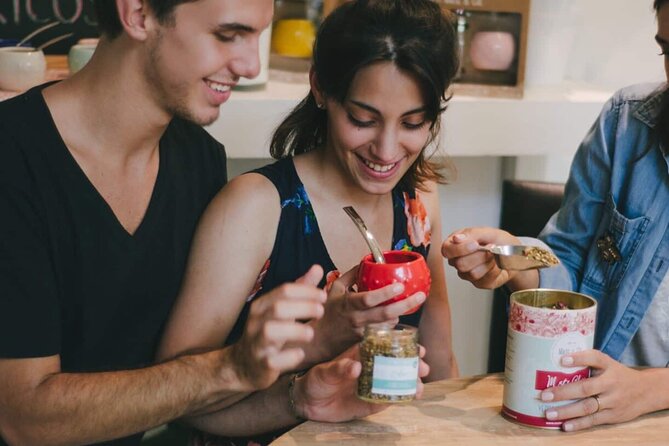
The experience begins at Tte. Benjamín Matienzo 1559 in Buenos Aires and returns to that same meeting point. It is near public transportation, which makes it a practical stop to add to a day in the city. The meeting point matters because this is a fixed workshop rather than a walking tour, so you can plan your route without needing to follow a guide across several neighborhoods.
The setting is presented as cozy and informal. That suits mate. You are not simply watching a demonstration from a distance. The point is to sit with the group, taste, ask questions, and learn a ritual that is normally shared among friends and family.
The class is available in English and Spanish. If you are traveling with family members or friends who speak different languages, confirm the language when booking. The information provided specifically notes that Spanish availability can be checked, while many English-speaking participants have found the instruction easy to follow.
More Food Tours in Buenos Aires
- Buenos Aires: 9-Course Argentine Meat Tasting at Fogón Asado
★ 4.9 · 826 reviews - Buenos Aires: Local Foodie Adventure with Sherpa Food Tours
★ 4.9 · 670 reviews - Buenos Aires: Wine Tasting and Lunch at Bodega Gamboa
★ 4.8 · 177 reviews
Learning what is inside the gourd
The first part explains what yerba mate is and where it comes from. You learn about its origins, how the plant is produced, and how the finished yerba reaches the market. The class also covers its properties and the different levels of consumption in Argentina and elsewhere.
This background is useful because yerba mate can seem simple at first glance. It is green leaves, hot water, a cup, and a metal straw. Once you hear about the production process and the many types of yerba available, the drink becomes easier to understand.
You also learn that the taste is not fixed. Different blends can vary in strength and character, and some include added flavors. The workshop lets you test those differences instead of asking you to choose a packet from a shop without knowing what you like.
That is one of the best reasons to take the class early in your Buenos Aires visit. If you plan to buy mate equipment or yerba, you will have a better sense of what you are choosing. The shop also offers discounts at the end of the session, which adds practical value for anyone who wants to continue the habit at home.
Getting familiar with cups, straws, and yerba
The equipment gets its own attention. You learn about mate cups, bombillas, and the accessories used to prepare and serve the drink. The class also explains the curing process, an important detail for anyone who plans to buy a traditional mate cup.
This part can save you from treating the first attractive cup you see as a complete kit. The cup, straw, yerba, and preparation method all work together. Learning the basic terms and uses makes shopping less confusing, especially if you want to take a set back to the United States, the United Kingdom, Honduras, or another country where mate may be less familiar.
The workshop is also useful if you already drink mate. One participant who had been preparing it independently still learned more about technique, equipment, and the ritual. You do not need to be a complete beginner to get something from the lesson.
Preparing your first proper mate
The heart of the session is the preparation lesson. You are shown how to make a mate and how to use the bombilla correctly. The guide explains the steps and lets you taste the results as the session moves along.
For a first-time drinker, this hands-on approach is far less intimidating than being handed a strong cup with no explanation. You can ask why the yerba is arranged in a certain way, how the water is added, and how the serving process works.
The class also introduces the role of the cebador, the person who prepares and serves the mate. That role is practical, but it also carries social meaning. Preparing the drink well helps the group share it comfortably, and the person serving it controls the pace of the ritual.
Expect questions during this part. Tomi is repeatedly described as patient, organized, and willing to explain details more than once. That is helpful because mate has small rules that are easy to miss when you are also concentrating on the taste and equipment.
Same city, a completely different kind of day:
- Buenos Aires Hop-On Hop-Off Bus, Free Walking Tours & Discounts
★ 4.5 · 2,218 reviews - Buenos Aires: Piazzolla Tango Show with Optional Dinner
★ 4.4 · 2,122 reviews - Buenos Aires: City Highlights Guided Tour with Transfer
★ 4.7 · 1,946 reviews - Buenos Aires: Hop-On Hop-Off City Bus Tour
★ 4.2 · 1,855 reviews
Comparing traditional and flavored blends
The tasting gives the class its most enjoyable contrast. You get to try several types of yerba, including original and flavored blends. The exact selection may vary, but the experience includes enough variety to help you identify a favorite.
Chai is one flavor that has particularly appealed to some participants, though the point is comparison rather than finding one official best choice. You may prefer a traditional blend, or you may find that a flavored option makes mate easier to enjoy at first.
Typical Argentine sweets are served alongside the tasting. That pairing gives you a break from the bitterness that some first-time drinkers notice. It also makes the tasting more social and relaxed, rather than a technical exercise.
I would not treat the tasting as a full meal. The information describes sweets and snacks, not lunch or dinner. If you are hungry, eat beforehand. The food is there to accompany the mate and add a local touch.
Understanding why mate is shared
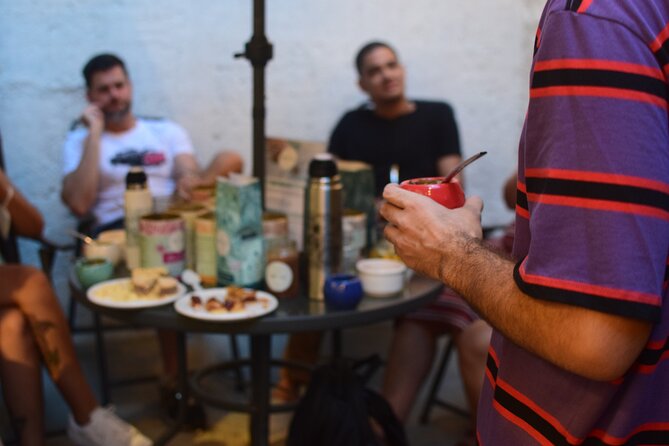
The most important lesson is cultural. Mate is not simply an individual cup of tea. It is commonly prepared and passed within a group, and the process carries its own etiquette and rhythm.
The session explains the meaning of mate in Argentine culture and its role in daily life. That context helps you understand why the drink appears in so many social settings and why the act of sharing matters as much as the liquid itself.
This is where the workshop goes beyond a shopping demonstration. You are not only learning how to recreate a beverage. You are learning why the cup moves around the group, what the server does, and how a familiar drink can create a sense of belonging.
The class also covers consumption in Argentina and around the world. That wider view is useful if you have encountered mate outside South America or have friends who already drink it. You can see the difference between learning a recipe and learning a living custom.
A small class with room for questions
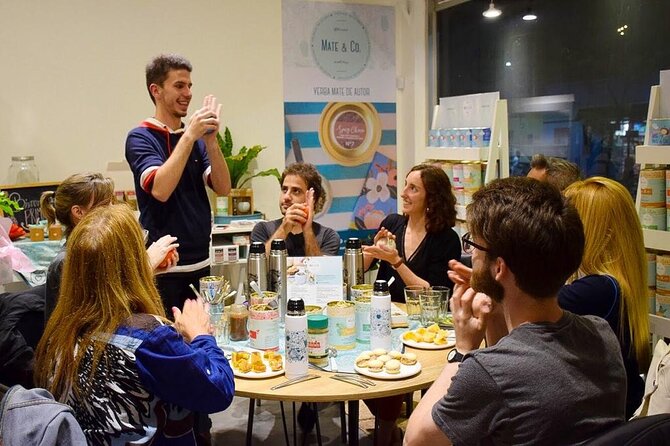
The maximum group size is 14 people. That is small enough to make the class feel personal, while still giving you the chance to meet people from different countries. The experience has attracted couples, families, solo participants, and friends traveling together.
A small group is especially valuable during the preparation section. You can watch the guide closely, ask for a correction, and follow the demonstration without standing at the back of a large crowd.
The atmosphere appears informal rather than formal or academic. Tomi is described as funny and engaging, with a good way of bringing the group together. That tone matters here. Mate is a social drink, so a stiff lecture would miss part of the point.
Still, small groups are not private classes. If your party wants individual instruction throughout, the maximum of 14 means other people will share the guide’s attention. For most visitors, that trade-off keeps the price reasonable.
What the $29 price includes
At $29 per person, this is a modestly priced cultural activity for Buenos Aires. You receive instruction, several tastings, Argentine sweets, and a diploma, all within about an hour and a half. The shop discount can add value if you plan to buy yerba or mate accessories afterward.
The real benefit is avoiding guesswork. You could buy a cup and packet of yerba on your own, but you might not know how to cure the cup, prepare the drink, or choose between blends. Here, the tasting helps you make a more informed purchase.
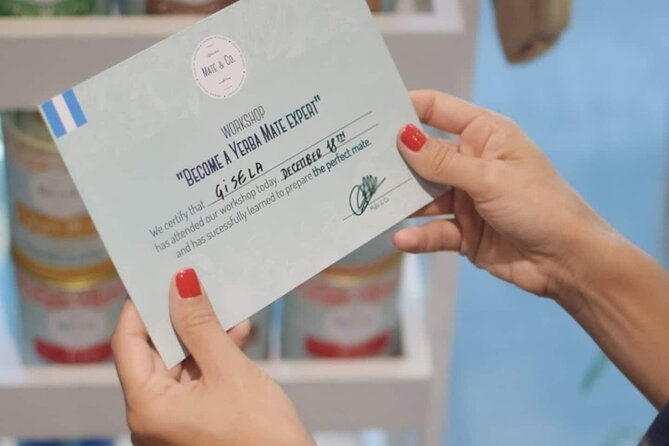
The diploma is not a formal professional qualification. It is a participation certificate and a playful souvenir. Families and friends may enjoy taking it home, especially if learning a new tradition is part of the trip.
You should book ahead if your schedule is tight. The activity is commonly reserved about a week before the date, so last-minute availability may be limited. Confirmation is provided when you book.
Who should book this experience
This workshop suits first-time mate drinkers best. If you have never tasted it, you get an explanation of the drink, a guided preparation, several blends, and a chance to ask basic questions without feeling out of place.
It also suits people who already know mate but want better technique. You may learn more about the production process, the equipment, the social ritual, and the differences between yerbas.
Families with older children and college-age sons or daughters can enjoy it together, provided everyone is interested in tasting and participating. Couples and solo visitors also fit the format well because the class encourages conversation within a small group.
You may want to skip it if you are looking for a long food tour, a broad Buenos Aires history lesson, or a full meal. Mate is the clear subject, and the 90-minute format keeps the focus narrow.
Service animals are allowed, and the meeting point is near public transportation. The activity ends where it begins, so there is no extra transfer to arrange.
Cancellation and timing details
Free cancellation is available up to 24 hours before the local start time for a full refund. Cancellations or changes made less than 24 hours before the experience are not accepted for a refund.
The activity requires a minimum number of participants. If that minimum is not met and the session is canceled, you are offered another date or experience, or a full refund.
Should you book the mate workshop?
I would book this if you want a short, friendly way to understand one of Argentina’s most familiar daily rituals. The strongest parts are the hands-on brewing lesson, the chance to compare several blends, and the clear cultural explanation from guides such as Tomi.
The main caution is simple: ninety minutes cannot cover every regional variation or every detail of mate culture. But at $29, the class gives you enough instruction to taste with confidence, shop more wisely, and prepare mate for friends when you get home.
Book it early in your Buenos Aires stay if you think you may buy equipment or yerba. You will get more from the rest of your visit once you know what is in that small gourd and why people pass it around.
FAQ
How long does the mate workshop last?
The activity lasts approximately 1 hour and 30 minutes.
Where does the experience begin?
It begins at Tte. Benjamín Matienzo 1559, C1426DAA, Buenos Aires, Argentina.
Where does the experience end?
The activity ends back at the meeting point.
How many people can join the workshop?
The group has a maximum of 14 participants.
Is the workshop available in English?
Yes. English-speaking participants have taken part in the class, and availability can also be checked in Spanish.
Will I taste different types of yerba mate?
Yes. The tasting includes several blends, including original and flavored options.
Are Argentine sweets included?
Yes. The mate tasting is served with typical Argentine sweets.
Do I receive anything at the end of the class?
Yes. You receive a diploma certifying your participation, and the shop offers discounts at the close of the workshop.
Just added around Buenos Aires
- Tango Show at El Querandi with optional Dinner★ 4.2 · 3 reviews
- Wine Tasting in Buenos Aires★ 4.2 · 4 reviews
- Walking Tour: Buenos Aires bookstores★ 4.3 · 12 reviews
- Velez Sarsfield Football Match★ 5.0 · 3 reviews
- Unique Tigre and Delta Private Day Cruise Navegation★ 5.0 · 3 reviews
- Private Underground Tango Immersion★ 5.0 · 31 reviews
- Tour Buenos Aires in one day on Electric Scooters★ 5.0 · 33 reviews
- Sailing with Wine Tasting in Buenos Aires★ 5.0 · 50 reviews
Food & Drink, compared.



Buenos Aires Food Tour: Local Dishes, Steak, Empanada & More
Read our review →
Full-day Cafayate, Lerma Valley, and Wine Tasting from Salta
Read our review →Browse the lists this tour appears in