

Reviewed · FOOTBALL & STADIUM TOURS
Buenos Aires: River Plate and Boca Juniors Museum Tour
Buenos Aires football makes more sense when you see its two great clubs side by side. This tour takes you from Boca Juniors’ home in La Boca to River Plate’s Monumental in Núñez, pairing club history with the sights and symbols of the famous Superclásico.
I like the two-club comparison and the transport between far-flung parts of the city. I also like the personal guide element, especially when the guide can explain the cultural differences between the clubs, as Martín did for one visitor and Ariel did for another. The main drawback is important: Boca’s stadium is closed for renovations, so you currently visit the museum only.
Key points to know before booking
- Boca’s stadium access is suspended: You cannot currently enter the pitch, locker rooms, or stands at La Bombonera.
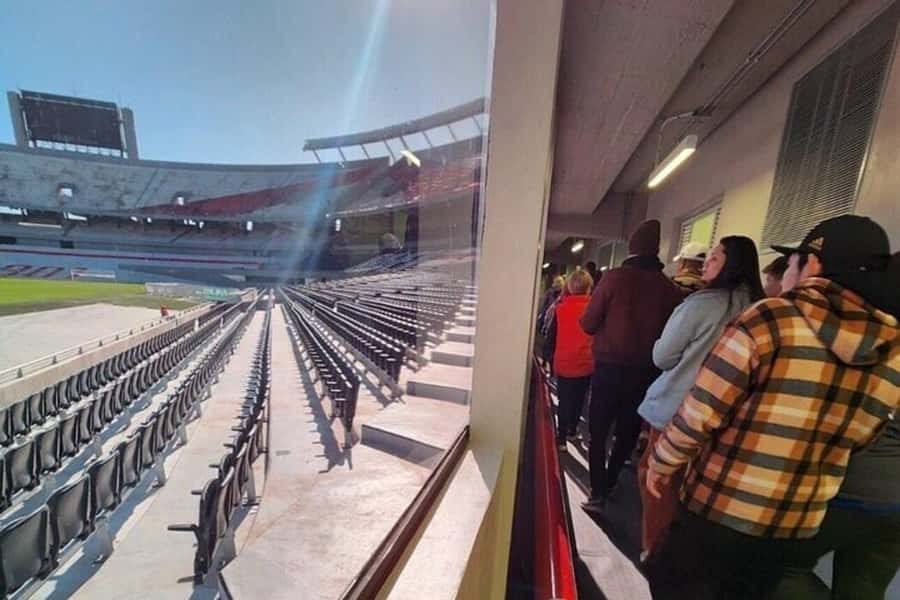
- River offers the fuller stadium visit: The tour includes the River Plate Museum and access to the playing field for photographs, subject to the selected option.
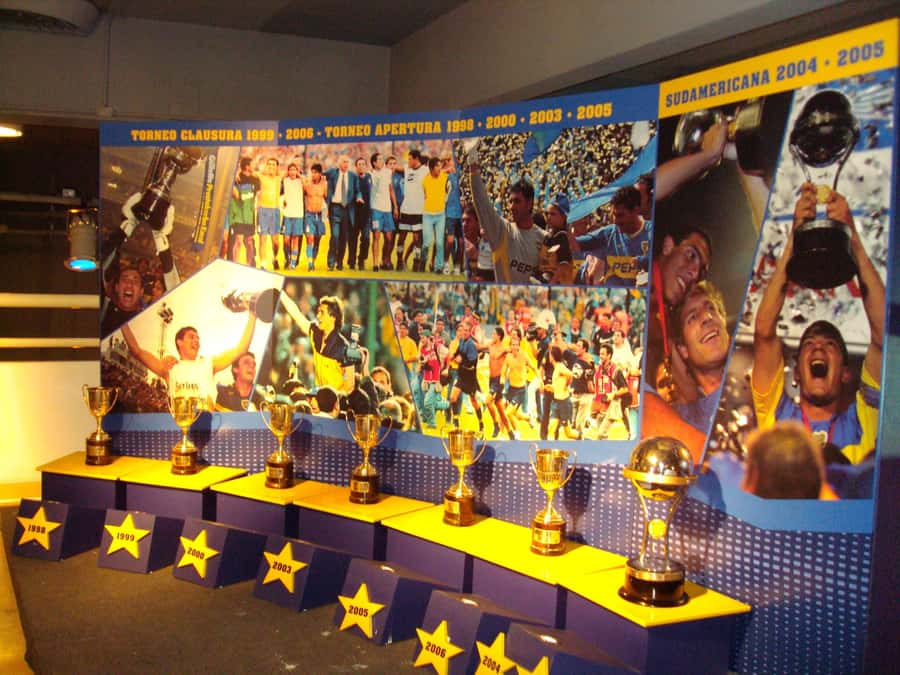
- The two clubs tell different stories: You see trophies, famous players, shirts, films, and club traditions from both sides of the rivalry.
- Transport is included: The tour begins at Tangol’s office in San Telmo and connects La Boca with Núñez.
- Allow three to five hours: The full two-museum version takes much of a day, with no hotel pickup.
- Guides can shape the experience: English and Spanish are offered, and the tour may use a multilingual guide.
Two clubs, one football-obsessed city
Football in Buenos Aires is not just a game on a weekend schedule. It is tied to neighborhood identity, family loyalty, music, color, memory, and pride. Boca Juniors and River Plate sit at the center of that world, and the Superclásico rivalry gives the city one of its clearest cultural dividing lines.
You do not need to know every player or title to enjoy this tour. The museums give you a quick way into the subject, while the guide helps connect the objects and images to the clubs’ larger place in Argentine life.
The tour is especially useful if you want to understand both clubs in one outing. Visiting only Boca or only River gives you one side of the story. Seeing both lets you compare the different visual styles, legends, trophies, stadium settings, and ideas of belonging that each club presents.
The full experience costs $103 per person. That is a serious price for a museum and stadium visit, so the value depends on your interest in football. For a committed fan, the included guide and transportation make the price easier to justify. For a casual sports follower, choosing one museum may be the smarter option, since both-club access is not the only choice.
More football and stadium visits in Buenos Aires:
- Buenos Aires: Tickets to Boca Juniors Museum & Stadium
★ 4.5 · 581 reviews - Soccer Match in Buenos Aires with Transfers and Local Guide
★ 5.0 · 103 reviews - Buenos Aires: Boca Juniors and River Plate Football Tour
★ 4.3 · 82 reviews
Starting in San Telmo and heading to La Boca
You meet at the Tangol Travel Agency office in San Telmo. Hotel pickup is not included, so you need to make your own way to the office before the stated start time. Comfortable shoes are a good idea, and large bags or luggage are not allowed.
From San Telmo, transportation takes you toward La Boca. This is one of Buenos Aires’ best-known neighborhoods, and the change from the old center to the football district helps set the mood for the visit. The destination is La Bombonera, Boca Juniors’ famous stadium.
The original plan describes a behind-the-scenes stadium visit, including the best seats, locker rooms, pitch access, and a view toward Diego Maradona’s private box. But the current operating note overrides those details: Boca’s stadium is not open for this part of the tour because of renovations.
That means you should not book expecting to walk onto the Boca pitch or see the changing rooms. You visit the Museo de la Pasión Boquense instead. This is the single most important detail to check before paying, since the title and older descriptions may suggest a wider stadium visit than is currently available.
The Museo de la Pasión Boquense
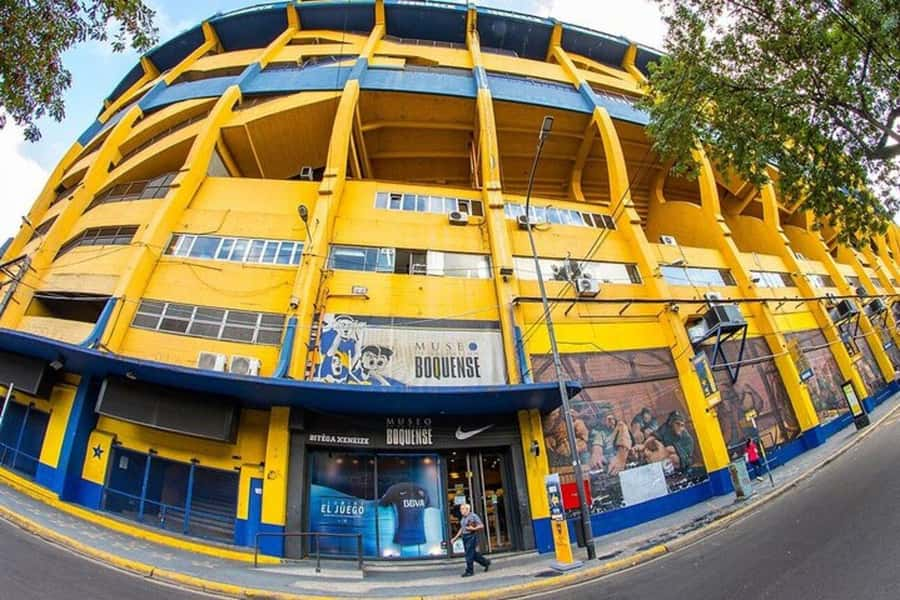
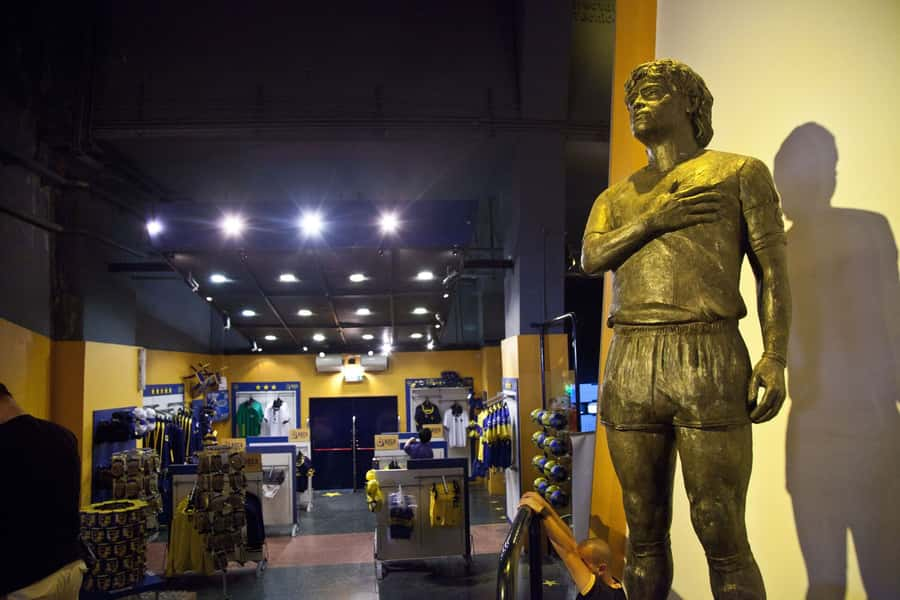
Boca’s museum focuses on the club’s identity and public image. You learn about its major players, important moments, club history, and the changes to the famous blue-and-yellow shirt over time.
A strong part of the visit is the presentation of Boca as more than a team. The museum shows how colors, players, symbols, and the stadium all feed into a shared identity. Even if you are not a Boca supporter, this helps explain why the club matters so much in Buenos Aires.
The museum also includes a film designed to show what it feels like to be part of the team and run onto the pitch in the club kit. It is a theatrical touch, but it gives the museum some movement and emotion beyond display cases and photographs.
You should think of this stop as a club museum rather than a full stadium tour. You will not get the same access to the physical ground that the original description outlines. There is no field visit, locker-room visit, or stand access at Boca while renovations continue.
That limitation does not make the museum pointless. It simply changes the reason to go. You are visiting for the club story, visual displays, film, and football culture, not for a complete behind-the-scenes look at La Bombonera.
Crossing the city to River Plate in Núñez
After Boca, the tour travels north to Núñez, where River Plate’s El Monumental is located. The journey matters because the two clubs are rooted in different parts of the city, and the route gives you a physical sense of the distance between their homes.
The River visit begins outside the stadium. You look at part of Barrio River, see the access gates, and get a feel for the area around the ground before going inside. This outdoor portion is useful because a stadium is not only its interior. The entrances and surrounding streets help you understand how the club occupies its neighborhood.
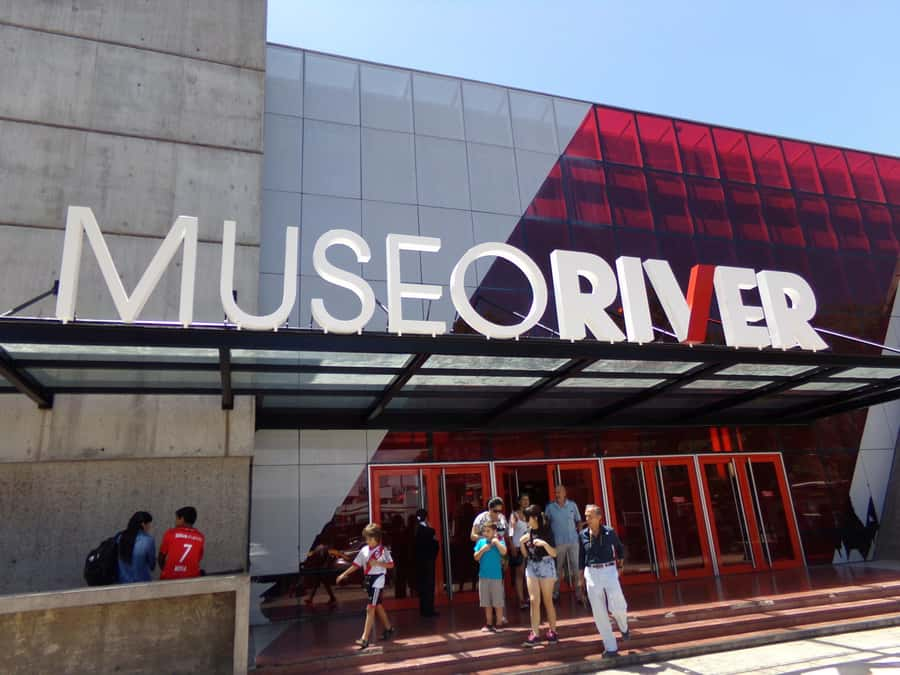
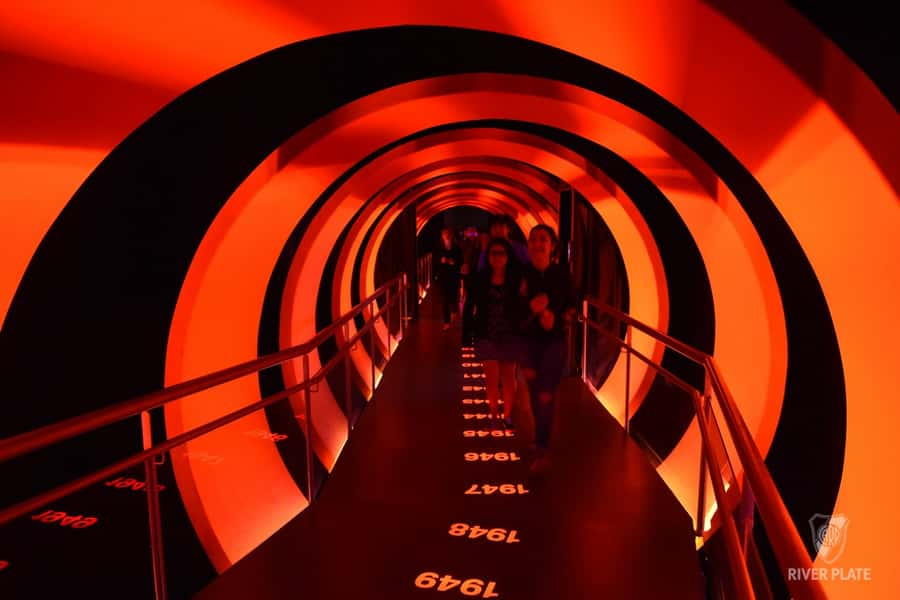
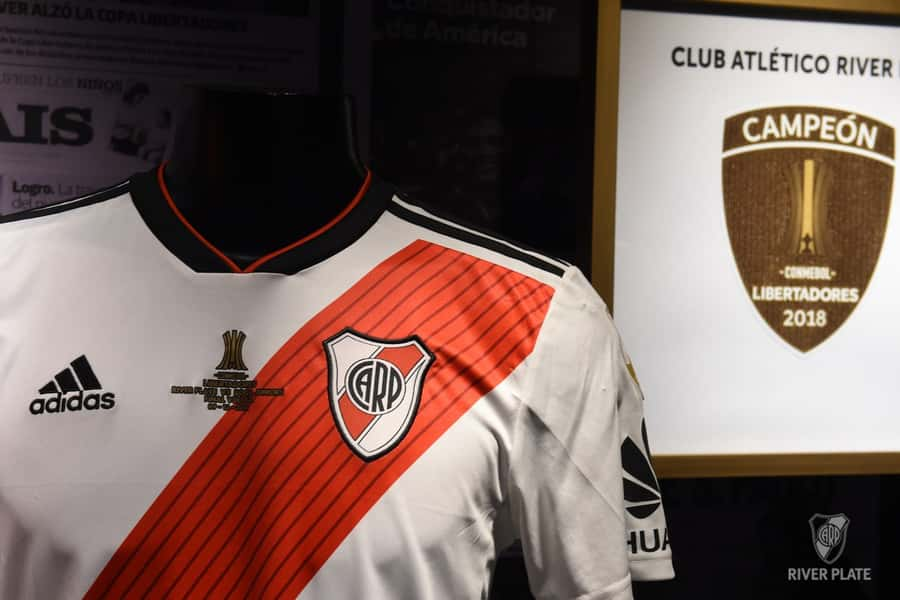
From there, you enter the River Plate Museum. The visit starts with a temporal translation module, a chronological display that traces the club from its founding through its major achievements.
The module gives structure to the visit. Instead of seeing trophies and player images as separate objects, you follow River’s progress through different eras. You learn about the club’s great players, major titles, and key stages of its development.
The museum is described as interactive, which should appeal to football fans who prefer more than static panels. It is designed to make club history easier to follow, even if you arrive without much prior knowledge.
More museum tours in Buenos Aires:
- River Plate Monumental Stadium and Museum Guided Tour
★ 4.5 · 39 reviews - Buenos Aires: Hop-On Hop-Off Bus and Football Museums
★ 4.3 · 39 reviews - Buenos Aires: Tickets to River Plate Museum
★ 4.6 · 32 reviews - AllMaradona Buenos Aires: Maradona House Museum and Stadium
★ 5.0 · 21 reviews
El Monumental and the River Plate pitch
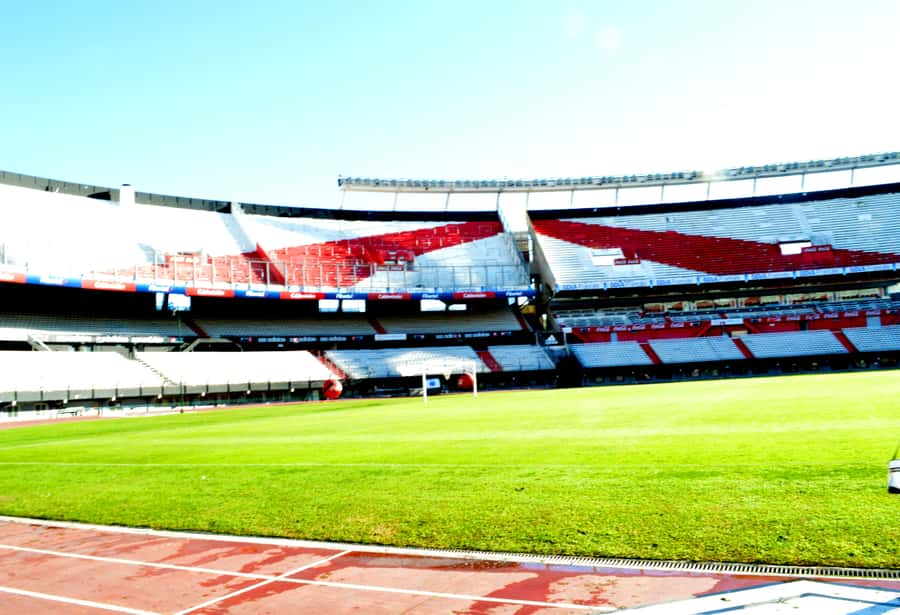
The River portion includes entry into El Monumental and a chance to visit the playing field for photographs. That is a meaningful difference from the current Boca arrangement.
Standing near the pitch gives the River visit a stronger stadium feel. You are not only looking at club objects in a museum. You also get a sense of the scale of the ground and the setting where River’s football story has played out.
Access can depend on the selected tour option and current operating conditions, so check exactly what your booking includes. The provided details clearly state pitch access at River, but they do not promise every possible area of the stadium.
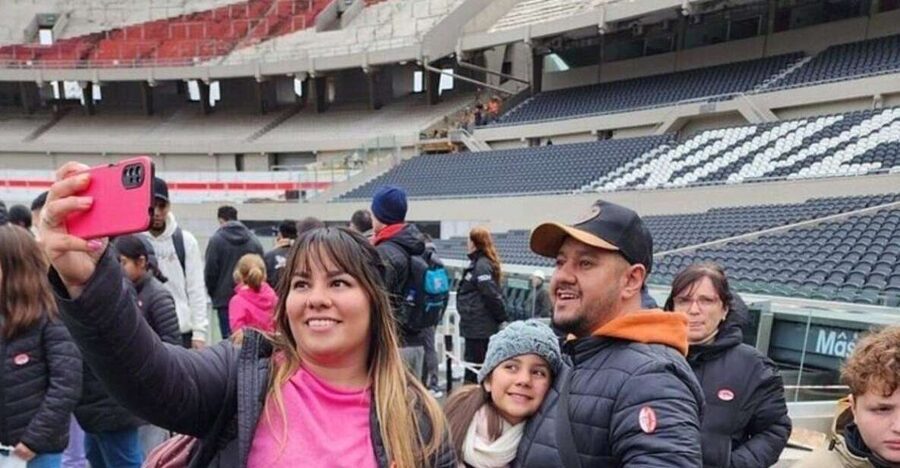
You should also allow time for photographs. One useful detail from the tour experience is that guides may give you time to take pictures and answer questions rather than rushing through the stops. That can make a big difference at a place where many visitors want personal photos, not just a quick look.
Why the guide matters
The guide is one of the most valuable parts of this experience. A museum can show you shirts, trophies, films, and player images, but a good guide explains why those things matter.
Martín, one of the named guides, was praised for explaining both club histories, the two stadiums, cultural differences, and small details that make the rivalry so compelling. He also answered questions and allowed time for photographs. Ariel was singled out for his warm and helpful approach.
Those details point to the kind of guide you should hope for: someone who can compare the clubs instead of reciting dates. Ask questions as you go. The tour becomes more useful when you ask about the Superclásico, famous players, club symbols, and differences between Boca and River supporters.
The tour is offered in English and Spanish, though it may be operated by a multilingual guide. If precise English explanations are important to you, confirm the language arrangement when booking.
Group size may affect the feel of the day. One reported experience had just one participant, allowing the guide and visitor to use taxis and move at a more personal pace. That should not be treated as a guarantee of a private tour, but it shows how flexible the experience can feel when numbers are low.
Timing, transport, and the real length of the day
The stated duration is three to five hours. The full two-museum version is closer to the longer end, since it includes San Telmo, La Boca, the Boca museum, the trip to Núñez, the River museum, and River stadium access.
Transportation during the tour is included. This is useful because La Boca and Núñez are not next door to each other, and arranging the connection yourself would add time and planning.
The tour returns you to the Tangol office in San Telmo. It does not include hotel pickup, food, drinks, or personal extras. Plan to eat before or after the tour, and carry only what you need because large bags are not allowed.
Starting times vary, so check availability for your date. Since the Boca stadium situation is tied to renovations, you should also confirm the current access conditions before you go. The operator may change what can be entered if work or club activity affects the visit.
Is the $103 price fair?
At $103, this is not a budget museum outing. You are paying for a guide, transportation, and entry to one or both museums, depending on your selection. The strongest value comes from choosing both clubs and making use of the guide’s comparison between them.
For a serious football fan, the price can be reasonable because the tour connects two major football sites in one day. You avoid working out transport between distant neighborhoods, and you get context that would be difficult to build from museum labels alone.
The value is weaker if you mainly want to enter La Bombonera. That access is currently unavailable, and the Boca portion is museum-only. If your main goal is to stand on Boca’s pitch, see the locker rooms, or sit in the stands, this is not the right time to book this version.
You can also choose a single-museum option, depending on availability. That may suit you if you already know which club interests you most or if your schedule does not allow up to five hours. Check carefully whether your selected price includes the River museum, Boca museum, or both, since the inclusions change with the option.
Who should book this experience?
I would recommend the full tour to:
- Football fans who want both sides of the Superclásico
- Visitors curious about Argentine culture and club identity
- People who want guided transport between La Boca and Núñez
- Anyone who values museum displays, club films, and player stories
- Visitors who want River pitch access and photographs
I would choose a single museum if you have limited time or only one club on your list. I would also wait or look for another option if your main aim is a full Boca stadium visit.
The tour is not suitable for wheelchair users or people with mobility impairments. The use of stadium areas, walking between sections, and museum access means you should be comfortable on your feet. Bring a passport or national ID, as well as comfortable shoes.
My take: book it for the comparison, not the Boca pitch
Book this tour if you want the broadest football lesson Buenos Aires can offer in one outing. The River museum and stadium access give the day a strong physical centerpiece, while the Boca museum explains the other side of the rivalry through its players, shirts, film, and club story.
Do not book it expecting the full Boca stadium experience described in older material. Renovations currently remove access to the field, changing rooms, and stands. If you accept that limitation, the tour remains a useful and well-organized way to compare two football institutions, especially with a guide such as Martín or Ariel who can add cultural detail and answer questions.
Free cancellation is available up to 24 hours before the tour, and reserve-now-pay-later booking may be offered. Those policies help if your schedule is still changing, but the key booking decision is simpler: choose both museums for the rivalry story, or choose one if you want a shorter, more focused visit.
FAQ
Where does the River Plate and Boca Juniors tour begin?
You meet at the Tangol Travel Agency office in San Telmo. Hotel pickup is not included.
How long does the tour last?
The tour lasts between three and five hours, depending on the selected option and schedule.
Can I enter La Bombonera during the tour?
No. Boca Juniors Stadium is currently closed for renovations, so the tour provides access to the Boca Juniors Museum only. You cannot currently visit the Boca pitch, locker rooms, or stands.
Can I visit the River Plate playing field?
The River Plate portion includes entry to El Monumental and an opportunity to visit the playing field for photographs, depending on the selected option and current access conditions.
Are museum tickets included?
Entry to the Boca Juniors Museum and River Plate Museum depends on the option you choose. Check the selected option to see which entrance tickets are included.
What languages are available?
The tour is offered in English and Spanish. It may be operated by a multilingual guide.
What should I bring?
Bring a passport or ID card and wear comfortable shoes. Large bags and luggage are not allowed.
Just added around Buenos Aires
- Tango Show at El Querandi with optional Dinner★ 4.2 · 3 reviews
- Wine Tasting in Buenos Aires★ 4.2 · 4 reviews
- Walking Tour: Buenos Aires bookstores★ 4.3 · 12 reviews
- Velez Sarsfield Football Match★ 5.0 · 3 reviews
- Unique Tigre and Delta Private Day Cruise Navegation★ 5.0 · 3 reviews
- Private Underground Tango Immersion★ 5.0 · 31 reviews
- Sailing with Wine Tasting in Buenos Aires★ 5.0 · 50 reviews
- Experience The Essence of Buenos Aires in San Telmo★ 5.0 · 51 reviews
Football & Stadium Tours, compared.

Soccer Match in Buenos Aires with Transfers and Local Guide
Read our review →


La Boca, a collective creation: Port, immigrants, arts and football
Read our review →

River Plate Monumental Stadium and Museum Guided Tour
Read our review →
Boca Juniors Game at La Bombonera with Local & Transport
Read our review →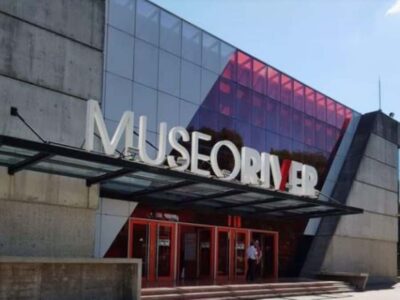
Browse the lists this tour appears in