
Reviewed · WORKSHOPS
Spanish Group Course in Buenos Aires, Argentina: 20 Lessons
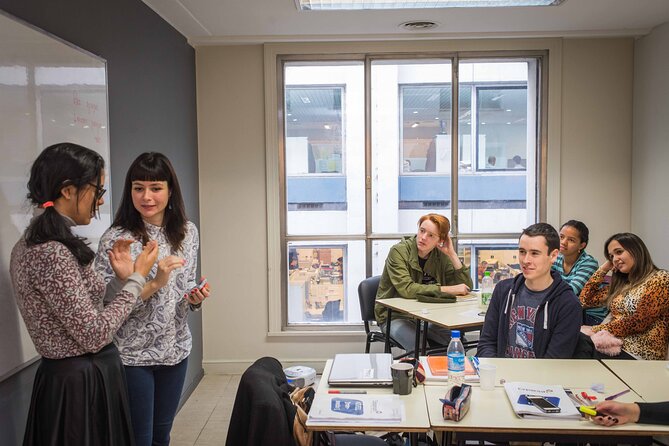
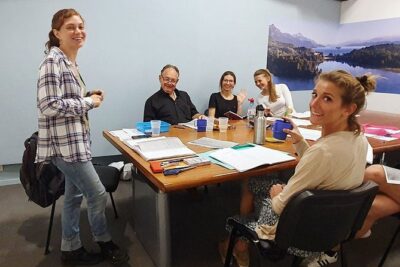
Buenos Aires is a terrific place to study Spanish because your lessons can quickly spill into daily life. This five-day course gives you 20 group lessons, a small class of up to 12 students, and social activities designed to get you speaking beyond the classroom.
I like the personal attention made possible by small groups, and I like the practical extras, especially luggage storage, free Wi-Fi, a student benefits card, and the certificate at the end. The main caution is scheduling: class times and any changes may not be fully clear until the first day, and changing teachers can sometimes mean reviewing material you have already covered.
Key points to know before booking

- Twenty lessons in about five days: A compact course for a short stay in Buenos Aires.
- Classes capped at 12 students: Small enough for questions, practice, and personal attention.
- Spanish continues after class: Social activities give you low-pressure chances to speak with classmates.
- All levels are accepted: The course is designed for beginners through more advanced students.
- Useful student extras: You receive a welcome pack, Wi-Fi, luggage storage, a benefits card, and a course certificate.
- Plan around the schedule: The starting time is 9:30 a.m., but the precise class arrangement may be explained on arrival.
Five mornings of Spanish in Buenos Aires
The course costs $275 per person and lasts approximately five days. That works out to 20 lessons, which makes this a concentrated option for someone with limited time in the city. You are not signing up for a casual one-off class. You are giving several mornings to steady language practice.
Classes begin at 9:30 a.m. at Federico Lacroze 2315 in Buenos Aires. The activity ends at the same location. The address is near public transportation, so you do not need to arrange a special transfer just to reach school.
The exact daily lesson pattern is not fully spelled out in advance. You should expect an orientation on the first day, followed by group instruction and opportunities to use Spanish in a social setting. If you need every hour planned before arrival, ask about the final class schedule before booking or be ready to stay flexible.
That small point matters. One past student found it inconvenient that the class schedule was not communicated until the first day, particularly when a public holiday or a shift to afternoon lessons changed the plan. The school also explained that group classes follow a weekly program, so students who leave and later return may repeat some material.
For a five-day course, this is less of a concern than it would be for someone studying over several weeks. Still, I would treat the first day as a settling-in period rather than scheduling a tightly timed afternoon excursion.
A few more Buenos Aires half-days to weigh up
- Buenos Aires: Empanadas and Alfajores Guided Cooking Class
★ 4.8 · 486 reviews - Buenos Aires: Private Tango Lesson
★ 4.9 · 244 reviews - Buenos Aires: Empanada & Alfajor Cooking Lesson in Palermo
★ 4.6 · 186 reviews
What happens on the first day
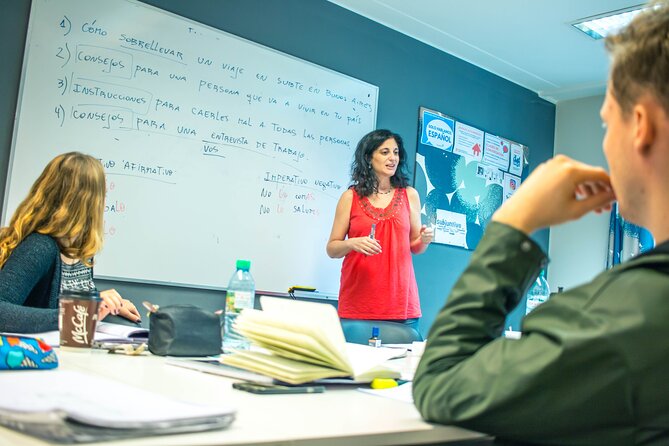
Your first morning includes orientation. This is where you should get the practical information you need: how the school works, where your class meets, and how the course is organized. It is also your chance to clarify your level and ask how the 20 lessons will be arranged.
The course welcomes all ages and skill levels. That broad range is helpful if you are traveling alone or joining at short notice, but group placement still matters. If the work feels too easy or too hard, the school allows you to change class level. One particularly useful feature is the ability to move levels during your stay if you are progressing quickly or need more support.
Do not be shy about speaking up early. Five days is a short window, and a class that fits your level will make a big difference. The teaching is built around an interactive group setting, not silent workbook time. You should expect to answer, listen, practice, and take part with the other students.
A welcome pack is included, along with free Wi-Fi. The course also provides luggage storage while you are in class. That is a real help if you have just arrived in Buenos Aires, are checking out of accommodation, or are heading to another part of the country after class.
Why the small class size matters
The maximum group size is 12 people. That is not a private lesson, but it is small enough to give you a reasonable chance to speak. In a larger language class, you can hide behind the fastest students. Here, you will need to take part.
The teaching approach is relaxed and interactive. The goal is not only to recognize Spanish on a page. You are encouraged to use it aloud, make mistakes, and keep going. That is especially valuable in Buenos Aires, where you can test new words soon after leaving class.
The course suits beginners, but it can also help you move beyond basic phrases. One student who studied for several weeks described gaining enough confidence to manage in Spanish-speaking countries. A five-day session will not produce the same result, but it can give you a useful push, particularly if you already know some Spanish and need practice using it.
The school’s materials follow the Aula Plus program from Editorial Difusión. The structure is useful because your lessons are not simply improvised conversation. At the same time, the shared course format means your progress can be linked to the pace of the group.
Social activities make the Spanish more useful
The best reason to choose a course like this instead of studying alone is what happens after class. Expanish includes social activities, and students can join various activities at no extra charge. These outings provide a less formal setting for practicing Spanish and meeting people from the school.
You may find it easier to speak while walking around Buenos Aires, sharing an activity, or chatting with classmates than sitting across from a teacher. The language becomes more useful when you need it for an ordinary exchange, rather than only for an exercise.
The social side also helps solo visitors. Several students appreciated how easy it was to meet people for evenings and weekends. That can be valuable in a large city, especially during a short stay when you do not want to spend your first few days alone.
You should keep one thing in mind: the available activities are not listed in the course details, so you should not book expecting a particular tour, meal, or attraction. Think of them as chances to practice and connect, not as a sightseeing itinerary.
Same city, a completely different kind of day:
- Buenos Aires Hop-On Hop-Off Bus, Free Walking Tours & Discounts
★ 4.5 · 2,218 reviews - Buenos Aires: Piazzolla Tango Show with Optional Dinner
★ 4.4 · 2,122 reviews - Buenos Aires: City Highlights Guided Tour with Transfer
★ 4.7 · 1,946 reviews - Buenos Aires: Hop-On Hop-Off City Bus Tour
★ 4.2 · 1,855 reviews
Using Buenos Aires as your classroom
The school is located in the city, near public transportation. That gives you a practical base for combining lessons with independent time in Buenos Aires. The course itself does not include food or drinks, so you will need to handle lunch and other meals separately.
I like this arrangement because it leaves your afternoons open. After class, you can explore, rest, continue practicing with classmates, or join a school activity. You are not locked into a full-day tour schedule.
The city also gives your Spanish immediate purpose. You can use the day’s vocabulary at a café, on public transportation, in a shop, or while asking for directions. The course does not promise private guiding around Buenos Aires, so the value comes from pairing structured lessons with your own time in the city.
Because the experience begins at 9:30 a.m., you should allow enough time to reach Federico Lacroze 2315. The meeting point is the start and finish location. Public transportation is nearby, but the activity does not include transportation to or from your accommodation.
The important catch: books are not included
Food and drinks are not included, and neither is the course book. This is easy to overlook when comparing the $275 price with other language programs. Ask about the required book before you arrive so you can budget for it and avoid losing study time on the first day.
The included welcome pack, Wi-Fi, certificate, orientation, luggage storage, and social activities add useful value. The student benefits card may also help during your stay, though the available discounts are not specified here. The course is strongest as a package for someone who wants lessons plus a social school setting, not simply the cheapest possible classroom hours.
At $275 for 20 lessons, the listed course rate comes to $13.75 per lesson before accounting for the included extras. That is a reasonable way to think about the price, but it is not the whole calculation. You also pay for a school environment, level placement, organized activities, and the convenience of studying in a central Buenos Aires setting.
If you only want a few hours of conversation practice, a shorter or private option might suit you better. If you want a structured week and a ready-made social circle, this package offers more than a stack of lessons.
What the course does especially well
The warm staff and patient teaching receive consistent praise. That matters for language study, where nerves can block progress as quickly as grammar can. A friendly atmosphere makes it easier to speak before you feel ready.
The school is also described as attractive, centrally located, and easy to reach. Its social environment can feel comforting for people far from home. That is not a minor extra. A language course works better when you feel comfortable enough to ask questions and make mistakes.
The homestay and shared-apartment options mentioned by past students are not part of this $275 course price. If you arrange one separately through the school, check the details and cost carefully. A shared apartment may provide everything you need, but it may offer less privacy than your own accommodation.
A homestay can give you more contact with local life, but the information provided does not say that meals are included. Do not assume the accommodation arrangements come with food or that they are part of this course.
Where the experience could be smoother

The main weakness is communication around the timetable. A schedule that arrives only on the first day can make it hard to arrange museum visits, day trips, or other bookings. Public holidays and afternoon sessions can add another layer of uncertainty.
Teacher coordination is another point to watch. If you change teachers or leave and return to the course, some repetition may occur. The school uses a weekly program and shared materials, but different classes may not move at exactly the same pace.
That does not make the course a poor choice. It simply means you should not expect a perfectly individualized syllabus during a short group session. Tell staff what you have already covered, ask where the class is headed, and confirm any schedule changes as soon as you arrive.
For many people, the friendly environment and chance to change levels will outweigh this inconvenience. For students who need tightly sequenced academic study, a private course may provide better continuity.
Who will get the most from these 20 lessons
I would recommend this course to you if you want a practical introduction to Spanish while spending time in Buenos Aires. It fits solo visitors, gap-year travelers, people on a short holiday, and anyone who wants a social way to study.
It is also a good match if you learn best by speaking. The small group, activities, and encouragement to use Spanish from the beginning give you several ways to practice.
You should think twice if you dislike flexible schedules or need a detailed timetable before you arrive. You may also prefer another format if you want private instruction, guaranteed one-to-one attention, or a book included in the price.
The course is suitable for all ages, but the mix of students can change from week to week. That variety can be part of the fun, though it also means the pace and personalities in your group are not fully predictable.
Practical details for a smooth start
Confirmation is provided when you book. The meeting point is Federico Lacroze 2315, C1426CPI, in the City of Buenos Aires, and the listed start time is 9:30 a.m. The activity finishes back at that point.
Service animals are allowed, and most people can participate. The maximum group size is 12. Free cancellation is available if you cancel at least 24 hours before the local start time. Cancellations or changes made inside that 24-hour window are not accepted for a refund.
Bring a way to take notes, but remember that the course book is not included. If you have studied Spanish before, bring any useful information about your level or recent lessons. It can help staff place you more effectively.
Most important, protect time after class for social activities and ordinary life in Buenos Aires. The lessons give you the framework. Your conversations outside school are where the new language begins to feel practical.
Should you book this Buenos Aires Spanish course?
Book it if you want structured Spanish study with a built-in social side. The 20 lessons, small classes, helpful staff, level flexibility, free activities, and luggage storage make the $275 fee reasonable for a five-day stay.
I would be cautious only if a precise schedule, uninterrupted lesson progression, or included books are essential to you. Ask about the timetable before arrival, budget separately for the book and meals, and expect some review if your class or teacher changes.
For a short visit, this is a smart way to give your Buenos Aires stay more purpose. You get classroom practice in the morning and plenty of room to use Spanish on your own afterward.
FAQ
Where does the Spanish course begin?
The course begins at Federico Lacroze 2315, C1426CPI, in the City of Buenos Aires, Argentina.
What time does class start?
The listed start time is 9:30 a.m.
How long does the course last?
The experience lasts approximately five days and includes 20 lessons.
How large are the classes?
The activity has a maximum of 12 students.
Is the course suitable for beginners?
Yes. The course is suitable for all ages and skill levels.
Is a course book included?
No. The book is not included in the course price.
Are food and drinks included?
No. Food and drinks are not included.
What is included with the course?
You receive a welcome pack, free Wi-Fi, social activities, first-day orientation, luggage storage while in class, and a course certificate upon completion.
Just added around Buenos Aires
- Tango Show at El Querandi with optional Dinner★ 4.2 · 3 reviews
- Wine Tasting in Buenos Aires★ 4.2 · 4 reviews
- Walking Tour: Buenos Aires bookstores★ 4.3 · 12 reviews
- Velez Sarsfield Football Match★ 5.0 · 3 reviews
- Unique Tigre and Delta Private Day Cruise Navegation★ 5.0 · 3 reviews
- Private Underground Tango Immersion★ 5.0 · 31 reviews
- Sailing with Wine Tasting in Buenos Aires★ 5.0 · 50 reviews
- Experience The Essence of Buenos Aires in San Telmo★ 5.0 · 51 reviews
Workshops, compared.


3h Cooking Class in Mendoza with 7 Recipes & Bottomless Drinks
Read our review →
Tango Porteño Show with Optional Dinner and Tango Lesson
Read our review →
Browse the lists this tour appears in