

Reviewed · ANDES HIGH MOUNTAIN TOURS
Wonders of the High Andes from Mendoza
The main event here is the High Andes scenery, not a hike or a polished resort visit. From Mendoza, you follow the Mendoza River toward Uspallata, then climb through stark mountain country to Aconcagua viewpoints, Puente del Inca, Las Cuevas, and, in the right season, Cristo Redentor.
I like two things in particular: you cover a huge stretch without renting a car, and the route brings you to places that would be awkward to reach on your own. I also like the mix of natural sights and border history, from the old Inca frontier to the monument shared by Argentina and Chile.
The catch is the distance. This is roughly 10 hours in a vehicle, sometimes longer, with a group of up to 40 people. Guide quality and English delivery can vary, and access to Cristo Redentor depends on weather, road conditions, season, and truck traffic.
Key points to know before you book
- Aconcagua is the visual high point: You stop at a viewpoint for the highest mountain in the Western Hemisphere, listed here at about 6,900 meters.
- The road trip is the experience: You cover roughly 400 kilometers through the Andes, with long stretches in the vehicle between stops.
- Cristo Redentor is seasonal: The monument visit is offered only from January through March and depends on weather and traffic.
- Uspallata adds history: This mountain settlement connects to the pre-Hispanic Huarpe people and the southern reach of the Inca Empire.
- The group may be large: Vehicles can range from a minivan to a bus holding up to 40 people. This is not a guaranteed small-group trip.
- Pack for changing conditions: Bring warm clothing and water. The high points can feel cold, and altitude sickness is a real concern.
Why the High Andes make a worthwhile day from Mendoza
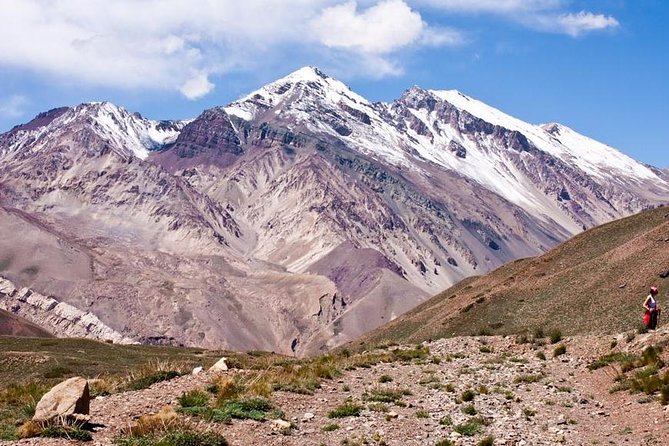
Mendoza is famous for wine, leafy streets, and easygoing city life. This trip shows you the other face of the province: dry, immense, and cut by the hard folds of the Andes.
You begin around 7:30 a.m. with hotel pickup from selected hotels. The first hours are not wasted time. The road follows the Mendoza River and passes the Cordon del Plata range and Potrerillos Dam, a major water and power project for the region. The dam supplies irrigation water as well as electricity, so it is part of the working infrastructure that makes life in this dry part of Argentina possible.
The scale changes quickly as you leave the city. You are not simply driving to one viewpoint, taking a photograph, and turning back. You spend the day moving through a mountain corridor used by local communities, historic routes, and international traffic heading toward Chile.
That is also the reason the day can feel tiring. The trip is long because the major sights are spread out. If you want a slow walk, a quiet picnic, or several hours at one site, this is the wrong format. If you want to see the main high-mountain sights in one outing, the vehicle saves you the stress of driving unfamiliar roads.
More high Andes days from Mendoza:
- From Mendoza: High Andes Aconcagua Mountain Tour
★ 4.4 · 767 reviews - Andes Day Trip from Mendoza Including Aconcagua, Uspallata and Puente del Inca
★ 4.5 · 419 reviews - From Mendoza: Andes High Mountain Full-Day Tour
★ 4.7 · 208 reviews
Uspallata and the old mountain frontier
Uspallata is the first substantial stop, usually after the route has begun to climb away from Mendoza. You have about an hour here, which gives you time to stretch, use facilities, and take in the setting.
The historical background makes Uspallata more than a convenient roadside break. The area is linked with the Huarpe people and marked the southern limit of the Inca Empire. That detail helps you read the mountains as a passage used by people long before modern highways crossed the Andes.
Do not expect a museum-style visit or a long guided walk. The value is in seeing the place itself and hearing the context from your guide. English service has been strong with some guides, including Federico, Rocío, and Esteban, while other departures have had weaker English delivery. If clear English explanation matters to you, confirm the language arrangement before booking and keep your expectations practical.
Picheuta, Polvaredas, and Punta de Vacas
The route continues through smaller settlements and historic sites, including Picheuta, Polvaredas, and Punta de Vacas. The itinerary groups these stops together, so the exact time at each point can depend on traffic, weather, and the day’s operating plan.
Puente Picheuta is connected with the old mountain route, while Polvaredas is known for its former railway setting. These stops are not grand attractions with extensive facilities. Their interest comes from the traces of transport and settlement in a remote corridor.
I like this part of the day because it gives the trip texture. You are not only looking at peaks. You are seeing how roads, railways, villages, and military or border routes fit into the same narrow passage. Still, people who prefer major sights may find these brief stops less memorable than Aconcagua or Puente del Inca.
Penitentes and the changing road upward
Los Penitentes is a former or seasonal ski area where you get wide views over the surrounding mountains. Entrance is not included, so treat this as a scenic stop rather than a ski-resort visit.
The stop lasts about an hour. In winter, fresh snow can transform the scene, and the route can look far more dramatic than it does in dry weather. At other times, the attraction is the open view and the sense that you are now well into the high country.
This is a good place to wear layers. Mendoza may be warm when you leave, but the mountain air can be chilly, especially when you step out of the vehicle. Several departures have also included lunch stops in the mountain villages, but food and drinks are not part of the price. Meals have been described as expensive or disappointing, so I would bring snacks and water rather than rely on the restaurant stop.
A few more Mendoza half-days to weigh up
- From Mendoza: 3 Wineries, Olive Oil Factory Tour & Tasting
★ 4.6 · 901 reviews - Mendoza: Half-Day Wine Tour with Tastings
★ 4.3 · 727 reviews - Mendoza: Sunset Horse Back Riding in the Mountains and BBQ
★ 4.9 · 515 reviews - Premium Spa Day at Cacheuta Hot Springs
★ 4.5 · 160 reviews
Puente del Inca, a natural bridge with a strange color
Puente del Inca is one of the most distinctive sights on the route. Mineral-rich hot springs formed a natural bridge over the river, leaving the rock with unusual yellow, orange, and brown tones.
The scheduled stop is short, about 10 minutes. That is enough for photographs and a quick look, but not enough for a long walk or detailed exploration. The site works best as a compact visual stop within a larger day.
Altitude begins to matter more here. One person on a previous departure felt sick from around the natural bridge onward, with nausea, dizziness, tiredness, shortness of breath, and blurred vision. Another person in the same group had no trouble. I would take those symptoms seriously. If you have concerns about altitude, ask a medical professional about preparation before you go, and tell the guide if you feel unwell.
Aconcagua viewpoint and the biggest view of the day
The Aconcagua viewpoint is the emotional center of the trip. From here, you look toward Aconcagua, the highest mountain in the Western Hemisphere, listed at around 6,900 meters above sea level.
The stop lasts about 30 minutes. That is usually enough for photos, a look at the mountain, and a chance to appreciate how much the scenery has changed since Mendoza. Visibility is not guaranteed. Clouds can cover the peak, and one departure reached the viewpoint only to find the mountain hidden. That is part of mountain travel, not a failure of the route, but it is worth knowing before you book.
The viewpoint can also be confused with a mountain walk. This is primarily a roadside viewing stop. The trip does not promise a hike to Aconcagua or a trek into the surrounding peaks. If you want time on foot, use the stops to walk around safely, but expect most of the day to be spent riding.
Las Cuevas at 3,200 meters
Las Cuevas is the final village before the international tunnel to Chile. It sits at about 3,200 meters, or 10,500 feet, and has an unusual European-style appearance that feels out of place in such a severe setting.
You have about an hour here. This is often a meal and rest stop, though food is extra. Prices and quality can be uneven, so I would treat lunch as a practical break rather than a reason to choose the trip. Carrying a sandwich, fruit, or other simple food can make the day easier.
The altitude is also more noticeable here. You may feel fine in Mendoza and then develop a headache, tiredness, or shortness of breath higher up. Drink water, avoid rushing, and tell your guide if you are struggling. The trip is not designed for a long acclimatization period, so people who know they react badly to elevation should think carefully before booking.
Cristo Redentor and the road to the border
Cristo Redentor de los Andes is a monument symbolizing unity between Argentina and Chile. It sits above Las Cuevas at roughly 4,200 meters, or 13,780 feet.
Reaching it is not guaranteed. The visit depends on weather and road traffic, and the description specifies that it is offered only from January through March. The final road can also be affected by international truck traffic. In summer, a departure that reaches Cristo Redentor may return to Mendoza around 8 p.m. rather than the usual approximately 5:30 p.m.
That difference matters. You are gaining a special high-altitude stop, but you may also be adding several hours to an already long day. Ask at booking time which sections are expected to operate on your date. On some departures, the trip has ended without reaching the monument because access was not possible.
Guides, vehicles, and the language question
The tour includes an English and Spanish guide, an air-conditioned vehicle, and pickup and drop-off at selected hotels. The maximum group size is 40, so the ride may be in a minivan or a larger bus.
The best departures depend heavily on the guide. Federico has been praised for speaking Spanish clearly and then repeating the information in English. Rocío and Esteban have also been singled out for clear explanations, while Paula, Javier, and Romina have received warm comments for their work on other departures.
But English delivery is not perfectly consistent. Some guides have spoken little English, and one guide solved the problem by asking another guide to provide short explanations at stops. That may rescue the day, but it is not the same as receiving a full bilingual tour. If you need detailed commentary in English, contact the provider before paying and ask how the language will be handled on your specific departure.
The vehicle is another variable. Most people should expect a full shared excursion, not a private ride. Some past departures felt cramped, especially when the vehicle was full. On a 10-hour route, seat space and driving comfort matter more than they would on a short city tour.
What the $67 price really covers
At about $67 per person, the cost is reasonable if you value transport and access. You are paying for a full day on a long route, a guide, air conditioning, and hotel pickup and return at selected hotels. Renting a car would add fuel, navigation, border-route driving, and the burden of managing mountain roads yourself.
The price does not include food, drinks, or entry costs at Penitentes if an admission is required. Lunch can be costly, and the quality is not guaranteed. I would budget for food separately and carry water.
Value depends on your preferred pace. You get many major sights for one modest price, but you also spend much of the day in the vehicle. A private or smaller excursion might offer more comfort and flexible stops, but this shared trip is the cheaper way to cover the route.
Practical advice for a better day
Wear warm layers even if Mendoza is hot when you leave. Bring water, snacks, sunscreen, and a phone or camera with extra battery power.
Keep your schedule open after the advertised return time, especially from January through March when Cristo Redentor may be included. The route can run until about 8 p.m.
Do not book this as a hiking trip. It is a scenic road journey with short walks at selected stops. The strongest moments come from the changing views, not from physical activity.
Finally, check your pickup details carefully. Hotel service is limited to selected hotels, and pickup begins around 7:30 a.m. The vehicle may be collecting several groups, so the exact arrival time can vary. If the tour is canceled for poor weather, you can accept another date or receive a full refund. Free cancellation is available up to 24 hours before departure.
Should you book Wonders of the High Andes?
Book it if you want to see Aconcagua, Puente del Inca, Las Cuevas, and the high border route in one day without driving. It is especially useful for a first visit to Mendoza when your time is limited and you want more than wineries and city streets.
Think twice if you dislike long vehicle rides, need a guaranteed English-speaking guide, or want a relaxed hike. I would also avoid it if you are prone to altitude sickness unless you have a clear plan for managing elevation.
For most people, the deciding question is simple: can you accept a long shared road trip in exchange for huge mountain views? If yes, the route offers strong value at $67. Just pack for cold, carry food and water, and confirm whether Cristo Redentor and English guiding are expected on your date.
FAQ
How long does the High Andes tour from Mendoza last?
The tour lasts about 10 hours. The usual return to selected Mendoza hotels is around 5:30 p.m., but summer departures that reach Cristo Redentor can finish around 8 p.m.
What time does the tour start?
The stated start time is 7:30 a.m. Hotel pickup is available from selected hotels.
Is hotel pickup and drop-off included?
Yes, pickup and drop-off are included for selected hotels. The activity ends back at the meeting point or selected hotel service area.
Is food included in the price?
No. Food and drinks are not included. Lunch stops may be made in the mountain villages, but meals must be paid for separately.
Will the tour visit Cristo Redentor?
The visit depends on weather, road conditions, and transportation traffic. It is offered only from January through March, so reaching the monument is not guaranteed.
How high does the route go?
Las Cuevas is about 3,200 meters above sea level. Cristo Redentor is about 4,200 meters above sea level.
What language is the tour guided in?
The tour includes an English and Spanish guide. English delivery can vary by departure, so confirm the language arrangements if English commentary is important to you.
What is the cancellation policy?
You can cancel for a full refund up to 24 hours before the local start time. Cancellations or changes made less than 24 hours before departure are not refunded. If poor weather cancels the tour, you can choose another date or receive a full refund.
Just added around Mendoza
- Zuccardi Full Paired Lunch at Piedra Infinita in Uco Valley★ 3.0 · 3 reviews
- Zuccardi Legacy: A Journey Through Uco Valley’s Finest★ 5.0 · 5 reviews
- Wine and Chocolate Bike Tour: ride, taste, lunch, vineyards.★ 4.1 · 10 reviews
- Wine Icons: Meet Salentein at the heart of Uco Valley★ 4.1 · 6 reviews
- Wine Icons: Meet the sparkling world of Chandon★ 5.0 · 3 reviews
- Wine Idols: Meet El Enemigo by Alejandro Vigil★ 4.6 · 6 reviews
- Valle de Uco: Private Full Day Wine Tour with 3-Course Lunch★ 3.5 · 6 reviews
- Visit & Tasting at Salentein + Lunch at La Azul★ 4.1 · 12 reviews
Andes High Mountain Tours, compared.

Andes Day Trip from Mendoza Including Aconcagua, Uspallata and Puente del Inca
Read our review →

High Mountain Experience, a Tour through the Andes
Read our review →
Cabalgata Cruce de Los Andes Cruce Sanmartiniano
Read our review →
Browse the lists this tour appears in