Reviewed · BUENOS AIRES TOURS
Buenos Aires for curious people
Buenos Aires for Curious People takes you beyond the usual photo stops and into the city’s harder, stranger, more revealing stories. You’ll move from the old streets around Parque Lezama through San Telmo and on to Puente de la Mujer and Casa Rosada, with history, politics, architecture, and local life woven into the walk.
I like the tiny group size, capped at eight, because it gives you room to ask real questions. I also like the guides’ personal range: Nicolás is described as a local with family roots in Buenos Aires, while Ignacio brings a background in history teaching. The main consideration is pace. This is a serious walking tour covering several districts, and one person found it less structured than expected.
Key points
- A history-first route: Follow Buenos Aires from its early colonial foundations to Argentina’s recent political past.
- San Telmo beyond the market: See churches, old squares, immigrant history, and sites many standard tours skip.
- A small group of eight or fewer: Questions are easier, and the guide can adjust the discussion.
- A difficult but important stop: Memory Walk addresses a former detention, torture, and extermination center used from 1976 to 1979.
- Several possible guides: Nicolás, Nico, Ignacio, Sophia, and Santiago have all led this experience.
- A useful first look at the city: The tour links major sights with context you can use for the rest of your stay.
Why this Buenos Aires walk feels different
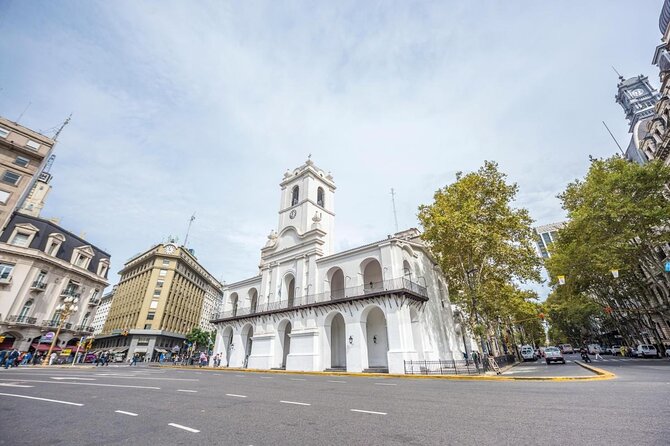
Many city walks collect famous buildings and move on. This one uses them as evidence in a larger story about how Buenos Aires developed, who shaped it, and how Argentina still deals with its past.
That means you’ll hear about architecture and food, but also about politics, social divisions, immigration, military rule, and the changing role of public spaces. The result is less of a postcard tour and more of a guided conversation on foot.
The experience lasts about two to three hours and accepts no more than eight people. That small number matters here. The subject can become complicated, and the strongest part of the tour is the opportunity to stop, ask for clarification, and connect the past to present-day Argentina.
Guides have included Nicolás, often called Nico, as well as Ignacio, Sophia, and Santiago. Their backgrounds and styles vary, but the strongest descriptions point to clear explanations, excellent English, patience, and an ability to answer questions without turning the walk into a lecture.
You should still expect a lot of information. This is not built around constant photo opportunities or a light introduction to Buenos Aires. One person found the route fascinating but wished it had more structure. That is a fair warning: if you prefer a tightly timed sightseeing circuit, this may feel loose. If you enjoy following a question wherever it leads, the format is a good fit.
A few more Buenos Aires half-days to weigh up
- Buenos Aires Hop-On Hop-Off Bus, Free Walking Tours & Discounts
★ 4.5 · 2,218 reviews - Buenos Aires: Piazzolla Tango Show with Optional Dinner
★ 4.4 · 2,122 reviews - Buenos Aires: City Highlights Guided Tour with Transfer
★ 4.7 · 1,946 reviews
Starting at Bar Britanico and Parque Lezama
The meeting point is Bar Britanico at Brasil 399, near Parque Lezama. The bar offers an immediate sense of old Buenos Aires, while the park provides the larger historical frame.
Parque Lezama is identified as the place where the first fort was established in 1536. That early date gives the guide a natural way to explain the city’s beginnings and the gap between its colonial origins and the modern capital you see today.
You’ll spend about 30 minutes here. That is enough time to orient yourself, look at the park’s setting, and begin the wider discussion without rushing straight into a list of dates.
Bar Britanico is a short opening stop, listed at about five minutes. Think of it as a meeting point and a first glimpse of the old town rather than a long café visit. The tour does not include food or drink, so arrive ready to walk.
This opening section is useful because it sets a tone. Buenos Aires is not presented as a city that sprang fully formed from grand avenues and elegant façades. You begin with the early settlement, contested memory, and the older southern districts.
Swedish church and the city’s less expected layers
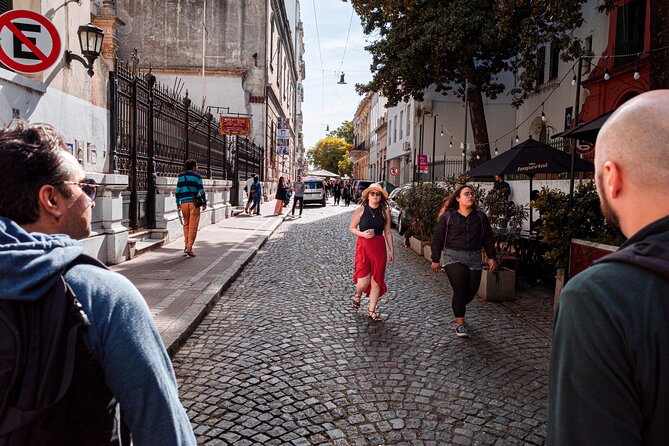
The next stop is Club Sueco Restaurante, connected with the Swedish church built in 1944. You’ll spend about 10 minutes here.
At first, a Swedish church may seem like an odd stop on a Buenos Aires history walk. That is exactly why it works. It points to the foreign communities that helped shape the city and reminds you that Buenos Aires has long drawn people from many countries.
The stop also breaks up the better-known Spanish and Italian associations visitors often make with the city. You are not only seeing grand civic buildings and colonial churches. You are looking at the traces of smaller communities and the institutions they created.
Because the visit is brief and admission is free, this is more about explanation than interior sightseeing. The guide’s context is what gives the stop meaning.
Memory Walk and the difficult years of 1976 to 1979
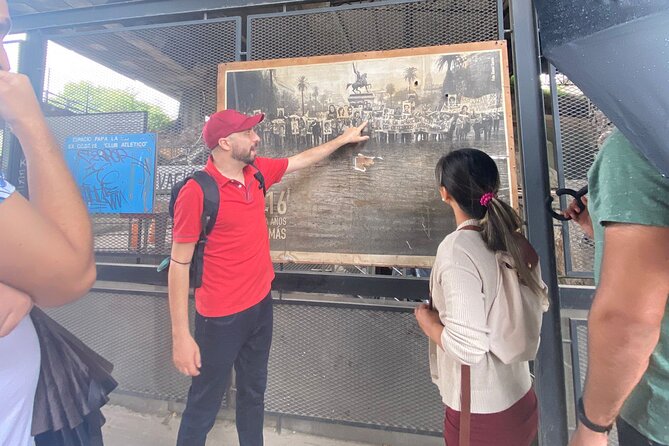
The most serious part of the route is Memory Walk, the former clandestine center for detention, torture, and extermination used from 1976 to 1979.
This is not a casual stop, and it should not be treated as one. The experience connects the physical place with Argentina’s recent political trauma. Guides explain the site within the broader story of state violence and the country’s continuing effort to remember what happened.
Several descriptions of the tour emphasize that some subjects are distressing. That is not a flaw, but it is important to know before booking. You are choosing a history walk that includes painful material, not simply a pleasant stroll through attractive neighborhoods.
The planned time here is about 20 minutes. That gives the guide room to explain the significance without turning the entire afternoon into a single subject. It also allows you to take in the place at your own pace.
I see this stop as one of the tour’s strongest features. It asks you to understand Buenos Aires as a living city with unresolved questions, not just as a collection of beautiful streets. If you want only light sightseeing, you may find this portion heavy. If you want a more honest picture of Argentina, it is essential.
Same city, a completely different kind of day:
- Buenos Aires: Hop-On Hop-Off City Bus Tour
★ 4.2 · 1,855 reviews - Buenos Aires Hop-On Hop-Off Bus and Exclusive Benefits
★ 4.4 · 1,714 reviews - Buenos Aires: La Boca Guided Walking Tour in English
★ 4.8 · 1,587 reviews - Buenos Aires: La Recoleta Cemetery Guided Tour in English
★ 4.8 · 1,359 reviews
San Pedro González Telmo and the heart of San Telmo
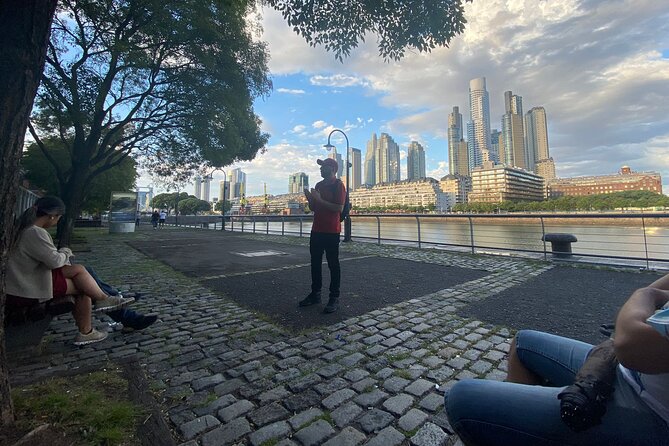
The walk continues to Parroquia de San Pedro Gonzalez Telmo, a colonial Catholic church. The planned visit is about 15 minutes.
The church helps explain San Telmo’s older character. It gives the guide a place to discuss colonial Buenos Aires, religious institutions, and the architectural remains that sit beside later additions to the city.
Do not expect a long church visit with an elaborate formal tour. This is one piece of the larger route, and its value comes from seeing it alongside the park, market, square, immigrant institutions, and political landmarks.
San Telmo is a good neighborhood for this kind of walk because its streets hold several periods of Buenos Aires at once. You can move from colonial foundations to nineteenth-century urban growth, then to markets, cafés, and present-day street life within a short distance.
The guide’s role is important here. Without context, an old church can be just another façade. With explanation, it becomes part of the story of how the district formed and why it still feels distinct from the newer parts of central Buenos Aires.
Plaza Dorrego and the old town’s public square
Plaza Dorrego is San Telmo’s main square, with about 15 minutes planned for the stop.
This is a natural place to pause and consider the social life of the neighborhood. Public squares in Buenos Aires are not merely open spaces between buildings. They are places where commerce, performance, politics, and ordinary daily routines meet.
The guide may connect the square to San Telmo’s older identity and to the way the district has changed over time. This is also one of the more photogenic portions of the route, though the emphasis remains historical rather than purely visual.
The pace can vary here. A small group makes it easier to stop for questions, but the tour still has several major locations ahead. If you want time to browse, shop, or sit with a coffee, save that for after the tour or ask the guide where a later break fits best.
One useful feature of the experience is its conversational style. Several guide descriptions point to room for questions and suggestions about the rest of your time in Buenos Aires. Use that opportunity. Ask about places to eat, neighborhoods to visit, or subjects that deserve more attention.
Mercado San Telmo and the city’s immigrant story
Mercado San Telmo receives about 30 minutes, making it one of the longer stops.
The market was built by Italian immigrants, and that detail gives the visit a clear historical purpose. You are not simply passing through a food hall. You are seeing how migration shaped the city’s buildings, businesses, tastes, and local identity.
This is also where the tour’s discussion of food fits naturally. Guides have included local culinary references while explaining broader social and political themes. You may leave with a better sense of why eating in Buenos Aires is tied to more than a menu. Food reflects migration, class, family traditions, and the city’s changing neighborhoods.
The market can also be the most relaxed section of the walk. After the heavier material at Memory Walk and the architectural focus of the church, you get a chance to observe daily activity in a working public space.
Admission is free, but food and purchases are not included. If you want a snack, carry some Argentine pesos or use the payment method accepted by the particular vendor. The tour information confirms that guides have included a snack and bathroom break, and one person noted two such pauses during the walk. Timing may vary, so do not count on a long meal.
Puente de la Mujer and a modern Buenos Aires
The route then reaches Puente de la Mujer, the Woman’s Bridge, designed by Spanish architect and structural engineer Santiago Calatrava. The stop is planned for about 15 minutes.
This is a sharp change from San Telmo’s older streets and market buildings. The bridge represents a more recent, polished face of Buenos Aires, with modern design and the redeveloped waterfront setting of Puerto Madero.
The contrast is valuable. You can see how quickly the city shifts from colonial church and immigrant market to contemporary architecture. A good guide uses that contrast to discuss urban change rather than treating the bridge as an isolated photo stop.
You will have time to take in the design and hear about Calatrava’s work. The bridge is free to view, but the tour does not promise an interior attraction or a special access visit. Its appeal is the structure itself and its place in the city.
Because the route covers San Telmo, the waterfront, and the city center, ask at the beginning how the group will move between sections. The experience is presented as a walking tour, and the total time is limited, so the pace and transitions matter, especially if you have mobility concerns.
Casa Rosada and the final political frame
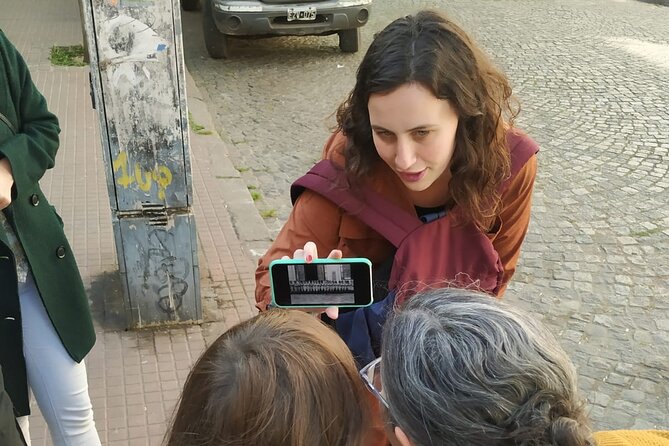
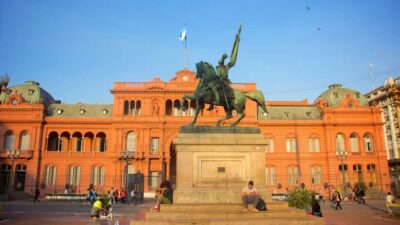
The tour ends at Casa Rosada, the president’s office, at Balcarce 78. About 25 minutes are planned here.
This is the grand finale in both location and subject. Casa Rosada is one of Buenos Aires’ defining landmarks, but the tour uses it as more than a pink building for photographs. It gives the guide a place to pull together the political story introduced throughout the walk.
You will have heard about the city’s foundations, immigration, religious institutions, military rule, memory, public spaces, and social change. Casa Rosada provides a clear point of connection between those subjects and Argentina’s national government.
Admission to Casa Rosada is not included. The experience ends at the president’s office, so do not assume that the tour includes entry inside the building. The listed stop is best understood as an exterior visit and final explanation unless the guide tells you otherwise.
Ending here is practical. You finish near one of the city’s major central landmarks, with a better sense of how the older southern districts connect to the political center.
What the $33 price buys you
At $33 per person, this is priced as an affordable small-group experience rather than a private tour. The value comes from the guide’s time and subject knowledge, not from paid admissions. Every listed stop is free, and Casa Rosada admission is specifically excluded.
I think the price is fair if you want more than directions and dates. A guide who can explain Argentina’s social and political background, answer follow-up questions, and adapt the conversation adds real value to the next several days of your visit.
The group limit of eight is especially important. On a large group walk, complex subjects can be hard to hear and questions may be rushed. Here, you have a better chance of speaking directly with the guide and making the tour fit your interests.
The tradeoff is that you are paying for interpretation, not a packed schedule of paid attractions. If you measure value by the number of interiors entered, you may prefer another tour. If you measure it by how much the city makes sense afterward, this is a strong buy.
Who should book this experience?
I would choose this tour near the beginning of a Buenos Aires visit. It gives you a working framework for the city, so later visits to museums, neighborhoods, political landmarks, and markets have more meaning.
It is particularly suited to you if you:
- Like history, politics, architecture, and social questions
- Prefer small groups to large sightseeing lines
- Want San Telmo explained rather than simply photographed
- Are comfortable discussing difficult periods in Argentina’s past
- Enjoy asking questions and following a guide’s explanations
- Want suggestions for using the rest of your time in Buenos Aires
It may not suit you if you want a gentle, highly polished photo tour with little walking or difficult subject matter. The walk covers several areas, and one account found the structure somewhat loose. A good walking pace will help you enjoy it.
The tour is near public transportation, service animals are allowed, and most people can participate. Still, the experience involves several hours on foot, so anyone who needs frequent rest should ask about the pace before booking.
Cancellation is free up to 24 hours before the start time for a full refund. Changes or cancellations made within 24 hours are not accepted for a refund. The experience requires good weather, and poor weather may lead to a new date or full refund.
Should you book Buenos Aires for Curious People?
Book it if you want the city explained by someone who can connect a church, market, bridge, park, and government building into one story. The best part is not any single landmark. It is the way the route links everyday Buenos Aires with the country’s difficult political past.
The strongest choice is to take it early in your stay, arrive ready to walk, and bring questions. You should also be prepared for serious material at Memory Walk and for a discussion that may feel more academic than a standard sightseeing loop.
For curious visitors who value context, local perspective, and a small group, $33 is a sensible investment. For anyone seeking only famous façades and quick photographs, choose a lighter tour instead.
FAQ
How long does Buenos Aires for Curious People last?
The experience lasts approximately 2 to 3 hours.
How many people can join the tour?
The maximum group size is 8 people.
Where does the tour start?
It starts at Bar Britanico, Brasil 399, in Buenos Aires.
Where does the tour end?
The tour ends at Casa Rosada, Balcarce 78.
Is admission to Casa Rosada included?
No. Admission to Casa Rosada is not included in the tour price.
Can most people participate?
Yes. Most people can participate, and service animals are allowed. The experience is near public transportation.
What happens if the weather is poor?
The experience requires good weather. If it is canceled because of poor weather, you will be offered another date or a full refund.
Just added around Buenos Aires
- Tango Show at El Querandi with optional Dinner★ 4.2 · 3 reviews
- Wine Tasting in Buenos Aires★ 4.2 · 4 reviews
- Walking Tour: Buenos Aires bookstores★ 4.3 · 12 reviews
- Velez Sarsfield Football Match★ 5.0 · 3 reviews
- Unique Tigre and Delta Private Day Cruise Navegation★ 5.0 · 3 reviews
- Private Underground Tango Immersion★ 5.0 · 31 reviews
- Tour Buenos Aires in one day on Electric Scooters★ 5.0 · 33 reviews
- Sailing with Wine Tasting in Buenos Aires★ 5.0 · 50 reviews
Buenos Aires Tours, compared.