
Reviewed · SAN TELMO & LA BOCA TOURS
Buenos Aires: La Boca Guided Walking Tour in English
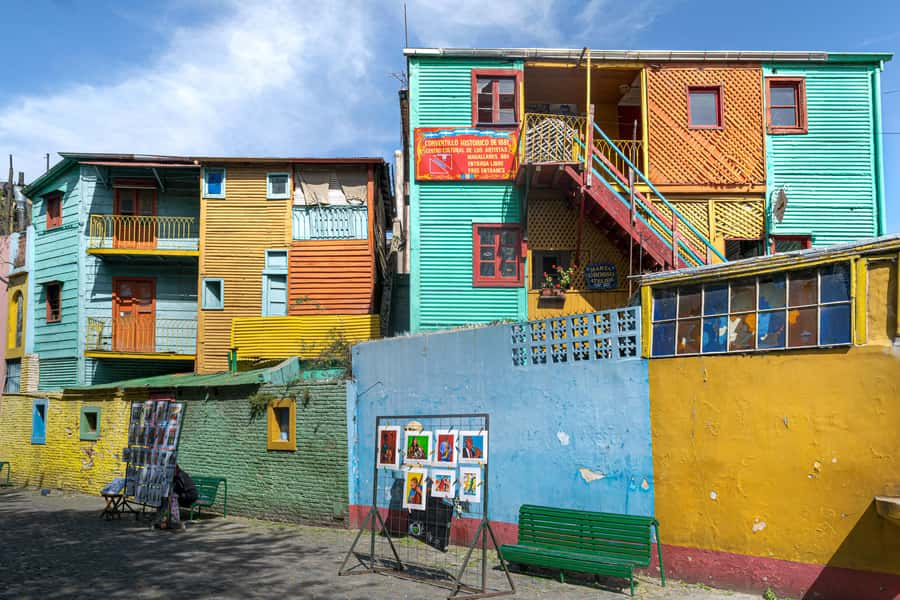
La Boca is more than a row of brightly painted buildings. This two-hour walking tour explains how immigrant life, tango, street art, and Boca Juniors shaped one of Buenos Aires’ most recognizable neighborhoods. You will see the famous conventillos, look for live tango on the streets, and finish outside La Bombonera.
I like the way the tour connects fileteado art with the area’s wider culture instead of treating the colorful walls as simple photo scenery. I also like the strong guiding, especially from guides such as Santiago, Vito, Victoria, Maria, and Juan, who bring humor, local stories, and plenty of historical context.
The main consideration is that La Boca is a busy tourist area, and the walk takes place outdoors in all weather. Traffic can be heavy, the meeting point has only a short waiting window, and the stadium admission is not included.
Key points to know before you book

- The tour begins at Caminito and Magallanes Street, with an orange T-shirt or umbrella marking the guide.
- Street tango is part of the setting, so you may see dancers performing during the walk.
- The Puente Transbordador adds industrial history to a neighborhood best known for color and football.
- Fileteado art receives proper attention, giving the painted facades more meaning than a quick photo stop.
- The walk ends by La Bombonera, but the stadium and Boca Juniors Museum require a separate ticket.
- Guides are the heart of the experience, with repeated praise for clear English, humor, safety, and useful recommendations.
Why La Boca works best with a guide

La Boca is easy to recognize and harder to understand. You can walk along Caminito, admire the painted walls, take photos, and watch tango dancers. Without context, though, the neighborhood can feel like a compact display built for visitors.
A guide gives the color a backstory. The conventillos, or shared housing buildings, are not just cheerful facades. They reflect the area’s multicultural past and the lives of people who helped shape Buenos Aires. The tour also connects tango, football, art, and local identity, so the neighborhood begins to feel like a living part of the city rather than a single tourist street.
That extra explanation is the main reason I would choose the tour over a solo visit. Several guides are praised for pointing out small details you might otherwise pass without noticing. Santiago, in particular, is repeatedly singled out for his theatrical delivery, humor, strong English, and ability to pack a large amount of information into two hours.
The format is also manageable. Two hours is long enough to build a clear picture of La Boca without turning the visit into an all-day commitment. One visitor specifically noted that there was not a huge amount of walking, which may suit you if you want the neighborhood explained without a strenuous route.
More Walking Tours in Buenos Aires
- Buenos Aires Hop-On Hop-Off Bus, Free Walking Tours & Discounts
★ 4.5 · 2,218 reviews - Nazis in Buenos Aires: a historical walking tour
★ 4.9 · 193 reviews - Buenos Aires: Personalized 2 to 8-Hour Private Walking Tour
★ 4.7 · 149 reviews
Starting at Magallanes 808 and Caminito
The meeting point is on the corner of Caminito and Magallanes Street, at the entrance of the Cachafaz shop. Look for the orange T-shirt or orange umbrella. The address is Magallanes 808, C1166ACA CABA.
This detail matters because La Boca’s colorful tourist core can be crowded and visually distracting. You do not want to spend the first part of your visit searching for a guide among painted walls, shops, dancers, and signs. Arrive early enough to find the corner without rushing.
Traffic can be heavy, and the guide waits for 10 minutes at the meeting point. After that, the group moves to the first stop, only one block away near the riverside. If you are arriving by taxi or another vehicle, allow extra time. The short waiting window is practical for keeping a walking group together, but it leaves little room for a delayed arrival.
The activity is wheelchair accessible. Since it takes place outside, sensible clothing and footwear still matter. The tour operates in the rain, and comments about cold wind and strong heat show why a light weather layer, sun protection, or an umbrella can make the walk more comfortable.
Colorful conventillos with a human story

The conventillos are among La Boca’s most familiar sights. Their vivid colors make for easy photographs, but the guide’s job is to explain what those buildings meant and how the neighborhood developed.
You will learn about the multicultural character of La Boca and the people who lived in these shared homes. This is where the walk moves beyond postcard viewing. Instead of simply hearing that the district is colorful, you get a clearer sense of why its buildings, traditions, and public art became so closely linked with local identity.
The strongest part of the guiding is the detail. Maria is praised for drawing attention to things that would be easy to miss, while other guides are described as thoughtful storytellers who explain both the area’s past and present. That balance matters. La Boca is not presented only as an old neighborhood frozen in time. You also hear about how it has changed into a heavily visited, bohemian part of Buenos Aires.
Expect frequent stops for explanation rather than a fast march from one photo point to another. Guides have also been praised for managing groups well, keeping people together, and seeking shade during hot periods. That can make a real difference in summer.
Tango on the streets, not only in a theater

Tango is one of the key themes of the walk. As you move through the neighborhood, you will likely encounter tango dancers performing on the streets. The experience is not framed as a formal theater show, so the timing and exact performance are not guaranteed. Think of it as part of La Boca’s public atmosphere.
The guide explains the origins of tango and its place in Argentine culture. That context helps you see the dance as more than a colorful performance for cameras. The tour links tango with the district’s immigrant roots and artistic character, giving the music and movement a stronger sense of place.
This is a good feature if you want a first introduction to tango but do not want to commit to an evening dinner show. It is also a limitation if you are looking for a long, polished performance with reserved seating. The street encounter is brief and dependent on what is happening during your visit.
The guides add much of the value here. Several are praised for making historical material lively, and Santiago’s background in theater is said to come through in his engaging delivery. Vito is also noted for being energetic and entertaining, while Victoria is praised as a strong storyteller. The result should feel more like a conversation with a passionate local than a list of dates.
More San Telmo and La Boca walks:
- Palermo: Graffiti and Street Art Guided Tour in English
★ 4.8 · 684 reviews - Buenos Aires: Puerto Madero Sunset Cruise with Open Bar
★ 4.1 · 439 reviews - Buenos Aires: Puerto Madero to Tigre Round Trip Cruise
★ 4.4 · 190 reviews - Buenos Aires: Empanada & Alfajor Cooking Lesson in Palermo
★ 4.6 · 186 reviews
Fileteado art and the details on the walls
Fileteado is another reason to take the guided route. You will see examples of this decorative art around La Boca and learn about its origins. The painted lettering and ornamental designs are part of the neighborhood’s visual language, but they can be easy to overlook when so many facades compete for attention.
A guide helps you slow down and read the surroundings. The best stops are not always the most famous ones. Small details in lettering, decoration, and painted scenes can explain how local art developed and why it remains tied to Buenos Aires’ public spaces.
I like this portion because it gives the walk a broader cultural range. La Boca is not only tango and football. Fileteado shows how art appears in everyday streets, shop fronts, signs, and building surfaces. It also gives you something to look for after the tour ends.
Do not expect a studio workshop or an art museum visit. The value comes from seeing examples in place and hearing the story behind them. If you enjoy design, lettering, or urban art, this may be one of the more satisfying parts of the route.
The Puente Transbordador and La Boca’s working side

The Puente Transbordador brings a different mood to the tour. After the painted streets and tango, this stop introduces an industrial landmark and a reminder that La Boca has long been connected to the river and working life.
The bridge gives the route some visual variety. It is not simply another colorful facade or football reference. Your guide uses it to add a wider sense of place, showing that La Boca’s identity includes industry and transport as well as art and entertainment.
The supplied route gives the bridge its own guided stop, but it does not promise a visit inside or a special crossing. Treat it as a viewpoint and history stop within the walking route. The riverside setting may also be more exposed to wind, so conditions can feel different from the sheltered streets.
This is one reason the route works as a short introduction. In two hours, you move among domestic history, street art, tango, industrial heritage, and football. The subjects are varied, but the guide ties them back to the same neighborhood.
Ending at La Bombonera and Boca Juniors
The walk finishes outside La Bombonera at Brandsen 801 to 831. This is the home of Boca Juniors, one of Argentina’s best-known football clubs and a central part of La Boca’s identity.
The final section explains the club’s history and its importance to the neighborhood. You do not need to be a dedicated football fan to get something from this stop. Boca Juniors is treated as part of local culture, not as a separate sports attraction. The club helps explain why the district has such a powerful identity far beyond its painted streets.
The tour does not include entry to the stadium or the Boca Juniors Museum. You can add those separately after the walking tour, subject to admission arrangements. This makes it easy to choose your own ending: finish after the outdoor explanation, or continue into the stadium if football is a major reason for your visit.
Plan extra time if you want the museum or stadium experience. The walking tour itself ends outside, so do not assume the two-hour duration includes an interior visit. If you are building a larger La Boca day, this is a useful place to finish because the final stop naturally points you toward another attraction.
The $13 price and what you receive

At $13 per person, this is a low-cost way to add structure and context to a La Boca visit. The fee covers the two-hour guided walk in English. Food, drinks, and the Boca Juniors Stadium admission are extra.
The value comes from the guide rather than from an included ticket or private access. You are paying for interpretation, route planning, and the chance to understand details that can be easy to miss alone. At this price, that is a sensible trade if you prefer to keep your sightseeing budget available for museums, food, or the stadium.
The experience appears especially strong when the guide is a good match for your interests. Santiago receives repeated praise for humor, passion, recommendations, and clear English. Vito is often described as lively and engaging, while Victoria, Maria, Juan, Maru, and Marianne are also praised for their storytelling and local insight.
No tour can promise a particular guide unless the booking specifically confirms one. Still, the range of positive comments about several guides suggests that the strength is not tied to one person alone. The common thread is clear explanation, enthusiasm, and care with the group.
Who should book this La Boca walk?

I would recommend it if you are visiting La Boca for the first time and want more than photographs. It suits you especially well if you enjoy local history, street art, tango, football, and short walking tours with frequent explanations.
It is also a good fit if you prefer a guide who can answer questions about Argentina beyond the immediate sights. Several guides are praised for discussing daily life in Argentina, sharing dining and sightseeing suggestions, and offering ideas for what to do after the walk.
Families and mixed-age groups may appreciate the moderate pace and limited amount of walking. The tour is wheelchair accessible, though the outdoor setting and weather should still be considered. If you are visiting in hot weather, shade can be limited in exposed areas, but guides have been praised for being attentive to this.
You may want a different activity if your main goal is a long tango show, a full stadium visit, or a quiet historical walk away from tourist activity. This route combines several subjects in a short time, and La Boca itself can feel busy and commercial around Caminito.
Practical details before you go
Book with the weather in mind, not because rain cancels the activity, but because the whole experience takes place outdoors. Comfortable shoes, sun protection, and a light rain layer are sensible choices.
Arrive before the scheduled start at Magallanes 808. Look for the orange shirt or umbrella, and remember that the guide waits 10 minutes before moving to the first stop. Heavy traffic can slow your arrival.
The tour is offered in English with a live guide. Availability depends on the starting time you choose. You can cancel up to 24 hours in advance for a full refund, and the reserve-now, pay-later option lets you hold a place without paying immediately.
If you want to enter La Bombonera or the Boca Juniors Museum, keep that separate from your tour plans and budget. The walking route ends outside the stadium, giving you the choice to continue or move on.
Should you book it?
Book this La Boca walking tour if you want the neighborhood explained rather than simply photographed. For $13, you get a focused two-hour introduction to conventillos, fileteado, tango, the Puente Transbordador, and Boca Juniors, with the added benefit of an English-speaking guide.
The best reason to choose it is the guiding. Santiago, Vito, Victoria, Maria, Juan, Maru, and Marianne are all associated with clear stories, humor, care, and useful local advice. Just keep your expectations clear: street tango may appear rather than follow a fixed show schedule, stadium admission costs extra, and the walk continues in rain.
If that sounds like the kind of first look you want, this is an easy La Boca activity to justify. Stay a little longer afterward for the stadium or more neighborhood exploring, and you will get more from the time spent getting there.
FAQ
How long is the La Boca walking tour?
The tour lasts two hours.
Where does the tour begin?
It begins on the corner of Caminito and Magallanes Street at Magallanes 808, C1166ACA CABA, near the entrance of the Cachafaz shop.
How will I identify the guide?
Look for an orange T-shirt or orange umbrella at the meeting point.
Is the tour offered in English?
Yes. The activity includes a live English-speaking guide.
Is entry to La Bombonera included?
No. The walking tour finishes outside La Bombonera, and stadium or Boca Juniors Museum admission requires a separate ticket.
Will the tour run if it rains?
Yes. The tour still takes place in rainy weather.
Is the tour wheelchair accessible?
Yes, the activity is listed as wheelchair accessible.
Just added around Buenos Aires
- Tango Show at El Querandi with optional Dinner★ 4.2 · 3 reviews
- Wine Tasting in Buenos Aires★ 4.2 · 4 reviews
- Walking Tour: Buenos Aires bookstores★ 4.3 · 12 reviews
- Velez Sarsfield Football Match★ 5.0 · 3 reviews
- Unique Tigre and Delta Private Day Cruise Navegation★ 5.0 · 3 reviews
- Private Underground Tango Immersion★ 5.0 · 31 reviews
- Experience The Essence of Buenos Aires in San Telmo★ 5.0 · 51 reviews
- Tour Buenos Aires in one day on Electric Scooters★ 5.0 · 33 reviews
San Telmo & La Boca Tours, compared.




BA: Empanadas and Alfajores Cooking Experience in Palermo
Read our review →

Buenos Aires Bike Tour: North Districts, Recoleta and Palermo
Read our review →Browse the lists this tour appears in