

Reviewed · SAN TELMO & LA BOCA TOURS
Buenos Aires: San Telmo and Market Guided Walking Tour
San Telmo is where Buenos Aires feels most layered. In two hours, you move from colonial churches and 19th-century facades to Mafalda, Argentine comic art, the San Telmo food market, and a Sunday street fair packed with stalls and local life. Juan, Santiago, and Jorge have each led this walk, and their history, architecture, and storytelling are central to the experience.
I like the route for two reasons: it connects big national stories to small street details, and it gives you both a traditional indoor market and an open-air fair. The main caution is crowd size. Narrow streets can feel cramped, especially on Sunday, and one group included more than 30 people.
Key points to know before you go
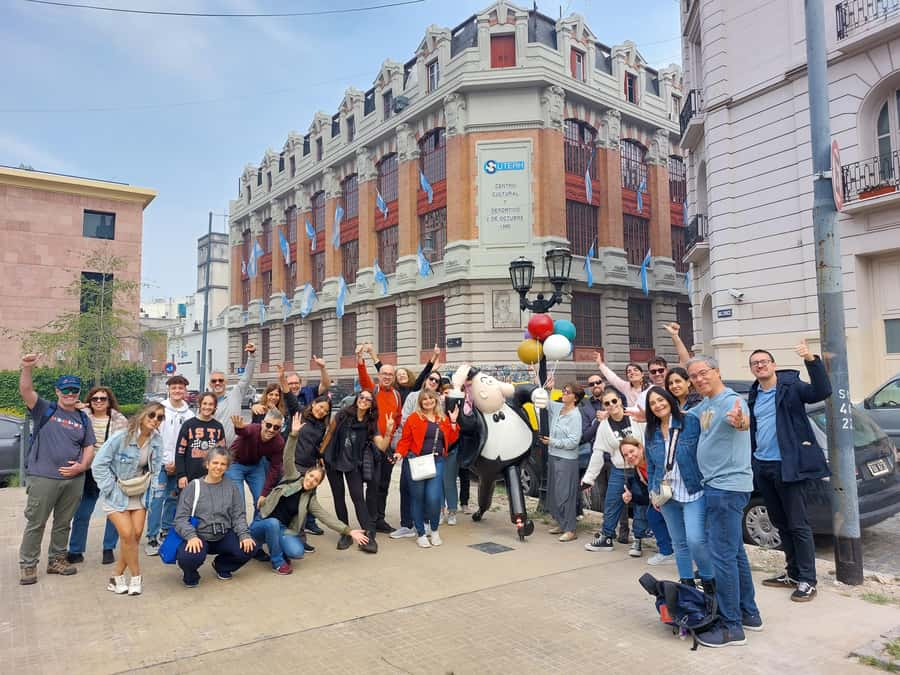
- San Telmo in two hours: A compact introduction to Buenos Aires’ oldest neighborhood, with history, architecture, art, and food.
- Several guides earn strong praise: Juan, Santiago, and Jorge are noted for clear English, humor, warmth, and detailed local knowledge.
- Mafalda meets colonial Buenos Aires: The route pairs beloved comic characters with churches, convent buildings, and old collective houses.
- Sunday changes the experience: The fair brings music, art, stalls, tango, and heavy foot traffic to the neighborhood.
- The $13 price is excellent value: You get a live English-speaking guide for two hours, though food purchases are not listed as included.
- Plan for the weather: The walk operates rain or shine, so sensible shoes and weather protection matter.
Why San Telmo makes such a good walking tour
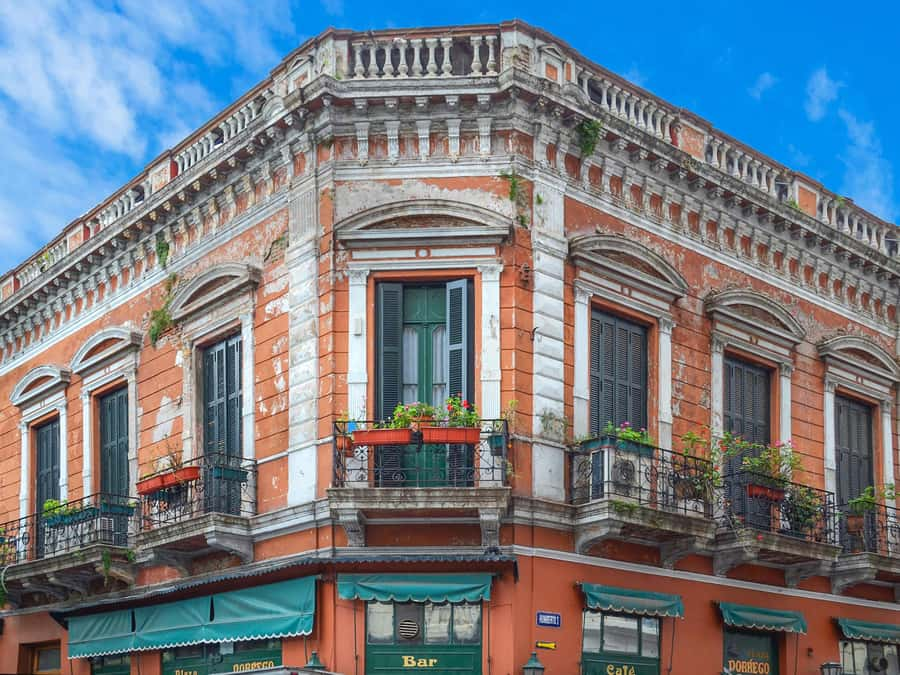
San Telmo is a useful place to begin understanding Buenos Aires because its streets show several versions of the city at once. You see the colonial foundations, the 19th-century buildings shaped by immigration, and the modern Argentine identity represented by comic-strip characters such as Mafalda and Clemente.
That mix gives the walk more purpose than a simple sightseeing loop. You are not just checking off a church, a statue, and a market. You are following the way Buenos Aires changed over time, from an early colonial settlement to a city shaped by newcomers, trade, food, art, and popular culture.
I especially like that the tour does not treat San Telmo as a polished museum district. The cobblestones, old facades, market stalls, and crowded fair are part of the point. You get a neighborhood with some rough edges and plenty of personality.
The tour lasts two hours, which is long enough for a useful introduction without taking over your day. At $13 per person, it is a low-cost way to get orientation early in your Buenos Aires visit. It also works well if you want local context before returning to San Telmo on your own.
More Walking Tours in Buenos Aires
- Buenos Aires Hop-On Hop-Off Bus, Free Walking Tours & Discounts
★ 4.5 · 2,218 reviews - Buenos Aires: La Boca Guided Walking Tour in English
★ 4.8 · 1,587 reviews - Nazis in Buenos Aires: a historical walking tour
★ 4.9 · 193 reviews
Starting at San Ignacio and San Francisco
The walk begins at Parroquia San Ignacio de Loyola, placing you among some of the city’s oldest religious and architectural landmarks. From there, the route continues to Iglesia y Convento de San Francisco, where the guide provides a closer look at the building and its place in Buenos Aires history.
These early stops give the tour a firm historical base. Instead of starting with shopping or food, you first get a sense of how the neighborhood formed and how colonial-era institutions shaped the city. The guide also discusses the foundation of Buenos Aires, helping you connect San Telmo’s streets to the wider story of Argentina.
I would pay close attention here if you enjoy architecture. The appeal is not only the buildings themselves, but also the contrast between the old religious structures and the later homes and commercial spaces around them. The guide’s explanations are important because the route appears to include several short stops whose names are not specified in the published details.
A good guide can make these pauses work by explaining what you are looking at rather than simply naming it. Santiago has been praised for answering questions and making the history accessible. Juan is also noted for explaining architecture and art in a way that keeps the walk entertaining.
Collective houses and the immigrant city
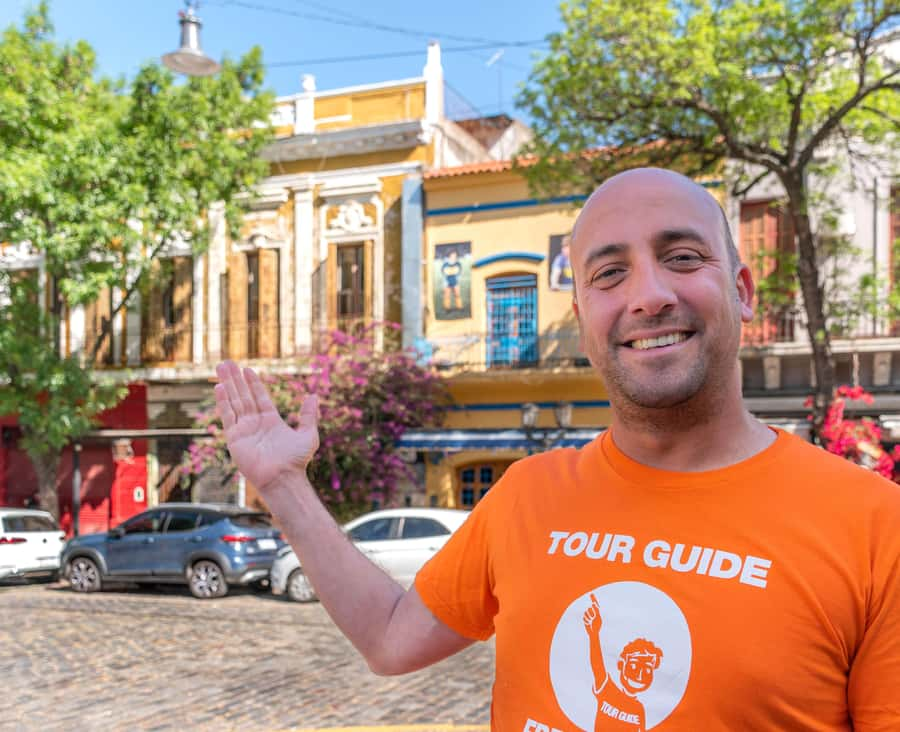
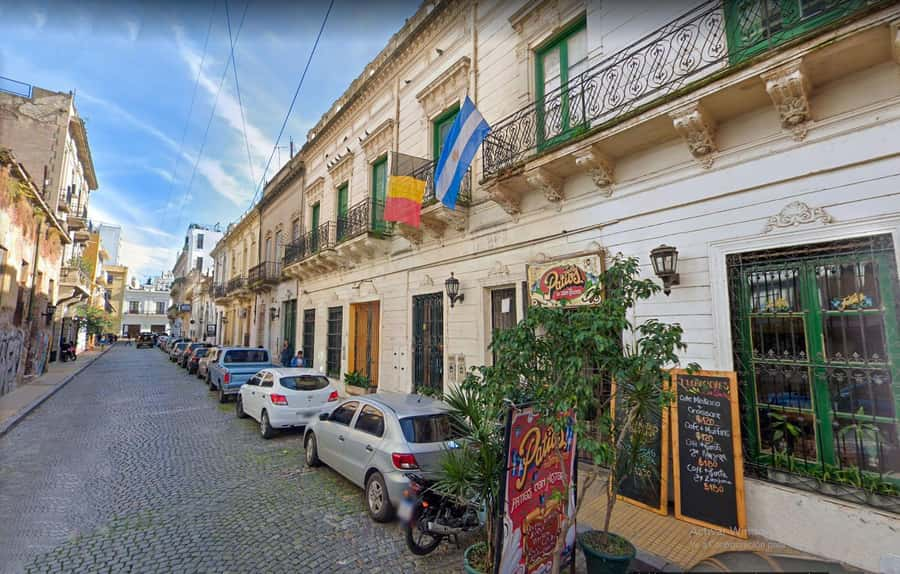
One of the more useful themes is immigration. San Telmo’s 19th-century collective houses, with their picturesque facades and shared living spaces, help explain how Buenos Aires developed as the population grew and new arrivals shaped local life.
You will not simply hear that immigration mattered. The buildings give the idea a physical form. Look at the fronts, the proportions, and the way these homes fit into narrow streets. Their appearance helps you picture a city becoming more crowded and socially mixed during the 19th century.
This is also where a guide adds real value. A quick solo walk can make San Telmo look like a collection of attractive old buildings. A good explanation links those facades to housing, urban growth, and the creation of modern Buenos Aires.
The walk is conducted in English, and the strongest guide feedback focuses on clear explanations rather than theatrical performance. Juan has been described as funny, kind, and able to communicate complex material to different audiences. Jorge is praised for giving detailed explanations even with a large group. That matters when the street is noisy or the group is spread out.
Clemente and the Paseo de la Historieta
The route then shifts from formal history to Argentine popular culture at Clemente and the Paseo de la Historieta. This series of comic-related figures and murals gives the walk a lighter change of pace while showing how national identity also lives in cartoons, humor, and everyday characters.
Clemente is an Argentine comic-strip character, and the Paseo de la Historieta offers a playful way to encounter local culture. You can expect time for the guide to explain why these characters matter, rather than simply stopping for a photograph.
I like this part because it keeps the tour from becoming a string of solemn church visits. You see that Buenos Aires expresses itself through jokes, drawings, public art, and recognizable figures as much as through grand buildings.
It is also a good stop for families and for anyone who wants more than standard architecture. The cartoon sculptures and murals add visual variety, and the route gives you easy reference points for exploring San Telmo later. The exact amount of time at each character is not specified, so the guide’s pacing will shape how much detail you receive.
More San Telmo and La Boca walks:
- Palermo: Graffiti and Street Art Guided Tour in English
★ 4.8 · 684 reviews - Buenos Aires: Puerto Madero Sunset Cruise with Open Bar
★ 4.1 · 439 reviews - Buenos Aires: Puerto Madero to Tigre Round Trip Cruise
★ 4.4 · 190 reviews - Buenos Aires: Empanada & Alfajor Cooking Lesson in Palermo
★ 4.6 · 186 reviews
Meeting Mafalda in San Telmo
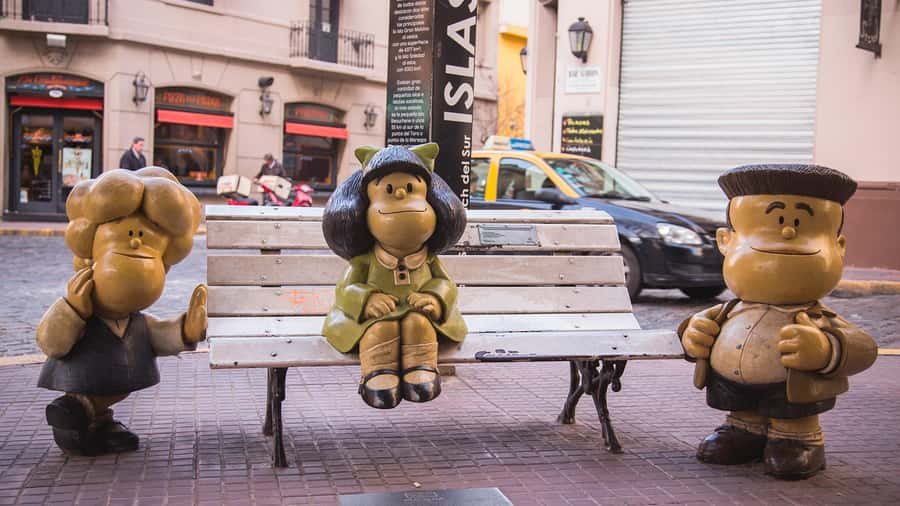
The Mafalda statue is one of the best-known stops. Mafalda, the sharp-witted Argentine comic character created by Quino, is closely tied to Buenos Aires’ public culture. Here, the tour connects a small statue with larger ideas about Argentine humor, social observation, and daily life.
You should expect this stop to be popular and brief. It is a natural place for photographs, and the guide can provide context that a quick picture alone cannot. The statue works especially well within this tour because Mafalda follows the older churches and collective houses, showing how the neighborhood holds both historic and modern symbols.
One strength of the route is this contrast. You go from religious architecture to comic art without leaving San Telmo. That shift explains why the district feels distinctive: its identity is not frozen in one period.
If Mafalda is a personal priority, keep in mind that the walk includes several other stops and a market visit. This is not a dedicated comic-art tour. It is a broader neighborhood walk that uses Mafalda and Clemente to explain Argentine culture.
Inside Mercado San Telmo
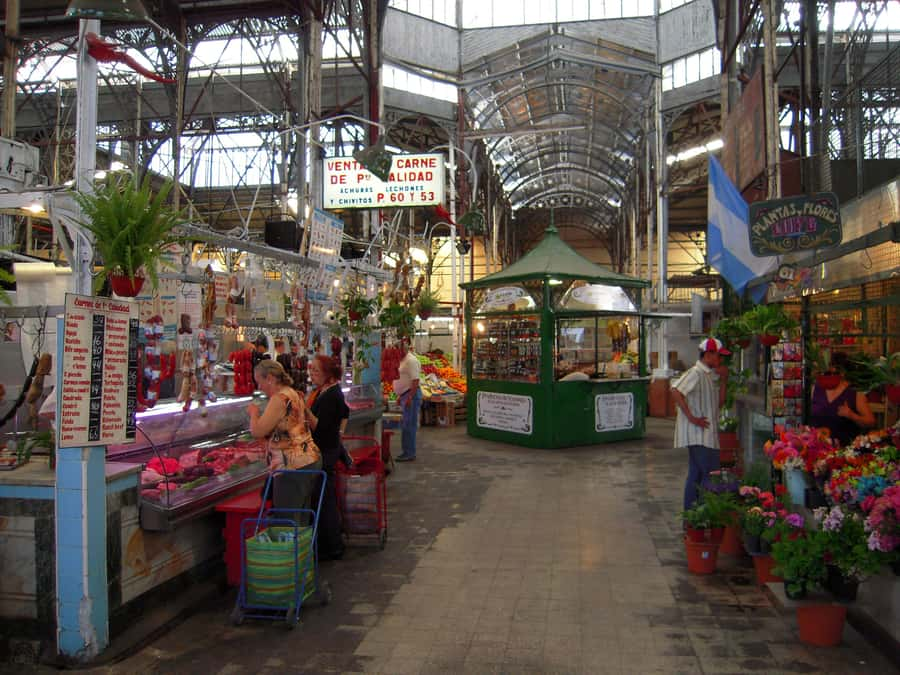
Mercado San Telmo is the food-focused center of the walk. The traditional indoor market gives you a chance to see where food, shopping, and local social life meet under one roof. The guide provides context and points out the market’s role in the neighborhood.
You might find traditional Argentine dishes and snacks available to buy, but the $13 tour price does not state that food is included. Bring some Argentine pesos or a payment method accepted by the stalls if you want to sample something, and allow for the possibility that the market may be crowded.
The market is valuable even if you do not eat. It adds sound, smells, displays, and movement after the quieter architectural stops. It also shows a practical side of San Telmo, rather than presenting the area only as a historic backdrop.
I would not expect a full food tour. The listed duration is two hours, and the route also includes churches, comic figures, the fair, and other stops. Think of the market as a guided introduction with the option to browse or buy something, not a long series of tastings.
The Sunday fair, tango, and narrow streets
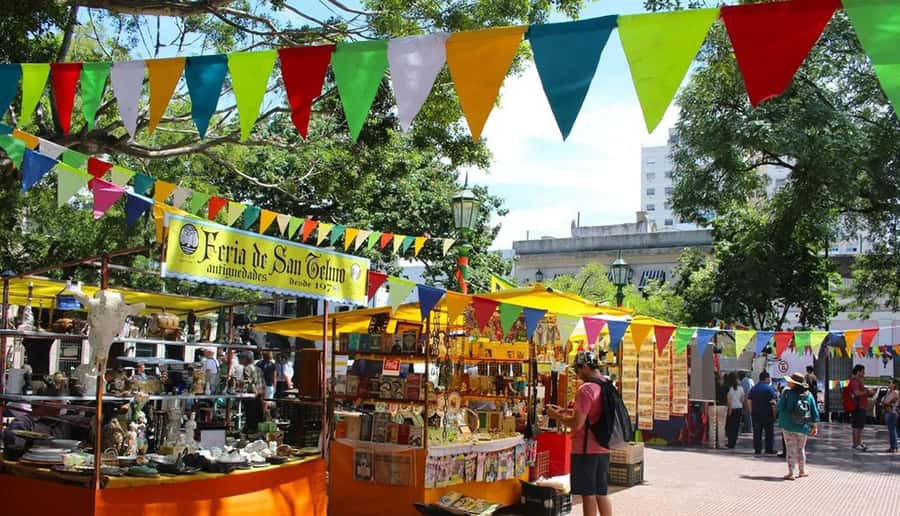
The Sunday street fair is likely to be the most energetic part of the experience. Music, art, stalls, and street activity fill the area, giving you a direct look at San Telmo as a social meeting place.
On Sunday, the fair can also be chaotic. One participant specifically found the group too large for the narrow streets, while another described the fair as crowded but worth seeing with a guide. That is a fair warning, not a reason to skip the tour. The crowds are part of what makes Sunday special, but you need to stay alert and keep the orange shirt or orange umbrella in sight.
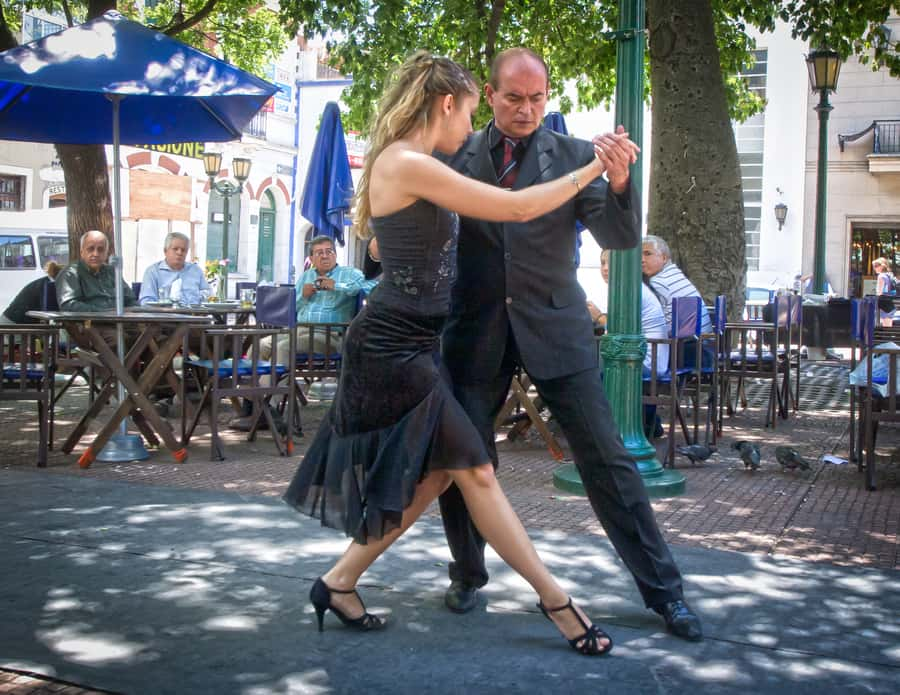
Tango may also be part of the finish in San Telmo. One walk ended near the square with tango dancers, adding a memorable live element to the neighborhood experience. The details do not promise a formal tango performance, so treat this as something you might encounter rather than a guaranteed show.
The fair changes the best day to take the tour. If you want the full street-market atmosphere, choose Sunday. If you prefer more open walking space and quieter photographs, another day may suit you better, though the provided schedule does not specify which days the tour runs.
Guides who shape the experience
The clearest strength is the guide team. Santiago is described as warm, friendly, and very well prepared to answer questions. Juan receives repeated praise for humor, kindness, and his ability to explain history, art, and architecture without losing the group.
Jorge is also praised for the depth of his explanations, including on a walk with more than 30 people. These names do not guarantee which guide you will receive, but they give you a sense of the standard the company aims for.
The orange T-shirt or orange umbrella is the meeting-point marker. That is useful in San Telmo, especially on Sunday when the streets and stalls can make a group hard to spot.
Group size is the main practical weakness. A large English-speaking group can make narrow streets feel crowded, and stopping to hear the guide may take patience. The upside is that the guides have handled large groups by projecting their voices and keeping people together. If you prefer quiet, highly personal guiding, a private tour would be a different experience, but this low price reflects a shared walk.
Is $13 a good value?
Yes, for most people. The $13 fee covers a two-hour guided walk in English through one of Buenos Aires’ most characterful neighborhoods. You get historical explanation, architectural context, public art, a market visit, and the Sunday fair when the timing lines up.
The value is strongest if you are new to Buenos Aires. A guide helps you understand why the buildings, comic characters, market, and fair belong in the same story. Afterward, you can return to the places that caught your attention and explore at your own pace.
The price does not appear to include food, drinks, or purchases at the market. It also does not promise a dedicated tango show or a small group. I would book it for the orientation and local context, not for a meal or a structured performance.
You can cancel up to 24 hours ahead for a full refund, and the reserve-now, pay-later option keeps the booking flexible. The walk operates rain or shine, so check the forecast and dress for the conditions before setting out.
Who should book this San Telmo walk?
I recommend it to first-time visitors, solo visitors, couples, families, and anyone who wants a low-cost introduction to Argentine history and city life. It is particularly useful if you enjoy walking, architecture, food markets, public art, and stories about how a neighborhood changed.
It also suits solo visitors because the shared group gives the route a social shape without requiring a full-day commitment. The short length makes it easy to combine with other Buenos Aires plans.
I would be more cautious if you dislike crowds, have difficulty walking on cobblestones, or want a quiet private experience. The tour takes place outdoors, continues in bad weather, and can pass through tight streets with a sizable group.
Should you book it?
Book this tour if you want San Telmo explained rather than simply photographed. For $13, the combination of churches, old homes, Mafalda, Clemente, the market, and the Sunday fair gives you a lot in two hours.
Choose Sunday for the fullest atmosphere, but accept the crowds. If you want more breathing room, select another available start time. Keep your expectations focused on a guided neighborhood walk, not a food tasting or formal tango event, and this is an easy, useful addition to a Buenos Aires itinerary.
FAQ
How long does the San Telmo walking tour last?
The tour lasts two hours.
What language is the tour conducted in?
The tour is conducted in English with a live English-speaking guide.
How much does the tour cost?
The listed price is $13 per person.
Where does the tour begin?
The meeting point is Parroquia San Ignacio de Loyola.
Where does the tour finish?
The tour finishes in San Telmo.
What landmarks are included?
The route includes Iglesia y Convento de San Francisco, Clemente at the Paseo de la Historieta, the Mafalda statue, and Mercado San Telmo. It also covers historic streets, 19th-century collective houses, and the Sunday street fair.
How do I identify the guide?
The guide uses an orange T-shirt or an orange umbrella.
Does the tour run in bad weather?
Yes. The tour takes place rain or shine.
Just added around Buenos Aires
- Tango Show at El Querandi with optional Dinner★ 4.2 · 3 reviews
- Wine Tasting in Buenos Aires★ 4.2 · 4 reviews
- Walking Tour: Buenos Aires bookstores★ 4.3 · 12 reviews
- Velez Sarsfield Football Match★ 5.0 · 3 reviews
- Unique Tigre and Delta Private Day Cruise Navegation★ 5.0 · 3 reviews
- Private Underground Tango Immersion★ 5.0 · 31 reviews
- Sailing with Wine Tasting in Buenos Aires★ 5.0 · 50 reviews
- Experience The Essence of Buenos Aires in San Telmo★ 5.0 · 51 reviews
San Telmo & La Boca Tours, compared.




BA: Empanadas and Alfajores Cooking Experience in Palermo
Read our review →
Buenos Aires Bike Tour: North Districts, Recoleta and Palermo
Read our review →Browse the lists this tour appears in