

Reviewed · HISTORICAL TOURS
Nazis in Buenos Aires: a historical walking tour
Buenos Aires carries a difficult postwar story: Nazi fugitives arrived here, Adolf Eichmann was identified and captured here, and political violence later struck the city’s Jewish community. This 2.5-hour walk with Max, a history teacher from the University of Buenos Aires, connects those events to streets and buildings you can actually see.
I like the tour’s evidence-based, balanced approach, especially since the subject is often reduced to a simple claim that Argentina welcomed every Nazi criminal. I also like the use of photographs, graphics, and questions at each stop. The main drawback is that this is a serious history seminar on foot, not a light sightseeing stroll, and some visitors may want more time focused only on Nazi fugitives.
- Adolf Eichmann’s Buenos Aires stop: Learn how one of the Holocaust’s key perpetrators was found and captured.
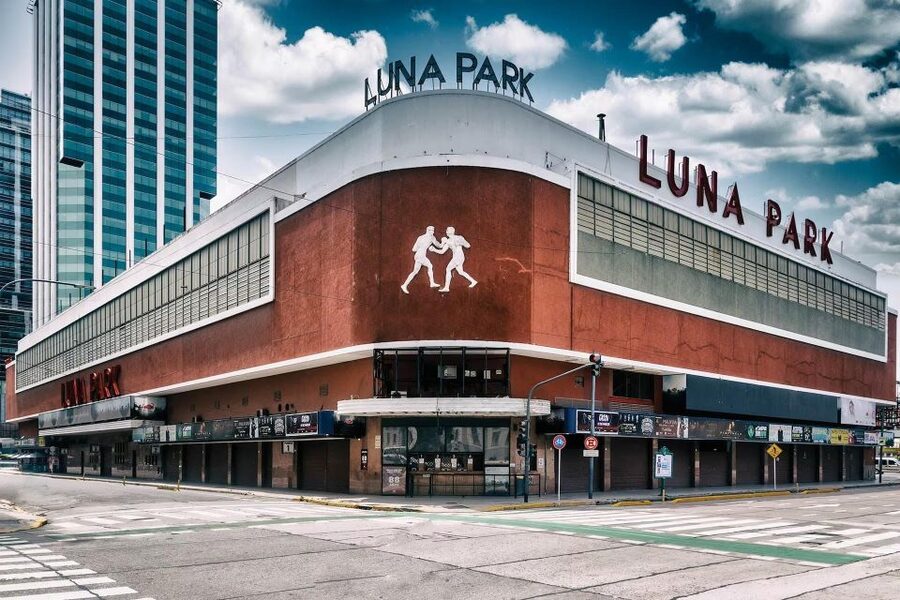
- Luna Park’s wartime gathering: See the still-operating stadium linked to a 15,000-seat Nazi meeting.
- The city’s Jewish story: Understand the history and vulnerability of Buenos Aires’ large Jewish community.
- Perón and postwar Argentina: Examine political debates around Juan Domingo Perón and immigration after 1945.
- A route through central Buenos Aires: Walk from the Monument to Juana Azurduy through Recoleta, Retiro, and Microcentro.
- A serious, well-prepared guide: Max uses images and source-based explanations rather than simply pointing at buildings.
Why this Buenos Aires history walk matters
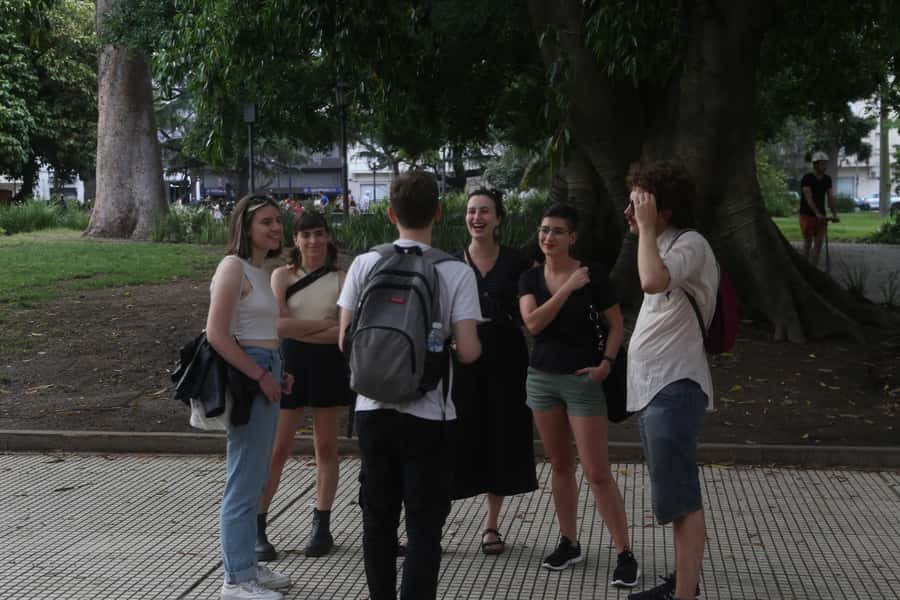
This tour asks a hard question without pretending the answer is tidy: was Argentina a refuge for Nazi war criminals, and if so, did the government know or help?
That question is useful because it forces you to separate several issues. Some Nazi fugitives did reach Argentina after 1945. The reasons for their arrival, the role of officials, the wider political setting, and the difference between state policy and individual networks require more care than a simple slogan allows.
Max builds the subject step by step. You get the background of World War II and the Holocaust, then the postwar movement of Nazi fugitives, then the Argentine political setting. He also brings in the fate of the Jewish community in Buenos Aires, described as the second largest Jewish community in the Americas.
You should arrive with a basic understanding of World War II and the Holocaust. You do not need to be a specialist. Max explains the key points and welcomes questions about Nazism, Judaism, the war, and Argentine politics.
The tone is serious but not stiff. The strongest feature is the guide’s habit of separating established evidence from uncertainty. That matters with a topic surrounded by rumor, political argument, and popular books that sometimes blur fact and speculation.
Starting near the Monument to Juana Azurduy
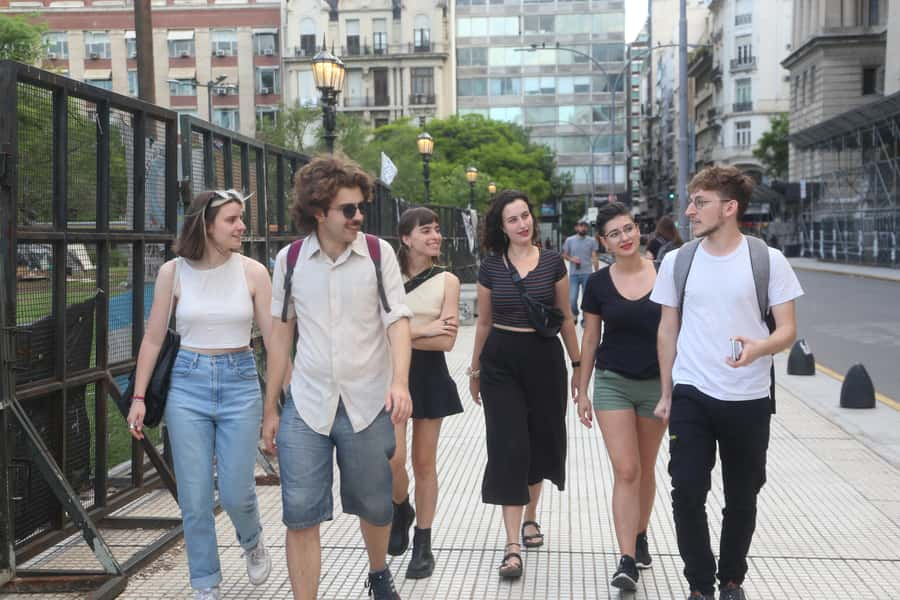
The walk begins a few meters from the Monument to Juana Azurduy, by the benches facing Palacio Libertad, formerly known as the CCK. Max wears a black cap, which helps you find him at a busy central meeting point.
This opening location places you in the middle of Buenos Aires’ civic and political center. The tour does not begin with a long lecture disconnected from the city. Instead, the setting helps establish Argentina’s postwar political climate before the group moves through the streets.
The route passes through Recoleta, Retiro, and Microcentro. You should wear comfortable shoes and bring water. There is a 10-minute pause for a restroom break, but this remains a walking tour with frequent stops rather than a series of indoor visits.
More Historical Tours in Buenos Aires
- San Telmo: Historical Guided Tour with Street Food & Drinks
★ 5.0 · 87 reviews - Buenos Aires: La Boca Art and History Walking Tour
★ 4.8 · 55 reviews - Recoleta Cemetery – Small Group Tour of History & Secrets
★ 5.0 · 53 reviews
Luna Park and the 15,000-seat Nazi meeting
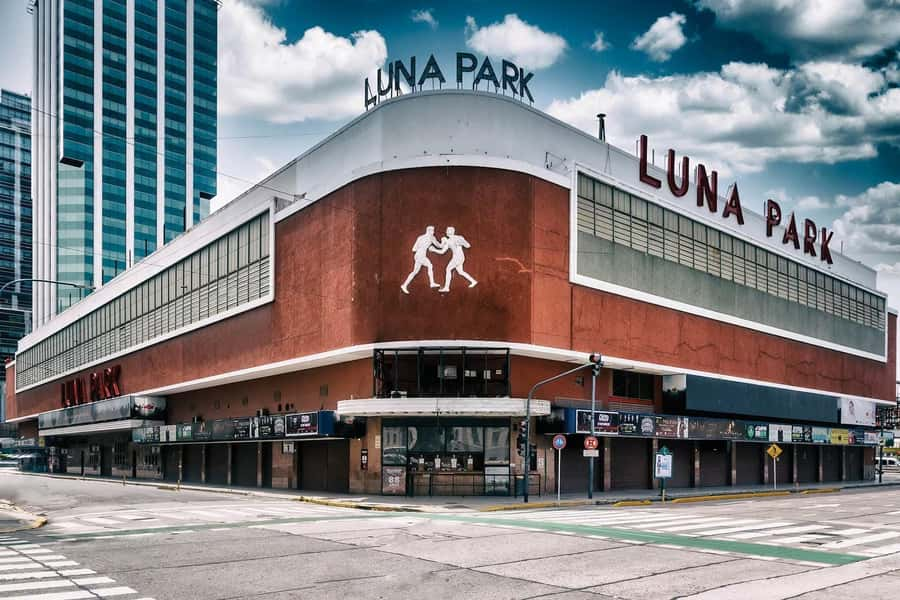
Luna Park is one of the route’s most striking stops. The stadium is still operating, which gives the site an unusual sense of continuity. You are not looking at a vanished building or a museum display. You are standing outside a working Buenos Aires venue connected to a major Nazi meeting.
The tour examines a gathering reported to have drawn 15,000 people. That figure changes the scale of the story. Nazi activity in Argentina was not only about a few secretive fugitives hiding after the war. Public political events and organized supporters also formed part of the country’s prewar and wartime story.
You spend about 20 minutes here. That is enough time for Max to use the location as a backdrop and explain its role without turning the stop into a long architectural visit. Entry to Luna Park is not included, so you should expect to learn about the stadium from outside unless access arrangements change.
For me, this is one of the tour’s best examples of place-based teaching. A familiar city landmark becomes evidence in a much darker chapter.
ABC Restaurant and the Eichmann story
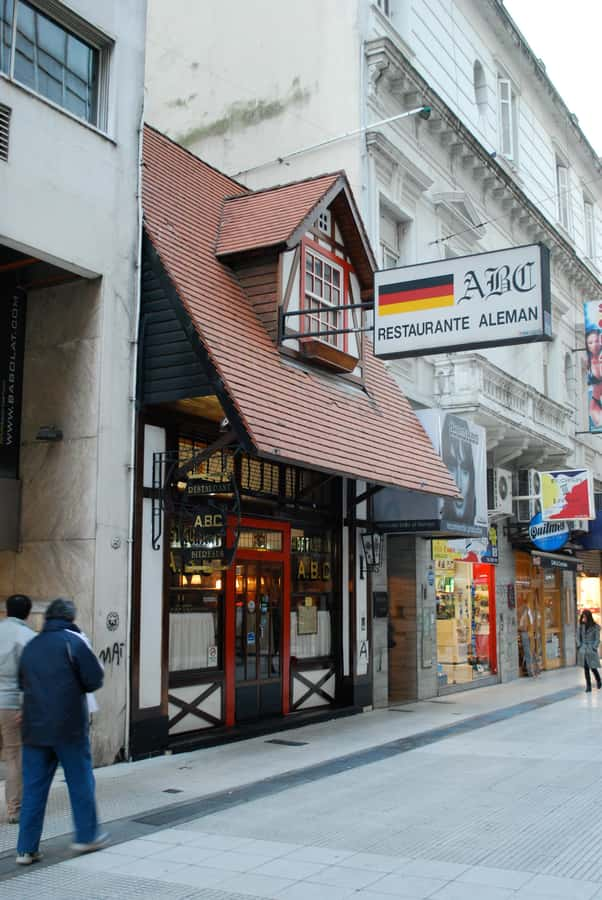
At ABC Restaurant, the tour turns from mass politics to the spy-like story of Adolf Eichmann’s identification and capture.
The key detail is simple and chilling: Eichmann sat for a cup of coffee in Buenos Aires. The significance is not the drink itself, of course, but the ordinary setting. A man central to the organization of the Holocaust could pass through daily city life under a false identity, far from the European sites where his crimes had taken place.
Max explains how Eichmann was identified and eventually captured. This part of the walk works best if you enjoy history told through small physical details. A restaurant, a cup of coffee, and an apparently normal city routine become part of a much larger international operation.
The stop lasts about 20 minutes. Do not expect a museum display or a preserved room designed for visitors. The value comes from Max’s explanation and the tension between the normal-looking setting and the crimes connected to the person who sat there.
The National Arms Museum and the machinery around power
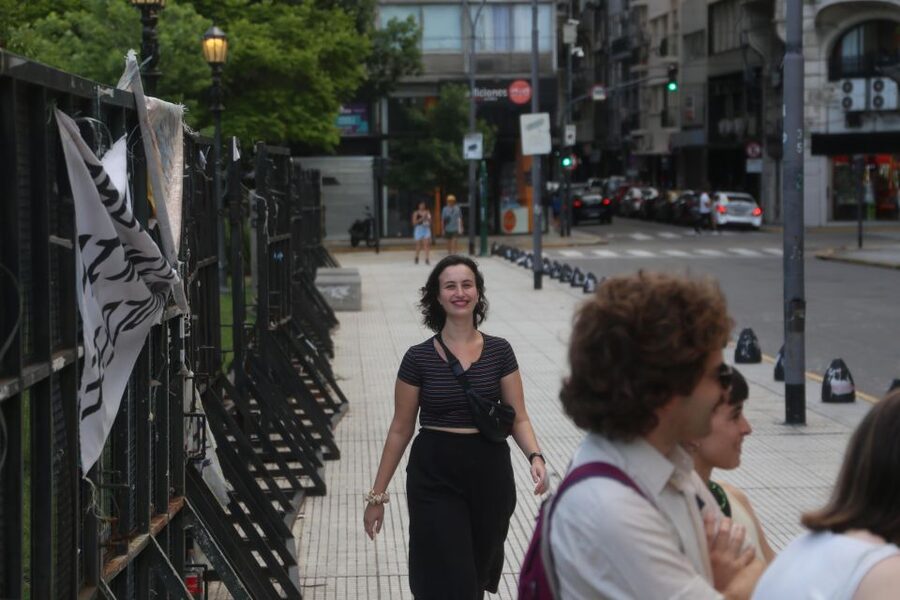
The Museo de Armas de La Nación, also known as the National Arms Museum, gives the route another useful angle. The stop is not simply about weapons. It helps place the story in a country where military institutions, political power, immigration, and national identity were tightly linked.
The supplied tour details do not promise entry to every location, so you should treat this as a stop connected to the museum rather than assume a full museum visit. Max uses photographs and other visual material during the tour, which is helpful when a site cannot be entered.
This section can be especially useful if you want more than a list of Nazi names. It connects individuals and escape routes to the institutions and political conditions around them. The tour asks you to consider who could enter Argentina, who could remain hidden, and how much officials may have known.
The stop lasts roughly 20 minutes. The guide’s strength here is context. You will not simply hear that a fugitive arrived. You will hear about the setting that made such movement possible and the questions historians still debate.
More Walking Tours in Buenos Aires
- Buenos Aires Hop-On Hop-Off Bus, Free Walking Tours & Discounts
★ 4.5 · 2,218 reviews - Buenos Aires: La Boca Guided Walking Tour in English
★ 4.8 · 1,587 reviews - Buenos Aires: Personalized 2 to 8-Hour Private Walking Tour
★ 4.7 · 149 reviews - Buenos Aires: San Telmo and Market Guided Walking Tour
★ 4.8 · 102 reviews
Palacio San Martín and the diplomatic setting
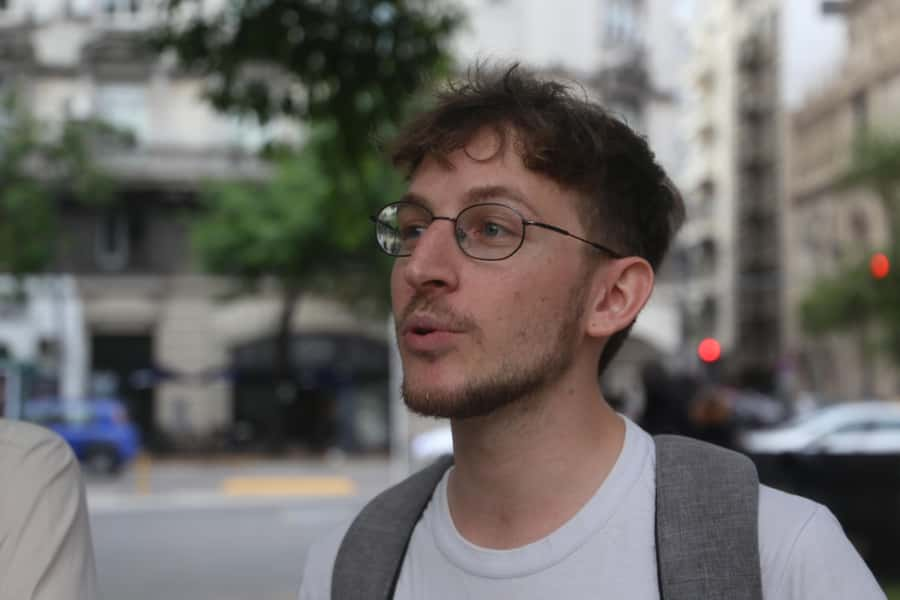
Palacio San Martín adds a diplomatic layer to the walk. Buenos Aires’ relationship with Europe did not end when World War II ended, and the movement of people across borders depended on paperwork, contacts, officials, and changing political priorities.
At this stop, Max discusses the postwar arrival of Nazi war criminals and the debate over whether migration was merely tolerated or actively promoted by parts of the Argentine government. The distinction matters. It keeps the story from becoming a claim that every Argentine institution acted in the same way.
You spend about 20 minutes here. The building provides a formal backdrop for questions about foreign policy and state responsibility. This is also where the tour’s discussion of Juan Domingo Perón becomes important.
Perón was arguably the key political figure in twentieth-century Argentina, and his presidency remains contested. Max does not treat Peronism as a side note. He uses it to explain the political environment in which postwar immigration, national sovereignty, European connections, and public memory were argued.
If your main goal is a narrow account of Nazis on the run, this section may feel broader than expected. If you want to understand why the subject cannot be separated from Argentine politics, it adds real value.
The Italian Circle and Buenos Aires’ European ties
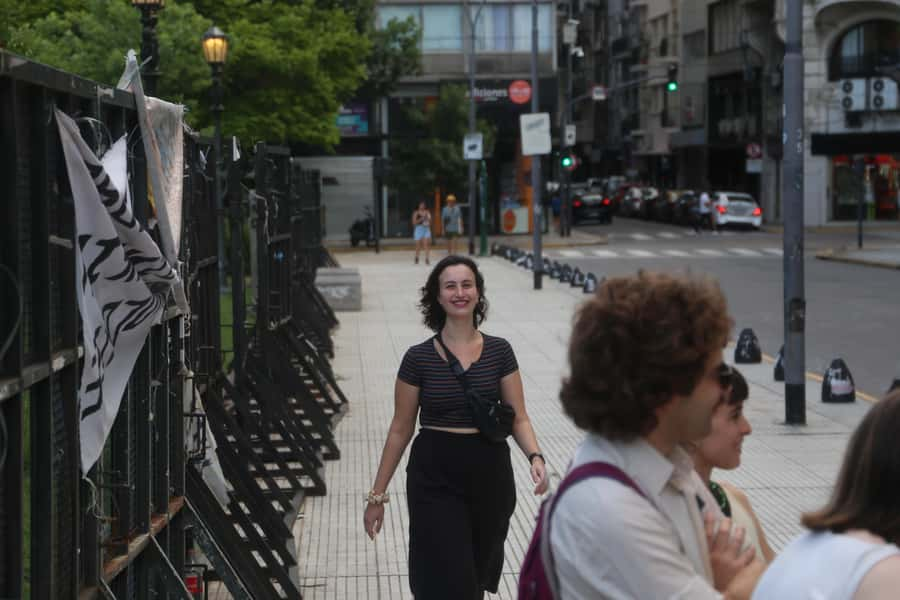
The Italian Circle of Buenos Aires continues the discussion of European communities and political networks in the city. Buenos Aires was shaped by immigration, and that fact can make the postwar story harder to untangle.
The stop helps you think about identity, association, and the difference between cultural communities and political movements. A European connection did not automatically mean support for Nazism, just as a person’s origin did not prove political involvement. That kind of distinction is part of the tour’s careful tone.
This is another 20-minute stop. The route does not treat every building as proof of a secret plot. Instead, Max explains how organizations, social circles, and political ideas moved through the city.
The use of images is helpful here. Several descriptions of the experience point to Max arriving well prepared, with relevant photographs and graphics for each stop. That makes a difference when the street itself offers few visible clues.
The final memorial and Argentina’s Jewish community
The walk ends at Plaza Embajada de Israel, the memorial site of the former Israeli Embassy. The stop brings the earlier discussion of Nazi fugitives into the history of later violence against Jewish targets in Buenos Aires.
The tour identifies this location as the site connected to the worst terrorist attack in Latin American history. It also covers a neo-Nazi attack in the 1960s. These events show that the story is not sealed in 1945. Antisemitism and political violence continued to affect Argentina’s Jewish community long after the fall of Nazi Germany.
This final section can be emotionally demanding. The site is not only a historical backdrop. It asks you to consider how old ideologies, local politics, international conflict, and present-day memory can meet in one city.
The route description says the walk finishes at Plaza Embajada de Israel. The meeting information also says the activity ends back at the meeting point, so confirm the exact finish location when you reserve. That small detail matters if you have a dinner booking or another tour soon afterward.
What Max does particularly well
Max receives the strongest praise for his preparation and teaching style. He explains complex material in fluent English, encourages questions, and is willing to say when a point is not certain. That last habit is important on a subject where confident claims are not always well supported.
You can expect a guide who:
- Uses photographs and graphics to support the story
- Explains both Argentine and European political context
- Answers questions from people with different levels of background
- Keeps the discussion focused rather than turning it into a simple walk-and-point tour
- Connects the past to present-day concerns without abandoning historical evidence
The experience has been described as closer to a university seminar conducted outdoors than a standard sightseeing walk. That is a fair expectation. The route gives the talk physical anchors, but Max is the main reason the tour works.
The balance also helps. The tour does not present Argentina as a one-note villain, nor does it excuse the presence of Nazi fugitives. It examines competing interpretations and the available evidence.
Is $25 a fair price?
At $25 per person, this is good value if you want a focused history lesson with a strong guide. You get about two and a half hours, six major stops, and a subject that would be difficult to piece together from ordinary sightseeing.
The price does not include entry to Casa Rosada, Libertad Synagogue, or Luna Park Stadium. Those exclusions are not a major problem because the advertised experience is primarily an outdoor walking tour. Still, you should not book it expecting several interior museum visits.
The value depends on your interests. If you enjoy modern history, Jewish history, World War II, political memory, or investigative stories, the tour gives you plenty to think about for a modest fee. If you prefer architecture, food, or a broad introduction to Buenos Aires, a standard city walk may suit you better.
I would also allow time afterward to process the final stop. This is not a breezy activity to squeeze between shopping and cocktails. Its subject matter deserves attention.
Who should book this walk?
This tour suits adults and older teenagers with an interest in difficult history. Children under 10 are not permitted, and the material is not designed as a family entertainment activity.
It is a strong choice if you:
- Know the basic outline of World War II and the Holocaust
- Want to understand Argentina beyond its usual tourist themes
- Prefer a guide who welcomes questions and admits uncertainty
- Are interested in the political background of Perón
- Want to learn about Buenos Aires’ Jewish community and later antisemitic violence
- Like walking tours built around evidence, debate, and real locations
It may not suit you if you want a quick list of Nazi fugitives or a tour devoted only to Eichmann. One piece of direct feedback suggests that some people might prefer more time on Nazis who escaped to Argentina and less on the wider political situation.
That is a fair trade-off to understand before booking. The tour is about Nazis in Buenos Aires, but also about the Argentine state, Peronism, Jewish life, memory, and violence. The wider frame is the point.
Practical details before you reserve
The tour is offered in English and lasts 2.5 hours. Check available dates for the starting time.
Wear comfortable shoes and carry water. The walk is not suitable for wheelchair users, and children under 10 cannot join. There is a 10-minute restroom pause.
You can cancel up to 24 hours ahead for a full refund, and the reserve-now, pay-later option keeps your plans flexible. Since the route and meeting information describe the finish differently, confirm whether your group ends at Plaza Embajada de Israel or returns to the starting point.
Should you book it?
Book this tour if you want a serious, carefully argued look at one of Argentina’s most uncomfortable subjects. Max’s preparation, use of visual material, and willingness to separate fact from debate make the $25 cost worthwhile.
Skip it if you want a light city walk or a narrow account of Nazi fugitives without much Argentine political context. For history-minded visitors, though, this is one of the more useful ways to see Buenos Aires as a place where World War II, Jewish life, Peronism, international politics, and present-day memory still meet.
FAQ
Where does the tour begin?
It begins a few meters from the Monument to Juana Azurduy, by the benches facing Palacio Libertad, formerly known as the CCK. Max wears a black cap.
Where does the tour end?
The route information says it ends at Plaza Embajada de Israel, the memorial site of the former Israeli Embassy. The meeting information says the activity ends back at the meeting point, so confirm the final location when booking.
How long does the walking tour last?
The activity lasts 2.5 hours. The listed stops generally allow about 20 minutes at each location, with a 10-minute restroom pause.
Is the tour offered in English?
Yes. The tour has a live English-speaking guide.
Are entrance tickets included?
No. Entry to Casa Rosada, Libertad Synagogue, and Luna Park Stadium is not included. The tour is primarily a guided walking experience.
Is the tour suitable for children or wheelchair users?
The activity is not suitable for children under 10 or for wheelchair users. Comfortable shoes and water are recommended.
Just added around Buenos Aires
- Tango Show at El Querandi with optional Dinner★ 4.2 · 3 reviews
- Wine Tasting in Buenos Aires★ 4.2 · 4 reviews
- Walking Tour: Buenos Aires bookstores★ 4.3 · 12 reviews
- Velez Sarsfield Football Match★ 5.0 · 3 reviews
- Unique Tigre and Delta Private Day Cruise Navegation★ 5.0 · 3 reviews
- Private Underground Tango Immersion★ 5.0 · 31 reviews
- Sailing with Wine Tasting in Buenos Aires★ 5.0 · 50 reviews
- Experience The Essence of Buenos Aires in San Telmo★ 5.0 · 51 reviews
Historical Tours, compared.

Historical Guided Tour with Street Food & Drinks
Read our review →

Recoleta Cemetery – Small Group Tour of History & Secrets
Read our review →


Browse the lists this tour appears in