

Reviewed · HISTORICAL TOURS
Bariloche: German Immigration and History Walking Tour
The most surprising part of this Bariloche walk is how much complicated history fits into just 1 kilometer. You’ll move from the grand Civic Center to the German School and the former home of Erich Priebke, the Nazi war criminal whose presence was exposed by journalist Sam Donaldson in 1994. The tour also explains why Bariloche became linked with German immigration long before the postwar Nazi arrivals.
I like the way the tour connects buildings and people instead of treating history as a list of dates. I also like the clear focus on three separate waves of German immigration, which helps you separate ordinary settlers, later arrivals, and Nazi fugitives. The main drawback is that the route is partly uphill, and a bilingual tour can leave less time for questions in each language.
Key points to know before you book
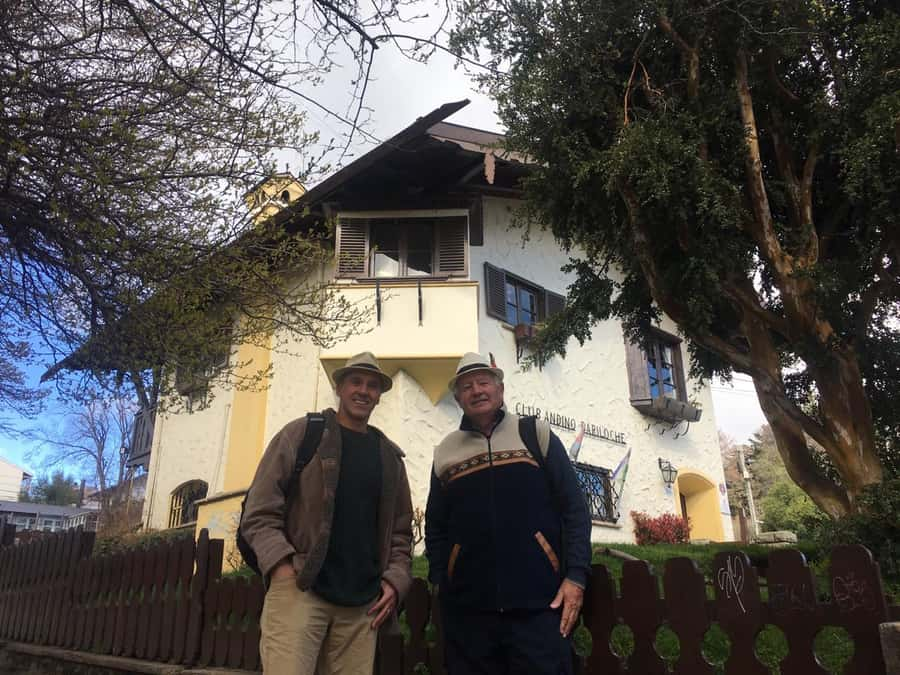
- Three immigration waves: Learn how German-speaking arrivals came to Argentina and Bariloche at different times and for different reasons.
- Erich Priebke’s former home: See the house where Priebke lived before his 1994 extradition.
- The Sam Donaldson connection: Visit the school where the American journalist found Priebke.
- A short urban route: The walk covers about 1 kilometer in 90 minutes, with frequent stops.
- Strong bilingual guiding: Diego is the guide most often named in the feedback, and he leads in Spanish and English.
- Some uphill walking: Wear comfortable shoes and expect a few slopes through the city streets.
A short walk into Bariloche’s complicated past
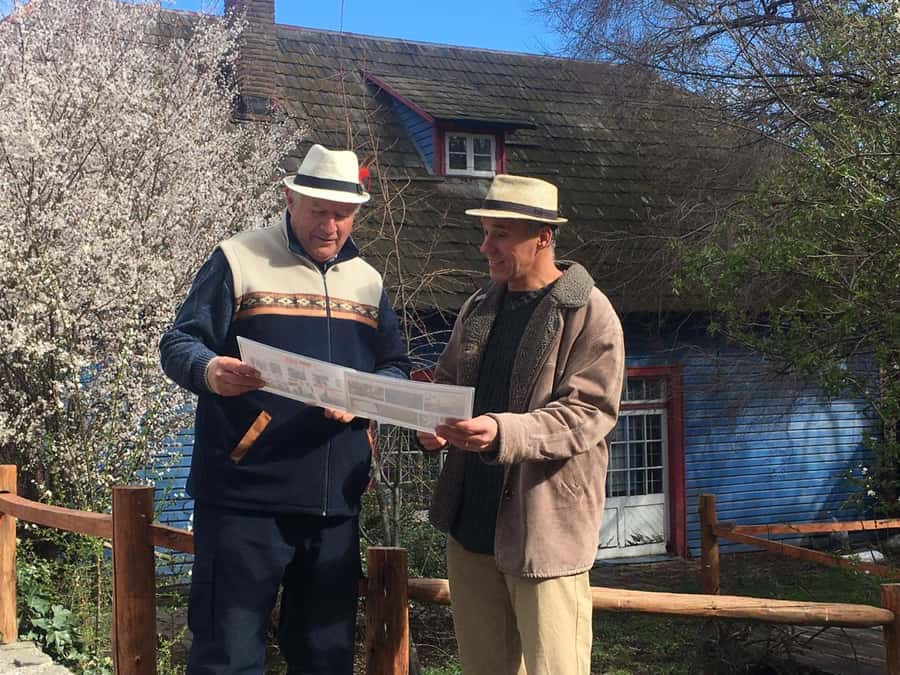
Bariloche is often sold through chocolate shops, lake views, ski trips, and Swiss-style architecture. Those are real parts of the city, but they do not explain how its European identity took shape. This tour gives you a useful counterweight to the postcard version.
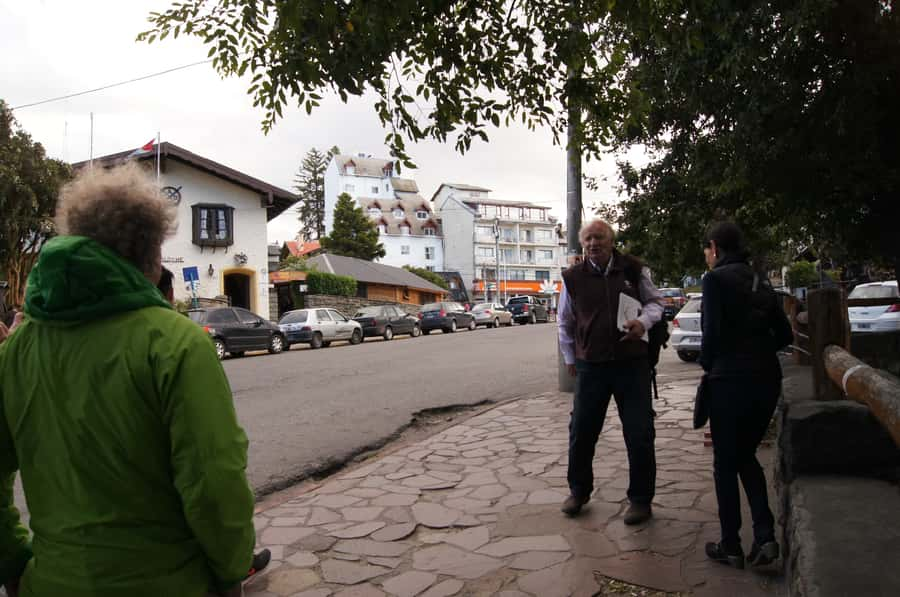
You begin at the Bariloche Civic Center, beside the tourist information office. From there, the route heads toward the area associated with German residents and institutions. The distance is modest, but the subject is not. The guide uses each stop to explain a different part of the story, then keeps the group moving rather than holding everyone in one place for a long lecture.
That rhythm matters. You are not simply standing in a square while someone recites local facts. You see buildings, walk between them, and gradually connect architecture, immigration, politics, and public memory.
The tour is led in Spanish and English. Diego receives the strongest praise, especially for his clear English, friendly manner, storytelling, and ability to answer questions. A few tours have included both languages in the same group, so the pace can vary. If you want a long question period, an English-only departure may be worth confirming before booking.
More history walks in Bariloche:
- Indigenous People of Patagonia History Tour
★ 5.0 · 8 reviews - Nazis in Buenos Aires: a historical walking tour
★ 4.9 · 193 reviews - San Telmo: Historical Guided Tour with Street Food & Drinks
★ 5.0 · 87 reviews
Starting at the Civic Center
The Civic Center is a sensible place to begin because it gives you an immediate look at Bariloche’s official image. The square and surrounding buildings reflect the city’s European styling, and the tour uses this setting to introduce the people and ideas that shaped local identity.
I like this opening because it avoids a common mistake in city tours: beginning with an isolated detail before explaining the larger picture. Here, you get the basic setting first. You learn why Bariloche developed its particular cultural links and how German influence became visible in its institutions and buildings.
The Civic Center is also easy to find. Meet by the door of the tourist information office in the square. Arrive with enough time to locate the guide, since the walk starts from a public meeting point rather than a hotel or private transport pickup.
The three waves of German immigration
The central lesson is the distinction between three waves of German immigration. This is the part that gives the tour its value, since it challenges the lazy idea that everyone associated with German Bariloche arrived for the same reason.
The first wave reaches back to the nineteenth century, when German-speaking immigrants formed part of the broader European movement into Argentina. The tour places these arrivals within the early development of Bariloche and the country’s wider immigration story.
A later wave helped strengthen German cultural institutions and community life. This is where places such as the German School become important. The school is not just an architectural stop. It helps show how language, education, and community identity lasted across generations.
The third wave is the most sensitive and widely known. It concerns Nazi officials and supporters who reached Argentina after the Second World War. The guide explains this period as part of the larger story, but does not treat it as the whole explanation for German influence in Bariloche.
That distinction is vital. You come away with a better sense of proportion: Bariloche’s German connections did not begin with Nazi fugitives, even though the later arrivals gave the city a darker reputation.
The Andean Club and National Park administration
The Bariloche Andean Club and the administration of Nahuel Huapi National Park are among the representative sites on the walk. These stops help tie immigration history to the city’s institutions and its development as an Andean destination.
The Andean Club points toward the outdoor identity Bariloche has today. The National Park administration connects the town with the protected area around Lake Nahuel Huapi. At these locations, the guide explains how the city’s European influences became part of its public and recreational life.
Do not expect a museum visit or a long indoor stop at each building. The experience is an outdoor walking tour, so the value comes from the explanation given on the street and the way the locations fit together. This is best for you if you enjoy seeing real places while building a story in your head, rather than reading displays behind glass.
More walking tours in Bariloche:
- Buenos Aires Hop-On Hop-Off Bus, Free Walking Tours & Discounts
★ 4.5 · 2,218 reviews - Buenos Aires: La Boca Guided Walking Tour in English
★ 4.8 · 1,587 reviews - Buenos Aires: Personalized 2 to 8-Hour Private Walking Tour
★ 4.7 · 149 reviews - La Docta Free Walking Tour “Córdoba La Antigua”.
★ 4.7 · 104 reviews
The German School and Belgrano Square
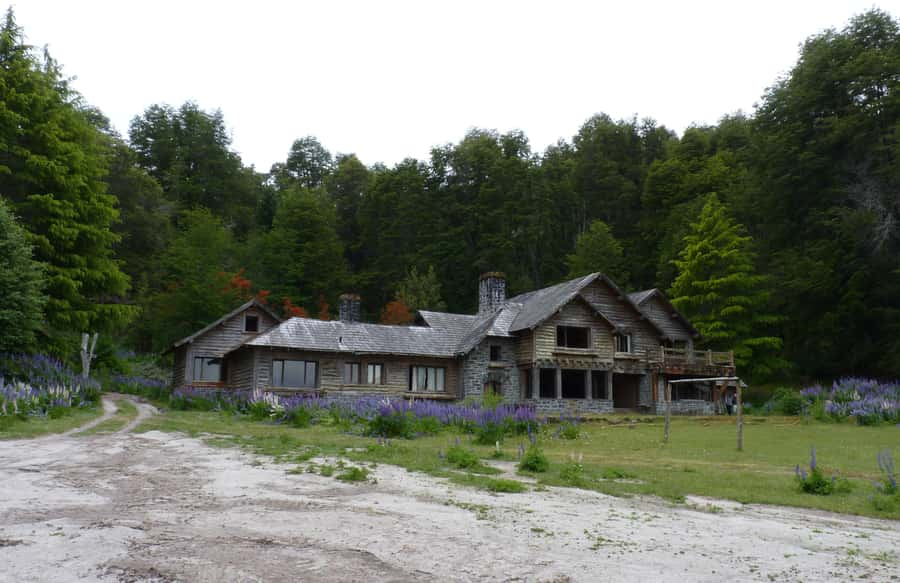
The German School gives the tour one of its clearest links to everyday community life. Institutions like schools reveal how immigration becomes more than a first-generation event. They show how language and cultural habits can continue after the original arrivals have settled.
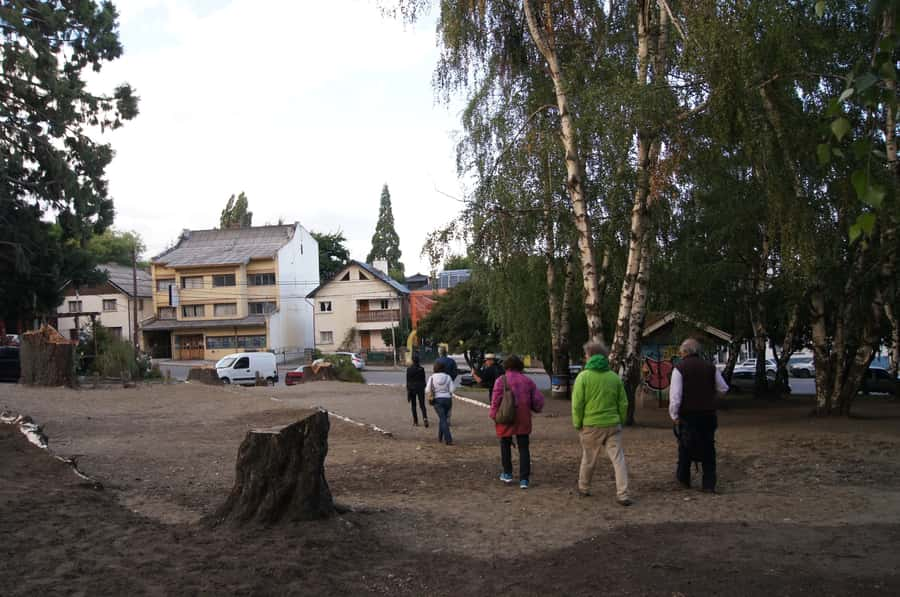
From there, the walk continues through streets and squares associated with German influence. Belgrano Square is another useful pause, allowing the guide to point out architecture and local details that you could easily pass without noticing.
I would not book this walk expecting a series of spectacular monuments. The appeal is interpretive. You may see an ordinary-looking building, then learn why it matters and how it fits into the wider story. The guide’s use of old photographs and anecdotes adds another layer, helping you compare Bariloche as it looked in the past with the city you see today.
Erich Priebke, Sam Donaldson, and the hardest part of the tour
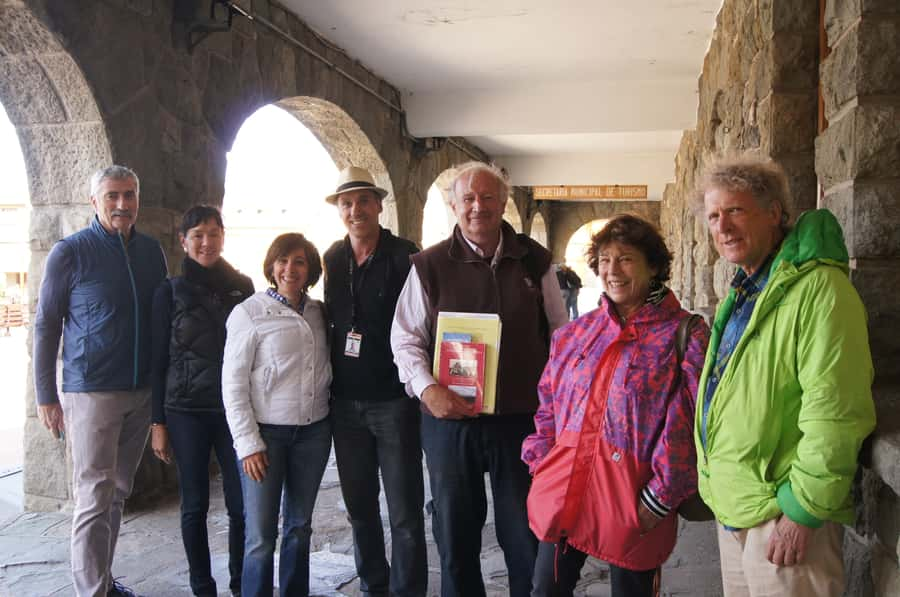
The stop at Erich Priebke’s former home is the most dramatic moment. Priebke was a Nazi war criminal who lived in Bariloche until his presence was exposed in 1994. The story became internationally known after American journalist Sam Donaldson found him and confronted him at the German School.
The tour connects the school, the house, the journalist, and the later extradition. Seeing the places in person makes the episode more concrete than it would be in a book or documentary. You are not simply hearing that Priebke lived in Bariloche. You are standing in the neighborhood where that fact became a public scandal.
This part requires a careful guide, and the walk appears to handle it as history rather than spectacle. The subject is disturbing, but it is also one reason the tour is useful. Bariloche’s Nazi connections are often reduced to rumors or sensational stories. A good explanation can separate documented events from the myths that grew around them.
The house is not presented as a museum attraction. It is a place associated with a troubling chapter, viewed from the street. Keep that in mind when deciding what kind of experience you want.
Fact, rumor, and German myths in Patagonia
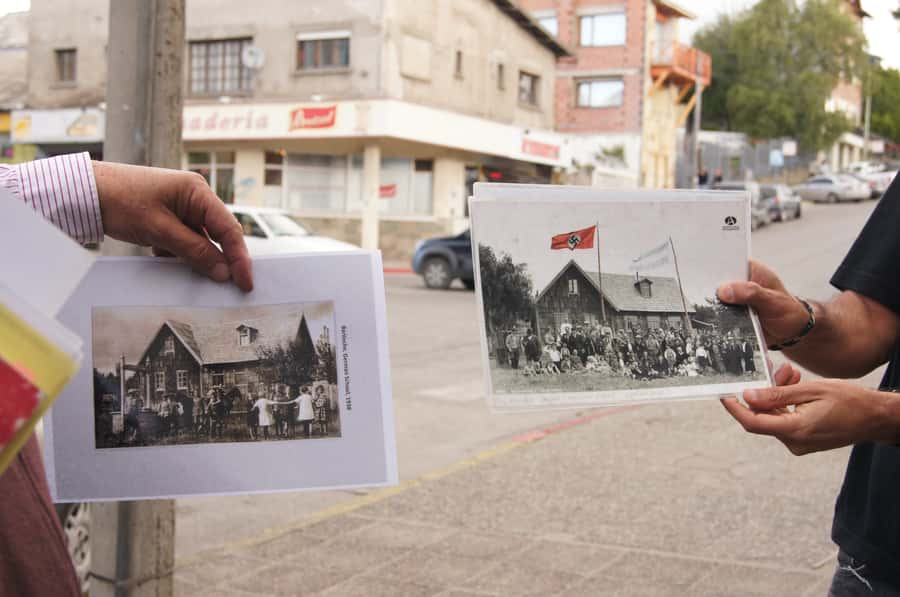
The final discussion deals with theories about German presence in Patagonia. This is where the tour moves beyond a simple account of immigration and asks how legends take root.
Patagonia has long attracted stories about hidden Nazi colonies, secret networks, and unidentified German activity. Some claims have a basis in real postwar arrivals, while others have grown through repetition and speculation. The tour helps you understand the difference.
I value this ending because it leaves room for uncertainty without treating every theory as fact. You can discuss what is documented, what is alleged, and why the subject remains so compelling. If you enjoy history with unanswered questions, this final section may be the part that sends you back to your hotel looking for books or videos.
The guide’s storytelling style is an important part of the effect. Diego is often praised for using cliffhangers between stops, holding back part of a story until the group reaches the next location. That approach keeps a 90-minute walk from feeling like a classroom lecture.
Pace, hills, and the practical side of the route
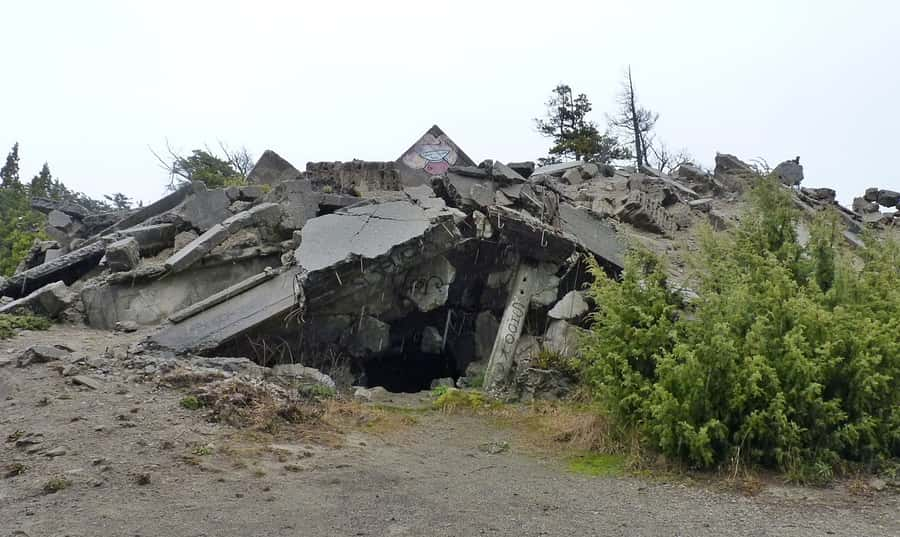
The advertised distance is about 1 kilometer, so this is not a strenuous day hike. Still, the route is not completely flat. Several parts are uphill, and one detailed comment specifically pointed out the slopes.
You should wear comfortable shoes, especially if rain has made the streets slick. The walk includes repeated stops, so you are not walking continuously for 90 minutes. That makes the route manageable for most people who are comfortable with ordinary city walking, but the hills are worth knowing about before you book.
The frequent changes of location are a strength. They give the guide natural points to pause, explain, and answer questions. They also help you keep track of the story. The tradeoff is that a bilingual group may spend extra time repeating information in Spanish and English.
The tour has a listed duration of 90 minutes, though some guides have run longer when questions and discussion continue. If you have a tight connection, restaurant booking, or excursion departure afterward, leave a little extra time.
Is $41 good value for 90 minutes?
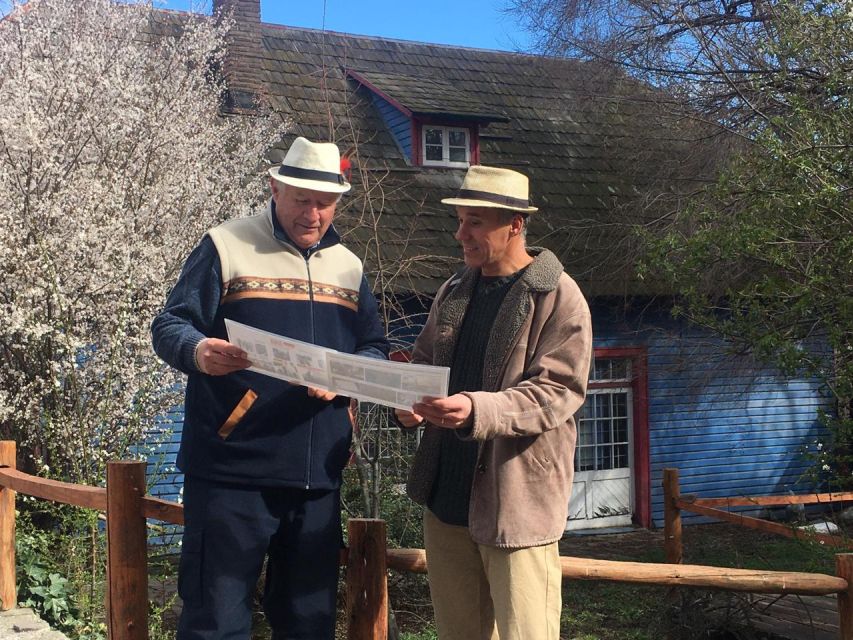
At $41 per person, this is not the cheapest way to walk around central Bariloche. You can see the Civic Center and several streets on your own for nothing. The question is what you are paying for.
You are paying for the connections: three immigration waves, local institutions, architecture, the Priebke story, and the myths surrounding German activity in Patagonia. Without a guide, you might notice the German School or the Andean Club, but you would probably miss much of the meaning behind them.
For me, the price is easier to justify if you have a real interest in history, migration, or twentieth-century politics. It is less compelling if you mainly want a general orientation walk or scenic sightseeing. A general city tour may cover more attractions, while this one stays focused on a single subject.
The tour includes the guide and walking experience, with no museum admission or transport listed. That is fine for a compact history walk, but keep your expectations realistic. Its worth lies in the explanation, not in included tickets or elaborate extras.
Free cancellation up to 24 hours before the start and the option to reserve now and pay later make it easier to fit into a changing itinerary. Those terms are useful in Bariloche, where weather can affect outdoor plans.
Who should take this Bariloche history walk?
I would recommend it to you if you enjoy local history that is tied to actual streets and buildings. It is also a strong choice if you have already seen the main sights and want something more specific than chocolate, shopping, or lake scenery.
The tour suits:
- History-minded visitors interested in immigration and postwar Argentina
- People curious about Nazi fugitives in South America
- Architecture fans who want context for Bariloche’s European style
- English-speaking visitors who want a guide able to explain complex topics clearly
- Anyone looking for a short activity between outdoor excursions
It may not suit you if hills are difficult, if you want a purely scenic walk, or if you dislike bilingual guiding. The route is short, but the subject is serious and sometimes unsettling.
My verdict on the German Immigration and History Walking Tour
I would book this tour if you want to understand why Bariloche feels so different from other Argentine cities. Its best feature is not any single building. It is the way Diego and the other guides connect immigration, schools, clubs, public institutions, Nazi fugitives, and local myths into one clear story.
Book it early in your Bariloche stay if you want historical context for the city. Skip it if you are looking only for views or a broad sightseeing circuit. At $41, it is a focused purchase rather than a bargain, but the short route and strong guiding make it worthwhile for the right audience.
FAQ
Where does the tour meet?
The meeting point is Bariloche Civic Center square, by the door of the tourist information office.
How long is the tour?
The tour is scheduled to last 90 minutes. Some departures may run longer if the guide continues with questions and discussion.
How far do you walk?
The route covers approximately 1 kilometer.
Which languages are available?
The tour is offered in Spanish and English.
Who guides the tour?
Diego is the guide most often identified in the available tour details and feedback. Another experience refers to a guide named Pedro, so the exact guide may vary by departure.
What places do you visit?
The route includes the Civic Center, the Bariloche Andean Club, the administration of Nahuel Huapi National Park, the German School, Belgrano Square, and the house where Erich Priebke lived.
Does the tour discuss Nazi history?
Yes. It explains the third wave of German immigration, including Nazi arrivals after the Second World War, Erich Priebke’s presence in Bariloche, his discovery by Sam Donaldson, and his extradition in 1994.
Can I cancel the booking?
You can cancel up to 24 hours before the tour for a full refund. The activity also offers a reserve-now-and-pay-later option.
Just added around Bariloche
- Road of the Seven Lakes from San Martin de los Andes★ 4.5 · 32 reviews
- 10 Secrets of Bariloche, Nahuel Huapi, and Patagonia★ 5.0 · 46 reviews
- Kayak paddling adventure around Bariloche★ 5.0 · 49 reviews
- Half a day of kayaking on the Nahuel Huapi lake in private service★ 5.0 · 53 reviews
- Full Day Cerro Tronador: Eternal Snow and Hanging Glaciers★ 4.5 · 43 reviews
- OneWay Journey: from Bariloche, Argentina to Puerto Varas, Chile★ 4.0 · 52 reviews
- Navigation through Isla Victoria and Bosque de Arrayanes★ 4.4 · 9 reviews
- From Bariloche: Half-Day Circuito Chico Sightseeing Tour★ 4.3 · 9 reviews
Historical Tours, compared.

Nazis in Buenos Aires: a historical walking tour
Read our review →
Historical Guided Tour with Street Food & Drinks
Read our review →

Recoleta Cemetery – Small Group Tour of History & Secrets
Read our review →


Browse the lists this tour appears in