
Reviewed · HISTORICAL TOURS
Indigenous People of Patagonia History Tour
Bariloche’s story begins long before ski lodges and chocolate shops. This short walk brings you to the Museum of Patagonia, where fossils, tools, implements, and displays about the area’s original inhabitants give the city a stronger sense of place. Guide Diego has earned praise for explaining Indigenous Patagonian history clearly, even within a tight 90-minute route.
I like two things right away: you get both cultural context and fine lake views, and your museum ticket lets you return later that day for a slower look. The main tradeoff is time. Ninety minutes is enough for a brisk introduction, but not enough to study every museum collection or linger at each stop.
Key points
- Museum of Patagonia: Learn about local natural history, fossils, tools, implements, and Indigenous peoples in Bariloche’s Civic Center.
- Guide Diego: An English and Spanish-speaking guide who is praised for clear, thorough explanations of Native Patagonian history.
- Cathedral visit: See the Cathedral of Our Lady of Nahuel Huapi, its stained glass windows, gardens, and Via Crucis.
- Lake finale: Finish on the shore of Nahuel Huapi Lake with views toward glacial valleys.
- Useful return option: Use your museum entry ticket to come back later the same day and explore at your own speed.
- Simple logistics: Meet by the tourist information office door at Centro Civico Square and wear comfortable shoes.
Starting at Bariloche’s Civic Center
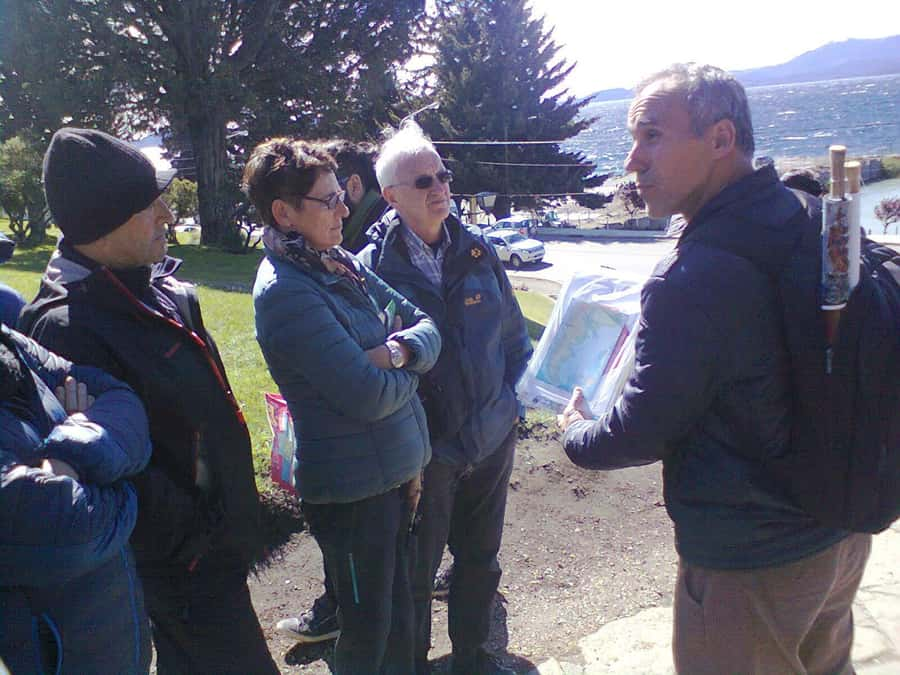
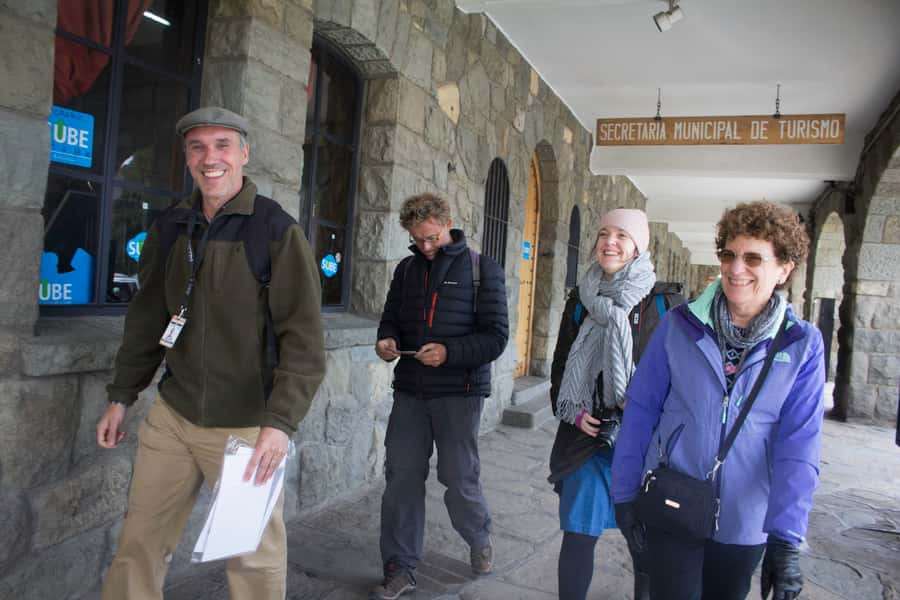
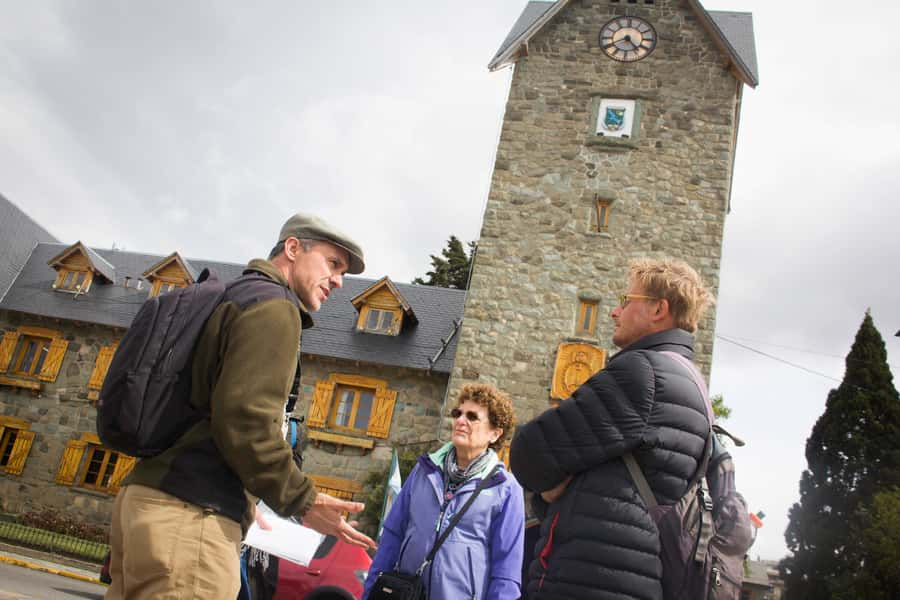
The tour begins by the door of the tourist information office at Centro Civico Square. This is a practical meeting point in central Bariloche, and you will want to arrive ready to walk rather than expecting a bus or private vehicle.
From here, the route puts the city’s public heart and its past side by side. Bariloche is widely known as a gateway to mountain recreation, but this experience asks you to pause before rushing toward the surrounding lakes and peaks. The Civic Center gives you a useful starting point for understanding how the town developed and why its museum was created.
The Museum of Patagonia was established in 1940 by the national government, at a time when Bariloche was still a remote ski resort town. That detail matters. The museum was not simply added as a tourist attraction; it was part of an effort to promote and explain a growing settlement in a far-flung part of Argentina.
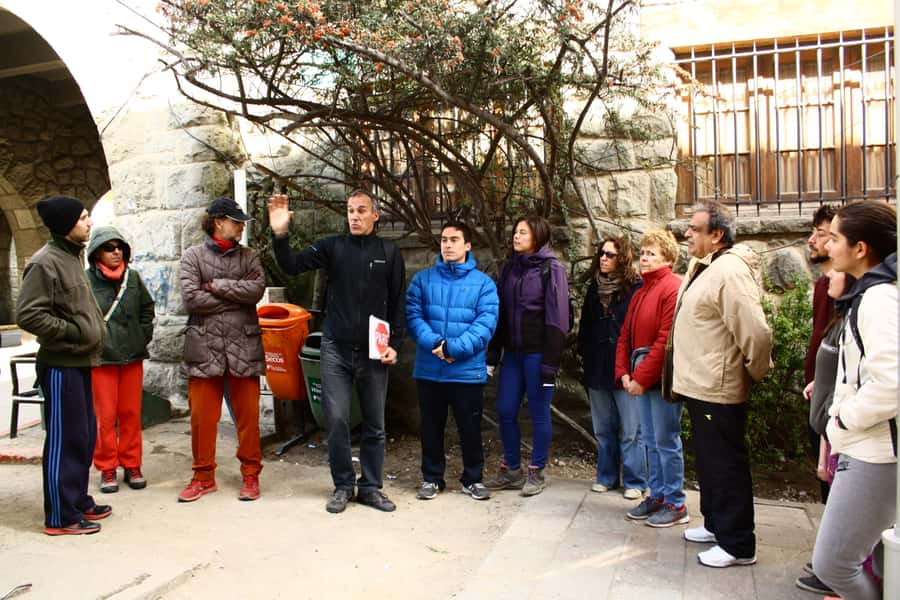
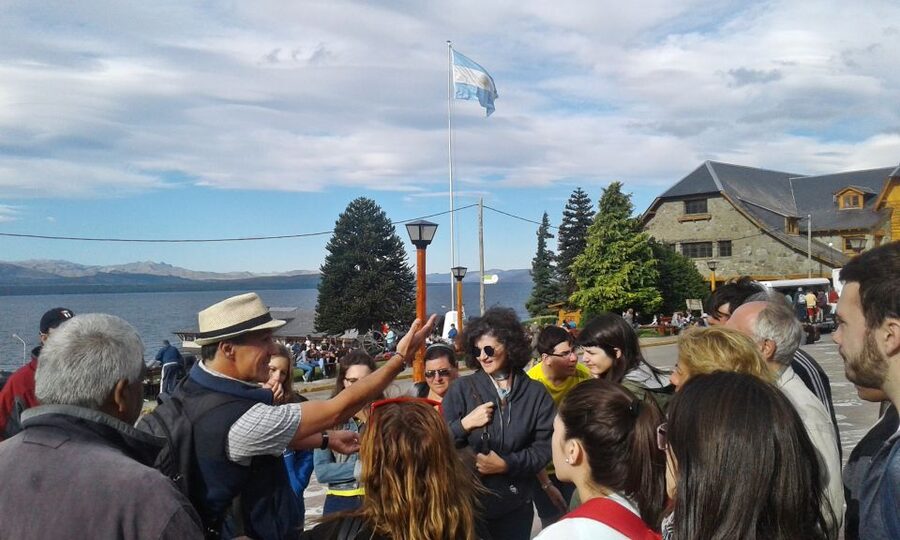
Your guide leads the walk in English or Spanish. Diego is the named guide associated with the strongest praise for clear, thorough explanations. If you want to ask questions about Indigenous communities or the area’s natural history, this is the part of the outing where your guide can give the larger picture before you inspect the displays yourself.
More history walks in Bariloche:
- Bariloche: German Immigration and History Walking Tour
★ 4.8 · 169 reviews - Nazis in Buenos Aires: a historical walking tour
★ 4.9 · 193 reviews - San Telmo: Historical Guided Tour with Street Food & Drinks
★ 5.0 · 87 reviews
What you see inside the Museum of Patagonia
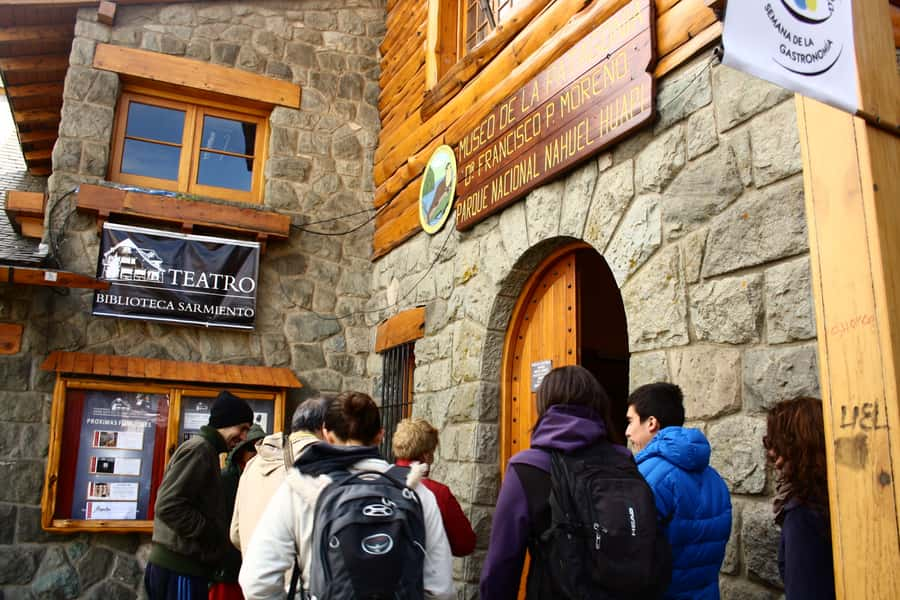
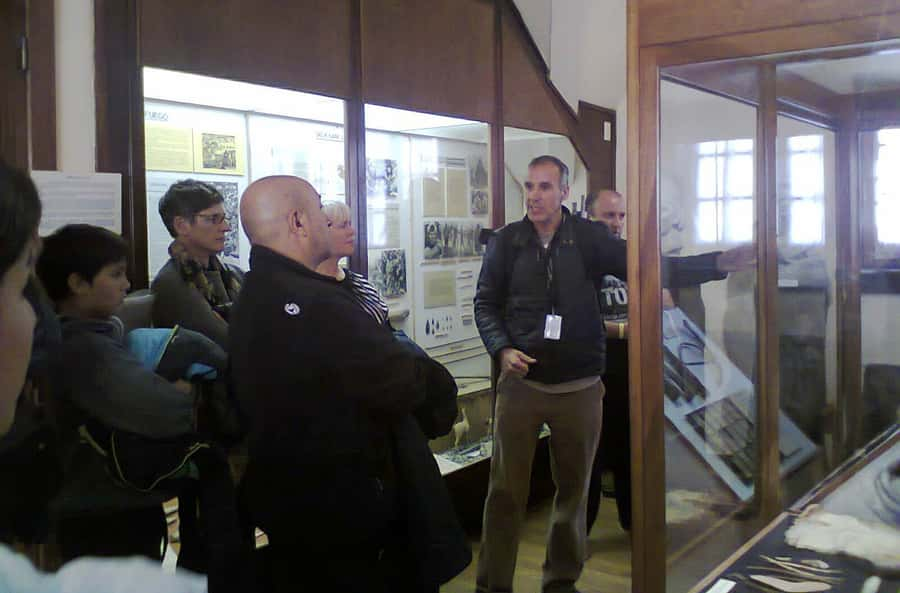
The museum is the most important stop for the tour’s central theme. Its collections cover both the natural history of the area and the original inhabitants of Patagonia. You can expect displays involving fossils, tools, and implements, along with material that helps place Indigenous life within the wider story of the region.
The value here is not just in seeing old objects behind glass. A tool or implement makes more sense when you understand the environment in which it was used, the skills required to make it, and the communities that depended on it. A good guide can connect those pieces, and Diego’s approach has been described as especially thorough despite the short schedule.
The museum stop also helps correct a common weakness in quick city walks. A viewpoint can show you what Patagonia looks like, but a museum can explain how people lived here and how the area changed over time. That balance makes this a better choice for you if Indigenous history is the main reason you are booking.
Still, you should set your expectations. The tour does not provide unlimited museum time. The guide has to cover several stops, so you will likely move through the main sections rather than inspect every object in detail.
That is where the return privilege helps. Your entry ticket allows you to return later in the day and look through the fossils, tools, and implements at your own pace. I consider this one of the best practical features of the experience. You can listen to the guide first, note which displays interest you, then come back without the pressure of keeping up with the group.
There is an optional $2 contribution to enter the museum. The tour price is listed as $41 per person, so keep this small extra cost in mind when working out your budget. It is modest, but the listing treats it separately from the tour price.
Walking toward the Cathedral of Our Lady of Nahuel Huapi
After the museum, the route continues through downtown Bariloche to the Cathedral of Our Lady of Nahuel Huapi. The cathedral is surrounded by gardens, giving the stop a different feel from the Civic Center and museum.
The cathedral’s stained glass windows are the main visual feature. You will also see the Via Crucis, or Stations of the Cross. These details give the walk a religious and artistic layer that contrasts with the museum’s focus on Indigenous peoples and natural history.
I like this change of subject. A short city tour can become repetitive when every stop tells the same kind of story. Here, the route shifts from Indigenous culture and regional science to Catholic art and architecture, then finishes outdoors by the lake.
The cathedral stop may be brief, since the entire experience lasts only an hour and a half. If you care deeply about the windows or the Via Crucis, you may want to pay close attention to the guide and use any free moment to look around. The available information does not promise a long interior visit or a separate architectural lecture, so treat this as an important stop within a compact walk, not a full cathedral study.
Ending beside Nahuel Huapi Lake
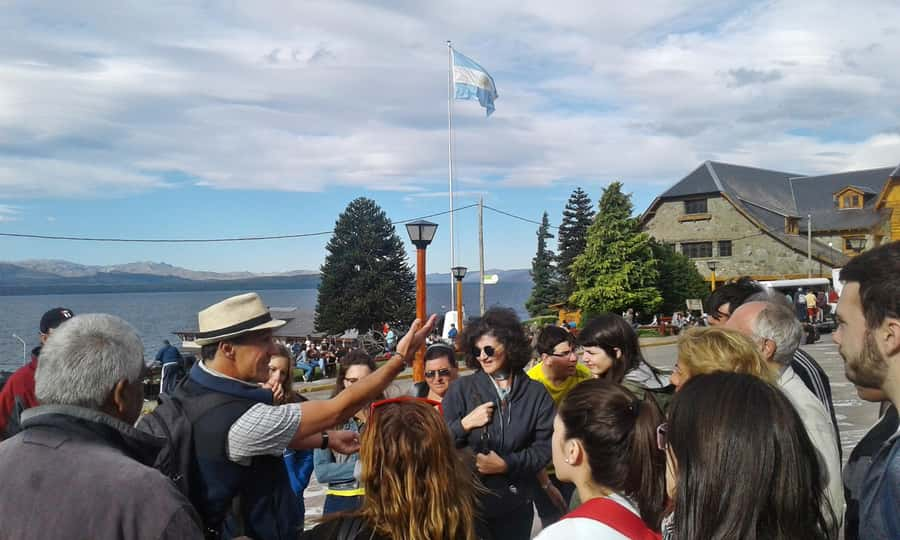
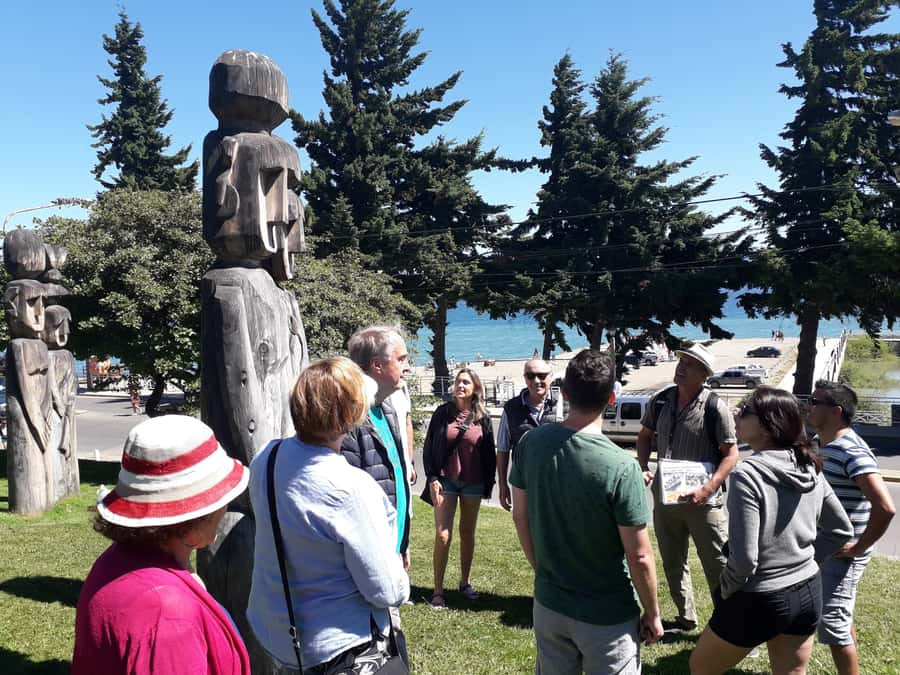
The final stop is on the shore of Nahuel Huapi Lake. From there, you can look toward the glacial valleys and take in the broad mountain setting that makes Bariloche such a popular base.
This ending works well because the lake view gives you a physical sense of the region after the museum has supplied the background. You are not just hearing about Patagonia in a room. You are finishing beside one of the natural features that shaped life, travel, and settlement here.
The view is also a good reason to schedule the walk near the beginning of your Bariloche stay. It can help you get oriented to the city and its setting before you plan other outings. If you are already booking a full lake excursion, this tour will not replace it. It offers a city shoreline view, not a boat trip or a day in the surrounding parks.
Weather can affect how much you enjoy this final stop. The experience is outdoors in part, and you should bring comfortable shoes. The supplied information does not specify weather protection or accessibility details, so dress for a walking tour and be prepared for conditions that may change around the lake.
A few more Bariloche half-days to weigh up
- Bariloche: 7 Lakes & San Martin de Los Andes Road Trip
★ 4.5 · 624 reviews - Bariloche: Circuito Chico with optional Cerro Catedral
★ 4.5 · 316 reviews - San Martín de los Andes por 7 Lagos
★ 4.4 · 155 reviews - Circuito Chico
★ 4.5 · 146 reviews
How much value do you get for $41?
At $41 per person, this is not the cheapest way to take a walk through Bariloche. Its value depends on what you want from a short city experience.
You are paying for a 90-minute historical walking tour, a live guide in English or Spanish, the museum visit, the cathedral stop, and the lake views. The guide is the key part of the package. If Diego leads your group, the strongest reason to book is the clear explanation of Indigenous Patagonian history and the way he fits a lot of information into a short time.
The museum return option also improves the value. You can treat the guided visit as an introduction, then go back later to explore the collections on your own. That makes the experience more useful than a walk where every stop disappears as soon as the guide moves on.
The price is less attractive if you only want photographs of the lake and cathedral. You can see those public areas without booking a tour. It makes more sense to pay for this experience if you want the historical explanation, especially concerning the Indigenous peoples of the region.
The optional $2 museum contribution is small, but remember it is not included in the stated price. You should also wear comfortable shoes, since the experience is a walking tour rather than a seated presentation.
What the guide adds to a short route
A 90-minute tour can either feel focused or rushed. The guide makes the difference.
Diego is repeatedly singled out for being thorough, clear, and strong on Native Patagonian history. One assessment describes him as covering a lot of history in a short time, while another highlights the amount of cultural information shared. That pattern suggests the tour’s best feature is not merely reaching the museum, cathedral, and lake. It is the explanation linking those places.
You should expect a compact city walk rather than a specialist academic seminar. The available details do not promise a particular Indigenous group, a workshop, or a hands-on activity. What you get is an introduction to the area’s original inhabitants through museum displays and a guide-led discussion.
The bilingual format is useful if you prefer English or Spanish. The experience lists both languages, but you should check the available starting time and language when booking. A guide who can explain historical terms clearly matters more here than a long list of stops.
Who will enjoy this Bariloche walk?
I would recommend this experience to you if you want a first look at Bariloche that combines people, place, and architecture.
It suits:
- First-time visitors who want central orientation without giving up cultural content.
- History-minded visitors who want more attention on Indigenous Patagonia.
- Museum fans who like the option of returning later.
- Short-stay visitors who have only 90 minutes available.
- English or Spanish speakers who prefer a live guide.
- Anyone who wants a lake view without committing to a longer excursion.
It may be less suitable if you want a full-day nature trip, a boat ride, or a long museum visit. The tour stays within central Bariloche and ends at the lake shore. It does not replace a wider outing around Nahuel Huapi Lake.
Families and older walkers should consider the pace. Comfortable shoes are specifically recommended, and the route includes outdoor walking. Pets are not allowed, so plan accordingly if you are traveling with an animal.
Timing, cancellation, and a useful plan for the day
The tour lasts 90 minutes, and starting times vary. Check availability before booking rather than assuming a fixed departure.
The reserve-now, pay-later option lets you hold a place without paying immediately. Free cancellation is available up to 24 hours before the activity for a full refund. These terms are useful if your Bariloche plans depend on weather or changing arrival times, but you still need to cancel within the stated window.
I would plan the walk early enough to return to the museum later the same day. That gives you two benefits: the guide’s explanation provides a map for your second visit, and you can spend more time with the objects that caught your attention.
You can also use the lake finale as a transition into the rest of your day. After the walk, you will have seen the Civic Center, the cathedral, and the waterfront, so you can decide which part of central Bariloche deserves more time.
My verdict on the Indigenous People of Patagonia History Tour
Book this tour if you want a compact, well-explained introduction to Bariloche’s Indigenous history, with a museum, cathedral, and lake view packed into one walk. The strongest reason to choose it is the guide-led context, especially if Diego is leading your group.
The $41 price is fair for you if you will use the museum return option and care about the historical explanation. It is less compelling if you only want a quick stroll or a nature-focused outing.
For most visitors, I would place this near the start of a Bariloche stay. Bring comfortable shoes, allow for the optional $2 museum contribution, and keep time later in the day for a return visit to the museum. You will leave with more than a few attractive photographs: you will have a clearer sense of the people, faith, objects, and natural setting that shape this corner of Patagonia.
FAQ
Where does the tour meet?
Meet by the door of the tourist information office at Centro Civico Square in Bariloche.
How long does the tour last?
The historical walking tour lasts 90 minutes.
What languages are available?
The tour is offered with a live guide in English or Spanish.
Does the tour visit the Museum of Patagonia?
Yes. The walk includes the main sections of the Museum of Patagonia, including displays related to natural history, original inhabitants, fossils, tools, and implements.
Can I return to the museum later?
Yes. Your entry ticket can be used to return later the same day and view the collections at your own pace.
Is the museum contribution included?
The listed tour price is $41 per person. A $2 optional contribution to enter the Museum of Patagonia is not included.
What other places does the walk visit?
The route includes the Cathedral of Our Lady of Nahuel Huapi, its stained glass windows and Via Crucis, and the shore of Nahuel Huapi Lake with views of glacial valleys.
Can I cancel for a full refund?
Yes. You can cancel up to 24 hours in advance for a full refund.
Just added around Bariloche
- Road of the Seven Lakes from San Martin de los Andes★ 4.5 · 32 reviews
- Kayak paddling adventure around Bariloche★ 5.0 · 49 reviews
- Half a day of kayaking on the Nahuel Huapi lake in private service★ 5.0 · 53 reviews
- Full Day Cerro Tronador: Eternal Snow and Hanging Glaciers★ 4.5 · 43 reviews
- 10 Secrets of Bariloche, Nahuel Huapi, and Patagonia★ 5.0 · 46 reviews
- OneWay Journey: from Bariloche, Argentina to Puerto Varas, Chile★ 4.0 · 52 reviews
- Navigation through Isla Victoria and Bosque de Arrayanes★ 4.4 · 9 reviews
- From Bariloche: Half-Day Circuito Chico Sightseeing Tour★ 4.3 · 9 reviews
Historical Tours, compared.

Nazis in Buenos Aires: a historical walking tour
Read our review →

Historical Guided Tour with Street Food & Drinks
Read our review →

Recoleta Cemetery – Small Group Tour of History & Secrets
Read our review →


Browse the lists this tour appears in