

Reviewed · QUEBRADA DE HUMAHUACA TOURS
Quebrada de Humahuaca and Purmamarca
The best part of this 12-hour trip through the Quebrada de Humahuaca is the steady change in scenery. Red, green, cream, and purple hills appear beside small Andean towns, old churches, craft stalls, and pre-Incan ruins. You get a broad look at northern Argentina without arranging several separate day trips.
I like the mix of big mountain views and real town stops, especially Purmamarca’s Seven Colors Hill and Humahuaca’s colonial center. I also like that the ride includes hotel pickup, a guide, and air conditioning for $86 per person.
The catch is the length. It is a long day with many stops, and shared pickup can add time before the route really begins. English commentary may also be shorter than the Spanish presentation, so confirm your language before booking.
Key points to know before you book
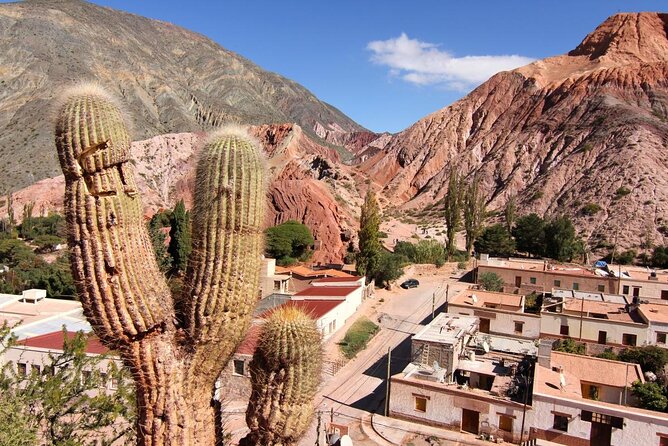
- Purmamarca gives you the classic Seven Colors Hill view, plus a small market and a cactus-roofed church.
- Tilcara adds pre-Incan ruins and an archaeological museum, but the entrance fee to the ruins is not included.
- Humahuaca is the main midday stop, with colonial buildings, local food, the Independence Monument, and Cuzco School paintings.
- The guide can make or break the day, with past guides including Abel, Pamela, Maria, Freddy, Eva, Jessie, and Noemi.
- The tour may hold up to 30 people, and hotel pickups can be slow in a shared coach.
- Lunch, drinks, and entrance fees are extra, so bring Argentine pesos or another accepted payment method for the day.
The long road from Salta into Jujuy Province
Pickup begins around 7 a.m. at selected Salta hotels. The exact arrival time can vary, so I would wait outside or near reception and allow patience for the coach to collect other people.
The vehicle is air-conditioned, and the tour usually runs with a coach or smaller minibus. A group of up to 30 people is possible, though some departures may be much smaller. One reported departure had only seven people, while another used a full bus shared by several tour groups.
The drive into the Quebrada de Humahuaca is part of the experience, not just dead time. The valley runs about 155 kilometers through Jujuy Province, following the Río Grande. Your guide explains how the route once served Inca caravans, colonial trade, and military movements during Argentina’s war of independence.
That background helps you read the scenery. The road is not simply passing through colorful hills. It follows an old corridor used by Indigenous communities, merchants, armies, and religious visitors for centuries.
The ride is also the main drawback. You may spend several hours on the road, and the return can feel especially long after a full day of walking. Some departures have lost extra time to hotel drop-offs in San Salvador de Jujuy or delays connected with other groups.
More Quebrada de Humahuaca days:
- From Salta: Full-Day Trip to Salinas Grandes and Purmamarca
★ 4.6 · 914 reviews - From Salta: Salinas Grandes, Purmamarca & Los Colorados Hike
★ 4.3 · 356 reviews - From Salta: Serranías del Hornocal & Hill of 14 Colors Tour
★ 4.4 · 339 reviews
Purmamarca and Cerro de los Siete Colores
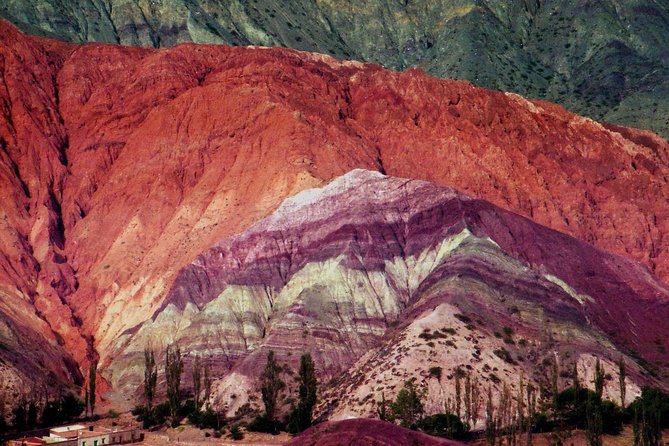
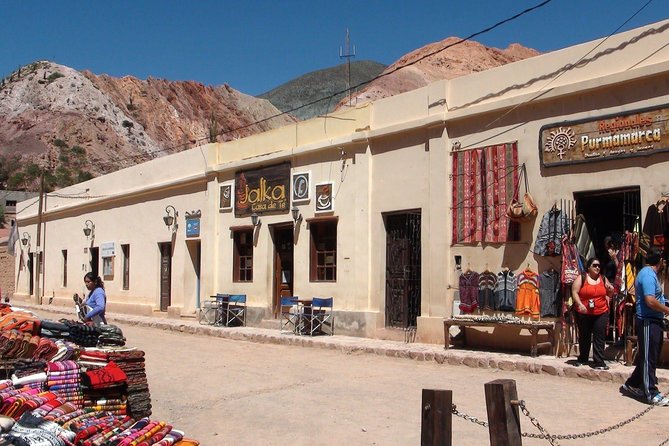
Purmamarca is the first major stop, and it delivers the image most people associate with this region. The small village sits below Cerro de los Siete Colores, a banded formation with cream, green, rose, ocher, and dark plum tones.
You get roughly an hour in town, with about 20 minutes specifically allotted for the Seven Colors Hill. The schedule lets you walk around the center, look at the market, and visit the local church.
The church is memorable for its roof covered with organ-pipe cacti. That detail alone makes the stop feel unlike a standard colonial town visit. The craft market sells jewelry, wool rugs, and other local goods, so bring a little spending money if you want to shop.
Purmamarca can feel rushed. The coach may make more than one pass through town to collect or drop off other people, depending on the departure arrangements. Some schedules also rely on a roadside viewpoint rather than giving you a proper hilltop overlook, so ask your guide where the best photo stop will be.
Still, this is one of the tour’s strongest stops. If you have seen photographs of the Quebrada, this is probably the view you came to find.
Tilcara’s Pucará and the story beneath the hills
The route continues to Tilcara, a lively town in the middle of the valley. On the approach, you stop near the pre-Incan ruins of Pucará de Tilcara, built on a hill with wide views over the surrounding area.
The ruins give you a useful break from looking at scenery through a bus window. You can see how the settlement occupied high ground and how the hills shaped movement through the valley. The archaeological museum in town adds objects and explanations connected with the area’s earlier cultures.
The planned stop lasts about an hour. That is enough for a short visit, but not enough for a slow archaeological tour. If ruins are your main interest, you may wish you had more time.
The entrance fee to the Tilcara ruins is not included in the $86 price. That matters because the tour description can make the stop sound fully covered. Ask the guide about the current charge and whether the group schedule allows time for the complete site.
Tilcara itself has a pleasant square and a more active feel than Purmamarca. The town offers another chance to see local crafts, but the schedule is designed for a quick overview rather than a long independent visit.
Huacalera, the Tropic of Capricorn, and La Pollera de la Coya
At Huacalera, the coach crosses the Tropic of Capricorn. A sundial marks the point, and the group gets a short stop for photographs.
This is a simple stop, but it breaks up the long drive and gives the guide a chance to explain the region’s position in the Southern Hemisphere. The nearby hill called La Pollera de la Coya adds another burst of color, with stripes that resemble the layered skirt of an Andean woman.
The stop takes about 30 minutes. Do not expect a long walk or a museum visit. It is mainly a scenic and photographic pause, best appreciated as part of the changing views along Route 9.
The itinerary lists La Pollera de la Coya as a separate stop, though in practice the two nearby stops may feel like one short visit. That is worth knowing if you are comparing this excursion with a private tour that can linger at individual viewpoints.
A few more Salta half-days to weigh up
- From Salta: Full-Day Tour to Cafayate with Wine Tasting
★ 4.5 · 478 reviews - Full-Day Tour Cafayate Calchaqui Valleys with Wine
★ 4.5 · 347 reviews - From Salta: Cafayate, land of wines and imposing ravines
★ 4.4 · 347 reviews - From Salta: Cachi and Los Cardones National Park Tour
★ 4.5 · 285 reviews
Uquía and the Cuzco School paintings
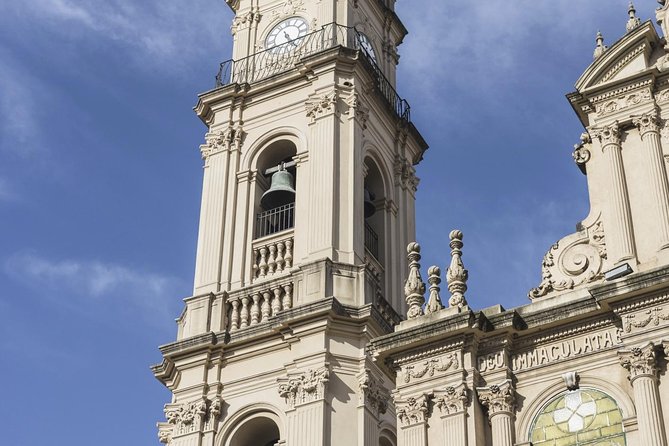
Uquía offers one of the tour’s most distinctive cultural stops. Inside the local church are paintings from the 1600s associated with the Cuzco School, a Catholic art tradition developed in Peru and shaped by Indigenous artists.
The paintings show the meeting of European religious subjects and local artistic traditions. They are not just decorative pieces. They help explain how faith, colonial power, and Indigenous skill came together in the Andes.
You have around 30 minutes here. The visit is short, but it adds depth to a day otherwise dominated by mountains and markets. Keep your expectations practical: this is a brief church stop, not a full museum visit.
Humahuaca at midday
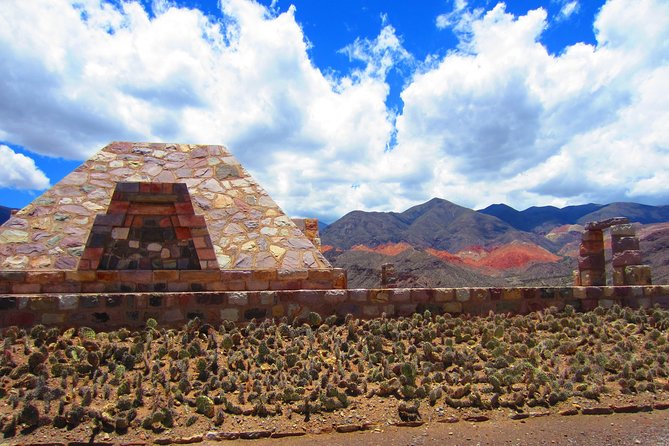
Humahuaca is the northernmost town on the route and usually the longest town stop. You have about two hours for walking and lunch.
The center has white colonial buildings and cobblestoned streets. A staircase leads up to the Monument of Independence, built in 1950, with views toward the Río Grande valley. The local cathedral contains more paintings linked to the Cuzco School.
This is where the tour’s history and scenery come together most clearly. The town sits in the old corridor through the valley, and the monument connects the area with Argentina’s independence struggle.
Lunch is not included. The guide may recommend a restaurant, but you are free to choose where to eat. I would ask for the lunch timing early, then decide whether the suggested restaurant suits you. Past meals on organized departures have ranged from acceptable local food to disappointing dishes, and one report described undercooked chicken. You can also bring your own food and drinks.
Two hours sounds generous, but it can disappear quickly once you combine lunch, the monument, the cathedral, and a walk through town. If you want to shop, eat slowly, and explore every side street, you may find the stop too short.
Painter’s Palette and the return through the valley
On the way south, the coach passes La Paleta del Pintor, or Painter’s Palette, near Maimará. The hills form sharp triangular bands of rose, green, and ocher around the town.
This stop is often more about viewing than walking. The exact photo opportunity depends on the road and the coach’s stopping point. Some departures have been criticized for making too few formal viewpoints, so do not assume you will get a long stop at every formation described in the program.
The return follows narrow and winding Route 9. You may see subtropical vegetation, Santa Laura Pass, the La Cienaga dam, Las Maderas, Campo Alegre, and Vaqueros before reaching Salta.
After Humahuaca, the ride is tiring but visually rewarding. The vegetation changes as you move south, and the route gives you a sense of how quickly northern Argentina shifts between dry Andean country and greener valleys.
Drop-off can take longer than expected because the coach may visit several hotels. A health issue or traffic can also extend the day. The advertised duration is about 12 hours, but you should avoid booking an evening plan in Salta that cannot be moved.
How good is the guiding and language support?
The guides receive some of the strongest praise attached to this experience. Abel is described as unusually engaging, while Pamela, Maria, Freddy, Eva, Jessie, and Noemi are also associated with friendly and useful departures.
The best guides keep Spanish and English speakers involved, explain the history of the towns, and help with practical matters such as ordering lunch. One guide arranged seating near her when a passenger was the only English speaker and stopped briefly for requested photographs.
Language quality is not guaranteed. Some English-speaking passengers received clear explanations, while others found that the guide gave much more detail in Spanish and a shorter English version. On a bilingual coach, the English explanation may come after the vehicle has already passed the sight being discussed.
I would confirm the guide language before departure and mention your needs at pickup. If English commentary is the main reason you are booking, a private or smaller departure may offer better communication, though this specific experience is a shared tour.
What the $86 price really includes
At $86 per person, the tour offers fair value if you want a broad introduction to the Quebrada in one day. You get hotel pickup and drop-off, an air-conditioned vehicle, and a professional guide. Organizing the same route independently would require arranging long-distance transport and fitting several towns into a tight schedule.
The price does not include lunch, drinks, or the entrance fee to the Tilcara ruins. Bring a jacket or sweater, sunscreen, comfortable shoes, and money for food and crafts. The morning can be cool, while sun exposure becomes strong during outdoor stops.
The value drops if you dislike long coach rides, shopping stops, or fixed schedules. It also drops if you want a slow visit to one or two towns. The tour is built for coverage, not for lingering.
Cancellation is free if you cancel at least 24 hours before the start time. If the minimum number of people is not reached, you are offered another date or a full refund.
Who should book this full-day excursion?
I would choose this trip if you have limited time in Salta and want to see the main towns and formations of the Quebrada without renting a car. It suits first-time visitors, solo bookers, couples, and people who enjoy a full day of scenery mixed with short cultural visits.
It is also a good choice if you want a guide to explain the Inca road, Indigenous communities, colonial art, and independence history while you watch the valley pass by.
I would hesitate if you need a guaranteed English-speaking guide, dislike early starts, or want extensive time at the Pucará ruins and in Purmamarca. A private tour would likely give you more control over stops, though it would not match this price.
Final verdict
Book this tour for breadth and scenery. In one demanding day, you see Purmamarca, Tilcara, Huacalera, Uquía, Humahuaca, Maimará, and parts of San Salvador de Jujuy, with some of the most striking colored hills in northern Argentina.
Go in prepared for a long road day, extra costs, shared pickup delays, and possibly uneven English translation. Bring food if you prefer to choose your own lunch, confirm the tour language, and keep your evening in Salta free. With those expectations, the $86 price is reasonable for a first look at the Quebrada de Humahuaca.
FAQ
How long does the Quebrada de Humahuaca tour last?
The experience lasts approximately 12 hours. Pickup begins around 7 a.m., and the return time can vary because of shared hotel drop-offs, traffic, or delays during the day.
What towns does the tour visit?
The route includes Purmamarca, Tilcara, Huacalera, Uquía, Humahuaca, and San Salvador de Jujuy. It also passes scenic areas near Maimará, including Painter’s Palette.
Is lunch included in the price?
No. Food and drinks are not included. You can buy lunch in Humahuaca or bring your own food and drinks.
Is the entrance fee to the Tilcara ruins included?
No. The entrance fee to the Pucará de Tilcara ruins is not included in the tour price.
Does the tour include hotel pickup and drop-off?
Yes. Pickup and drop-off are included for most Salta hotels, though shared pickups can take extra time.
What should I bring?
Wear comfortable clothes and walking shoes. Bring sunscreen, a jacket or sweater, and money for lunch, drinks, crafts, and the Tilcara ruins entrance fee.
Just added around Salta
- Tucumán: Tafí del Valle Full Day Tour★ 3.8 · 4 reviews
- Trekking Purmamarca★ 5.0 · 52 reviews
- Salinas Grandes and Purmamarca Full Day Tour★ 4.5 · 34 reviews
- Tilcara: 2 hours cycling tour trough the rural area★ 5.0 · 5 reviews
- Salta: Tour to the Salinas Grandes and Purmamarca★ 3.7 · 3 reviews
- Salta or Jujuy: Iruya and Salinas Grandes 2-Day Tour★ 4.3 · 3 reviews
- From Salta: Cafayate, Humahuaca, Cachi, & Salinas Grandes★ 4.3 · 13 reviews
- Salta en un Bocado – Cultural Tour & Empanada Tasting★ 5.0 · 3 reviews
Quebrada de Humahuaca Tours, compared.
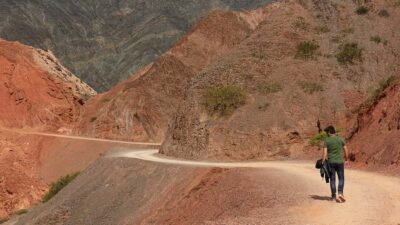
Full-Day Trip to Salinas Grandes and Purmamarca
Read our review →
Salinas Grandes, Purmamarca & Los Colorados Hike
Read our review →
Serranías del Hornocal & Hill of 14 Colors Tour
Read our review →
Full-Day Tour Salinas Grandes and Purmamarca from Salta
Read our review →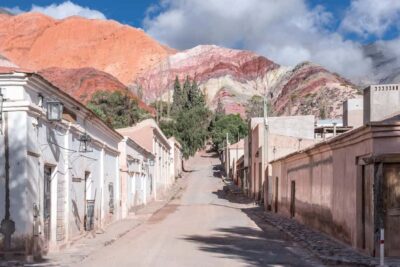
Full-Day Tour to Salinas Grandes and Purmamarca From Salta
Read our review →
Hornocal: Tour of the 14 Colors Mountain & Humahuaca´s Gorge
Read our review →
Cafayate and the imposing Quebrada de las Conchas
Read our review →Browse the lists this tour appears in