

Reviewed · ANDES HIGH MOUNTAIN TOURS
Cabalgata Cruce de Los Andes Cruce Sanmartiniano
Crossing the Andes on horseback is the heart of this expedition, but the real pull is the combination of high mountain riding and living history. You follow the route associated with General José de San Martín, passing the Espinacito and La Honda routes, sleeping in remote camps, and reaching the Argentina-Chile border.
I like the careful human side of the trip, especially the guidance of Cristian, Eugenia, and the baqueanos who manage the horses and mules. I also like the chance to see condors and guanacos while spending evenings around a fire or beneath a starry sky. The catch is simple: this is a medium-to-high difficulty expedition, not a comfortable sightseeing ride, and the published duration needs clarification because it is described as both seven days and eight days, seven nights.
Key points before you saddle up
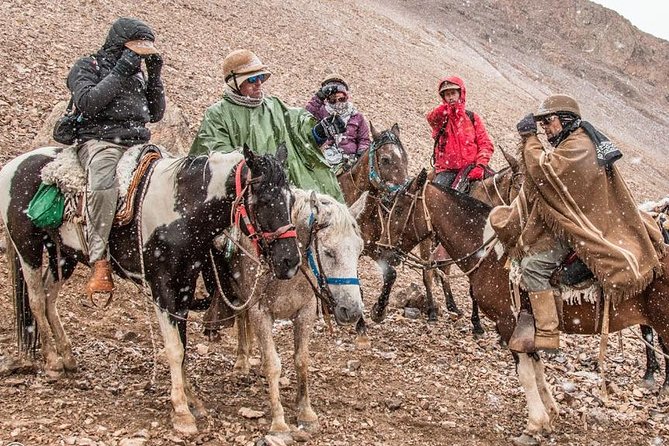
- Historic route: Follow the Andes passes and valleys used during San Martín’s liberation campaign.
- High-altitude riding: Reach about 4,500 meters at Espinacito and 4,350 meters at La Honda.
- Remote camping: Expect tents, mountain weather, basic conditions, and limited phone use.
- Strong local support: Cristian, Eugenia, guides, and baqueanos handle the horses, mules, camps, and daily logistics.
- Summer-only season: The expedition runs from December through March.
- Small private group: Bookings allow up to 14 people, with at least six required to operate.
Why this San Juan expedition feels different
Many horseback trips give you a few hours in the hills and a good photograph. This one asks you to spend nearly a week in the Andes, moving from camp to camp with pack mules and a working mountain crew.
That changes the experience. You are not simply being taken to viewpoints. You help prepare for the day, adjust to changing altitude, ride through valleys and streams, and settle into camp after several hours outside. The effort gives the scenery more weight. By the time you reach the border marker, you have a better sense of why this route demanded so much from San Martín’s troops.
The historical setting is not an optional lecture added at the end. The route itself supplies the story. The camps, passes, valleys, and border crossing become part of the account of the Army of the Andes. Cristian is described as providing historical explanation during the crossing, while the baqueanos bring the practical mountain skills needed to keep the group moving safely.
The trip also has an unusually personal feel. Cristian and Eugenia are the named contacts, and the operation includes a team of local guides and baqueanos. That matters in a remote area where the quality of the horse handling, camp setup, and daily decisions can shape your whole week.
More high Andes days from Argentina:
- From Mendoza: High Andes Aconcagua Mountain Tour
★ 4.4 · 767 reviews - Andes Day Trip from Mendoza Including Aconcagua, Uspallata and Puente del Inca
★ 4.5 · 419 reviews - From Mendoza: Andes High Mountain Full-Day Tour
★ 4.7 · 208 reviews
Day 1: San Juan to Barreal
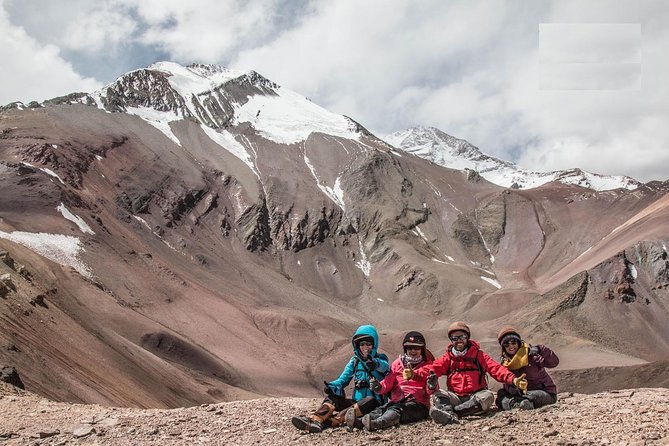
The expedition begins with pickup in San Juan and a transfer to Barreal. The first day is less about riding than getting ready for the mountains.
You stay in Barreal, take time to acclimatize, review your equipment, and attend a logistics briefing. There is also an introduction to the history of the crossing and free time before the harder days begin.
This preparation day is valuable. You are moving from city altitude and routine into a high mountain setting, so a slower start gives you time to ask questions and check your clothing, footwear, and personal gear. Do not treat the equipment review as a formality. Weather can change quickly in the Andes, and the trip operates in all conditions.
Barreal is also the practical staging point for the expedition. The tour returns here at the end for the farewell dinner and cabin night, according to the published plan.
Day 2: Four-wheel-drive tracks and the first mountain camp
After breakfast, you transfer by four-wheel-drive vehicle to the first mountain post. Here, the mules are assigned and prepared, followed by lunch in the field.
The riding begins through a mountain valley bordered by Cerro La Ramada and Cerro Alma Negra. This is where the expedition shifts from road travel to a slower, more physical rhythm. You ride with the mountains close around you and have the chance to see native wildlife.
The first camp marks your first real night away from ordinary services. Tents are included, along with the daily meals listed by the operator. You should expect a working camp rather than a lodge: the emphasis is on shelter, food, horses, mules, and the next day’s route.
Day 3: The Espinacito Pass at 4,500 meters
Day three brings the expedition’s highest point, the Espinacito Pass at roughly 4,500 meters above sea level. This is likely to be the most demanding and dramatic riding day.
The route climbs toward the pass before continuing to base camp. The official plan places dinner and the night at Las Vegas de Gallardo. The combination of altitude, rough weather, exposed mountain terrain, and several hours on horseback requires real stamina.
This is the point where the difficulty rating matters. The trip is not recommended for children aged 12 and under, and all participants should have a moderate level of physical fitness. Even a strong rider should be ready for cold, fatigue, and the effects of altitude. The operator does not list an air evacuation service as included, so you should understand that this is a remote expedition and ask the company about emergency procedures before booking.
The reward is the scale of the Andes. The route gives you a direct look at the passes and ridges that shaped the historic crossing. You will not simply hear that the troops faced hard conditions. At Espinacito, the terrain makes that fact plain.
Same city, a completely different kind of day:
- El Calafate: Perito Moreno Glacier & Optional Boat Cruise
★ 4.7 · 2,586 reviews - Buenos Aires Hop-On Hop-Off Bus, Free Walking Tours & Discounts
★ 4.5 · 2,218 reviews - Buenos Aires: Piazzolla Tango Show with Optional Dinner
★ 4.4 · 2,122 reviews - Buenos Aires: City Highlights Guided Tour with Transfer
★ 4.7 · 1,946 reviews
Day 4: Valle de los Patos and Valle Hermoso
The group rides through Valle de los Patos and continues toward Valle Hermoso. This is one of the most important historical sections of the route because Valle Hermoso was the final camp on the Argentine side for San Martín and his army.
The night is spent beside the Valle Hermoso River. A riverside camp gives the day a strong sense of place, but it does not turn the trip into a soft adventure. You still have to sleep in camp, manage the cold, and be ready for the next day.
This is also where the historical side becomes especially meaningful. The route is not just named after San Martín. You are reaching a specific place connected with his campaign, and the setting helps you picture the scale of the operation. The experience works best if you enjoy history presented outdoors, in the locations where events unfolded, rather than through a museum display.
Day 5: Riding to the Argentina-Chile border
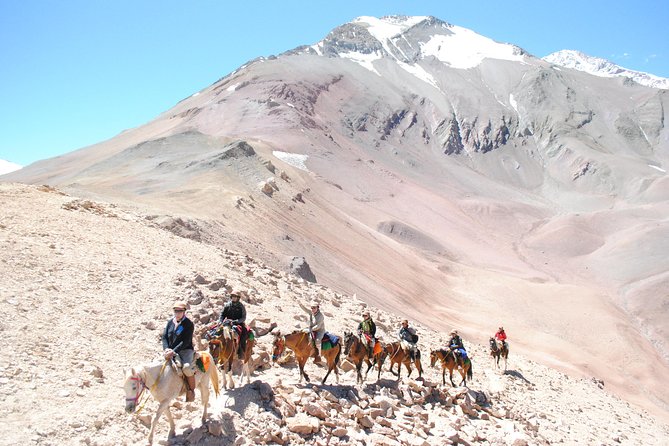
The fifth day takes you to the border marker between Argentina and Chile. After reaching the marker, you have time to rest and the remainder of the day is free.
That pause is welcome. By this stage, you have crossed high passes and spent several nights in remote camps. A quieter afternoon allows you to absorb the setting without another long schedule pressing in.
The border marker also gives the trip a clear goal. You are not riding an open-ended route through the mountains. You are following a historic crossing to a defined point on the frontier, then turning back toward Argentina.
Bring patience to the day. Border scenery is dramatic, but this is not a staffed border-control visit or a city-style sightseeing stop. It is a remote mountain point, and the value is in the route, the setting, and the historical meaning.
Day 6: The return through mountain streams
The return ride follows mountain streams and continues toward Rancho de Lata or Vega del Cura, where you spend the night and have dinner.
This day illustrates the practical nature of the expedition. The route is not designed as a one-way transfer with a vehicle waiting at the border. You ride back through the mountain country, giving you a second view of the terrain from a different direction and under different weather or light.
You should also expect the return to test your legs. The scenery may remain beautiful, but fatigue is real after several days in the saddle. This is one reason the trip suits people who want an active expedition rather than a short horseback outing.
Day 7: La Honda Pass, Aconcagua views, and Barreal
The final mountain day starts with breakfast at Rancho de Lata or Vega del Cura. You then climb toward La Honda Pass, reaching about 4,350 meters.
From the pass, the route offers views toward the high border range and Cerro Aconcagua. The published itinerary describes this as a place where you can see the line of the high summits and the famous peak. After descending to Manantiales, you transfer back to Barreal.
The trip ends with a farewell dinner and a night in cabins. Drinks and dessert are not included, so budget for those separately. The closing night gives the group a chance to shift from mountain routine back to conversation and comfort.
There is an important planning issue here. The supplied information calls the experience seven days in some places and eight days, seven nights in others. The day-by-day schedule contains seven numbered days, while the meal and accommodation details do not line up perfectly with the stated duration. Confirm the exact number of nights, camp nights, and the return time before you pay for flights or other connections.
What the price of $1,550 includes
At $1,550 per person, this is not a cheap horseback holiday. It is also not priced like a simple day ride. The fee covers a large amount of field logistics: mountain transport, mules, guides, baqueanos, tents, meals, and vehicle support.
The listed inclusions are:
- Tents
- Air-conditioned vehicle
- Six lunches
- Five breakfasts
- Seven dinners
The inclusion of an air-conditioned vehicle may sound like a small detail, but transfers are important here. The expedition uses four-wheel-drive vehicles to reach the first mountain post and returns you to Barreal at the end.
The meal figures deserve a careful check because they do not fully match the stated eight-day, seven-night description. Ask exactly which meals are served each day and what food you should carry personally. Drinks and dessert at the farewell dinner are not included.
The value depends on what you want. If you want a hotel, showers, luggage service, and easy transport, the price will not feel like a bargain. If you want a supported historic expedition with animals, mountain staff, camping, and high-altitude routes, the fee reflects the complicated work required to move a group through the Andes.
The horses, mules, and camp routine
This is a horseback expedition, but the mules are just as important. They carry equipment and supplies, while the riding horses allow you to cover the route without carrying a full pack on your back.
You should still pack light and carefully. The published information does not provide a detailed gear list, so ask Posta Inca Adventures for one before departure. At minimum, plan for changing weather, cold at high altitude, sun exposure, and the physical strain of riding for several days.
The camping is part of the point, not a minor inconvenience. You trade normal phone access and private rooms for star-filled nights, camp meals, conversation, and a much closer connection to the surroundings. If you need reliable comfort every evening, this is the wrong trip. If you like simple outdoor living and can accept dust, cold, and limited services, the camp routine will likely be one of the strongest parts.
Guides, group size, and the human side
The operation is a private activity for your group, with a maximum of 14 people and a minimum of six required to run the departure. That size should allow for a more personal experience than a large coach tour, while still giving you a social group for camp evenings.
Cristian and Eugenia are the key names to know. Cristian leads the historical side and is described as highly attentive to individual needs, while Eugenia is available throughout the experience. The baqueanos provide the mountain and animal-handling support.
The guide team receives especially strong praise for professionalism, warmth, and attention to detail. That is important, but you should keep the right expectation: good guides do not remove the physical demands or the weather risk. They help you manage the experience in a remote place.
Who should book this ride
I would recommend it to you if you:
- Enjoy horses and can handle repeated days in the saddle
- Have moderate physical fitness
- Are comfortable camping in changing weather
- Want history tied directly to the places you visit
- Prefer remote scenery and quiet nights to restaurants and nightlife
- Can accept a demanding route at high altitude
- Are at least 13 years old, with an adult accompanying minors
I would hesitate if you dislike camping, have little tolerance for cold or rough conditions, or want a relaxed riding holiday. The medium-to-high difficulty rating should guide your decision. A love of horses alone is not enough if you are not prepared for altitude and long days outdoors.
The season runs from December through March, the Southern Hemisphere summer. Even then, high mountain weather can be severe, and the experience operates in all weather conditions unless conditions force cancellation. Dress for the mountains, not for warm summer weather in San Juan.
Booking details worth checking first
Pickup is offered from San Juan, and the activity ends back at the meeting point. A current valid passport is required on the day of travel, which is especially important because the route reaches the Argentina-Chile frontier.
Confirmation is provided at booking. The operator requires at least six participants and accepts no more than 14 per booking. If the minimum is not met, the departure can be canceled with the choice of another date or experience, or a full refund.
You can cancel for a full refund up to 24 hours before the start time. Cancellations or changes within 24 hours are not refunded or accepted. If poor weather causes the operator to cancel, you are offered another date or a full refund.
Should you book the Cabalgata Cruce de Los Andes?
Book it if you want a serious, historic horseback expedition rather than a polished resort activity. The strongest reasons are the high passes, the San Martín route, the border crossing, the wildlife, and the chance to share a demanding week with a small group and a local support team.
Pause before booking if you need exact itinerary details for flights, if you are uncertain about high-altitude riding, or if camping is not your style. Confirm the seven-day versus eight-day schedule, meal count, nights in tents, and emergency arrangements with Posta Inca Adventures.
For the right person, this is a rare kind of trip. You do not merely see the Andes from a vehicle. You ride through them, sleep beside their valleys, and gain a much sharper sense of the effort behind one of South America’s defining military crossings.
FAQ
Where does the Andes horseback crossing begin?
The activity begins with pickup in San Juan, in San Juan Province, Argentina.
Where does the experience end?
The activity ends back at the meeting point after the return to Barreal and the final transfer arrangements.
How long is the tour?
The tour is described as approximately seven days in the summary and as eight days and seven nights in the overview. The detailed schedule lists seven numbered days, so confirm the exact duration before booking.
When does the tour operate?
The season is summer, from December through March.
How difficult is the horseback crossing?
The experience is rated medium to high difficulty. A moderate level of physical fitness is recommended.
What is the highest point reached?
The route reaches about 4,500 meters above sea level at the Espinacito Pass. La Honda Pass reaches about 4,350 meters.
Is camping included?
Yes. Tents are included, and the route includes nights at mountain camps. Confirm the exact number of camping nights because the supplied duration details differ.
Are meals included?
The listed inclusions are six lunches, five breakfasts, and seven dinners. Drinks and dessert at the farewell dinner are not included.
Is a passport required?
Yes. You need a current valid passport on the day of travel.
Can children join the expedition?
The experience is not recommended for children aged 12 and under. Children who do participate must be accompanied by an adult.
How many people can join a booking?
A booking can include up to 14 people, and at least six participants are required for the activity to operate.
What happens if bad weather cancels the trip?
You are offered a different date or a full refund if the operator cancels because of poor weather.
Just added around Argentina
- Tango Show at El Querandi with optional Dinner★ 4.2 · 3 reviews
- Zuccardi Full Paired Lunch at Piedra Infinita in Uco Valley★ 3.0 · 3 reviews
- Zuccardi Legacy: A Journey Through Uco Valley’s Finest★ 5.0 · 5 reviews
- Wine and Chocolate Bike Tour: ride, taste, lunch, vineyards.★ 4.1 · 10 reviews
- Wine Tasting in Buenos Aires★ 4.2 · 4 reviews
- Wine Icons: Meet Salentein at the heart of Uco Valley★ 4.1 · 6 reviews
- Wine Icons: Meet the sparkling world of Chandon★ 5.0 · 3 reviews
- Wine Idols: Meet El Enemigo by Alejandro Vigil★ 4.6 · 6 reviews
Andes High Mountain Tours, compared.

Andes Day Trip from Mendoza Including Aconcagua, Uspallata and Puente del Inca
Read our review →

High Mountain Experience, a Tour through the Andes
Read our review →

Browse the lists this tour appears in