
Reviewed · USHUAIA TOURS
Exploring Ushuaia: Double Decker Bus Tour
Ushuaia’s double-decker bus tour gives you a quick sweep of the world’s southernmost city, from old government buildings and war memorials to hillside viewpoints above the Beagle Channel. In about 70 minutes, you cover roughly 15 kilometers without having to plan a route or climb Ushuaia’s steep streets yourself.
I like the short, practical format and the chance to see neighborhoods that sit well beyond the central waterfront. I also like the hilltop views and photo stops, especially when the weather opens up a broad look over the city and harbor.
The main drawback is that this is an overview, not a deep historical tour. Commentary can be brief or prerecorded, and the bus may feel cramped or bumpy upstairs. You should book it to get oriented, not to replace Ushuaia’s museums or a full-day excursion.
Key points to know before you board

- A 70-minute city loop: You cover central Ushuaia, outer neighborhoods, hillside roads, and several historic sites in one compact ride.
- The best views come from above town: Monte Gallinero, Monte Vigía, and the photo stop near Laguna del Diablo give you a different look at Ushuaia.
- It is useful early in your stay: Take it on your first day to understand the city’s shape before choosing museums, restaurants, or longer excursions.
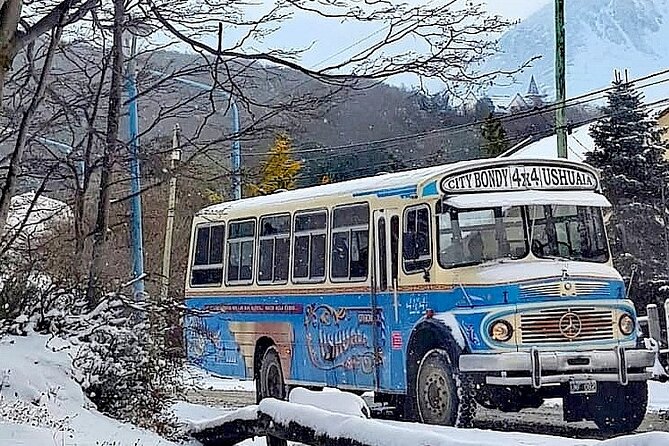
- The commentary varies by season: Summer includes English and Spanish guidance. Winter service runs in a Bondi 4×4 with Spanish only.
- This is not a true hop-on, hop-off service: The route includes short stops, but you should not count on frequent buses coming back for you.
- Weather matters: Bring a rain jacket. Ushuaia can change from clear to wet quickly, and some stops require you to get outside.
A fast first look at Ushuaia
At $32 per person, this tour is priced as a convenient orientation ride rather than the cheapest way to move around town. You are paying for a planned circuit, a driver, commentary, and access to several distant viewpoints in a little over an hour.
I see the value most clearly if you have limited time. Cruise passengers, people with only one free afternoon, and first-time visitors can see a broad slice of Ushuaia without arranging taxis or working out the hills and outer roads.
The value is less convincing if you have several days in town and enjoy walking. Many central sights can be visited on foot, and a taxi may give you more control over how long you spend at each stop. The bus is best used as a first look, a rainy-day activity, or a simple way to see the city from above.
The bus departs from Civic Plaza, along Avenida Maipú, and returns to the same meeting point. It is easy to find, and departures are offered at several times. The group size is limited to 20 people, though the upstairs seating can still feel tight when everyone boards or moves around at once.
A few more Ushuaia half-days to weigh up
- Ushuaia: National Park & Train of the End of the World Tour
★ 4.5 · 811 reviews - Ushuaia: Penguin Watching Tour by Catamaran
★ 4.5 · 439 reviews - Ushuaia: Catamaran Sailing to Penguin Island
★ 4.4 · 436 reviews
What the route shows you in 15 kilometers
The route starts at the Antigua Casa de Gobierno, or Old Government House. This is a sensible place to begin because it puts Ushuaia’s civic past at the center of the story. From here, the circuit points out the region’s first school and the First Chapel, linking education, government, and religious life.
You do not spend long at these places. The stop is meant to give you context as the bus moves through the older parts of town. If you want detailed architectural information or time inside buildings, plan a separate visit rather than expecting it here.
The next stop is the Lucinda Otero House. This building helps explain the local style and the city’s early domestic life. The visit lasts only a few minutes, so pay attention as you approach and keep your camera ready.
The Malvinas Memorial adds a more serious note. It honors Argentine combatants from the Malvinas War and remains an important public monument in the city. The stop is short, but the subject deserves more than a quick photograph. If modern Argentine history interests you, make a note to read more afterward.
The First Cemetery offers another pause for memory and local history. It is not a dramatic sightseeing stop, but it helps show that Ushuaia is more than a port for Antarctic voyages and a base for outdoor trips. This is a working city with generations of families and a past that reaches well beyond tourism.
Hill roads, science, and wide harbor views
The bus then heads toward the National University of Tierra del Fuego and CADIC, the regional scientific research center. These stops point to Ushuaia’s present-day role in education and science, not just its frontier image.
The road climbs around Monte Gallinero and Monte Vigía. Here the tour becomes more scenic. From the higher ground, you can look back toward the city, harbor, and surrounding mountains. This is one reason I would choose a seat upstairs if the weather is dry and calm.
The upper deck gives you a better view, but it is exposed to wind and rain. One practical tip: keep a waterproof jacket close, not buried under the seat. The route can also be bumpy on the higher roads, so hold your camera and avoid expecting a smooth coach ride.
Some departures include a photo stop near a small airstrip or another high point with a view of the harbor and city. The exact feel of the stop depends on weather and route conditions, but the broad view is one of the strongest parts of the tour.
Do not assume you will see every popular Ushuaia photo sign or every mountain attraction. One common point of confusion is the old ski lift and nearby glacier area, which has been expected by some passengers but is not reliably included in the current route details. If that sight is a priority, arrange a separate visit.
Rio Pipo and the story behind Prisoners’ Road
The circuit continues through the Rio Pipo area and newer neighborhoods before reaching Camino de los Presos, or Prisoners’ Road. This section gives the tour a useful historical edge.
Ushuaia’s identity was shaped in part by its former prison and the difficult work carried out by prisoners. The road helps you understand how the settlement expanded and how transportation, labor, and punishment were tied together in the city’s early development.
The stop itself is brief. You will get an introduction rather than a full account, and the information may be delivered through recorded narration rather than a guide speaking continuously to the whole bus. I recommend treating this as a prompt for further reading, especially if you plan to visit the Prison Museum.
The route also passes the Barrio de los Italianos and the local hospital. These may not be the first places you would seek out on your own, but they show everyday Ushuaia beyond the postcard center. That broader view is useful. You see a real community, not only the waterfront and souvenir shops.
Same city, a completely different kind of day:
- Ushuaia: Beagle Channel & Sea Wolves Island Catamaran Cruise
★ 4.6 · 433 reviews - National Park and Train Trip End of the World Guided Tour
★ 4.0 · 414 reviews - Ushuaia: Beagle Channel and Penguin Island
★ 4.6 · 318 reviews - From Ushuaia: Tierra del Fuego Emerald Lagoon Trekking Tour
★ 4.9 · 271 reviews
Laguna del Diablo is the main outdoor pause
Laguna del Diablo is the most substantial stop on the route. The bus pulls over so you can get out, take photographs, and have a short break before continuing.
This is where the weather can make or break the experience. On a clear day, the water, hills, and city setting create a pleasant contrast with the built-up center. In rain or strong wind, the stop can feel less inviting, but a jacket and sensible shoes make it manageable.
I would not plan a long walk here. The tour allows about 10 minutes, so use the time for photographs and a quick look around. Keep track of the boarding time, since loading a full bus can take longer than expected.
Some people may find this stop less impressive than the higher viewpoints. That is fair. Its value is not that it is Ushuaia’s grandest natural attraction, but that it gives you a short breath of open space during a city tour.
The waterfront finish and maritime connections
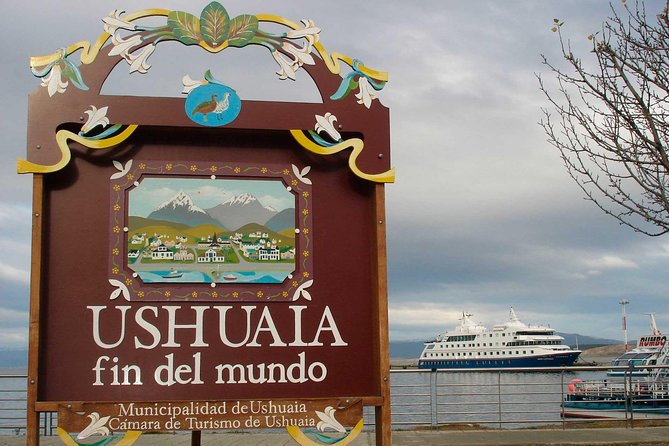
The final section returns toward the central waterfront, passing the Saint Christopher shipwreck and the End of the World Museum area. The shipwreck is a reminder of Ushuaia’s close relationship with the sea, shipping, and remote southern routes.
The published route describes the End of the World Museum as part of this section, but the amount of time at the site is limited. A separate museum visit makes more sense if you want exhibits, artifacts, and a careful account of Tierra del Fuego’s indigenous cultures, explorers, prisoners, and natural history.
There has also been uncertainty about whether every departure passes the Maritime Museum and Presidio area as expected. If that museum is one of your main reasons for booking, confirm the current route before departure and leave time to visit independently.
The tour finishes near the Naval Pier and Fournier Monument. These landmarks connect the city’s maritime past with the pioneers who built lives at the end of the continent. The return to Civic Plaza makes the ride easy to combine with a walk along the waterfront or a museum visit afterward.
Commentary, language, and the old bus itself
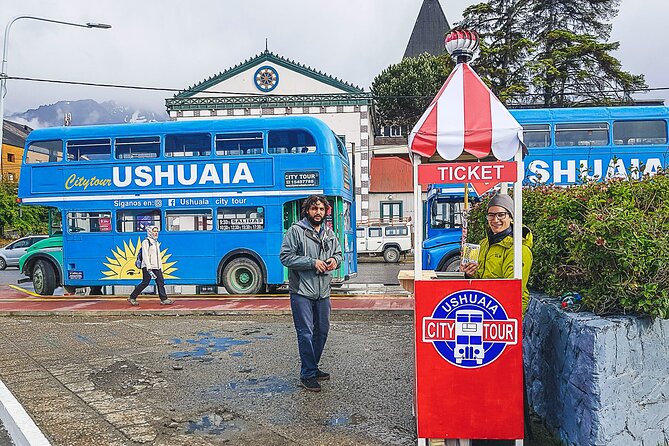
In summer, the tour includes an English and Spanish-speaking professional guide. Several departures have also used prerecorded commentary in English and Spanish, with music between sections. Other language audio is available through equipment at each seat in German, Chinese, Russian, Italian, French, and Portuguese, but you need your own headphones with a standard jack unless you buy or obtain a pair locally.
The recorded format has advantages. It is generally easy to follow, and the information arrives at the right point on the route. It also means there may be no guide upstairs to answer questions or ask people to stop talking.
That matters. If passengers chat during the narration, you may miss parts of it. Sit near the audio source if possible, and use the seat equipment when available. The commentary gives a useful outline, but the depth can vary from one departure to another.
In winter, the experience changes. The double-decker bus operates from October through April, while winter service uses a Bondi 4×4 and is Spanish only. If you are booking outside the summer period, do not expect the same vehicle or language setup.
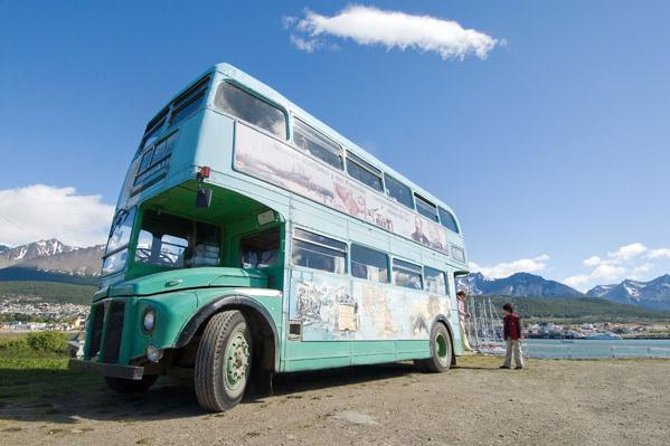
The bus itself is part of the charm for some people. Its old-fashioned style makes the ride feel different from a standard minibus. It is also not a luxury vehicle. Upstairs can be cramped, the narrow stairs require care, and uneven roads may make the ride lively. Downstairs is warmer and more sheltered, but you give up some of the views.
Who should book this tour?
I would choose this ride for:
- First-time visitors who want a city overview before making other plans
- Cruise passengers and short-stay visitors with only an hour or two available
- People who want to reach hilltop viewpoints without arranging a taxi
- Anyone looking for a simple activity in uncertain weather
- Visitors interested in Ushuaia’s civic, military, prison, and maritime story
I would look elsewhere if you want a long museum visit, a serious history lesson, extensive time in nature, or a flexible hop-on, hop-off route. This bus does not give you much time to wander at each location.
It can also be a good choice for people who find Ushuaia’s steep streets tiring. Most participants can join, but you still need to manage the bus steps and the brief outdoor stops. The tour does not include hotel pickup or drop-off, so you need to reach Civic Plaza on your own.
Practical advice for getting more from the ride
Book an early departure if you are using the tour to plan the rest of your stay. You will get a sense of where the museums, waterfront, hills, and outer neighborhoods sit before committing to longer outings.
Bring a rain jacket, even if the morning looks clear. Ushuaia weather can shift quickly, and the best views require getting off the bus.
Arrive ready to choose your seat. The upstairs deck is better for photographs and city views, while the lower deck is more comfortable in cold or wet weather. If you use the audio equipment, bring compatible headphones.
Keep your expectations in proportion to the price. This is a short orientation loop with a few stops, not a full-day cultural tour. The strongest parts are the route, the views, and the convenience. The weaker parts are the short visits, limited commentary, and occasional uncertainty about which museum areas are included.
The experience is non-refundable, and the operator requires suitable weather. If poor weather cancels the tour, you are offered another date or a full refund. That policy makes it especially important to check the forecast before booking if your schedule is tight.
Should you book the Ushuaia bus tour?
Yes, if you want a quick first look at Ushuaia and value convenience over depth. At $32, it is a reasonable way to cover central streets, outer neighborhoods, Prisoners’ Road, and the hills without building your own route.
I would book it near the start of your stay, then use what you learn to choose a museum, a waterfront walk, or a longer trip into Tierra del Fuego National Park. Do not book it expecting a detailed guided lecture or guaranteed access to every museum and viewpoint named in older descriptions.
For a compact introduction, especially in limited time or mixed weather, this bus earns its place. For a richer understanding of Ushuaia, treat it as the opening chapter, not the whole book.
FAQ
Where does the Ushuaia double-decker bus tour start?
The tour starts at Civic Plaza Ushuaia, along Avenida Maipú 420 to 498. It returns to the same meeting point at the end.
How long does the tour last?
The tour lasts approximately 1 hour and 10 minutes.
Is the tour offered in English?
During the summer season, a professional English and Spanish-speaking guide is included. Recorded English and Spanish commentary may also be used. In winter, the Bondi 4×4 version operates in Spanish only.
What languages are available through the seat equipment?
Audio equipment is available in German, Chinese, Russian, Italian, French, and Portuguese. You need to use your own headphones with a standard jack, or obtain headphones separately.
Does the tour include hotel pickup?
No. Hotel pickup and drop-off are not included. You need to reach the Civic Plaza meeting point independently.
What happens if bad weather cancels the tour?
If poor weather causes cancellation, you are offered a different date or a full refund. The experience itself is otherwise non-refundable and cannot be changed for another reason.
Just added around Ushuaia
- Trekking Esmeralda Lagoon★ 4.8 · 3 reviews
- USHUAIA: TREKKING IN LAGUNA DE LOS TÉMPANOS AND VINCIGUERRA GLACIER★ 4.8 · 5 reviews
- Ushuaia: Tour: Beagle Channel Navigation★ 4.7 · 3 reviews
- Ushuaia: Visit to Escondido and Fagnano Lakes PM★ 4.7 · 6 reviews
- Ushuaia: Tierra del Fuego National Park Tour with Lunch★ 4.7 · 38 reviews
- USHUAIA | Tierra del Fuego National Park & Optional Train★ 4.6 · 11 reviews
- Ushuaia: Tierra del Fuego National Park Shore Excursion★ 4.1 · 18 reviews
- Tierra del Fuego National Park: Small Group Tour with Lunch★ 4.7 · 7 reviews
Ushuaia Tours, compared.

National Park & Train of the End of the World Tour
Read our review →


Beagle Channel & Sea Wolves Island Catamaran Cruise
Read our review →
National Park and Train Trip End of the World Guided Tour
Read our review →


National Park, Train, and Beagle Channel Navigation
Read our review →Browse the lists this tour appears in