Reviewed · BUENOS AIRES TOURS
Buenos Aires for curious people
Buenos Aires reveals itself best when you connect its grand buildings with the people and conflicts behind them. This three-hour walking tour does that from Lezama Park to Casa Rosada, moving through San Telmo and the historic center while asking hard questions about conquest, immigration, race, politics, and memory.
I like the route’s two strong ideas: it includes places many first-time visitors pass without noticing, and it treats history as a conversation rather than a speech. Guide Nicolás has been praised for explaining Argentina from basic facts to more unusual subjects, and for leaving room for questions. The main consideration is pace. You will walk for much of three hours, and the subject matter can turn serious.
Key points to know before you go
- Start at Bar Británico: The walk begins near Lezama Park, in one of the city’s oldest historic areas.
- History beyond monuments: You discuss first inhabitants, British interest, African-descendant communities, immigration, Perón, the disappeared, and the dollar.
- A route with variety: The walk links churches, markets, former detention-site memory, government buildings, and modern waterfront architecture.
- Conversation matters: You are encouraged to ask questions and debate rather than simply listen.
- Good value at $30: For three hours with a professional guide and a small or private group option, the price is fair, especially for a first orientation to Buenos Aires.
- Prepare for real walking: Wear comfortable shoes, carry water and sunscreen, and expect weather to shape the experience.
Why this walk is more than a city introduction
Many city walks show you a church, a square, and a government building, then move on. This one uses those places to ask why Buenos Aires became the city it is today.
At Lezama Park, the focus begins with the city’s earliest inhabitants and the roots of Buenos Aires. From there, the route follows the old historic center toward Casa Rosada. Along the way, you consider the city’s colonial past, British interest in the Río de la Plata, the place of African-descendant communities, and the waves of immigration that shaped Argentina.
The approach suits curious visitors who want context, not just photographs. You can ask why an event mattered, challenge an explanation, or pause over a subject that needs more time. That makes the tour especially useful early in your stay, when you still need a framework for understanding Argentina.
It is also a serious walk. The discussion includes the disappeared, the people who vanished during Argentina’s military dictatorship, and the way their memory remains part of public life. You will also hear about Juan and Eva Perón, Argentina’s political leaders, and the power of the US dollar in the local economy. These topics give the final stop, Casa Rosada, much more meaning than a quick photo outside the pink building.
A few more Buenos Aires half-days to weigh up
- Buenos Aires Hop-On Hop-Off Bus, Free Walking Tours & Discounts
★ 4.5 · 2,218 reviews - Buenos Aires: Piazzolla Tango Show with Optional Dinner
★ 4.4 · 2,122 reviews - Buenos Aires: City Highlights Guided Tour with Transfer
★ 4.7 · 1,946 reviews
Starting at Bar Británico and Lezama Park
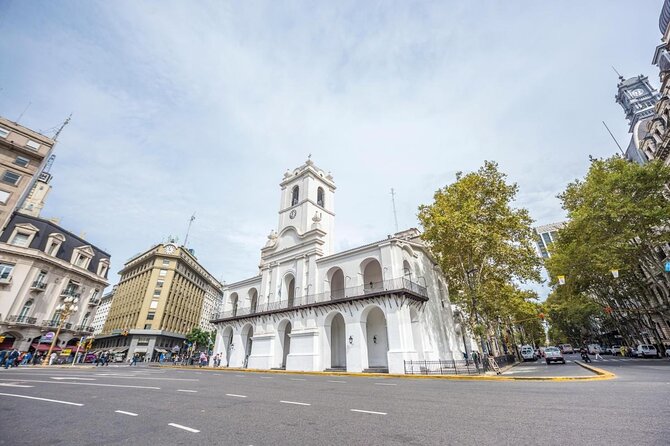
Meet by Bar Británico, beside Parque Lezama. The bar serves as a practical landmark, and the park gives the tour a spacious starting point before the route moves into denser historic streets.
The guided portion at Lezama Park lasts about 15 minutes. This is where the tour asks who lived here first and how the city’s earliest story connects with its modern identity. The park is not treated as a decorative green space alone. It becomes the first chapter in a discussion about settlement, power, and the making of Buenos Aires.
I like this opening because it avoids beginning with the usual postcard icons. You start with questions about people and place, then gradually approach the buildings that usually dominate a city tour.
If you arrive early, plan your route to the meeting point carefully. Transportation to Bar Británico is not included, and the walk itself is the main activity. Comfortable shoes are more useful than smart clothes here.
Churches, Swedish connections, and overlooked details
The Russian Orthodox Church of the Holy Trinity comes next, with about 10 minutes for guided viewing and walking. Its presence adds another thread to the city’s story: Buenos Aires is not only Spanish colonial, Italian, or broadly European. Its historic center also reflects communities that arrived from different parts of Europe.
The route then continues toward Club Sueco Restaurante. The stop is brief, around 10 minutes, but it helps reinforce the idea of Buenos Aires as a city shaped by international connections. The guide uses the streets and buildings as prompts, so the value lies less in a long interior visit and more in understanding what these places say about migration and urban life.
You should not expect a formal museum visit at every stop. This is a moving discussion, with short explanations followed by more walking. That format keeps the route active, but anyone hoping for extended time inside each building may find the stops too brief.
Club Atlético and the memory of the disappeared
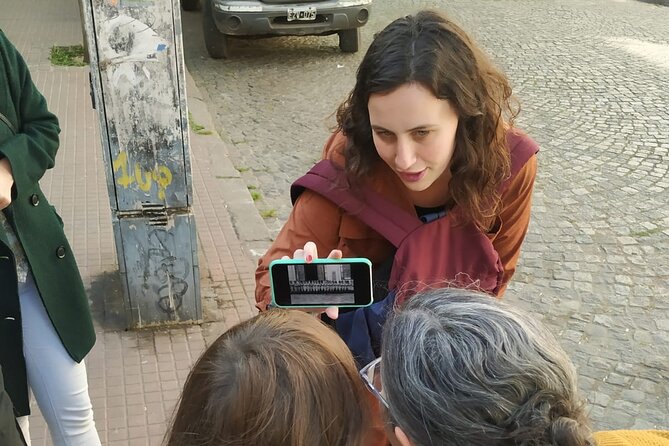
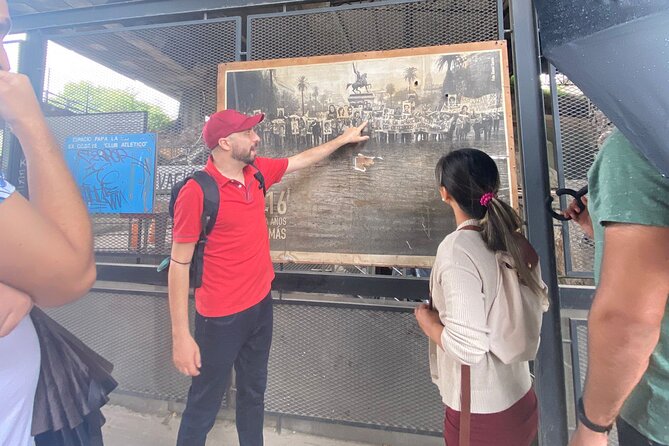
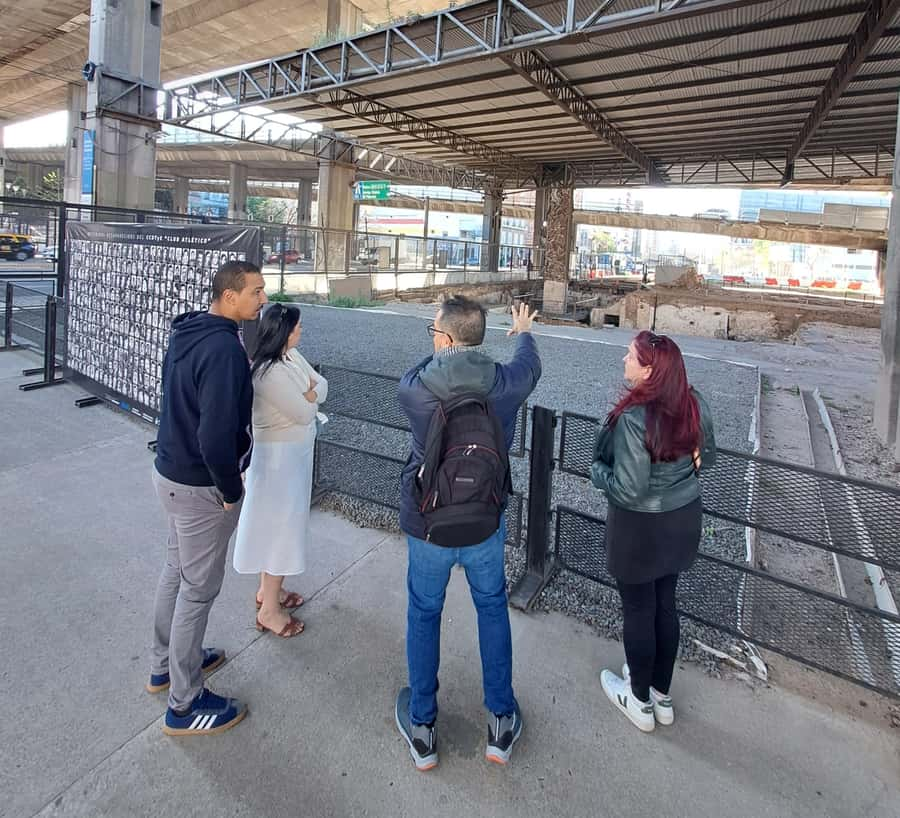
One of the most important stops is Espacio para la Memoria ex CCD Club Atlético. The guided visit and walk take about 10 minutes.
The site connects the route to Argentina’s recent political past and the disappeared. The subject is not presented as a distant chapter that ended neatly. Instead, it helps explain how public memory shapes modern Argentina and why political history remains visible in the city.
This stop gives the tour emotional weight. It also separates the experience from a standard architecture walk. You are not only learning when buildings were built or who occupied them. You are considering what happened to people, how a society remembers state violence, and how that memory affects public discussion.
Because the stop concerns repression and disappearance, it may feel heavy compared with the earlier parts of the walk. That is worth knowing before you book. The guide’s conversational style should help you ask questions, but this is not a light sightseeing outing from start to finish.
Same city, a completely different kind of day:
- Buenos Aires: Hop-On Hop-Off City Bus Tour
★ 4.2 · 1,855 reviews - Buenos Aires Hop-On Hop-Off Bus and Exclusive Benefits
★ 4.4 · 1,714 reviews - Buenos Aires: La Boca Guided Walking Tour in English
★ 4.8 · 1,587 reviews - Buenos Aires: La Recoleta Cemetery Guided Tour in English
★ 4.8 · 1,359 reviews
San Telmo Church, Plaza Dorrego, and the market pause
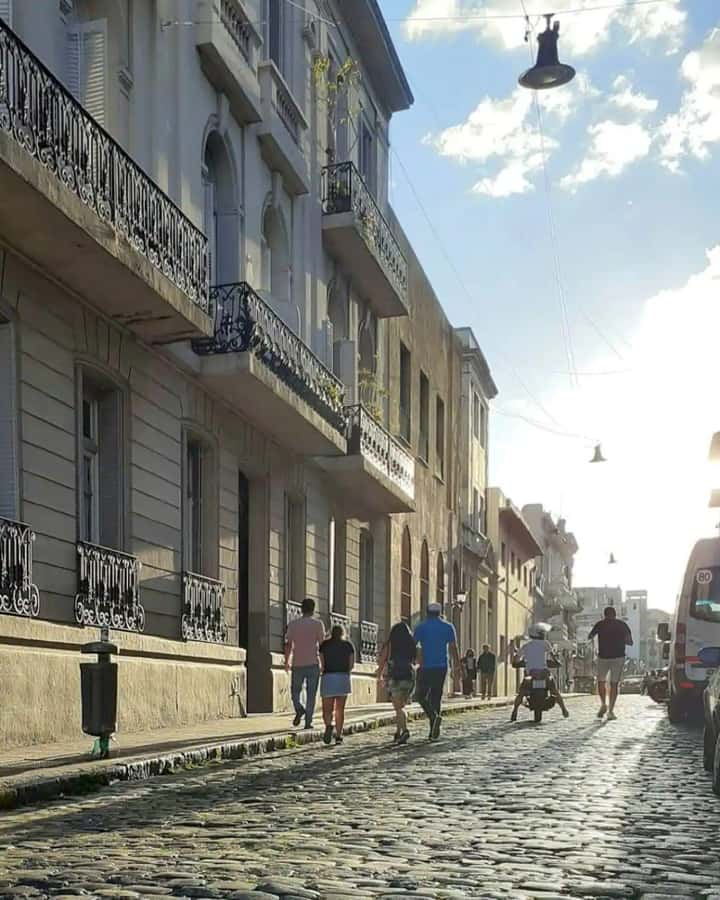
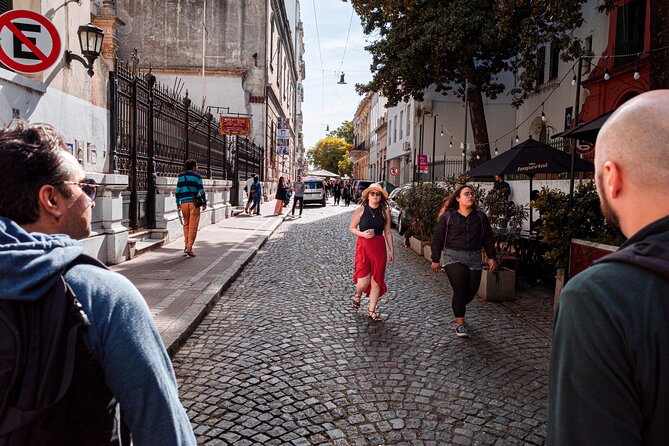
The route continues to Parroquia de San Pedro González Telmo, followed by Plaza Dorrego. Each guided stop lasts roughly 10 minutes, then five minutes respectively.
San Telmo is one of the most useful areas for understanding the older city. The church and plaza bring together religion, public space, neighborhood identity, and the changing face of historic Buenos Aires. The short stop at Plaza Dorrego keeps the pace moving toward the market.
At San Telmo Market, you get about 20 minutes of break time. This is a welcome pause in a three-hour walk. You can rest, look around, and take stock of the themes introduced so far. Meals and drinks are not included, so bring water and budget separately if you want something to eat.
The market stop is also practical. It breaks up the more demanding historical discussion and gives you a chance to browse at your own speed. Still, 20 minutes is not a long market visit. Treat it as a breathing space, not as a full shopping session.
From the Faculty of Engineering to the waterfront
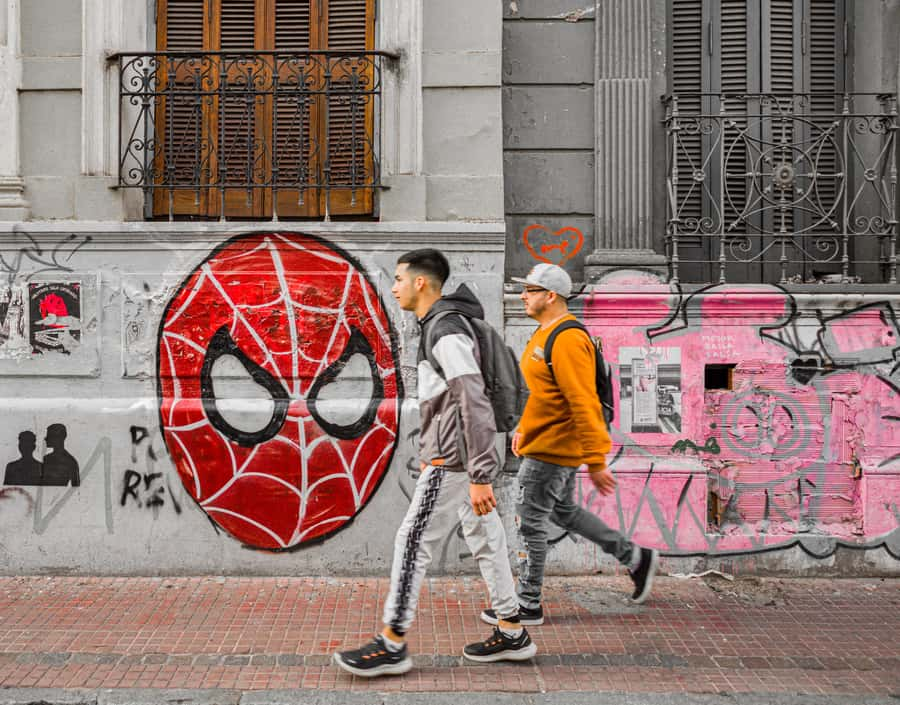
After the market, the walk continues to the Facultad de Ingeniería for about five minutes of guided viewing. The route then reaches UCA Santa María de los Buenos Aires, with around 10 minutes for walking and explanation.
These stops broaden the picture beyond colonial streets and political monuments. The university setting lets the guide connect the built city with education and public life. The route keeps shifting between old and newer institutions, which helps you see Buenos Aires as a city that has repeatedly remade itself.
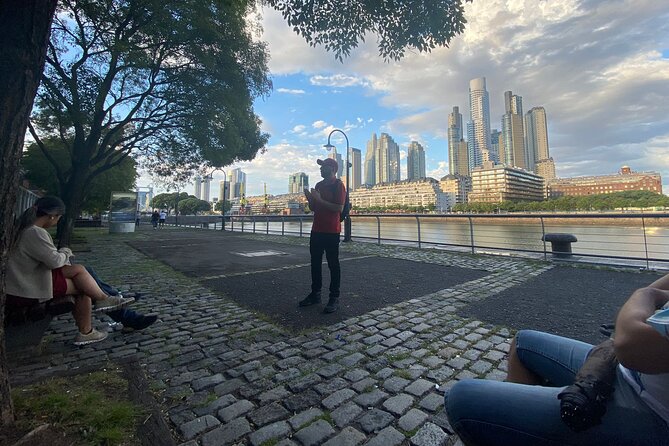
The final approach leads to Puente de la Mujer, where the guided portion lasts about 15 minutes. This modern bridge provides a change of mood and setting before the tour ends near the city’s political center.
The contrast is useful. You move from older religious and neighborhood spaces to a contemporary waterfront landmark, then finish with the institutions that define national politics. The tour is not just a straight march through old buildings. It uses different parts of the city to show how Buenos Aires holds several eras at once.
Ending at Casa Rosada and Plaza de Mayo
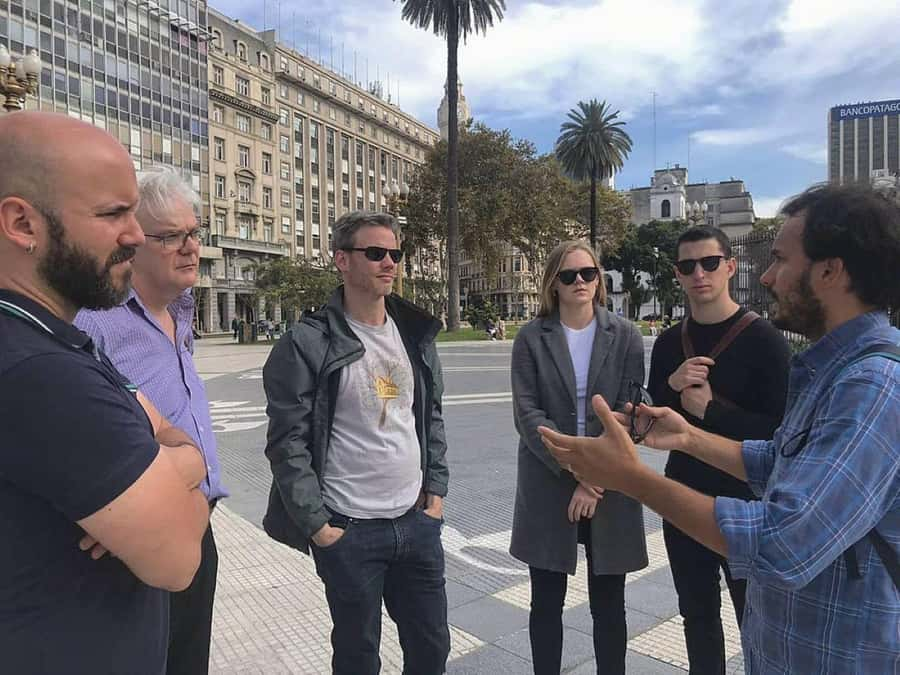
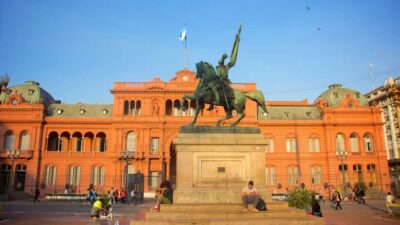
The tour concludes with drop-off options at Museo Casa Rosada, Casa Rosada, or Plaza de Mayo. This gives you flexibility at the end. You can continue sightseeing, visit the museum if it fits your schedule, or remain near the square and explore the political heart of the city.
Casa Rosada is the right place to finish because the tour has spent its route building toward questions about leadership and national identity. Here, the discussion turns to Argentina’s political figures, including Evita and Perón, and to the role of the presidential seat in the country’s public imagination.
The guide also addresses why the US dollar has such power over the local economy. That question may sound economic rather than historical, but it is useful for anyone trying to understand daily life and national politics in Argentina. It gives you a clearer way to interpret prices, currency conversations, and the tension between Argentina’s past and present.
The final stop should not be treated as a quick photo opportunity. Listen for how the building connects to the leaders, movements, and arguments discussed throughout the walk.
The guide style and group experience
The experience is offered in Spanish, French, English, and Portuguese. Private and small-group formats are available, which matters here because the tour depends on conversation.
A guide such as Nicolás can make a real difference. He is specifically praised for taking the subject from basic orientation to less familiar details, and for making space for questions. One particularly useful benefit of a private or very small group is the ability to stop and ask about a topic that interests you, rather than waiting for the whole group to move on.
The format also means your experience may not be identical each time. A private group may finish earlier if the route moves quickly, but that can be a benefit if you have an appointment or want time for questions. Ask about any timing concerns before setting another activity immediately afterward.
The multilingual setup is helpful, but always confirm your preferred language when booking. Historical and political subjects are easier to follow when the guide can explain nuance clearly.
Is $30 a fair price?
At $30 per person, the tour offers solid value for a three-hour guided walk. You are paying for a professional guide, historical explanation, and discussion rather than for transport, food, or admission to a major attraction.
I would compare it with the cost of trying to connect these places alone. You can walk through San Telmo and reach Plaza de Mayo for free, but you may miss the links between first inhabitants, immigration, British interest, African-descendant communities, dictatorship memory, Perón, and the economy. The guide supplies that connecting thread.
The value is strongest if this is your first or second day in Buenos Aires. You will leave with questions and reference points that can improve later visits to museums, churches, markets, and political sites.
It is less useful for someone who only wants a relaxed stroll or who already has a strong understanding of Argentine history. The route covers a lot, and the pace may feel brisk when the discussion becomes serious.
Practical advice for a better walk
Wear walking shoes with good support. The route lasts three hours and includes repeated movement between stops, with only a 20-minute break at San Telmo Market.
Bring water, sunscreen, and a camera. The organizers also advise preparing for changing weather, so check the forecast and dress for conditions rather than assuming every Buenos Aires day will be mild.
Do not plan a large meal during the tour. Food and drinks are not included, and the market break is limited. A bottle of water and a small snack can make the walk easier, especially in warm weather.
The tour is wheelchair accessible, which makes it an option for many visitors who need an accessible activity. Because route conditions and the exact group format can affect comfort, it is still sensible to confirm your needs when booking.
Cancellation is free up to 24 hours before the start, and you can reserve now and pay later. Those terms help if your arrival plans are still shifting.
Who should book this experience?
I would recommend this walk to first-time visitors who want a useful introduction without reducing Buenos Aires to famous buildings. It suits people who enjoy asking questions, comparing viewpoints, and learning how political events still affect public life.
It is also a good match for visitors who have already seen the main sights and want less familiar context. The Club Atlético memory site, the discussion of African-descendant communities, and the focus on British interest add subjects that many standard city tours skip.
Families with older children and teenagers may find the conversation worthwhile, provided they are comfortable with serious political history. The walk is also well suited to solo visitors because a small group or private format makes it easier to engage with the guide.
You may want a different activity if you prefer a food tour, a ride with little walking, or a narrow focus on architecture. This experience asks you to think as much as you look.
Should you book Buenos Aires for curious people?
Book it if you want the city explained through people, power, memory, and change. The route is well chosen, the price is reasonable, and the mix of historic sites, political questions, and lesser-seen subjects gives you more than a basic orientation.
I especially like it for the start of a Buenos Aires visit. You will see Lezama Park, San Telmo, the market, the waterfront, and Casa Rosada, but the real payoff is the set of questions you carry into the rest of your trip.
Skip it only if you want a quiet walk with little discussion or if three hours on foot sounds tiring. For curious visitors who want to understand why Buenos Aires feels politically charged, culturally layered, and shaped by immigration, this is a strong choice.
FAQ
Where does the tour begin?
The meeting point is by Bar Británico, near Parque Lezama.
Where does the tour end?
The walk ends at one of three locations: Museo Casa Rosada, Casa Rosada, or Plaza de Mayo.
How long does the experience last?
The tour lasts three hours.
What languages are available?
The live guide is available in Spanish, French, English, and Portuguese.
Is this a walking tour?
Yes. The experience is described as a walking journey through the historic center, with guided stops along the route.
Is the tour wheelchair accessible?
Yes, the activity is listed as wheelchair accessible.
Are food and drinks included?
No. Meals and drinks are not included. There is a 20-minute break at San Telmo Market.
Can I cancel my booking?
Yes. You can cancel up to 24 hours in advance for a full refund. You can also reserve now and pay later.
Just added around Buenos Aires
- Tango Show at El Querandi with optional Dinner★ 4.2 · 3 reviews
- Wine Tasting in Buenos Aires★ 4.2 · 4 reviews
- Walking Tour: Buenos Aires bookstores★ 4.3 · 12 reviews
- Velez Sarsfield Football Match★ 5.0 · 3 reviews
- Unique Tigre and Delta Private Day Cruise Navegation★ 5.0 · 3 reviews
- Private Underground Tango Immersion★ 5.0 · 31 reviews
- Sailing with Wine Tasting in Buenos Aires★ 5.0 · 50 reviews
- Experience The Essence of Buenos Aires in San Telmo★ 5.0 · 51 reviews
Buenos Aires Tours, compared.