

Reviewed · QUEBRADA DE HUMAHUACA TOURS
Hornocal: Tour of the 14 Colors Mountain & Humahuaca´s Gorge
Hornocal is the prize here: a sharp, striped mountain ridge where red, orange, yellow, cream, and purple bands fold across the high country. The final climb from Humahuaca by 4×4 vehicle gives this full-day outing its sense of adventure, while the Quebrada of Humahuaca supplies one striking view after another.
I like the broad route, which links Purmamarca and Tilcara with Hornocal instead of treating the 14 Colors Mountain as an isolated photo stop. I also like the cultural touches, from Uquía’s old church paintings of gun-carrying angels to the Tropic of Capricorn marker. The tradeoff is time: at 12 hours, this is a long day, and some stops may feel brief. Transport quality has also varied, with reports of an old bus, weak microphone sound, and rough suspension.
Key points to know before booking
- Hornocal requires a 4×4 change in Humahuaca, and the mountain viewpoint is the high point of the day.
- Purmamarca’s Seven Colors Hill gives you an earlier, easier introduction to the area’s unusual geology.
- Tilcara, Maimará, and Uquía are included in the route description, but the time available at each can be limited.
- Pucará de Tilcara admission is not included, and the archaeological site may not receive a full visit on a tightly timed day.
- Hotel pickup runs roughly from 6:30 to 7:15 AM for central accommodation near Salta’s 9 de Julio square.
- Food and drinks are extra, so you should start with breakfast and carry water and weather-ready clothing.
Why Hornocal is worth the long day
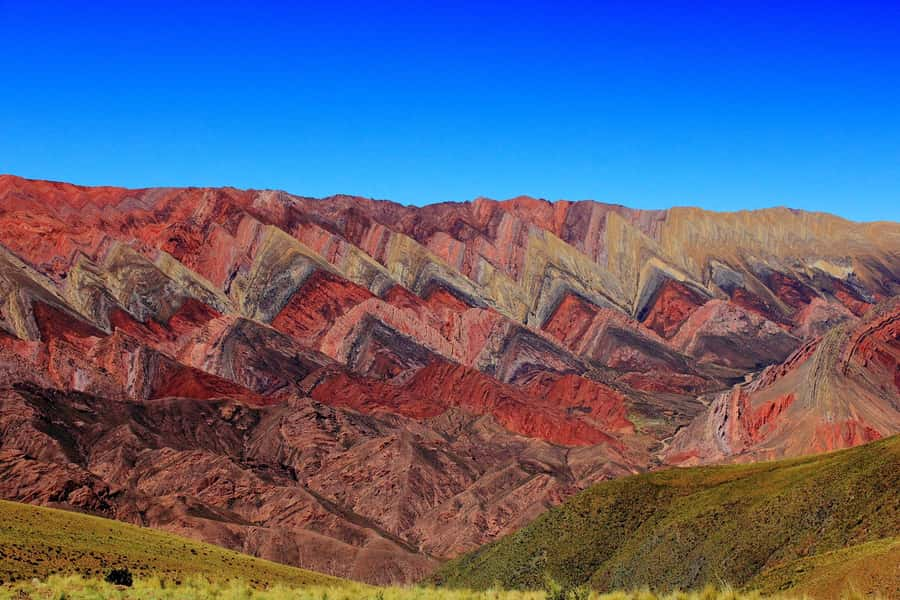
The Hornocal viewpoint is the main reason to choose this outing. The mountain belongs to the Yacoraite calcareous formation, a long geological belt that runs from Salta through the Quebrada de Humahuaca and onward across the Bolivian Altiplano to Peru.
You do not need to be a geology enthusiast to appreciate it. From the viewpoint, the folded rock forms a broad zigzag of color. The name 14 Colors Mountain is useful shorthand, though the exact shades change with sunlight, weather, and your position. Red and rust tend to catch the eye first, with pale cream and yellow bands cutting across them.
Getting there is part of the appeal. In Humahuaca, you leave the main bus or van and board a local 4×4 for the climb to Hornocal. That vehicle change makes the final section feel distinct from the rest of the day, and it also places the mountain visit in local hands. Afterward, you return to Humahuaca and rejoin the main group.
Plan for a lot of road time. The mountain is not a quick roadside stop from Salta, and the 12-hour schedule reflects the distance. If you prefer slow meals, long museum visits, or independent wandering, this will feel rushed. If you want to cover the Quebrada’s major sights in one day, the route earns its keep.
More Quebrada de Humahuaca days:
- From Salta: Full-Day Trip to Salinas Grandes and Purmamarca
★ 4.6 · 914 reviews - From Salta: Salinas Grandes, Purmamarca & Los Colorados Hike
★ 4.3 · 356 reviews - From Salta: Serranías del Hornocal & Hill of 14 Colors Tour
★ 4.4 · 339 reviews
Purmamarca and the Seven Colors Hill
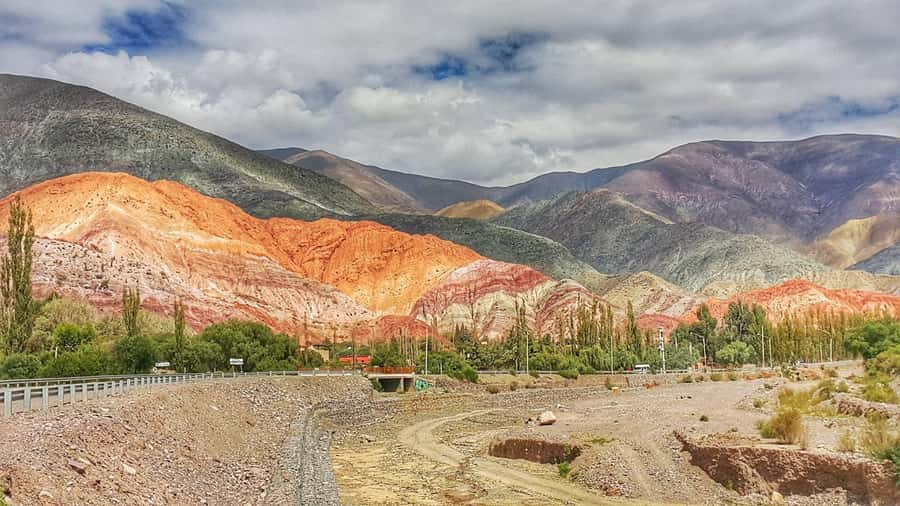
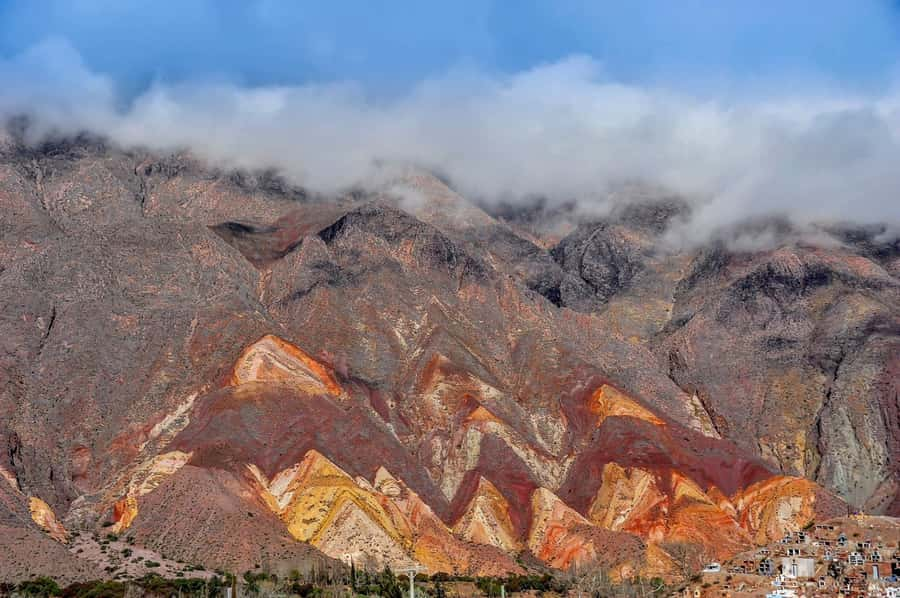
The first major stop is Purmamarca, a compact village at the foot of the Seven Colors Hill. Its setting is immediately readable: low buildings and village streets backed by a mountain with bands of red, tan, orange, and other muted tones.
Purmamarca works well early in the day because it gives you a clear comparison with Hornocal. The Seven Colors Hill is close to town and easy to appreciate without a long climb or special vehicle. Hornocal, by contrast, feels more remote and dramatic because of its elevated viewpoint and folded ridge.
Your time here matters. The tour description promises a visit to the village and its famous hill, but it does not specify a long free period. Keep your expectations practical. You are getting a scenic introduction, not a full village stay with hours for shopping, meals, and side streets.
The scenery also changes as the route continues. Purmamarca introduces the warmer, more familiar colors of the Quebrada. Later, Maimará and Hornocal add larger folds, stronger contrasts, and a wider sense of open country.
Maimará and the Painter’s Palette
Maimará sits below the formation known as the Monolith Painter’s Palette. The name fits the view: red, yellow, orange, and pale tones appear across the slopes in broad, uneven bands.
This is one of the route’s best visual stops because it lets you see the geology from another angle. At Purmamarca, the colored hill feels like a backdrop to a village. Near Maimará, the patterned slopes become the main subject. You can compare the softer colors here with the sharper, more dramatic lines at Hornocal later in the day.
There is an important practical point. The printed route includes Maimará, but the actual time spent at each small town can depend on traffic, road conditions, and the group schedule. One account of this experience specifically found that Maimará was not visited, so I would confirm the day’s exact stop list before booking if this village is a priority for you.
That does not make the outing poor value, but it does affect how you plan. Book this for the overall Quebrada route and Hornocal, not for a guarantee of extended time in every named village.
Tilcara’s Andean character and Pucará question
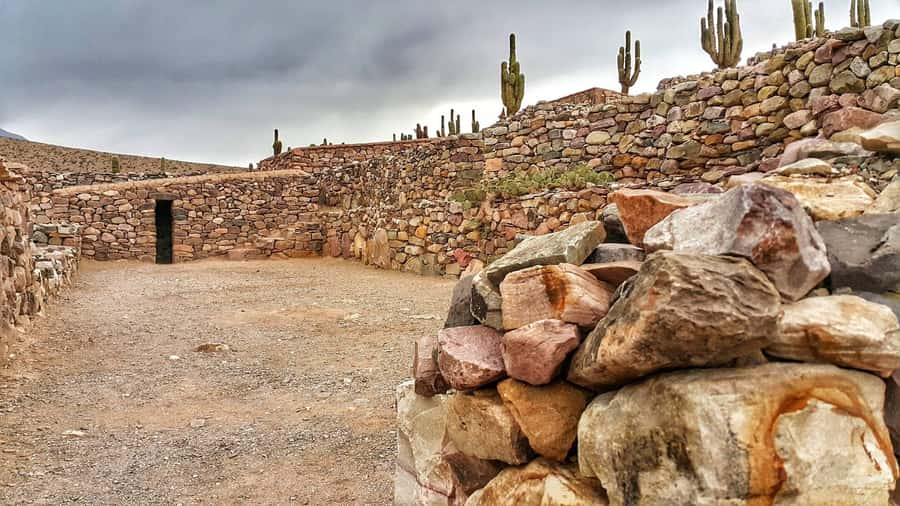
Tilcara brings a different mood. It is known for Andean character, local culture, and mountain views, and it is one of the most appealing towns on the route for anyone who wants more than scenery from a vehicle window.
The main question is what you will actually have time to see. The itinerary mentions Tilcara, but one account noted that there was not enough time to see much of it. That is believable on a 12-hour circuit with several stops and a separate 4×4 journey to Hornocal.
The Pucará de Tilcara archaeological site is not included in the price. Admission is extra, and the schedule may not allow a proper visit even if you are interested in the site. Do not assume that a mention of Tilcara means a full archaeological tour. If Pucará is essential to your plans, set aside a separate visit or ask the operator for a precise timetable.
I still like having Tilcara on the route. Even a short pause can help break up the drive and show you a settled Andean town rather than only viewpoints. Just treat it as a taste, not a complete Tilcara experience.
A few more Salta half-days to weigh up
- From Salta: Full-Day Tour to Cafayate with Wine Tasting
★ 4.5 · 478 reviews - Full-Day Tour Cafayate Calchaqui Valleys with Wine
★ 4.5 · 347 reviews - From Salta: Cafayate, land of wines and imposing ravines
★ 4.4 · 347 reviews - From Salta: Cachi and Los Cardones National Park Tour
★ 4.5 · 285 reviews
Uquía and the gun-carrying angels
Uquía is a smaller, quieter stop with a special cultural detail: its historic church contains paintings of angels carrying guns. These works are often called the gun-toting angels, and they reflect a colonial-era religious art tradition shaped by local conditions and Spanish influence.
This stop adds useful context to a day that could otherwise become a parade of colored hills. The Quebrada is not only a place of unusual rock formations. It is also a corridor of villages, churches, beliefs, and older cultural exchanges.
Again, timing is the concern. The route description includes Uquía, but not a long guided visit. If the church is open during your stop, you may have only a short window to look inside. The tour is best for a first encounter, while a slower cultural trip would give you more time in the village.
The Tropic of Capricorn stop
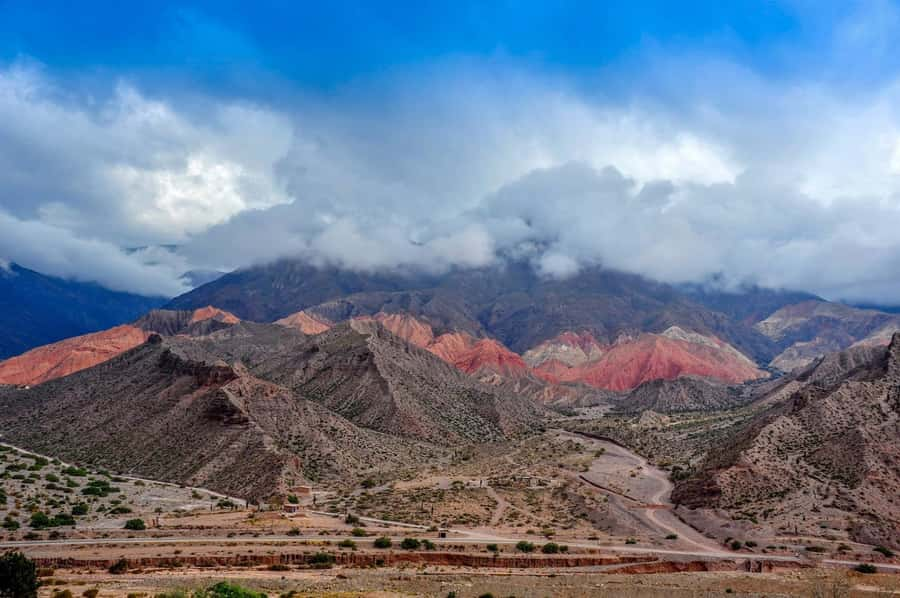
The tour pauses at the Tropic of Capricorn, the southernmost latitude where the sun can appear directly overhead at noon. It is a simple stop, but it gives the route a useful geographic marker.
I like these brief markers when they connect a long drive to something you can understand on a map. You are not simply passing through northern Argentina. You are moving through a distinctive latitude and a highland region with its own climate, geology, and settlement patterns.
Do not expect a major attraction with a long visit. This is a short photo and orientation stop, best appreciated as part of the route rather than as a reason to book the tour by itself.
The Humahuaca Gorge before the final climb
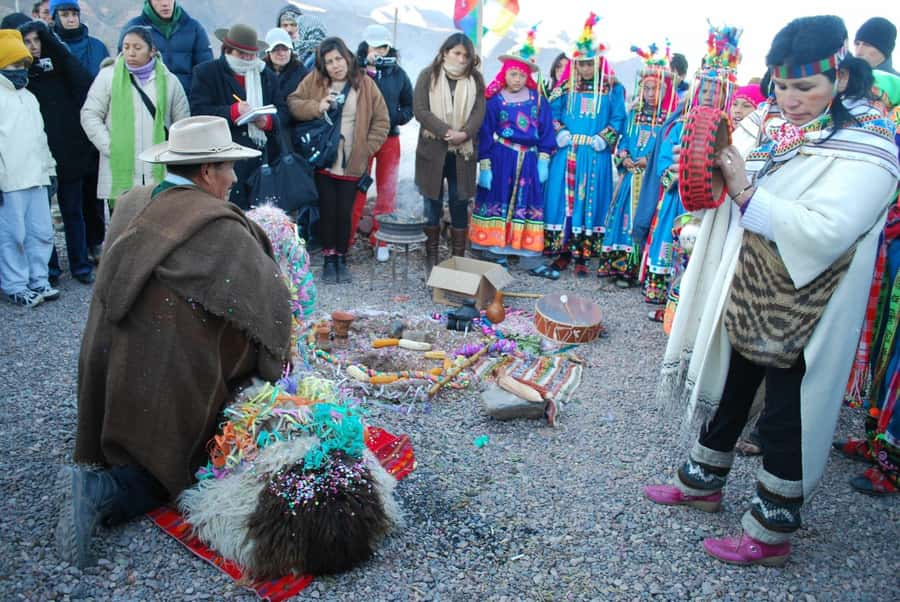
The Quebrada de Humahuaca is the thread tying the day together. The road passes through a long mountain corridor marked by dry slopes, colored rock, and small settlements. The gorge gives you scale, while the individual towns provide human detail.
You will make a short visit to Humahuaca before going to Hornocal. This is where the transport arrangement changes, so pay attention to the guide’s instructions. You leave the bus or van, board a 4×4, and travel toward the mountain with a local guide for the final stretch.
That change is worth understanding before you book. You are not staying in one vehicle all day, and you may be separated from the main group for the Hornocal portion before meeting everyone again afterward. The arrangement is practical, not luxurious, but it suits the rougher road and makes the final stop possible.
Humahuaca itself receives less attention than Hornocal. If you want a long town visit, local meal, or careful look at every historic building, this tour may not give you enough time. Its purpose is to connect the main route and prepare you for the mountain viewpoint.
Transport, guides, and the reality of a 12-hour outing
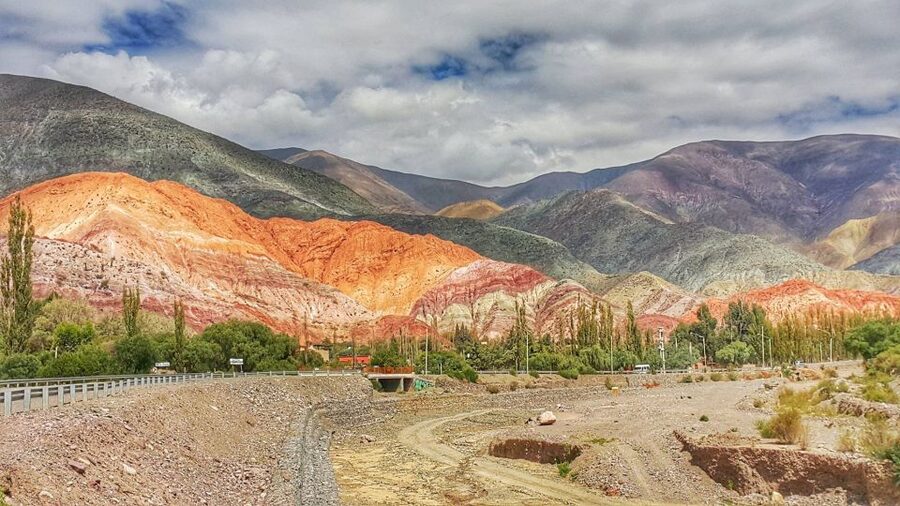
The tour includes round-trip transportation and a Spanish or English-speaking guide. Hotel pickup and drop-off are available if you select that option and stay in centrally located accommodation within about eight blocks of Salta’s 9 de Julio central square.
Pickup is scheduled between 6:30 and 7:15 AM. Be ready 15 minutes early. In some cases, a bus cannot reach a hotel, and the local operator may arrange a nearby meeting point. Confirm this before the morning of departure, especially if your lodging is on a narrow street or outside the central zone.
Guide quality can shape the day. Martín received particular praise for clear explanations, while another account described a guide as somewhat cold even though the driver was friendly. That tells you to expect a mix of personalities rather than a uniform style.
Transport has also been uneven. One bus was described as old, with a microphone that was hard to hear. Another account described poor suspension and a bumpy ride along the route. Roads through mountain country are not always smooth, but a vehicle in poor condition can make a long day tiring. If you have back problems or dislike rough roads, ask about the current vehicle before paying.
What the $68 price really covers
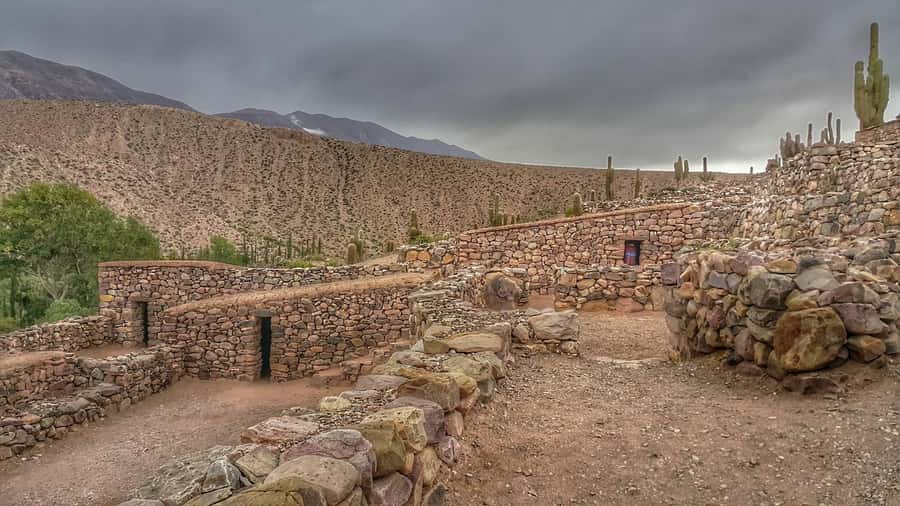
At $68 per person, the tour is priced as a full-day regional outing rather than a short city excursion. The value comes from covering a large route with transport, a bilingual guide, the Humahuaca Gorge, several towns, and the 4×4 connection to Hornocal.
You are paying for convenience and breadth. Organizing Purmamarca, Maimará, Tilcara, Uquía, Humahuaca, and Hornocal independently would require careful timing and several transport arrangements. The tour removes that work.
The price does not cover food, drinks, or admission to Pucará de Tilcara. Bring money for meals and snacks, and do not assume an archaeological visit is included. Because the day starts early and ends late, breakfast is especially important.
Value depends on your priorities. If Hornocal is your main goal and you want a coordinated route from Salta, $68 is reasonable. If you mainly want a relaxed visit to Tilcara or Maimará, the limited stop time may make another arrangement better.
What to wear and carry for Hornocal
Bring your passport or identity card, comfortable shoes, comfortable clothing, and layers suited to changing weather. The information for this outing specifically asks you to carry identification, so keep it accessible rather than packed deep in your luggage.
Weather-ready clothing matters more than stylish clothing here. The route includes long hours outside, mountain viewpoints, and a 4×4 transfer. Conditions can feel different from the city, and you will be happier with a warm layer and practical shoes.
Pack water and food or plan to buy them during the day. Neither is included. Since the schedule covers many places, your meal opportunities may be limited or timed around the group.
Who should book this Hornocal tour?
I would choose this tour if you have one day for the Quebrada and want the strongest possible overview. It suits you if Hornocal is at the top of your list, you enjoy scenic road trips, and you prefer having transport and guiding arranged for you.
It also suits first-time visitors who want cultural details alongside mountain views. Uquía’s church, the Tropic of Capricorn, Purmamarca, and Tilcara give the day more range than a direct Hornocal transfer.
I would hesitate if you want an easy, leisurely day. Twelve hours is a serious commitment, and the route can involve rough transport, early pickup, short stops, and a late return. I would also hesitate if your main aim is Pucará de Tilcara or a detailed visit to every town, since the schedule may not allow it.
The overall rating of 4.2 from 81 bookings fits the experience well: the main sights are powerful, but the execution depends on the vehicle, guide, timing, and exact stops that day.
Should you book it?
Book this outing if Hornocal’s 14-color ridge is a must-see and you want to fold the Quebrada’s best-known towns into one long day. The final 4×4 ride, the mountain viewpoint, and the range of cultural stops give you plenty for the price.
Before confirming, ask about the current vehicle, the planned time in Tilcara and Maimará, and whether hotel pickup applies to your address. If you accept a packed schedule and some road bumps, this is a practical way to reach a remote highlight. If you want depth rather than coverage, stay longer in the Quebrada and visit its towns separately.
FAQ
How long does the Hornocal tour last?
The tour lasts 12 hours. Pickup is scheduled between 6:30 and 7:15 AM when hotel pickup is selected.
Is hotel pickup included?
Hotel pickup and drop-off are available if you select that option and stay in centrally located accommodation within eight blocks of Salta’s 9 de Julio central square. The bus may not reach every hotel, and an alternate pickup point may be arranged.
What languages does the guide speak?
The tour offers a live guide in Spanish and English.
Do I travel to Hornocal in the same vehicle all day?
No. In Humahuaca, you leave the main bus or van and transfer to a 4×4 vehicle for the trip to Hornocal. You meet the rest of the group again after returning.
Are food, drinks, and Pucará de Tilcara admission included?
No. Food and drinks are not included, and admission to the Pucará de Tilcara archaeological site is also extra.
Can I cancel the tour?
You can cancel up to 24 hours before the activity for a full refund. A reserve-now, pay-later option is also available.
Just added around Salta
- Tucumán: Tafí del Valle Full Day Tour★ 3.8 · 4 reviews
- Trekking Purmamarca★ 5.0 · 52 reviews
- Salinas Grandes and Purmamarca Full Day Tour★ 4.5 · 34 reviews
- Tilcara: 2 hours cycling tour trough the rural area★ 5.0 · 5 reviews
- From Salta: Cafayate, Humahuaca, Cachi, & Salinas Grandes★ 4.3 · 13 reviews
- Salta: Tour to the Salinas Grandes and Purmamarca★ 3.7 · 3 reviews
- Salta or Jujuy: Iruya and Salinas Grandes 2-Day Tour★ 4.3 · 3 reviews
- Salta en un Bocado – Cultural Tour & Empanada Tasting★ 5.0 · 3 reviews
Quebrada de Humahuaca Tours, compared.
Full-Day Trip to Salinas Grandes and Purmamarca
Read our review →
Salinas Grandes, Purmamarca & Los Colorados Hike
Read our review →
Serranías del Hornocal & Hill of 14 Colors Tour
Read our review →
Full-Day Tour Salinas Grandes and Purmamarca from Salta
Read our review →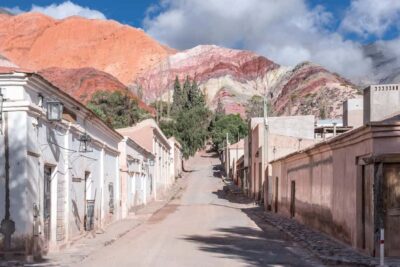
Full-Day Tour to Salinas Grandes and Purmamarca From Salta
Read our review →
Cafayate and the imposing Quebrada de las Conchas
Read our review →
Salinas Grandes, Purmamarca & Los Colorados Hike
Read our review →Browse the lists this tour appears in