Reviewed · BUENOS AIRES TOURS
Buenos Aires: Chacarita, The Largest Cemetery In Argentina
Chacarita Cemetery is not just a place of graves. It is an open-air record of Argentine culture, with tango singers, poets, actors, musicians, athletes, and public figures remembered in grand mausoleums and quiet corners. The three-hour walk takes you from Carlos Gardel’s famous tomb to Gustavo Cerati’s more modern memorial, then into German and British burial grounds with their own styles and traditions.
I like the small six-person group, which gives guide Miguel room to answer questions and adjust his pace. I also like the range of the visit: you get tango, popular music, cinema, poetry, military history, and cemetery architecture in one outing. The main drawback is practical: this is a long walking tour with uneven access, and it is not suitable for wheelchair users or people with mobility impairments.
Key points about the Chacarita Cemetery walk
- Carlos Gardel’s mausoleum: Pay respects to Argentina’s best-known tango voice and learn why his tomb draws such lasting attention.
- Gustavo Cerati and Gilda: See memorials connected to two beloved figures in Argentine popular music.
- Tango, film, poetry, and public life: The route includes Osvaldo Pugliese, Luis Sandrini, Alfonsina Storni, Jorge Newbery, and other notable names.
- German and British burial grounds: Compare different memorial styles, religious spaces, and national traditions.
- A genuinely small group: No more than six people join the Spanish-language walk.
- A full three-hour visit for $20: The price is reasonable if you want context rather than a quick look at cemetery gates and famous names.
Why Chacarita tells Argentina’s story
Buenos Aires has famous cemeteries, but Chacarita offers a different kind of encounter. Its importance is not limited to grand marble tombs. The people remembered here connect to the music, films, poetry, sports, and public life that shaped Argentina for generations.
That makes this a good choice if you want more than a standard sightseeing stop. You are not simply walking among graves. You are following a cultural map of the country, with each mausoleum opening a small story about fame, memory, art, or public service.
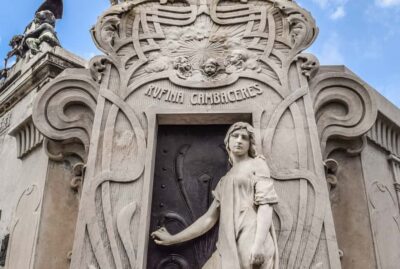
The cemetery also gives you a chance to compare architectural styles. Some memorials are formal and imposing. Others are more personal, with flowers, photographs, or signs of continuing affection. The tour also reaches separate German and British burial areas, where national customs and religious design add another layer to the visit.
I would not treat Chacarita as a casual stroll. Three hours is a substantial amount of time, and the setting calls for respectful behavior. If you enjoy places that explain a city through its people, the length works in your favor. If you only want to see one famous grave, the tour may feel too long.
A few more Buenos Aires half-days to weigh up
- Buenos Aires Hop-On Hop-Off Bus, Free Walking Tours & Discounts
★ 4.5 · 2,218 reviews - Buenos Aires: Piazzolla Tango Show with Optional Dinner
★ 4.4 · 2,122 reviews - Buenos Aires: City Highlights Guided Tour with Transfer
★ 4.7 · 1,946 reviews
Beginning at the main door
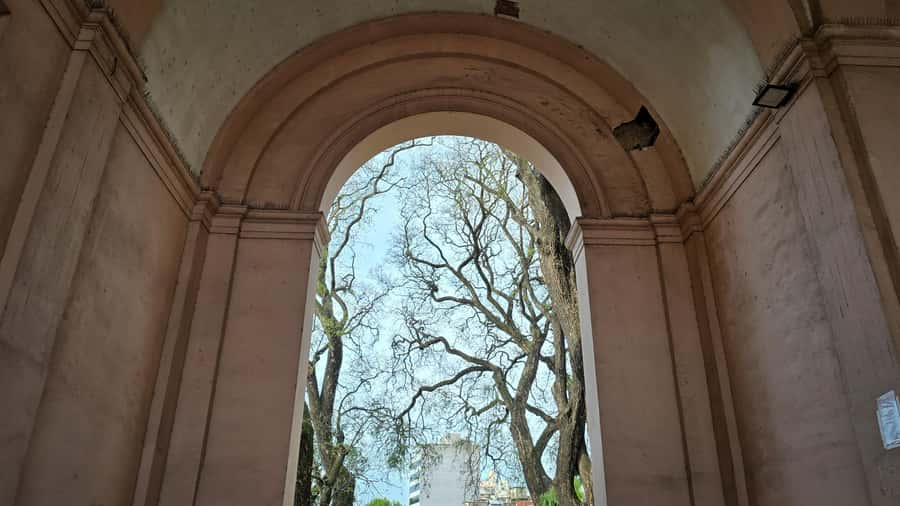
You meet at the main door of Chacarita Cemetery. From there, the guide introduces the cemetery before leading you toward the most notable memorials.
The first stop is a general visit to Chacarita Cemetery, with time for photographs and an initial explanation. This opening matters because it gives you a sense of the site before the tour narrows its focus to individual figures.
The planned visit includes a 10-minute guided stop here. That may sound brief, but it is useful for getting your bearings and understanding why Chacarita matters in Buenos Aires. Bring water, wear comfortable shoes, and keep your hat and sunscreen handy. The tour is outdoors, and the supplied information does not suggest that indoor shelter is available throughout the walk.
Carlos Gardel, the voice of tango
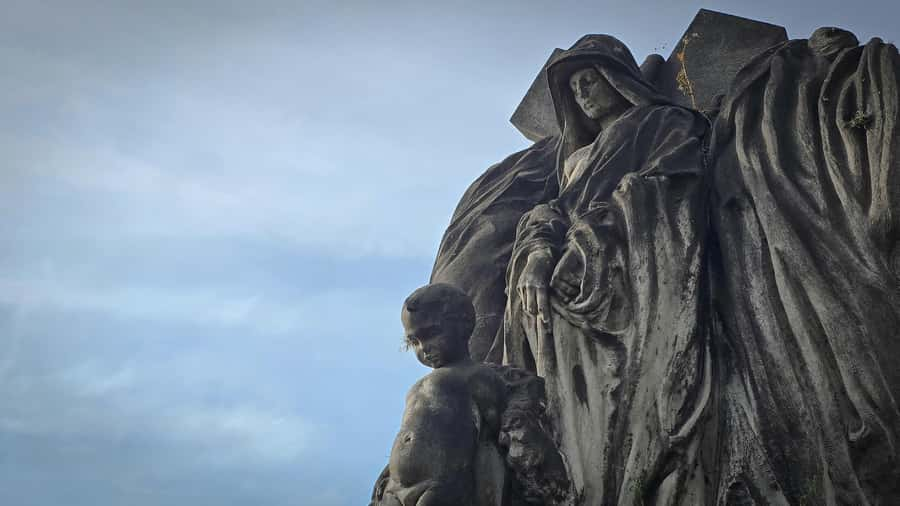
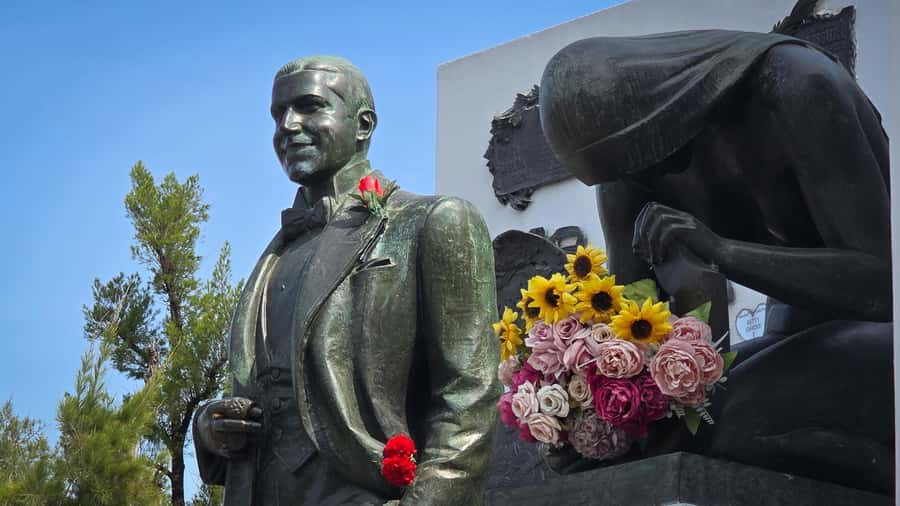
For many people, the emotional center of the tour is the Mausoleum of Carlos Gardel. Gardel is presented as the quintessential voice of tango, and his name carries weight far beyond music fans.
The 10-minute stop includes time to visit, hear the guide’s explanation, and take photographs. A good guide can help you see the memorial as part of Argentine cultural life rather than as a famous name on a map. Miguel’s Spanish commentary is especially useful here because he connects the cemetery to the people and art that Argentines hold close.
If you have limited knowledge of tango, do not worry. The tour is not described as a specialist music lecture. Instead, Gardel serves as an accessible entry point into the country’s musical identity.
Jorge Newbery and public memory
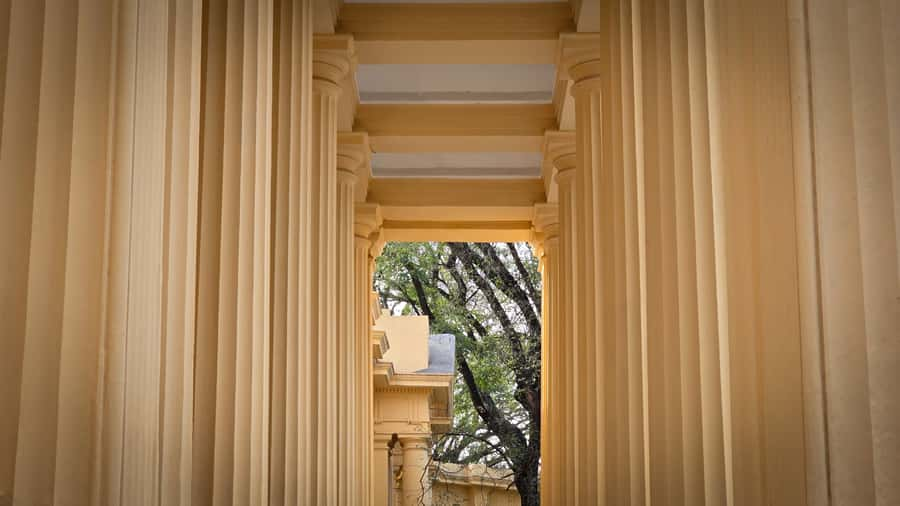
The next stop is the Mausoleum of Jorge Newbery, also scheduled for about 10 minutes. Newbery is one of the public figures included in the route, and his memorial broadens the tour beyond entertainers.
This is one of the strengths of the itinerary. You are not taken from one celebrity grave to another without pause. The names represent different parts of Argentine life, so the visit keeps shifting in tone and subject.
The stop allows photographs and a guided explanation. As with the other memorials, the value depends on listening to the story behind the name. Chacarita works best when you let the guide explain why a person mattered, not when you race to collect pictures.
Same city, a completely different kind of day:
- Buenos Aires: Hop-On Hop-Off City Bus Tour
★ 4.2 · 1,855 reviews - Buenos Aires Hop-On Hop-Off Bus and Exclusive Benefits
★ 4.4 · 1,714 reviews - Buenos Aires: La Boca Guided Walking Tour in English
★ 4.8 · 1,587 reviews - Buenos Aires: La Recoleta Cemetery Guided Tour in English
★ 4.8 · 1,359 reviews
María Salomé Loredo de Subiza
The Mausoleum of María Salomé Loredo de Subiza receives another 10-minute visit. This is one of the less familiar names for many international visitors, which makes the guide’s role important.
You might not recognize every person on the route, and that is part of the point. The tour introduces figures who shaped Argentine society but may not appear in standard guidebooks. A small group helps here because you can ask Miguel to explain a name or story without holding up a large crowd.
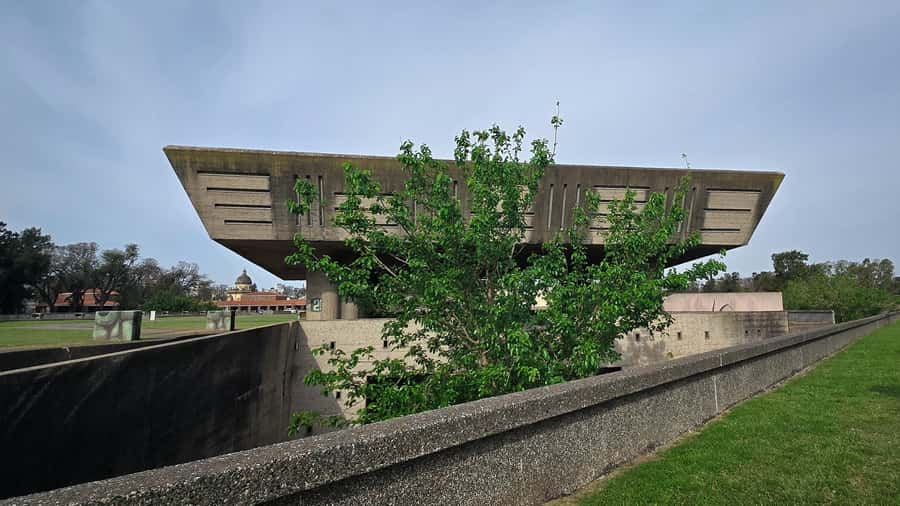
This stop also reinforces the architectural side of the walk. Chacarita is not only a collection of famous residents. The mausoleums themselves show how families and communities choose to honor the dead.
Gustavo Cerati and modern Argentine music
The Mausoleum of Gustavo Cerati is given 15 minutes, making it one of the longer stops. Cerati’s memorial brings the story into a more recent era of Argentine music.
That contrast with Gardel is one of the tour’s most appealing features. You move from the classic world of tango to a modern musical figure with a different audience and legacy. Together, the two stops show how Argentine music has changed while still producing artists with a powerful place in public memory.
You get time to visit and hear a guided explanation. If you are interested in rock music, this may be the stop that makes the tour feel especially personal. Even if you are not familiar with Cerati, the contrast between his memorial and the older tango sites helps you understand the breadth of Argentine popular culture.
Gilda and the personal side of fame
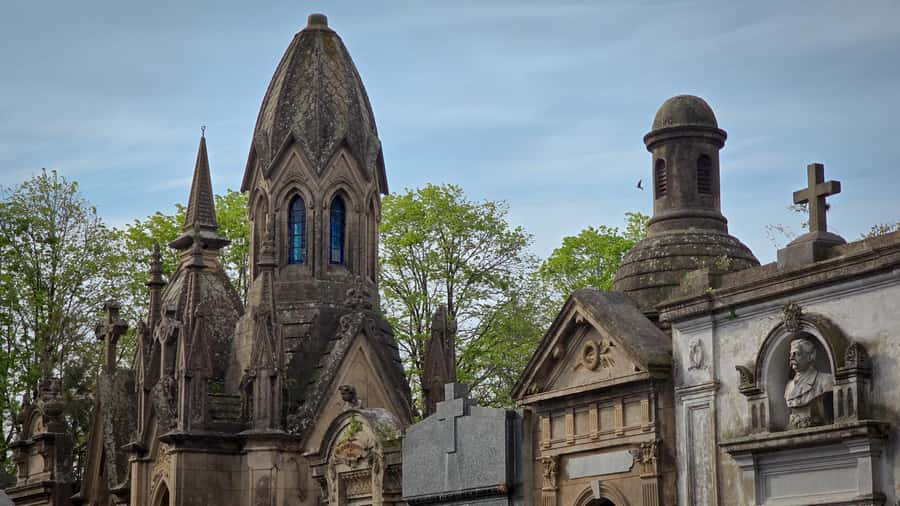
The visit to Gilda’s tomb also lasts about 15 minutes. Gilda is another major name in Argentine music, and her inclusion keeps the route from being limited to internationally famous figures.
This stop can feel different from the grander mausoleums. A cemetery visit often reveals how people continue to express affection for artists after death, and the guide can explain the place Gilda holds in Argentine memory.
The tour’s music theme becomes clear by this point. Gardel, Pugliese, Cerati, and Gilda represent different musical worlds, while their shared presence in Chacarita shows how a cemetery can become a record of changing tastes and generations.
The chapel and the cemetery’s quieter spaces

The Chapel of Chacarita Cemetery receives a 10-minute guided visit. This stop gives the tour a religious and architectural pause after several famous individual memorials.
You can expect a closer look at the cemetery’s sacred setting and design. The chapel also helps balance the tour. Without it, the route could feel like a list of celebrity graves. With it, you see the cemetery as a functioning spiritual place as well as a cultural one.
The tour includes a 10-minute pause for restroom use during the three hours. The supplied information does not specify exactly where that pause occurs, so ask Miguel at the beginning if you need to plan around it.
Panteón VI and the larger memorials
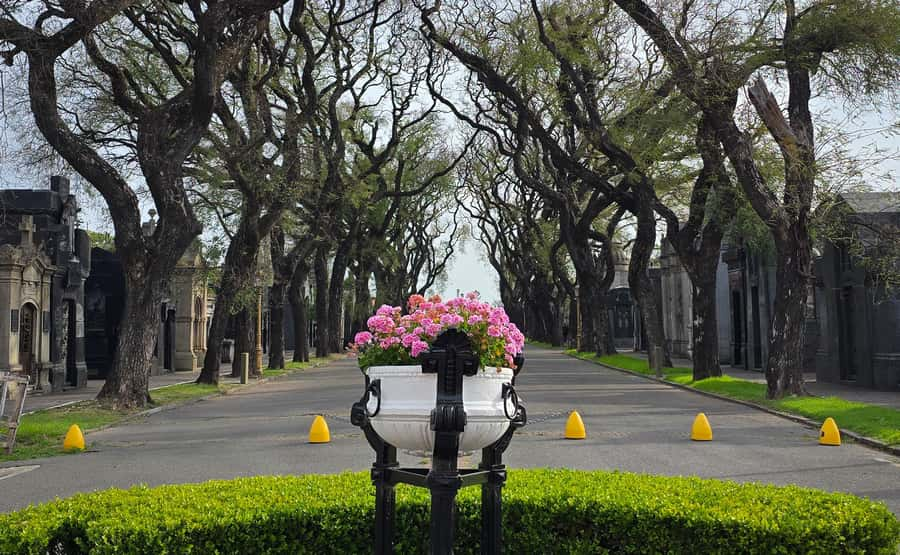
Panteón VI is allotted 30 minutes, the longest single stop on the route. That extra time suggests a more substantial explanation of the space, its architecture, or the people associated with it.
This is where the tour’s focus on art and memorial design becomes most useful. A pantheon can show how a group, institution, or family chooses to remember its members. Look beyond the surface details and listen for the links between the building, the people inside it, and Argentina’s public life.
The longer stop also gives you room for photographs without rushing. Still, remember that a three-hour walking tour requires patience. The visit is built around stopping and listening, not moving constantly from one attraction to the next.
Commonwealth War Graves Buenos Aires
The Commonwealth War Graves section adds a clear international element. It is scheduled for about 15 minutes and lets you consider how British and Commonwealth military dead are honored in Buenos Aires.
This stop is valuable because it shifts the subject away from Argentine entertainment and national culture. The memorials reflect another tradition of remembrance, with a style and purpose that differ from the famous mausoleums elsewhere in the cemetery.
You will visit with the guide and hear an explanation of the site. It is a compact stop, but it helps prepare you for the next part of the tour, the German Cemetery and its own distinct character.
German Cemetery and national traditions
The German Cemetery receives about 15 minutes for a guided visit and sightseeing. Here you can compare memorial customs, religious references, and architectural choices with what you saw in the main cemetery and at the Commonwealth War Graves.
The tour description specifically points to unique styles, religious temples, national historical monuments, and notable people buried in these areas. That makes the German Cemetery more than an extra stop added at the end. It is part of the tour’s wider lesson: cemeteries show how communities carry their identity across borders.
The comparison works best if you pay attention to form and atmosphere. Notice how different groups use space, monuments, and sacred buildings. The guide’s Spanish explanations provide the context that a self-guided walk might miss.
Elcano Park and the final stretch
The final listed stop is Elcano Park, with about 10 minutes of guided sightseeing. It gives the walk a change of setting after the enclosed memorial areas and adds a little breathing room at the end.
The available information does not provide a detailed description of what you will see in the park, so I would not book the tour expecting a major park attraction. Treat it as the closing part of a route that has covered cemetery architecture, famous Argentine figures, military remembrance, and national communities.
By this point, the tour has moved through a wide range of subjects. That variety is its main strength, but it also means you should expect an overview rather than an exhaustive biography of every person named.
Miguel’s guiding style and language
The tour is conducted in Spanish, with Miguel as the guide. His approach appears especially suited to a small group: he is described as patient, attentive, and willing to answer questions, and he adjusts his speech for a visitor learning Spanish.
That is useful information for anyone who understands some Spanish but is not fully fluent. You should not assume the tour is offered in English, since Spanish is the stated language. Still, a patient guide who speaks slowly can make the experience workable for language learners.
Miguel also brings a personal connection to Buenos Aires and its stories. The small-group limit of six gives you a better chance to ask about unfamiliar names, clarify historical points, or pause when a memorial catches your attention.
Is $20 a fair price?
At $20 per person, the tour offers three hours of guided walking and a broad route through major sections of Chacarita Cemetery, the Commonwealth War Graves, the German Cemetery, and Elcano Park.
I see good value here if you care about context. A free walk through the cemetery would show you the buildings and tombs, but it would not necessarily explain Gardel’s importance, connect Cerati and Gilda to Argentine music, or compare German and British memorial traditions.
The price is less attractive if you want a short photo stop or only care about one person. The tour spends time on several names, including figures you may not know. That is exactly what makes it useful for curious visitors, but less suitable for someone in a hurry.
The small group also matters. You are paying not only for access to the places, but for a more personal conversation with the guide. With no more than six participants, the experience should feel less like a crowd moving from plaque to plaque.
Who should book this experience?
I would recommend this tour to visitors interested in Argentine music, film, poetry, public figures, or memorial architecture. It also suits people who prefer local stories over a standard list of major city sights.
It is a strong pick for Spanish learners. Miguel’s patience and willingness to speak slowly can turn the walk into useful language practice, as long as you are comfortable taking the tour in Spanish.
You should think twice if walking for three hours is difficult. The experience is not suitable for people with mobility impairments or wheelchair users. Comfortable shoes are essential, and you should bring water, a hat, and sunscreen.
The tour can continue in less-than-perfect weather. One recent visit took place with some rain and still lasted the announced three hours, but you should dress for the conditions because much of the experience takes place outdoors.
Should you book the Chacarita Cemetery tour?
Book it if you want a thoughtful look at Buenos Aires through the people it remembers. The route combines Gardel, Cerati, Gilda, tango, cinema, poetry, German traditions, British war memorials, and cemetery architecture in one manageable visit.
I would skip it if you want a quick attraction or need step-free access. For everyone else, $20 is a sensible price for three hours with a small Spanish-speaking group and a guide who can bring meaning to names you may not recognize. Arrive ready to walk, listen, and ask questions, and Chacarita can become one of the more distinctive cultural visits in Buenos Aires.
FAQ
Where does the tour meet?
The meeting point is at the main door of Chacarita Cemetery.
How long does the tour last?
The guided walking tour lasts three hours and includes a 10-minute pause for restroom use.
What language is the tour conducted in?
The live tour is conducted in Spanish.
How many people can join the group?
The group is limited to six participants.
How much does the tour cost?
The price is $20 per person.
Which famous graves and mausoleums are included?
The route includes Carlos Gardel, Jorge Newbery, María Salomé Loredo de Subiza, Gustavo Cerati, and Gilda. It also covers figures such as Luis Sandrini, Osvaldo Pugliese, and Alfonsina Storni.
Does the tour visit cemeteries besides Chacarita?
Yes. It includes the Commonwealth War Graves Buenos Aires and the German Cemetery.
What should I bring?
Bring comfortable shoes, a hat, sunscreen, and water.
Is the tour suitable for wheelchair users?
No. The experience is not suitable for wheelchair users or people with mobility impairments.
Just added around Buenos Aires
- Tango Show at El Querandi with optional Dinner★ 4.2 · 3 reviews
- Wine Tasting in Buenos Aires★ 4.2 · 4 reviews
- Walking Tour: Buenos Aires bookstores★ 4.3 · 12 reviews
- Velez Sarsfield Football Match★ 5.0 · 3 reviews
- Unique Tigre and Delta Private Day Cruise Navegation★ 5.0 · 3 reviews
- Private Underground Tango Immersion★ 5.0 · 31 reviews
- Sailing with Wine Tasting in Buenos Aires★ 5.0 · 50 reviews
- Experience The Essence of Buenos Aires in San Telmo★ 5.0 · 51 reviews
Buenos Aires Tours, compared.