Reviewed · BUENOS AIRES TOURS
Electric Scooter Tour: North Buenos Aires
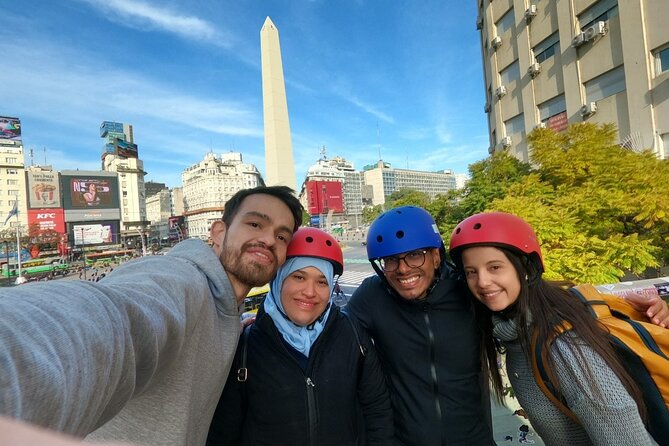
The best thing about this tour is the amount of Buenos Aires you cover without turning the day into a march. In about two and a half hours, you ride roughly 10 kilometers from the city center through Retiro, Recoleta, and the northern neighborhoods, pausing for stories, photos, mate, and an alfajor.
I like the small maximum of eight people, which keeps the ride personal, and I like that the guides explain local habits rather than simply naming buildings. Guides Miguel and Rita are praised for their humor and easy conversation. The main caution is practical: you need to know how to ride a bicycle, and traffic, weather, or a busy weekend can stretch the timing.
Key points to know before booking
- A fast way to see major sights: The route links San Martín Square, the Obelisk, Recoleta, the Faculty of Law, Floralis Generica, and MALBA.
- Local culture is central: Expect talk about soccer, barbecue, politics, authority, Argentine self-expression, religion, and French influence.
- Mate is part of the experience: You’ll learn how to prepare the traditional yerba mate drink and taste a chocolate alfajor filled with dulce de leche.
- Small groups matter: The tour allows no more than eight people, useful for questions and street crossings.
- Cycling ability is required: The electric scooter is not a good choice if you cannot ride a bicycle.
- The schedule can shift: The advertised duration is about two and a half hours, but a weekend route or cemetery stop may take longer.
Seeing Buenos Aires from an electric scooter
Buenos Aires is a city of grand avenues, broad parks, monumental buildings, and long distances. Walking gives you time to notice the details, but it can leave you tired before you reach Recoleta. A taxi is quick, yet you lose the street-level feel.
The electric scooter offers a useful middle ground. You move fast enough to connect several districts, but you still stop often to hear the guide and look around. The ride covers about 10 kilometers, so you should expect regular movement rather than a short sightseeing loop.
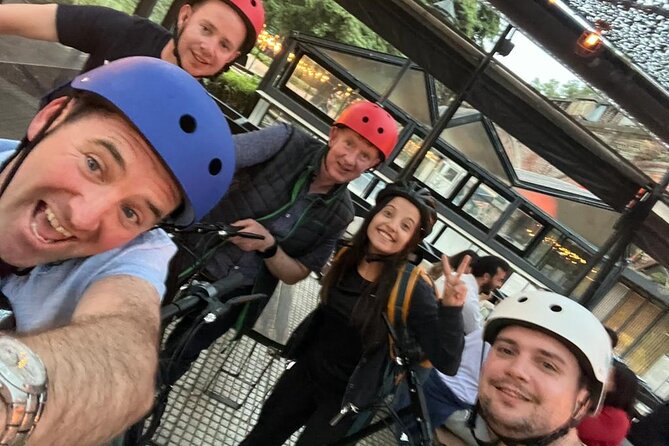
The tour begins at 2 p.m. on Tres Sargentos, near public transportation, and returns to the same meeting point. The scooter, helmet, and reflective belt are supplied. The small group size is especially helpful here because riding in an urban setting requires clear instructions and attention at crossings.
You should feel comfortable balancing, steering, braking, and riding a bicycle before booking. The electric motor makes the distance easier, but it does not remove the need for basic riding control. Wind can also be part of the deal, so secure loose clothing and bring whatever protection you normally use for an afternoon outside.
A few more Buenos Aires half-days to weigh up
- Buenos Aires Hop-On Hop-Off Bus, Free Walking Tours & Discounts
★ 4.5 · 2,218 reviews - Buenos Aires: Piazzolla Tango Show with Optional Dinner
★ 4.4 · 2,122 reviews - Buenos Aires: City Highlights Guided Tour with Transfer
★ 4.7 · 1,946 reviews
San Martín Square and Buenos Aires’ European character
The first stop is Plaza General San Martín, with about 20 minutes for explanation and orientation. This is a smart place to begin because it introduces one of the city’s most noticeable traits: Buenos Aires often feels more European than visitors expect from a South American capital.
Your guide uses the square to explain why. The point is not simply architectural style. Buenos Aires developed through immigration, political ambition, cultural exchange, and a strong desire to present itself as a modern international city. This opening gives the rest of the ride a useful frame.
You are not just looking at attractive buildings. You are learning to ask why the city looks and feels the way it does. That approach is one of the strongest parts of the experience.
Torre Monumental, football, and immigration
The next stop is Torre Monumental, known for its clock tower and often compared with London’s Little Ben. You have about 15 minutes here.
The guide connects the tower and surrounding area with migration and football, two subjects that help explain Argentine identity. Buenos Aires has been shaped by people arriving from abroad, while football became one of the country’s great shared passions. The conversation gives you a more useful introduction to soccer culture than simply pointing out a stadium.
If you are not a football fan, you will still get something from this stop. The subject opens a window onto neighborhood loyalty, national pride, and the emotional way Argentines talk about their clubs. If you are a serious football follower, ask questions. This is one place where the guide’s personal stories can add more than a standard sightseeing script.
The Obelisk, a quick look at the city’s symbol
The stop at the Obelisk lasts about 10 minutes. That may not sound long, but the purpose is clear: this is a photo and context stop rather than a long visit.
The Obelisk is one of Buenos Aires’ most recognizable landmarks and a major gathering point for public celebrations. Your guide presents it as a witness to the city, linking the monument to the events and passions that have played out around it.
The short timing works well on a scooter tour. You get the essential explanation without spending half an hour beside a monument you can understand fairly quickly. Keep your expectations realistic: this is an outdoor stop, not an interior visit.
Same city, a completely different kind of day:
- Buenos Aires: Hop-On Hop-Off City Bus Tour
★ 4.2 · 1,855 reviews - Buenos Aires Hop-On Hop-Off Bus and Exclusive Benefits
★ 4.4 · 1,714 reviews - Buenos Aires: La Boca Guided Walking Tour in English
★ 4.8 · 1,587 reviews - Buenos Aires: La Recoleta Cemetery Guided Tour in English
★ 4.8 · 1,359 reviews
French influence and Argentine self-expression
At the French Embassy, the guide turns from buildings to personality. The question is why Argentines have a reputation for being conceited, or at least unusually self-confident.
That topic is handled through the city’s ties to France and its cultural ambitions. Buenos Aires has long looked outward, borrowing ideas, styles, and social habits while developing a personality of its own. The discussion also touches on the Argentine way of expressing opinions, which can feel direct, theatrical, or wonderfully confident.
This is the kind of stop that makes a city tour more useful. You are not only collecting facts about a façade. You are getting a few clues about how people talk, argue, joke, and present themselves. The guide’s personality matters here, and Miguel and Rita are both noted for making this sort of conversation lively.
The Faculty of Law and public life
The Faculty of Law at the University of Buenos Aires receives about 15 minutes. The building is impressive, but the larger subject is education and public leadership.
You’ll hear about the university’s role in producing Argentina’s social and political figures. The stop also refers to its inauguration by Domingo and Evita Perón, placing the institution within the country’s political story.
I like this stop because it broadens the route beyond postcard sights. You see how a university can function as part of a nation’s public life, not merely as a place for classes. The discussion may be especially useful if you want to understand Argentina’s political culture, though anyone hoping to enter the building should know that the stop is primarily an exterior visit.
Mate and alfajores at Floralis Generica
Floralis Generica is the tour’s built-in pause. You spend about 20 minutes near the large metal flower sculpture, preparing and tasting mate while enjoying a traditional alfajor.
This is more than a snack break. Mate is a daily social ritual in Argentina, and learning how to prepare it gives you a small but genuine connection to ordinary local life. The supplied tasting includes an infusion made with yerba mate and a chocolate alfajor filled with dulce de leche.
The pause also gives your legs a rest and breaks up the ride. You will want to take photos of the flower, but the useful part is the explanation around the drink: how it is prepared, how it is shared, and why it matters.
The alfajor is a welcome sweet bite, especially because the tour spends much of its time moving between stops. If you dislike bitter or herbal drinks, mate may not become your new favorite. Still, tasting it in context is more valuable than seeing it on a café menu without explanation.
Recoleta Cemetery and the cost of a flexible schedule
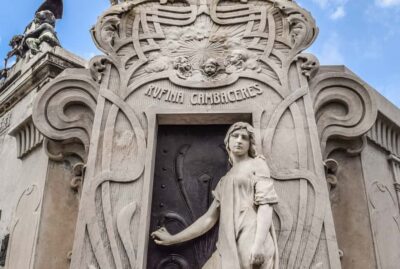
The tour allows about 15 minutes at Recoleta Cemetery, with roughly 10 minutes to enter, take photos, and look around. The cemetery is associated with important figures from Argentina and the wider continent, so it gives the route another view of national memory and religion.
The limited time means you should not expect a full cemetery visit. You’ll get a quick look rather than a detailed tour of every notable tomb. If Recoleta is high on your priority list, plan to return separately with more time.
Timing is worth watching. A weekend artisan market can affect the route, and reaching the cemetery may take longer when the area is crowded. One family’s ride lasted about four and a half hours instead of the expected three, which caused problems with later plans. That is not the normal advertised duration, but it is a useful warning: avoid scheduling another fixed activity immediately afterward, especially on a weekend.
The Basilica and MALBA finish
The Basilica de Nuestra Señora del Pilar receives about 10 minutes. The guide uses it to discuss Argentina’s Catholic tradition and the country’s connection to Pope Francis, once known as the Pope from the end of the world.
This stop works because it adds religion to the mix. The tour has already covered migration, politics, education, sport, and food. The basilica helps you see another force that shaped Argentine public life.
The final listed stop is MALBA, the Museum of Latin American Art of Buenos Aires, with about 15 minutes. Admission is not included, so treat this as an exterior stop or a brief introduction unless you plan to pay separately and return for a proper museum visit.
Fifteen minutes is not enough to explore the collection in any serious way. The value here is knowing where the museum is and why it belongs on your Buenos Aires list. If modern and Latin American art interests you, schedule a separate visit.
How the price compares with other ways to see the city
At $39 per person, this is reasonably priced for a guided two-and-a-half-hour ride that includes the scooter, safety gear, mate, and alfajor. You are paying for transportation between widely separated sights as well as interpretation.
The value is strongest if you have limited time in Buenos Aires and want an overview before choosing where to return. You cover more ground than on foot, and the guide supplies cultural context that a self-guided ride would not.
The price is less attractive if you want long visits inside museums, churches, or Recoleta Cemetery. Most stops are short, and the experience is designed as a moving overview. Think of it as a city introduction, not a collection of full attraction visits.
The maximum of eight people helps protect that value. A large group would make urban riding slower and make questions harder. Here, the format should allow more direct conversation, though the quality naturally depends on the guide assigned that day.
Practical details that affect your day
The meeting point is Tres Sargentos 463, and the activity returns there. Confirmation is provided when you book, and the starting time is 2 p.m. The tour is near public transportation, which makes it easier to fit into a day of sightseeing.
The ride requires decent weather. If rain or other poor conditions cancel it, you can choose another date or receive a full refund. You can also cancel for a full refund up to 24 hours before the start time.
There is one important booking condition: the operator requires a minimum number of participants. A cancellation can happen if that minimum is not met, with a different date, another experience, or a refund offered. If you have a tight schedule, keep that possibility in mind.
Wear comfortable clothing and expect some wind. Bring a camera, but do not let photography slow you down at every stop. The tour is designed to keep moving.
Who will enjoy this ride most
I would choose this experience if you want a friendly overview of northern Buenos Aires, enjoy conversation, and would rather ride than walk long distances. Families can appreciate the way the scooter links major sights without tiring everyone out, provided each rider can handle a bicycle.
It also suits first-time visitors who want cultural clues, not just names and dates. The best material concerns soccer, mate, political attitudes, French influence, religion, and the city’s European feel.
I would hesitate if you are uncomfortable on two wheels, need a tightly controlled schedule, or want long interior visits. The route is active, the timing can shift, and several attractions receive only a short stop.
Should you book the North Buenos Aires scooter tour?
Book it if you want to see a lot in one outing and prefer a guide who talks about how Buenos Aires works, not only what each monument is called. Miguel and Rita bring the kind of personal, humorous approach that suits subjects such as football, politics, and Argentine habits.
Skip it if you cannot ride a bicycle or if your afternoon is packed with fixed reservations. For everyone else, $39 buys a practical city orientation, a small-group ride, a mate lesson, an alfajor, and a useful list of places to revisit at a slower pace.
FAQ
How long does the electric scooter tour last?
The scheduled duration is approximately 2 hours and 30 minutes. The timing can be longer in busy conditions, especially on weekends or when visiting Recoleta Cemetery.
What time and where does the tour begin?
The tour starts at 2 p.m. at Tres Sargentos 463 in Buenos Aires. It ends back at the same meeting point.
Is the scooter and safety equipment included?
Yes. The tour includes use of the electric scooter, a helmet, and a reflective belt.
Do I need to know how to ride a bicycle?
Yes. The activity is not recommended if you do not know how to ride a bicycle. Most participants can join if they have the required riding ability.
Is food or drink included?
Yes. The experience includes a chocolate alfajor filled with dulce de leche and an infusion based on yerba mate, described as coffee and/or tea in the included items.
Can I cancel for a refund?
You can cancel up to 24 hours before the start time for a full refund. Poor weather or failure to reach the minimum number of participants can also lead to a different date or a full refund.
Just added around Buenos Aires
- Tango Show at El Querandi with optional Dinner★ 4.2 · 3 reviews
- Wine Tasting in Buenos Aires★ 4.2 · 4 reviews
- Walking Tour: Buenos Aires bookstores★ 4.3 · 12 reviews
- Velez Sarsfield Football Match★ 5.0 · 3 reviews
- Unique Tigre and Delta Private Day Cruise Navegation★ 5.0 · 3 reviews
- Private Underground Tango Immersion★ 5.0 · 31 reviews
- Sailing with Wine Tasting in Buenos Aires★ 5.0 · 50 reviews
- Experience The Essence of Buenos Aires in San Telmo★ 5.0 · 51 reviews
Buenos Aires Tours, compared.