
Reviewed · QUEBRADA DE HUMAHUACA TOURS
Humahuaca Valley Multicultural Tour from Salta
The Quebrada de Humahuaca is the reason to take this long day trip. From Salta, you cross into Jujuy and follow a route of red, gold, and striped hills, stopping in small towns shaped by Indigenous, colonial, and Andean culture. The day packs in Purmamarca’s Cerro de los 7 Colores, Tilcara, Humahuaca, Uquía, and several shorter photo stops.
I like the sheer variety here: you get dramatic scenery and real town visits rather than one viewpoint and a quick bus ride back. I also like the low price of $49 per person, which includes round-trip transport and an English and Spanish guide. The tradeoff is clear: this is a 12-hour outing with an early start, long stretches on the road, and potentially up to 50 people during July and January.
The strongest practical note is to confirm your pickup carefully. One booking ended with a missed pickup and poor communication, while another was handled well after hotel details changed. On a more positive note, guide Angie earned special praise for keeping the only English-speaking passengers informed and making the day enjoyable.
Key points to know before you book
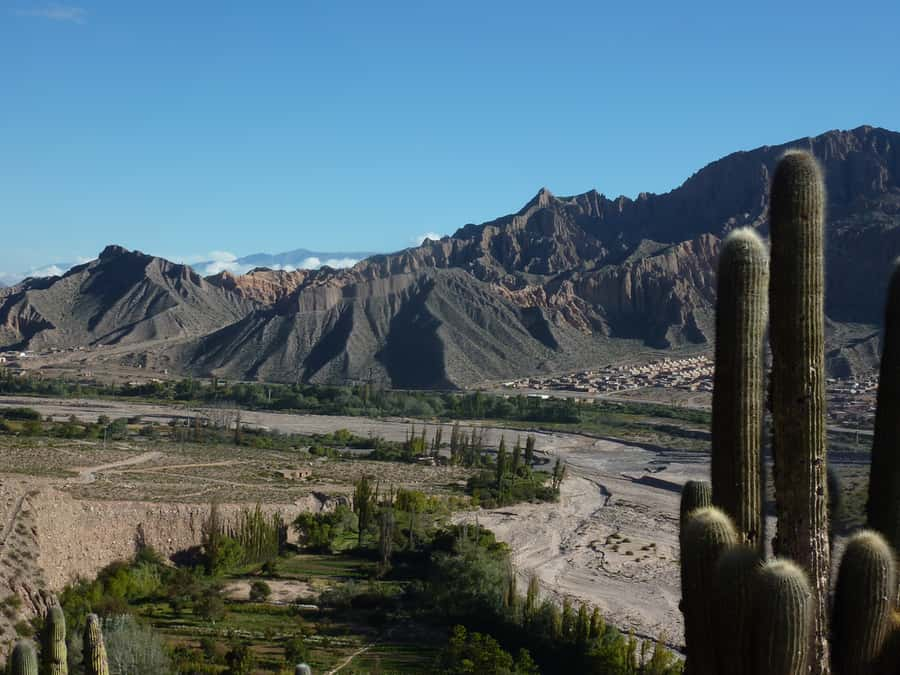
- Seven major stops and photo opportunities: The route includes Volcán, Purmamarca, Tilcara, Humahuaca, Uquía, Huacalera, and Maimará.
- The best scenery comes in Jujuy: Cerro de los 7 Colores and La Paleta del Pintor provide the strongest visual moments.
- Humahuaca gets the most time: You can eat regional food, walk the town, and see why it is a center of Carnival celebrations.
- Llama meat is part of the local menu: Lunch is not included, and you choose the restaurant in Humahuaca.
- The day is long but good value: Twelve hours of transport, guiding, and stops costs $49 per person.
- Pickup needs attention: Some hotels are excluded, and during July and January you may need to meet in central Salta instead.
Why this route is worth the long day
Salta is a fine base for exploring northwest Argentina, but the Humahuaca Valley gives you a different sense of place. The province of Jujuy feels more closely tied to the Andes, with high, dry hills, small adobe-colored towns, colonial churches, and customs that reach toward Bolivia and Peru.
This tour works because it does not treat the valley as a single photo stop. You move through several towns, and each one adds something different. Purmamarca gives you the famous colored hill. Tilcara brings more town life and cultural interest. Humahuaca offers the longest pause, a meal, and time to walk. Uquía provides a small church with unusual colonial paintings.
At $49, I consider the trip a strong value if you want an overview without renting a car. The price covers transport from central Salta hotels and a bilingual guide. You still pay for lunch and drinks, but that also lets you choose how much you want to spend. The main cost is your time. Twelve hours is a serious commitment, especially when some of that day is spent on the road.
More Quebrada de Humahuaca days:
- From Salta: Full-Day Trip to Salinas Grandes and Purmamarca
★ 4.6 · 914 reviews - From Salta: Salinas Grandes, Purmamarca & Los Colorados Hike
★ 4.3 · 356 reviews - From Salta: Serranías del Hornocal & Hill of 14 Colors Tour
★ 4.4 · 339 reviews
Leaving Salta through General Güemes
The excursion begins in Salta and heads out through the city’s central access. The route follows RN 9 before reaching General Güemes and continuing on RN 34. Later, you cross into Jujuy Province and enter the Quebrada de Humahuaca.
The outward journey matters because the scenery changes gradually. You leave the city behind, pass through the wider province, and then reach the narrower valley and its colored hills. A guide can help connect those changes to local culture, though the amount of commentary will depend on the guide and the size of the group.
Pickup is included from downtown hotels, but not every hotel lies on the route. If your accommodation is excluded, the operator provides the closest pickup location, and you are expected to wait in the lobby at the stated place. During the busiest holiday periods in July and January, buses may carry as many as 50 passengers, with a central meeting point replacing hotel pickup.
That detail is easy to overlook. If you are visiting in one of those months, check your meeting instructions before bed, not at dawn while standing outside with a daypack.
Volcán and the first feel of Jujuy
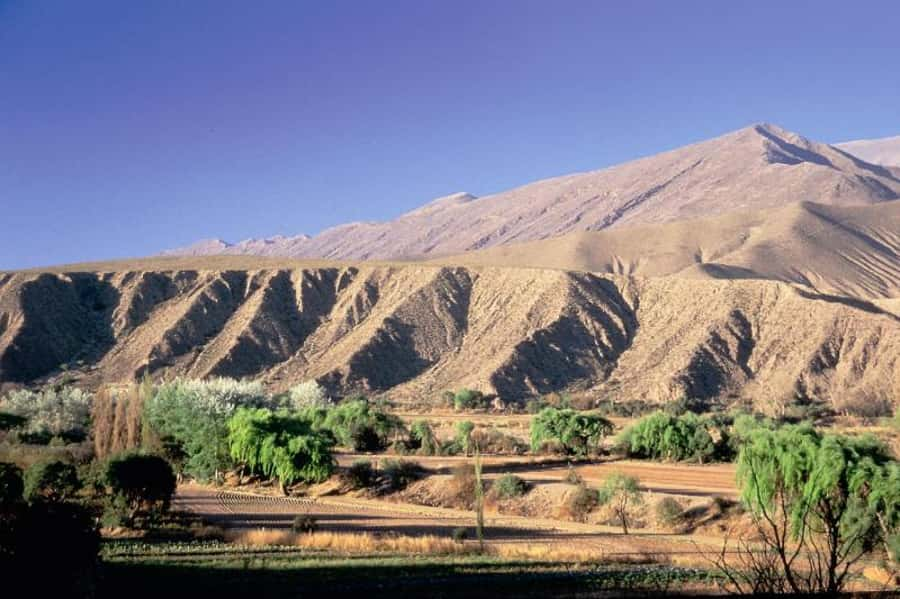
Volcán is one of the first picturesque towns on the Jujuy portion of the route. The stop helps break up the journey and gives you an early look at the dry mountain setting that defines the valley.
Do not expect a long independent visit at every location. The tour includes stops for walking and photographs, but the exact time at each place is not stated. Treat Volcán as an introduction rather than the main event. Keep your camera ready, listen for the guide’s instructions, and avoid wandering far from the group.
The practical lesson is simple: comfortable shoes matter. You will not be hiking a major trail, but the day includes repeated walks, town streets, and photo stops. Sunglasses, sunscreen, water, and light, comfortable clothing are sensible choices.
Purmamarca and Cerro de los 7 Colores
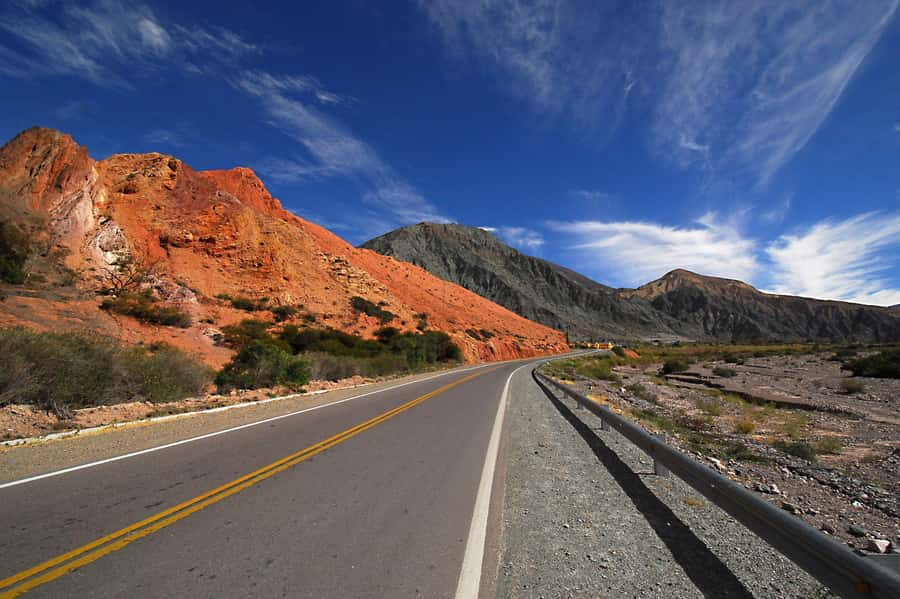
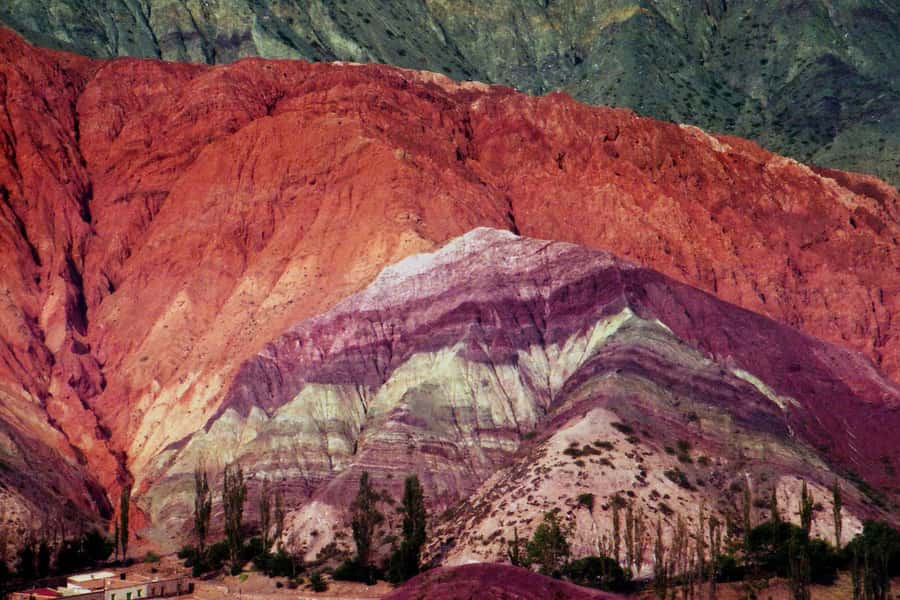
Purmamarca is likely to be the most instantly recognizable stop. The town sits beside Cerro de los 7 Colores, the multicolored hill that gives this part of Argentina its visual punch.
The colors are not painted decoration. The hill’s bands and changing tones come from different rock layers, and the dry air often makes the contrast look especially sharp. Your stop gives you time to view the hill, walk around town, and take photographs.
Purmamarca can also be one of the busier places on the route. The attraction is famous, and a group tour means you will share the stop with other visitors. Still, the visit earns its place. You get a clear visual symbol of northern Argentina without needing a strenuous walk.
I would keep this stop focused. Take the photos you want, look beyond the standard angle, and use any free time to notice the town’s small-scale streets and local character. The schedule has many stops ahead, so this is not the moment to spend an hour browsing every shop.
A few more Salta half-days to weigh up
- From Salta: Full-Day Tour to Cafayate with Wine Tasting
★ 4.5 · 478 reviews - Full-Day Tour Cafayate Calchaqui Valleys with Wine
★ 4.5 · 347 reviews - From Salta: Cafayate, land of wines and imposing ravines
★ 4.4 · 347 reviews - From Salta: Cachi and Los Cardones National Park Tour
★ 4.5 · 285 reviews
Tilcara and the valley’s cultural side
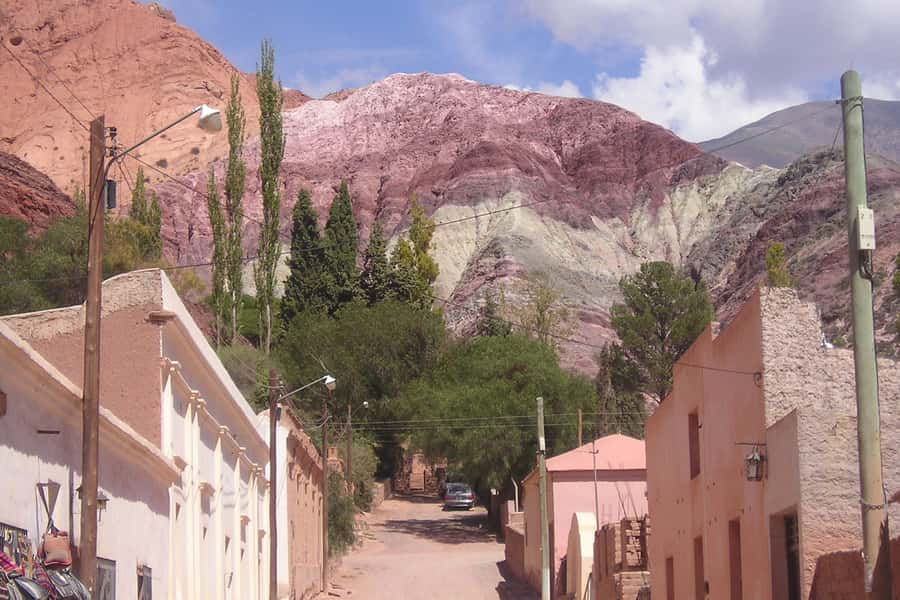
Tilcara adds another layer to the outing. It is one of the valley’s best-known towns and helps show that the region is more than scenic hills.
The town is part of a route shaped by Indigenous traditions, colonial influence, and Andean connections. The tour description highlights culture, history, and local people rather than only viewpoints, and Tilcara is one of the places where that broader focus makes sense.
Your time here may be shorter than you would have on a dedicated Tilcara visit. That is the price of covering so much ground in one day. If Tilcara is your main interest, a slower stay in Jujuy Province would give you more freedom. If you want a first look at the town as part of a wider route, this stop fits well.
Humahuaca, the main stop of the day
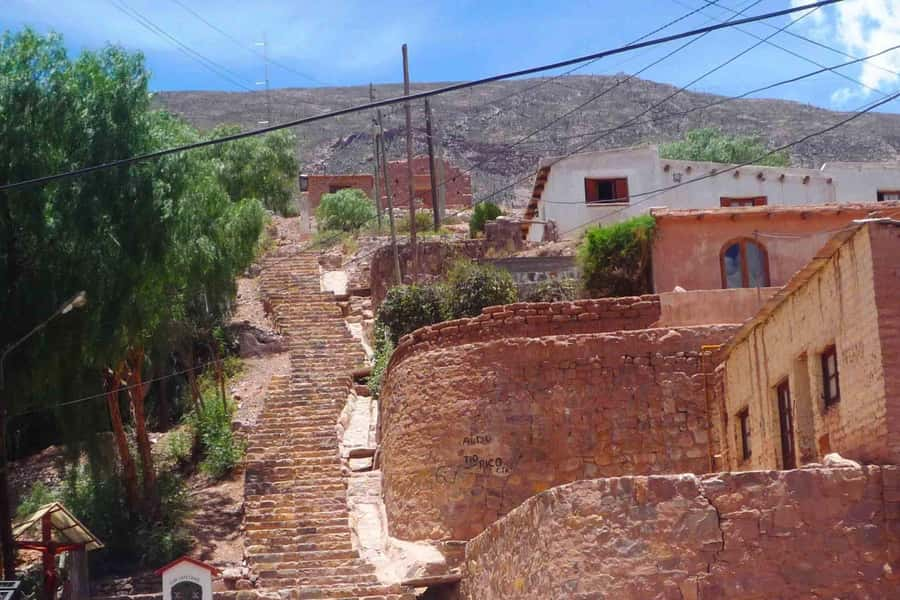
Humahuaca is the largest town in the ravine and the center of the excursion. It is also the place where you receive the longest break, making it the best chance to slow down after the morning’s road time.
Lunch is at your own expense and your own choice. Regional dishes often feature llama meat, a local specialty that gives you a chance to try something closely tied to the area. Since restaurants are selected by passengers, you can choose based on your appetite and budget rather than being locked into a prepaid meal.
Leave enough time for both food and a walk. Humahuaca’s culture reaches into the streets, and the town is known as an important center for Carnival. That does not mean the tour is a Carnival festival visit, but it does explain why music, celebration, and local identity are so important here.
This is also the point where the pace may feel most rewarding. The morning offers changing views through the valley. Humahuaca gives you a place to sit, eat, browse, and get your bearings before the return journey. I would not rush lunch just to collect another photograph. The town visit is part of the value.
Uquía and the San Francisco de Paula church
Uquía is a smaller town with one of the most distinctive cultural stops on the route: the 17th-century Church of San Francisco de Paula.
Inside are the Arquebuceros Angels, paintings from the colonial period that came from Cuzco, Peru. These works reflect the meeting of European religious imagery and local artistic traditions during colonization. Even a short visit can help you understand that the valley’s story is not only about geology and views.
This stop may appeal most to you if you enjoy small churches, art, and cultural detail. It is not as grand as the colored hills, but it gives the itinerary more depth. The group schedule may limit your time inside, so follow the guide’s directions and check whether photography is permitted before taking out your camera.
Huacalera and the Tropic of Capricorn
At Huacalera, the tour reaches the imaginary line of the Tropic of Capricorn. It is a simple but memorable geographic marker, especially for anyone who likes collecting unusual points on a journey.
The stop is brief compared with Humahuaca, but it breaks the return or onward route and gives you another chance to stretch your legs. You might find this stop more interesting as a sense-of-place moment than as a major attraction. It reminds you how far south you are and how strongly the region’s geography shapes its identity.
As with the other short stops, stay aware of the meeting time. A group tour can only work if everyone returns to the vehicle promptly.
Maimará and La Paleta del Pintor
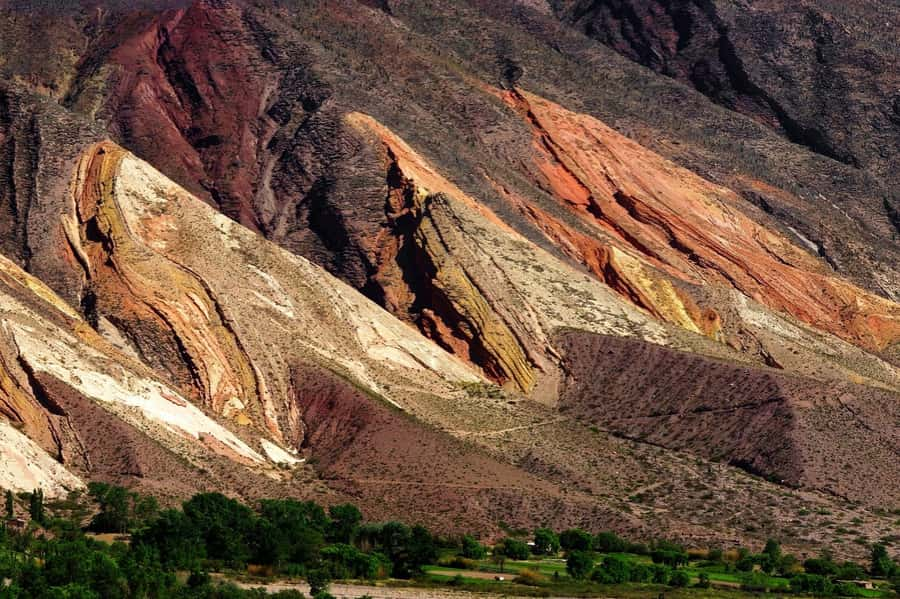
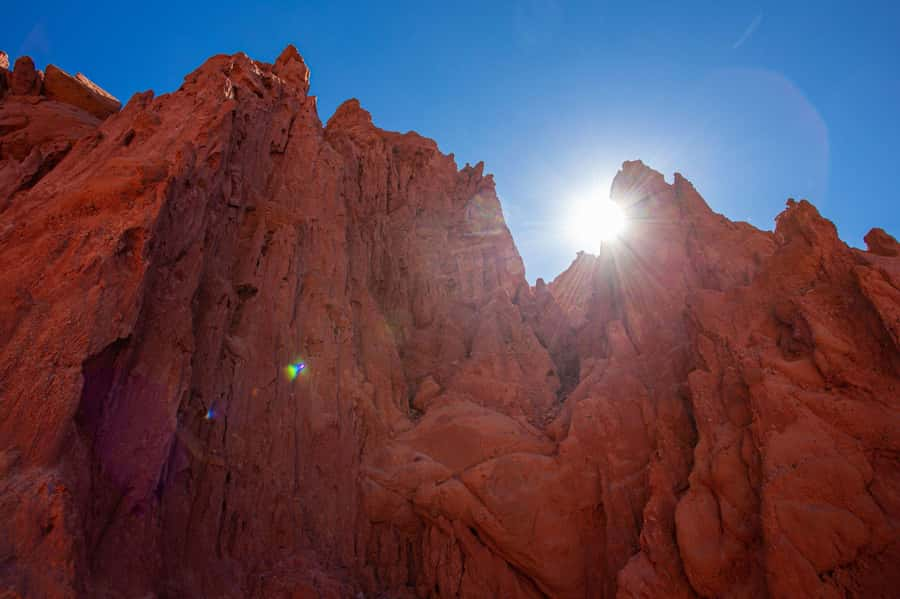
The final named highlight is La Paleta del Pintor in Maimará, or the Painter’s Palette. The name refers to the colored mountain forms around the town.
This is another stop built for looking and photographing rather than a long town visit. The colors change with the light, and the broad view provides a fitting final image of the valley. Compared with Purmamarca, the attraction feels more like a natural panorama than a single famous hill.
Maimará helps round out the route because it gives you one more version of the valley’s geology. You have already seen the colors at Purmamarca, but the shapes and setting here are different enough to keep the return journey interesting.
What the 12-hour schedule feels like
A 12-hour day sounds manageable on paper, but the rhythm matters. You will start early, ride through several stretches of road, stop repeatedly, walk in the sun, eat lunch, and then make the return trip to Salta.
The variety keeps the day from feeling like one endless drive. Still, I would not choose this excursion if you dislike long bus days or need a relaxed schedule. The route is ambitious. It tries to show you many of the valley’s signature places in one outing.
The tour uses bilingual English and Spanish guiding. One English-speaking passenger specifically praised Angie for explaining the day clearly and keeping the trip fun, even though the rest of the group did not speak English. That is useful context if you are booking as an English speaker. The service can work well, but the actual quality of the day depends partly on the assigned guide and the group.
During peak periods, a bus holding up to 50 people can make each stop feel less personal. In quieter periods, the experience may feel easier to manage. The supplied rating is 4.7 from five reviews, but the small number means you should treat it as a helpful signal, not a guarantee.
Lunch, clothing, and what to pack
Food and drinks are not included. In Humahuaca, you choose the restaurant, and llama meat is a common regional feature worth considering if you want to try local food.
Bring water. The operator specifically advises staying hydrated and avoiding getting wet, along with wearing sunglasses, sunscreen, sneakers, and comfortable walking clothes. Those suggestions fit the day: you will be outdoors at several stops, and the combination of sun, dry air, and repeated walking can wear you down.
I would pack:
- A refillable bottle or enough water for the day
- Sunscreen and sunglasses
- Comfortable sneakers
- A light layer for changing conditions
- Small spending money or a payment method for lunch and drinks
The information does not specify luggage storage, restroom timing, or a detailed meal schedule, so keep your personal needs in mind when deciding if a full-day group trip suits you.
Pickup, booking, and cancellation details
Round-trip transport is included from downtown Salta hotels. Some hotels are outside the pickup route, and you will be given a nearby meeting point if necessary. Wait in the hotel lobby or at the stated pickup location, and check your confirmation carefully.
One past booking problem involved a passenger waiting outside an apartment for an hour without a vehicle arriving. The emergency and office numbers went unanswered, and the passenger was later told the booking had not been confirmed. That is a serious warning about checking confirmation status, especially when booking close to the departure date.
A separate case had a better outcome after hotel details changed. Emails were answered within 24 hours, and the intermediary helped sort out the arrangements. The practical takeaway is not to assume that a voucher alone settles every pickup detail. Confirm the hotel address, pickup point, and departure time before the tour.
You can cancel up to 24 hours in advance for a full refund, and the reserve-now, pay-later option keeps you from paying immediately. Check current availability for starting times because the exact departure time is not fixed in the information provided.
Who should book this Humahuaca tour?
I would recommend it to you if you have limited time in Salta and want to see the main sights of the Humahuaca Valley in one day. It is also a good match if you prefer included transport and guiding to planning a long route yourself.
The trip suits people who enjoy:
- Dramatic colored hills and broad mountain views
- Small towns and short walks
- Regional food, especially llama dishes
- Churches and colonial art
- A packed sightseeing schedule
- Bilingual guiding in English and Spanish
I would hesitate if you want long visits in each town, a small private group, or a flexible route. The tour covers a lot, but the schedule cannot give every stop the attention it deserves. Peak-season buses of up to 50 people may also feel too large if you prefer quiet, personal touring.
Should you book it?
Book this tour if your priority is coverage and value. For $49, you get a full day from Salta into Jujuy, transport, bilingual guiding, and stops at the valley’s best-known towns and viewpoints. Humahuaca’s longer break, the church at Uquía, and the two famous colored mountain areas give the day more substance than a simple scenic drive.
Skip it if you have several days to explore independently or if a long bus day sounds tiring. Before paying, verify your hotel pickup or central meeting point, allow extra money for lunch, and prepare for sun and walking. If those conditions suit you, this is a practical first look at one of northern Argentina’s most memorable routes.
FAQ
How long does the Humahuaca Valley tour last?
The tour lasts 12 hours, including travel from Salta, stops in Jujuy Province, time for lunch in Humahuaca, and the return journey.
What places does the tour visit?
The route includes Volcán, Purmamarca, Tilcara, Humahuaca, Uquía, Huacalera, and Maimará. Stops include Cerro de los 7 Colores and La Paleta del Pintor.
Is lunch included in the tour price?
No. Food and drinks are not included. In Humahuaca, you choose where to eat, and regional dishes with llama meat are available.
Is transportation included?
Yes. Round-trip transportation from downtown Salta hotels is included. Some hotels are outside the pickup route, in which case you receive a nearby pickup location.
Is the tour offered in English?
Yes. The tour has a live guide in English and Spanish. Guide Angie was specifically praised for keeping English-speaking passengers informed on one departure.
What should I bring?
Bring water, sunglasses, sunscreen, sneakers, and comfortable clothing suitable for walking. The operator also advises avoiding getting wet.
Can I cancel for a refund?
Yes. You can cancel up to 24 hours before the activity for a full refund.
What happens during July and January?
During peak holiday periods in July and January, the tour may use buses holding up to 50 passengers. Hotel pickup may not be available, and a central meeting point in Salta may be used instead.
Just added around Salta
- Tucumán: Tafí del Valle Full Day Tour★ 3.8 · 4 reviews
- Trekking Purmamarca★ 5.0 · 52 reviews
- Salinas Grandes and Purmamarca Full Day Tour★ 4.5 · 34 reviews
- Tilcara: 2 hours cycling tour trough the rural area★ 5.0 · 5 reviews
- Salta: Tour to the Salinas Grandes and Purmamarca★ 3.7 · 3 reviews
- Salta or Jujuy: Iruya and Salinas Grandes 2-Day Tour★ 4.3 · 3 reviews
- From Salta: Cafayate, Humahuaca, Cachi, & Salinas Grandes★ 4.3 · 13 reviews
- Salta en un Bocado – Cultural Tour & Empanada Tasting★ 5.0 · 3 reviews
Quebrada de Humahuaca Tours, compared.
Full-Day Trip to Salinas Grandes and Purmamarca
Read our review →
Salinas Grandes, Purmamarca & Los Colorados Hike
Read our review →
Serranías del Hornocal & Hill of 14 Colors Tour
Read our review →
Full-Day Tour Salinas Grandes and Purmamarca from Salta
Read our review →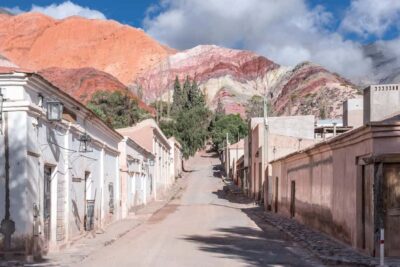
Full-Day Tour to Salinas Grandes and Purmamarca From Salta
Read our review →
Hornocal: Tour of the 14 Colors Mountain & Humahuaca´s Gorge
Read our review →
Cafayate and the imposing Quebrada de las Conchas
Read our review →Browse the lists this tour appears in