
Reviewed · QUEBRADA DE HUMAHUACA TOURS
Purmamarca: Hiking with Llamas through multicolored mountains
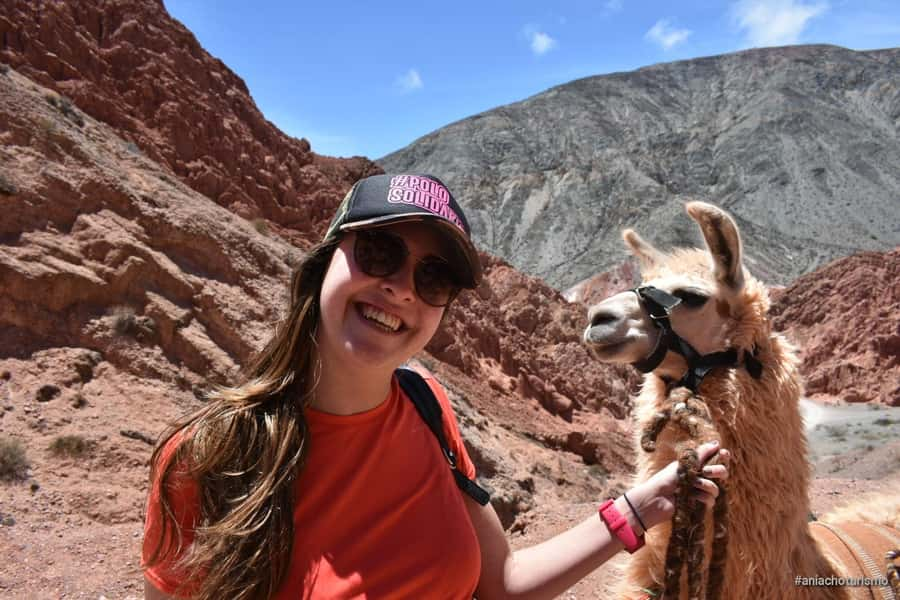
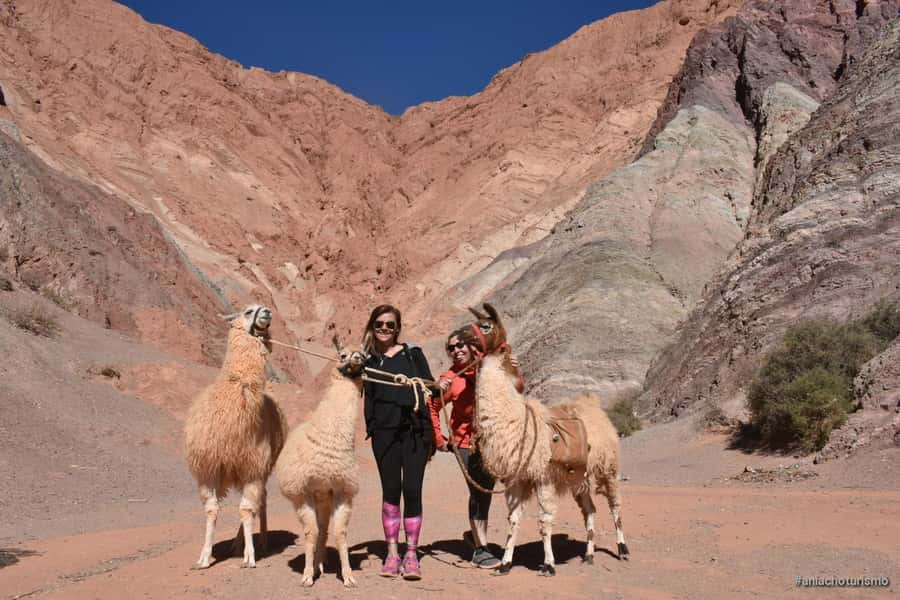
Purmamarca’s colorful mountains are even better with a llama at your side. This gentle walk brings you close to the animals without riding them, while a local guide explains Andean culture, mountain geology, plants, and the idea of Pachamama, the living relationship between people and nature.
I like the small groups of up to eight, which give the walk a quiet, personal feel. I also like the care taken with the llamas: you learn how to hold them, but you do not pull, ride, or force them. The main consideration is that this is a walking activity on uneven mountain ground, so it is not suitable for wheelchair users or people with major mobility limits.
Key points to know before you book
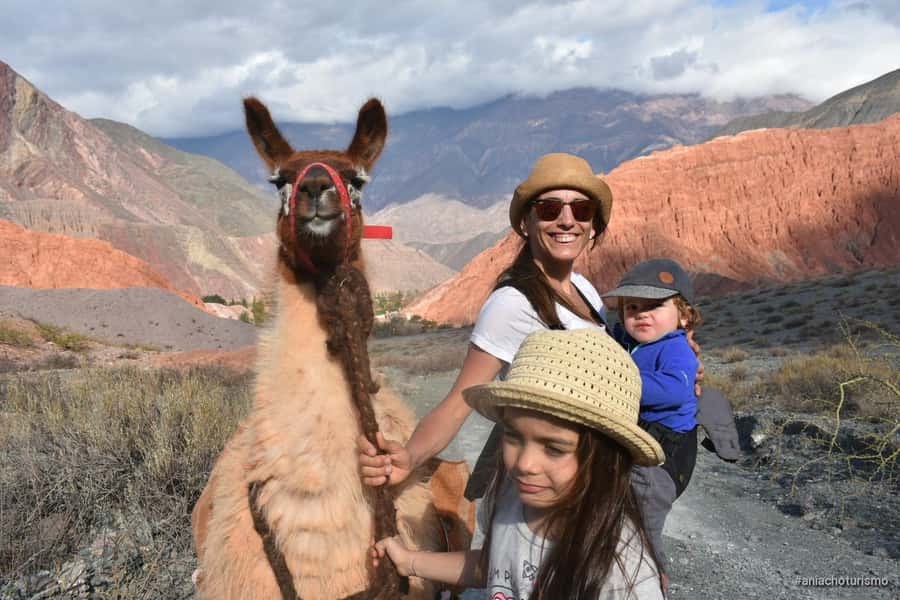
- Walk beside the llamas, never on them: The animals are companions for the route, not mounts.
- Meet close to Purmamarca’s square: The starting point is about 200 meters away, beside the cemetery on Paseo de los Colorados.
- Expect a 90-minute to two-hour outing: The route is adjusted to the age and physical condition of the group.
- Learn more than animal facts: Guides cover geology, native plants, medicinal uses, camelid biology, and Andean beliefs.
- Small groups keep it personal: No more than eight people can join each outing.
- Bring water and sun protection: The highland sun can be strong, and sandals are not allowed.
Why walking with llamas changes the Purmamarca experience
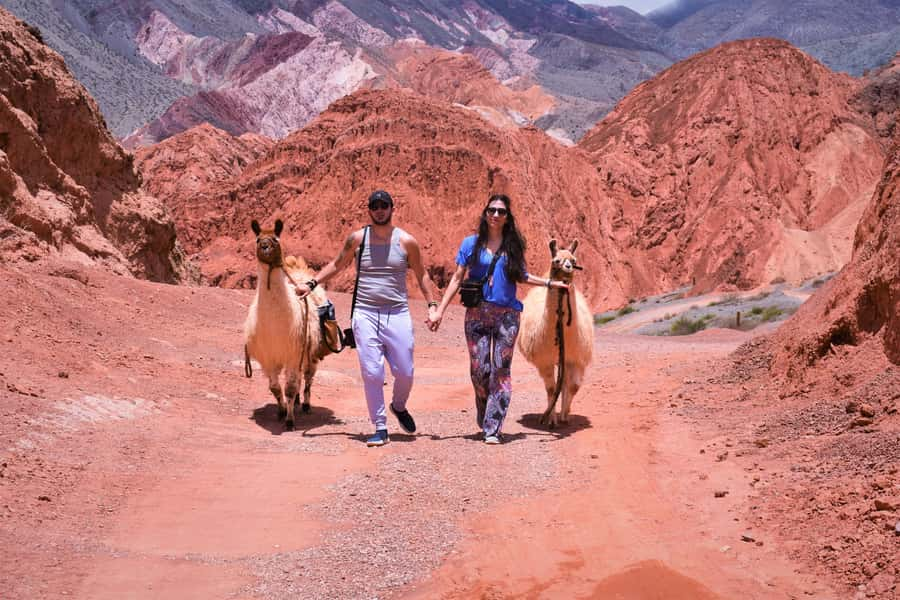
Purmamarca is famous for the Cerro de los Siete Colores, but a quick photo stop can leave you knowing little about the place. This activity slows things down. Instead of only looking at the striped mountains, you walk through them with a llama, stop for pictures, and hear how the natural world fits into local Andean life.
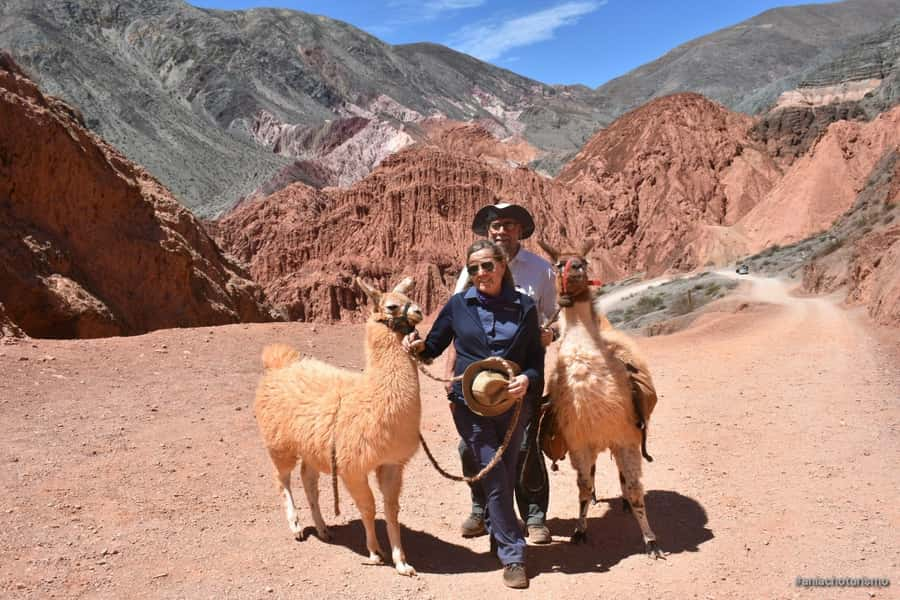
The animal contact is the heart of the outing. At the meeting point, you learn how to hold the llamas before setting off. You can pet them, embrace them, and take close-up photos, but the rules are clear: you do not ride them, hurt them, or make them move beyond their comfort.
That approach matters. Many animal activities treat the creature as a prop for a picture. Here, the stated aim is reciprocity between people, animals, and the place around them. You should still remember that these are living animals, not trained photo booths. The guide sets the pace and helps you interact with them properly.
The setting adds plenty of drama without requiring a hard trek. The colored mountain walls provide the backdrop, while the guide fills in the details that a viewpoint cannot. You hear about how the rock formations developed, what plants grow in the area, and how some are used for medicinal purposes.
More Quebrada de Humahuaca days:
- From Salta: Full-Day Trip to Salinas Grandes and Purmamarca
★ 4.6 · 914 reviews - From Salta: Salinas Grandes, Purmamarca & Los Colorados Hike
★ 4.3 · 356 reviews - From Salta: Serranías del Hornocal & Hill of 14 Colors Tour
★ 4.4 · 339 reviews
Starting beside the cemetery on Paseo de los Colorados
The meeting point is on Paseo de los Colorados, beside the cemetery, at coordinates -23.74663543701172, -65.4992446899414. It is around 200 meters from Purmamarca’s main square, close enough to reach on foot but specific enough that you should check the location before setting out.
This is not a hotel pickup or a long transfer from Salta. You make your own way to the starting point in Purmamarca. Once there, the guide checks the supplies needed for the walk and introduces you to the llamas.
That first contact is useful, especially if you have never handled one. You learn where and how to hold the animal before walking. The introduction also gives the guide a chance to see how the group is managing and select a suitable circuit.
The route can be adapted for different ages and needs. The walk is described as non-demanding, and families with children of different ages can take part. Still, non-demanding does not mean fully accessible. You need to be able to walk on natural ground, and the outing is not suitable for wheelchair users or people with significant mobility impairments.
What the llama walk feels like
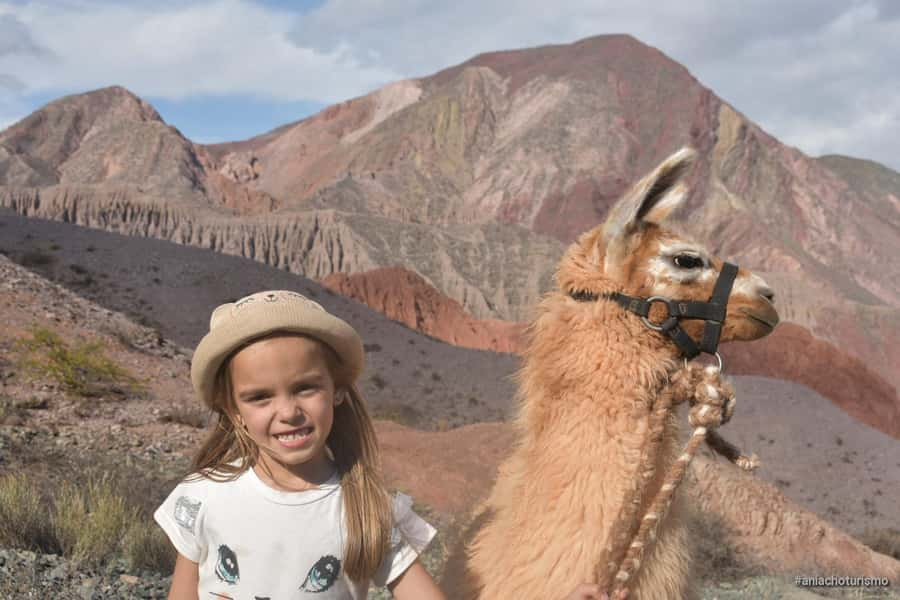
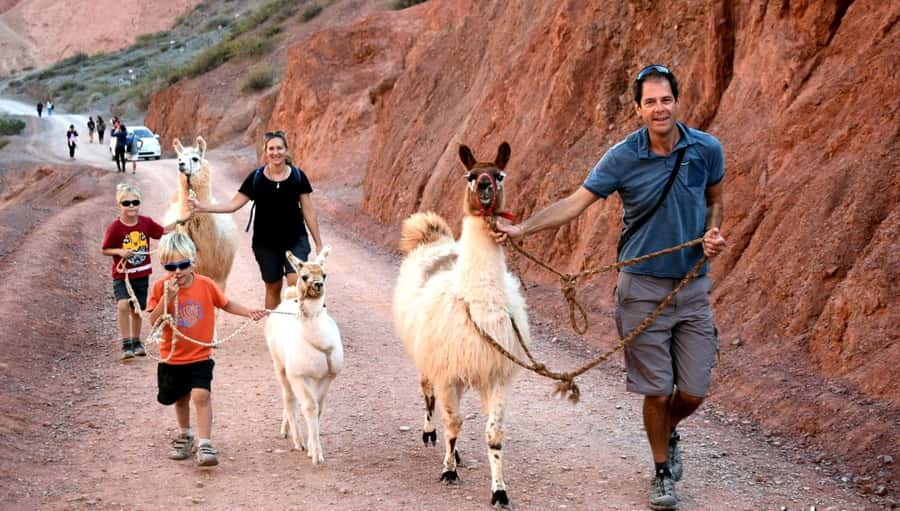
Once everyone is ready, you set off through the colorful mountains. The pace is intended to be pleasant rather than strenuous, with time for photos, videos, and direct contact with the llamas.
You will not be racing from one viewpoint to the next. That is the point. The outing is built around the act of walking, watching the animals, and listening to the guide. A small group helps here. With no more than eight participants, the guide can respond to questions and keep the group together without turning the activity into a crowd procession.
The scenery is the obvious draw, but the silence is just as important. The experience is promoted as private and authentic, and the small-group format supports that promise. You may find the quiet especially welcome after a busy day of road stops and lookout points in the Quebrada de Humahuaca.
The llamas also change the rhythm. They encourage you to slow down and pay attention. You might spend a few minutes taking pictures, then pause to watch their behavior or listen to an explanation about camelids. This is a better choice for someone who values contact and conversation over a packed list of attractions.
You should not book it expecting a dramatic mountain hike. The routes are gentle, and the activity lasts about an hour and a half to two hours. For most people, that is enough time to enjoy the setting without using up the whole day.
The guide’s stories: geology, plants, and Pachamama
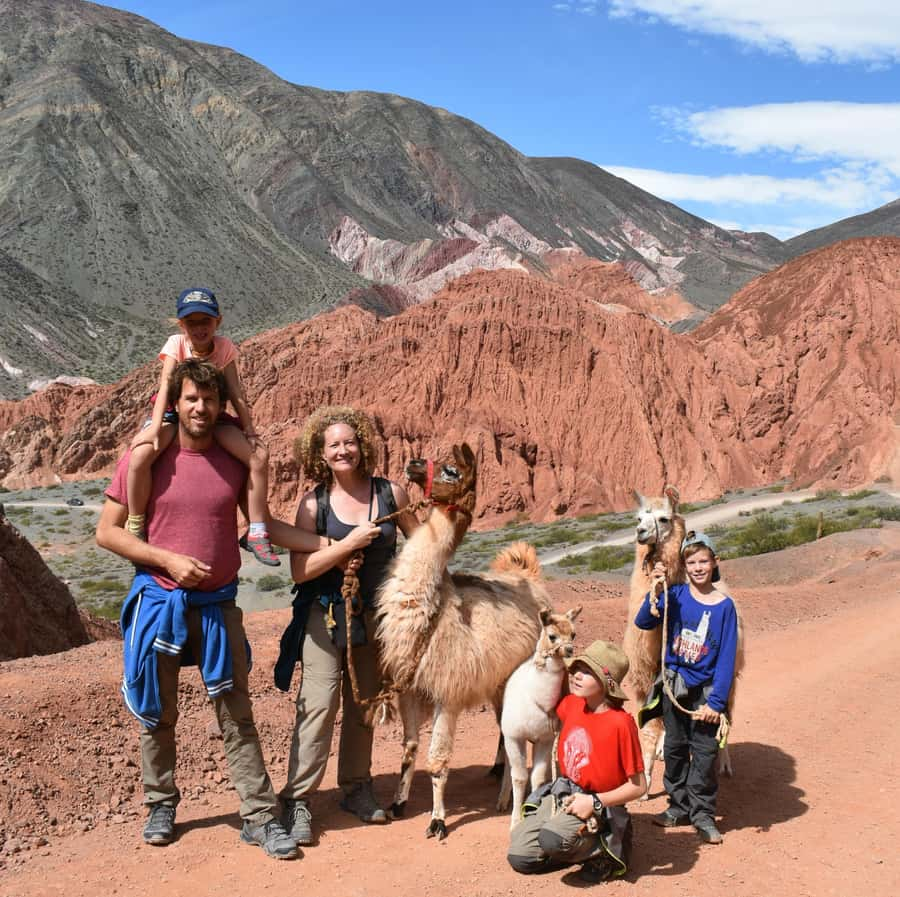
The educational side is what gives the activity more weight than a simple animal encounter. The guide explains the formation of the mountains, so the layers and colors become easier to understand. You also learn about local flora and its medicinal uses, along with the biology of South America’s camelids.
The cultural discussion centers on Andean cosmovision. The word Pachamama is often translated as Mother Earth, but here it refers to a broader relationship between humans, animals, plants, and the land. The tour presents this as a form of syncretism, where Indigenous Andean beliefs and later religious influences have met and developed together.
You do not need prior knowledge of Andean culture to follow the discussion. The best part is that the ideas are connected to what you can see and do. You are walking through the mountains, touching the llama, noticing plants, and considering how those things fit into local life.
Guides named Fabrizio and Aniacho are associated with this experience. Fabrizio is described as attentive to questions and keen to explain the country, while Aniacho is noted for checking that participants remain comfortable. Since guide assignments can vary, you should confirm your language preference when booking. Tours are offered in English and Spanish.
More hiking tours around Salta:
- From Jujuy: Salinas Grandes, Purmamarca & Los Colorados Hike
★ 4.2 · 75 reviews - Trekking Purmamarca
★ 5.0 · 52 reviews - El Calafate: Perito Moreno Glacier Trekking Tour and Cruise
★ 4.8 · 805 reviews - From Ushuaia: Tierra del Fuego Emerald Lagoon Trekking Tour
★ 4.9 · 271 reviews
The scenery and the photo opportunities
Purmamarca’s mountain colors are not a decorative backdrop added for tourists. They are the reason the town is one of the most popular stops in northern Argentina. Reds, oranges, yellows, purples, and muted earth tones appear in the rock, with the exact effect changing according to light and viewpoint.
Walking gives you a different angle from the main square or a roadside stop. You have time to take pictures and videos without being pushed toward the next stop. The llamas add scale and personality to your images, although the best photos will depend on the animals’ mood and the light on the day.
A practical note: bring a daypack, water, a sun hat, and biodegradable sunscreen. The sun can be intense in the high desert, even during a cool season. Closed shoes are important because sandals and flip flops are not allowed.
The activity has a strong visual appeal, but it is not only a photo session. If you are uncomfortable with animal contact, you can still appreciate the views and listen to the cultural explanations, though the close interaction is a central part of the experience.
Is the two-hour format good value?
No price is provided here, so I cannot judge the exact cost. I can judge what you receive for the time. The value is strongest if you want a local guide, direct animal contact, and a slow walk through the mountains rather than a quick sightseeing stop.
The small group is important when considering value. A group of eight or fewer gives you a better chance to ask questions, get help handling the llamas, and enjoy the quiet. A private tour would offer more control, but this format should still feel personal compared with a large bus excursion.
You also avoid spending half a day in transport. The activity begins and ends near the center of Purmamarca, and the walk itself lasts 90 minutes to two hours. That makes it easy to combine with time in town or with another regional outing, provided you allow enough time to arrive at the meeting point.
The experience is less useful for someone trying to cover a long list of attractions in one day. It does not replace a full excursion to places such as Salinas Grandes, Hornocal, or the wider Quebrada de Humahuaca. Those trips cover more ground and offer broader sightseeing, while this one offers closer contact with one place and its animals.
Families, older adults, and physical limits
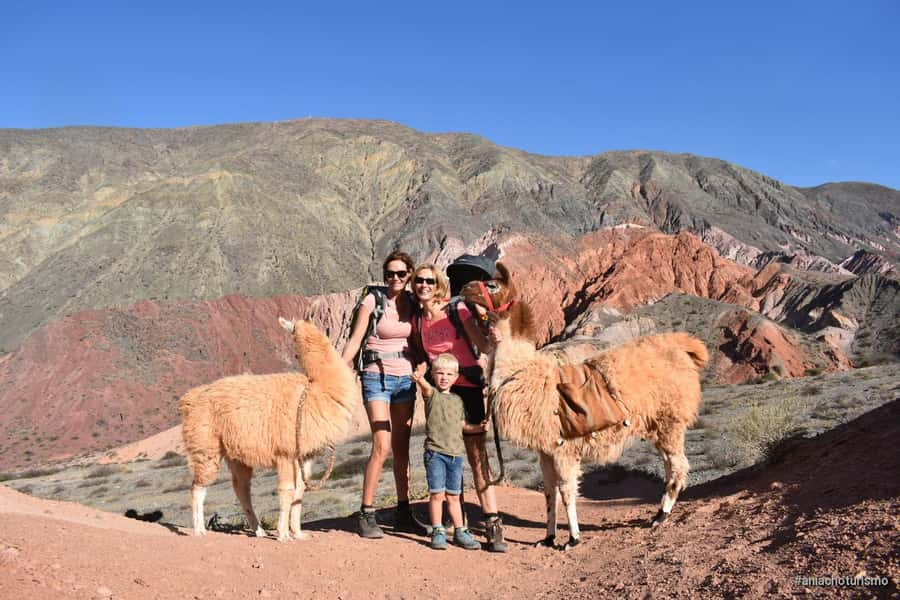
The easy pace makes the walk suitable for families with children of different ages. The guide can offer different circuits based on participant needs, which is helpful when a group includes people with different levels of stamina.
There are firm limits. Babies under one year are not suitable for the activity, and babies who do participate must be carried in a baby backpack. Baby carriages cannot be used. Wheelchair users cannot join, and the experience is also not suitable for people with visual impairments, recent surgery, or major mobility problems.
The stated upper age limit is 95 years. That does not mean every older participant will have the same experience. You should be comfortable walking outdoors and standing or moving on natural ground for the duration of the outing.
If you have a recent injury or a health concern, the activity description gives no detailed medical guidance. The sensible choice is to ask the provider before booking rather than assume the gentle pace solves every problem.
What to pack for the colorful mountains
Keep your gear simple. A small daypack is enough.
- Water
- Sun hat
- Biodegradable sunscreen
- Comfortable closed walking shoes
- Clothing suited to outdoor conditions
- Phone or camera, if you want photos and videos
Alcohol and drugs are not allowed. That rule is especially reasonable around animals and on an outdoor route. You should also avoid bringing a stroller, since it cannot be used during the activity.
The most important item is water. The walk is short, but Purmamarca’s highland setting and strong sun can make a gentle outing feel warmer than expected. Protect your head and skin, and do not count on finding supplies along the route.
How this compares with a standard Purmamarca stop
A standard visit to Purmamarca often means walking around the square, browsing local goods, and viewing the Cerro de los Siete Colores. That is worthwhile, but it can be brief and crowded.
This activity gives you a more focused way to spend time in the area. You trade some independence for a guide, a planned route, and close contact with llamas. In return, you gain explanations about geology, plants, camelids, and Andean life that you would be unlikely to get from a short visit to the viewpoint.
It also works well for people who want a cultural experience without a formal museum setting. The teaching happens outdoors, through movement and conversation. You see the subject, walk beside it, and connect it to the place around you.
The drawback is that the experience depends on your interest in llamas and guided interpretation. If you want a challenging hike, a long scenic drive, or a full-day tour, this will feel too limited. If you want a quiet two-hour activity with a strong sense of place, it fits well.
Should you book this llama walk?
Book it if you want to slow down in Purmamarca, enjoy close contact with llamas, and learn how the mountains connect to Andean culture. It is especially well suited to couples, families with older babies and children, and anyone who prefers a small group to a large sightseeing tour.
Choose something else if you need wheelchair access, cannot walk on uneven ground, or want a strenuous trek. You should also skip it if animal encounters do not interest you, since the llamas are central to the experience.
For most suitable participants, this is a smart addition to a northern Argentina itinerary. It is short, gentle, personal, and rooted in the place itself. The main question is not how many sights you will tick off. It is whether you want to spend two hours paying attention to one mountain town, its animals, and the Andean way of seeing the natural world.
FAQ
Where does the llama walk start?
It starts on Paseo de los Colorados beside the cemetery, about 200 meters from Purmamarca’s main square.
How long does the activity last?
The activity lasts between one and a half and two hours. Starting times depend on availability.
Can I ride the llamas?
No. You walk with the llamas and learn how to hold them gently. Riding them is not part of the activity.
What languages are available?
The live guide service is available in English and Spanish.
How many people are in each group?
The activity is limited to eight participants, making it a small-group experience.
Is the walk suitable for children?
Families with children of different ages can participate, provided they can manage the outdoor walk. Babies under one year are not suitable, and participating babies must be carried in baby backpacks.
What should I bring?
Bring water, a sun hat, biodegradable sunscreen, and a daypack. Sandals and flip flops are not allowed.
Can wheelchair users join?
No. The activity is not suitable for wheelchair users, people with mobility impairments, or people who cannot manage an outdoor walking route.
Just added around Salta
- Tucumán: Tafí del Valle Full Day Tour★ 3.8 · 4 reviews
- Trekking Purmamarca★ 5.0 · 52 reviews
- Salinas Grandes and Purmamarca Full Day Tour★ 4.5 · 34 reviews
- Tilcara: 2 hours cycling tour trough the rural area★ 5.0 · 5 reviews
- Salta or Jujuy: Iruya and Salinas Grandes 2-Day Tour★ 4.3 · 3 reviews
- From Salta: Cafayate, Humahuaca, Cachi, & Salinas Grandes★ 4.3 · 13 reviews
- Salta: Tour to the Salinas Grandes and Purmamarca★ 3.7 · 3 reviews
- Salta en un Bocado – Cultural Tour & Empanada Tasting★ 5.0 · 3 reviews
Quebrada de Humahuaca Tours, compared.
Full-Day Trip to Salinas Grandes and Purmamarca
Read our review →
Salinas Grandes, Purmamarca & Los Colorados Hike
Read our review →
Serranías del Hornocal & Hill of 14 Colors Tour
Read our review →
Full-Day Tour Salinas Grandes and Purmamarca from Salta
Read our review →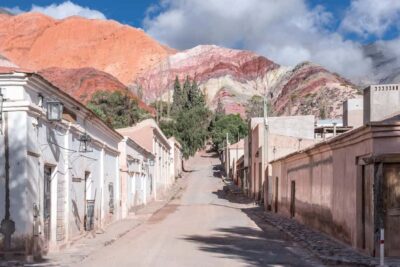
Full-Day Tour to Salinas Grandes and Purmamarca From Salta
Read our review →
Hornocal: Tour of the 14 Colors Mountain & Humahuaca´s Gorge
Read our review →
Cafayate and the imposing Quebrada de las Conchas
Read our review →Browse the lists this tour appears in