

Reviewed · SAN TELMO & LA BOCA TOURS
BA: Empanadas and Alfajores Cooking Experience in Palermo
The best part of this Palermo cooking experience is that you learn the small rules that a recipe rarely explains. A local host shows you how empanada folds can differ by filling, then guides you through alfajores made with dulce de leche. It is food instruction tied to family custom, not just a meal with a recipe card.
I like the small group size, capped at 10, and the choice between meat and vegan empanadas. I also like the relaxed mix of chopping, shaping, eating, mate, and conversation. The main drawback is that the hands-on work can vary by session. Some people help with nearly everything, while others may spend more time watching.
Key points at a glance
- Two Argentine classics: Make savory empanadas and sweet dulce de leche alfajores during one 2.5-hour session.
- Meat and vegan choices: Beef and lentil fillings are among the options described, making the class useful for mixed groups.
- Small Palermo setting: With no more than 10 people, it is easier to ask questions and work alongside the host.
- Cultural details matter: Learn about empanada shapes, family cooking habits, mate, and regional food traditions.
- Good for families: Children aged 10 and 13 were especially engaged, though knife work calls for adult help.
- Recipes to take home: The recipes are sent by WhatsApp, giving you a practical souvenir you can use after Buenos Aires.
Why Empanadas and Alfajores Make a Good Buenos Aires Class
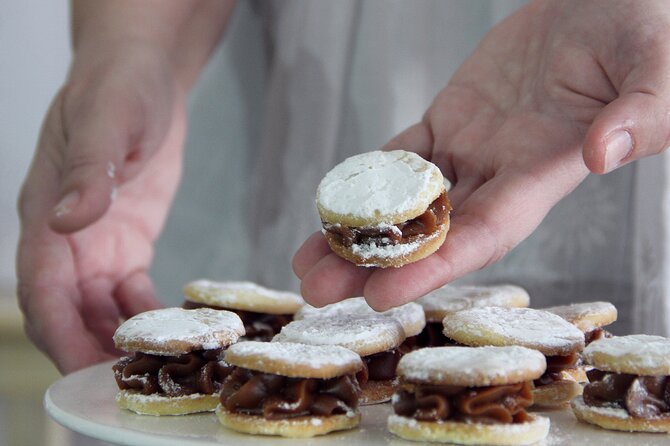
Buenos Aires is full of bakeries, cafés, and places selling empanadas. You can sample these foods without taking a class. What makes this experience worthwhile is the chance to understand how two everyday Argentine favorites fit into local life.
Empanadas are more than pastry pockets. They appear in many forms across Argentina, with fillings and folding styles that can signal what is inside. During the class, you prepare the filling, work with the dough, and learn how the shape can change depending on whether you are making a beef or lentil version.
Alfajores bring a different lesson. These tender cookies are baked, filled with dulce de leche, and often finished with coconut. The cookies can be fragile, so you need a light touch when adding the filling and coating them. That small warning is useful, especially if children are helping.
The class gives you a savory dish and a dessert in one sitting. That makes the $49 price easier to assess than a short demonstration with one tasting. You are paying for ingredients, tools, instruction, and a meal you help prepare, though the value depends on how active your particular session becomes.
More San Telmo and La Boca walks:
- Buenos Aires: La Boca Guided Walking Tour in English
★ 4.8 · 1,587 reviews - Palermo: Graffiti and Street Art Guided Tour in English
★ 4.8 · 684 reviews - Buenos Aires: Puerto Madero Sunset Cruise with Open Bar
★ 4.1 · 439 reviews
Arriving in Palermo at Gorriti 4882
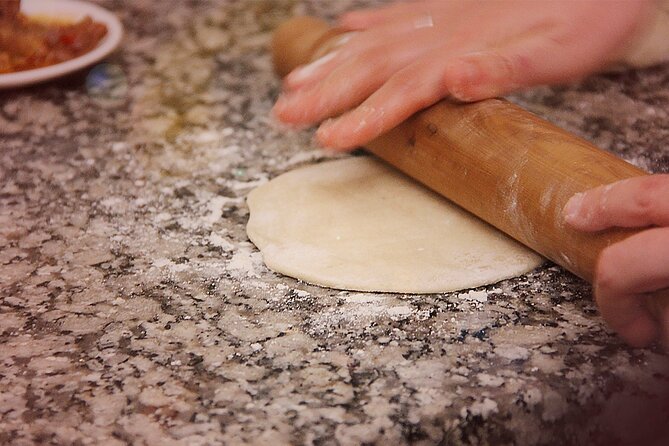
The meeting point is Gorriti 4882 in Palermo, at C1414BJN Buenos Aires. The location is near public transportation, which helps if you are staying elsewhere in the city. Transportation to and from the activity is not included, so plan your own way to the address.
The class lasts about two hours and 30 minutes. That is enough time for the filling to be prepared, the empanadas assembled, the alfajores made, and the finished food enjoyed without forcing every stage into a hurried race.
The setting is described as a pleasant venue, and the activity returns to the same meeting point. You do not need to arrange a second pickup or find your way to a different restaurant afterward.
Because the session is presential, you are working in person with a host rather than following a remote demonstration. Confirmation is provided at booking, and the maximum group size is 10. That is small enough for a social table but not necessarily a private lesson.
Preparing the Empanada Filling
The class begins with empanadas, one of Argentina’s most familiar dishes. The host explains the basic process, then the group works on ingredients and filling. Depending on the session, you may chop vegetables and meat, cook the mixture briefly on the stovetop, and fill prepared empanada shells.
This is an important point for anyone expecting a pastry-school workshop. Several parts may be ready before you arrive, particularly the shells or some of the filling. Some classes involve making nearly everything from scratch, while another account describes prepared shells being filled after a quick cooking step.
That does not make the experience useless. It simply means the focus is likely to be on practical home cooking, shaping, and Argentine food customs rather than advanced dough technique. If you want to learn every stage from flour and fat onward, ask about the preparation at the start.
Meat eaters can usually expect a beef filling. Vegetarian options are also available, with lentils specifically described as one alternative. Tell the provider your dietary preference when booking or before the class so the right ingredients can be prepared.
The host also explains the cultural side of the food. You may hear how family members learned empanada making at a grandmother’s kitchen table, including the playful custom of whistling while working so nobody sneaked bites of filling. Details like this give the cooking a human setting.
Folding Empanadas by Filling
Folding is where the class becomes more than a simple chopping lesson. You seal the dough around the filling and practice the distinctive edge patterns used for empanadas. The shape can help identify what is inside, and the folding style is part of the local standard.
Do not expect your first few to look perfect. That is part of the fun. The folding takes practice, and a patient instructor can make the difference between a neat seal and a pastry that leaks in the oven.
Chef Valentino, Tomas, Carolina, and Catalina are among the hosts praised in the information provided for this experience. The actual host can vary, so do not book with the expectation that one named chef will always lead your session. The strongest sessions appear to depend partly on how much the host lets each person participate.
The social side also matters. You cook alongside people from different countries, share table space, and compare your shapes. Solo visitors can meet others without committing to a full group tour, while families have a natural activity that keeps children involved.
More cooking classes in Buenos Aires:
- Buenos Aires: Empanadas and Alfajores Guided Cooking Class
★ 4.8 · 486 reviews - Buenos Aires: Empanada & Alfajor Cooking Lesson in Palermo
★ 4.6 · 186 reviews - Argentinian Empanadas Cooking Experience in Palermo, Bs As
★ 4.8 · 50 reviews - Private Argentine Cooking Class and Tango Lesson in Buenos Aires
★ 5.0 · 37 reviews
Making Alfajores While the Filling Cools
The sweet course begins with alfajores, Argentina’s famous sandwich cookies filled with dulce de leche. You mix or handle the cookie ingredients, bake the rounds, add the creamy filling, and finish the cookies, often by rolling the edges in coconut.
The timing works well. While an empanada filling cools, the group can turn to the cookies instead of standing around. That keeps the two-and-a-half-hour session moving and gives you a second type of cooking task.
Alfajores are delicate. Use a gentle touch when spreading dulce de leche or pressing the cookies together. Children can take part, but they may need help with fragile pieces and any hot equipment.
The dessert is also one of the easiest parts to repeat at home. Dulce de leche is widely associated with Argentina, and the finished cookies make a simple food souvenir. The recipes are sent by WhatsApp after the class, so you do not need to copy instructions while your hands are covered in flour or filling.
Mate, Wine, and Conversation at the Table
Mate is Argentina’s best-known infusion, and it is included with the experience along with coffee and/or tea. Sharing mate gives the class a useful cultural pause. It is not just another drink on the table, but part of how people gather and talk.
Some sessions have also included wine, and several accounts describe enjoying wine while cooking or eating the finished food. Since wine is not listed among the included items, treat it as a possible extra or session detail, not a guaranteed part of the price.
The conversation can extend beyond the recipes. Hosts have explained food origins, Argentine geography, family traditions, and local customs. Tomas, for example, has also been described as an artisan maker of aperitivos, including vermouths and fernets. If your host has a specialty or local recommendation, this can turn a basic lesson into a wider introduction to Buenos Aires food culture.
Still, the cultural content depends on the person leading the class. One session was described as light on dish background and local advice. If you want more context, ask questions early rather than waiting for the host to volunteer every detail.
What the Hands-On Work Is Really Like
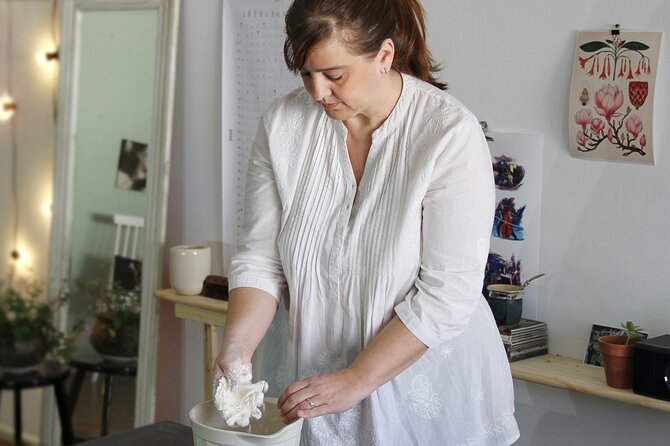
The phrase cooking experience covers different levels of participation here. You may chop ingredients, cook the filling, roll or handle dough, stuff empanadas, shape them, and assemble alfajores. In another session, much of the preparation may be ready, leaving you with filling, folding, and decorating.
For some people, that balance is ideal. You get to eat what you make without spending the whole afternoon on technical pastry work. It is also less intimidating for beginners and children.
For serious home cooks, the limitations are worth noting. The class may not cover advanced dough preparation, several cooking methods, or a broad range of empanada styles. A few people also found the recipes plain, and one person disliked the use of large amounts of sunflower oil. Taste is not likely to be identical in every session.
I would approach it as a friendly introduction to two Argentine staples, not a professional culinary course. You will learn useful methods, folding habits, and finishing touches, but the quality of the lesson depends on how actively the host involves the whole group.
Is $49 a Fair Price?
At $49 per person, the price is reasonable if you value participation, food, and cultural conversation in one compact activity. Ingredients for two dishes, kitchen tools, a professional native host, and mate, coffee, or tea are included. You also finish with food to eat and recipes to use later.
The value is strongest for families and solo visitors. A family can spend an afternoon doing something together rather than buying separate snacks and sightseeing tickets. A solo visitor gets a structured way to meet people and enjoy a meal without eating alone.
It is less compelling if your main goal is to eat exceptional restaurant food. You are making beginner-level dishes, and several factors can affect the result, including the recipe, the host, and how much preparation is done in advance.
The experience has a 4.9 rating from 112 reviews, with 96 percent of people recommending it. Those numbers point to a consistently positive activity, but the lower-scoring sessions are useful to remember. One person reported a cancellation and refund problem, while another found the class too passive and the food lacking flavor.
For the best value, think of the price as covering an edible cultural lesson, not just lunch.
Family Fit, Solo Visits, and Dietary Choices
This is a strong choice for families with children who like making things with their hands. Children aged 10 and 13 were especially engaged in one session, and other families enjoyed letting children shape alfajores in different forms.
Knife work needs adult supervision. Chopping meat and vegetables is part of some sessions, and children may need help with sharp tools, hot stovetop cooking, and fragile cookies.
Couples can expect a relaxed shared activity with food and conversation. Solo visitors should find the group format comfortable, especially because the maximum is 10 rather than a large bus tour.
Vegetarians have a practical option through the vegan empanada choice, with lentils mentioned as a filling. The information does not describe other dietary accommodations, so ask about allergies or special restrictions before booking rather than assuming they can be handled.
Booking Details and Cancellation Timing
The activity is booked well in advance on average, around 37 days, so you may want to reserve ahead if your Buenos Aires dates are fixed. Confirmation arrives at the time of booking.
Free cancellation is available up to 24 hours before the local start time. Changes made less than 24 hours before the experience are not accepted, and late cancellations are not refunded. One reported cancellation by the provider caused frustration, so keep your confirmation and allow time to contact the operator if your schedule changes.
The activity begins and ends at Gorriti 4882. Transportation is not included, but the meeting point is near public transportation.
Should You Book This Palermo Cooking Experience?
Book it if you want a friendly, food-centered way to understand Buenos Aires beyond restaurants and landmarks. It works especially well for families, couples, solo visitors, and mixed groups where some people eat meat and others prefer vegan food.
Go in expecting a practical introduction, not a formal culinary qualification. Ask how much will be prepared in advance, confirm your dietary needs, and remember that wine may not be part of the listed inclusions.
I would choose this class for the combination of empanadas, alfajores, mate, recipes, and local stories. The strongest sessions give you skills you can use at home and a better sense of why these foods matter. If you need a highly technical cooking lesson or guaranteed restaurant-level results, spend your $49 elsewhere.
FAQ
Where does the cooking experience take place?
The meeting point is Gorriti 4882, C1414BJN, in Buenos Aires. The activity ends back at the same meeting point.
How long does the class last?
The experience lasts approximately two hours and 30 minutes.
What foods will I make?
You will make Argentine empanadas and dulce de leche alfajores. The empanadas have meat and vegan options, including a lentil option described for vegetarian participants.
Is the class suitable for children?
Yes. The activity is described as suitable for families, and children aged 10 and 13 enjoyed one session. Children may need adult help with chopping, sharp knives, stovetop cooking, and fragile alfajor cookies.
What is included in the price?
The $49 price includes ingredients for the empanadas and alfajores, cooking tools, a professional native host, and coffee, tea, or mate. Transportation and tips are not included.
Can I cancel for a full refund?
You can cancel for a full refund if you do so at least 24 hours before the experience start time. Cancellations or changes made less than 24 hours before the start time are not accepted for a refund.
Just added around Buenos Aires
- Tango Show at El Querandi with optional Dinner★ 4.2 · 3 reviews
- Wine Tasting in Buenos Aires★ 4.2 · 4 reviews
- Walking Tour: Buenos Aires bookstores★ 4.3 · 12 reviews
- Velez Sarsfield Football Match★ 5.0 · 3 reviews
- Unique Tigre and Delta Private Day Cruise Navegation★ 5.0 · 3 reviews
- Private Underground Tango Immersion★ 5.0 · 31 reviews
- Sailing with Wine Tasting in Buenos Aires★ 5.0 · 50 reviews
- Experience The Essence of Buenos Aires in San Telmo★ 5.0 · 51 reviews
San Telmo & La Boca Tours, compared.




Buenos Aires Bike Tour: North Districts, Recoleta and Palermo
Read our review →Browse the lists this tour appears in