
Reviewed · SAN TELMO & LA BOCA TOURS
Buenos Aires: Montserrat, San Telmo, La Boca, and Puerto …
Buenos Aires reveals itself in layers on this four-hour route: colonial government buildings, immigrant streets, tango culture, football passion, and a sleek former port district. I especially like the way the tour links Plaza de Mayo and Avenida de Mayo with the older streets of San Telmo, then shifts to La Boca and modern Puerto Madero.
I also like the small details, such as the city’s oldest pharmacy, the tiny house on Calle Defensa, Mafalda’s statue, and the old ships at Puerto Madero. Guide Alejandra has led the tour with a friendly, clear style, while Sebastian helped keep the experience running smoothly. The main drawback is pace: four neighborhoods in four hours means you will see a lot, but you will not have long for museums, shopping, or a sit-down meal.
Key points to know before booking
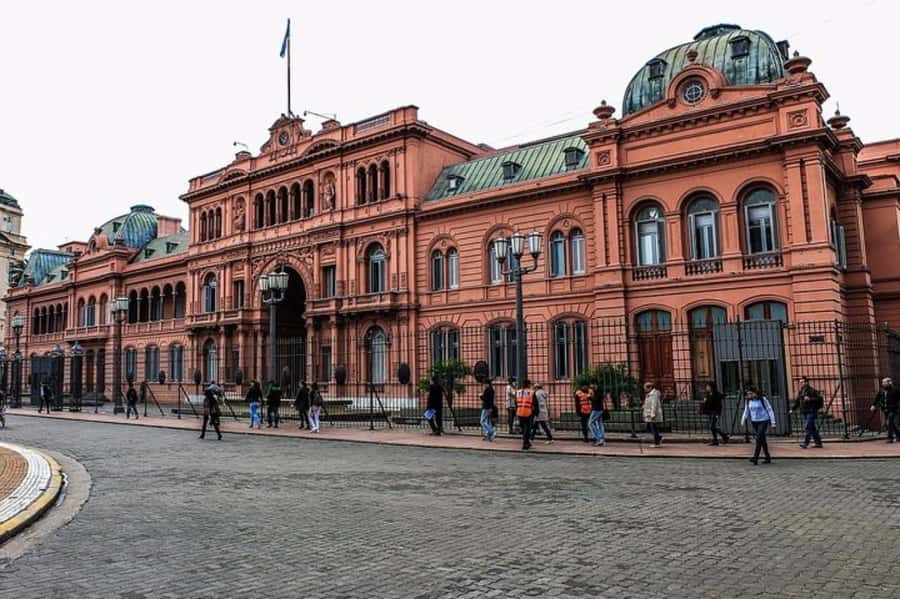
- Plaza de Mayo begins the story: See the Casa Rosada, Cabildo, Metropolitan Cathedral, and the seat of Argentina’s government.
- Calle Defensa adds the human detail: Look for the oldest bookstore, church, pharmacy, first two-story building, Mafalda statue, and smallest house.
- San Telmo Market mixes food and antiques: The 1897 market is useful for a short look, but lunch is not included.
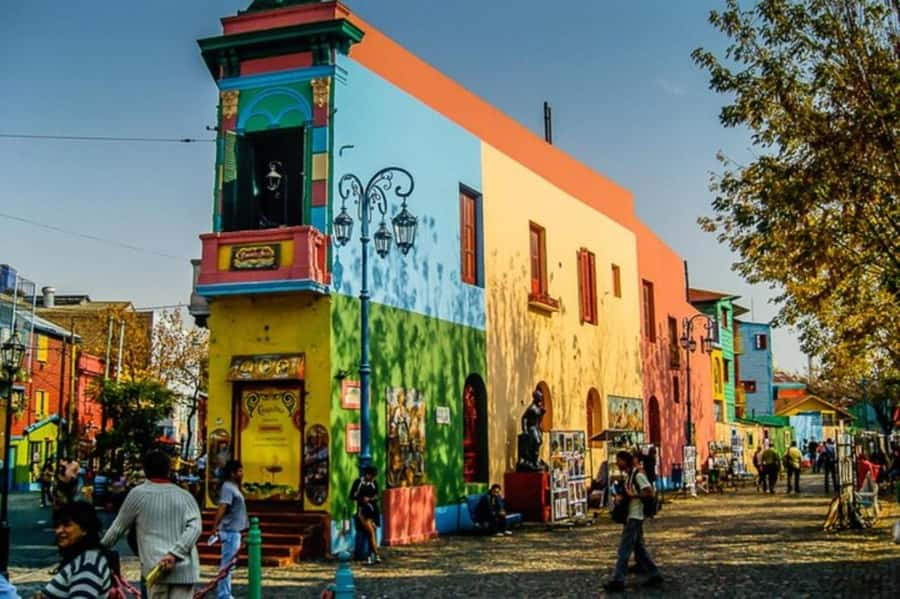
- La Boca brings football and tango together: See the Boca Juniors Stadium area and the colorful Caminito street.
- Puerto Madero changes the mood: Finish beside the modern skyline, Puente de la Mujer, and historic naval vessels.
- Plan for walking: Comfortable shoes matter, and the tour is not suitable for wheelchair users.
Starting at Buenos Aires Cathedral and Plaza de Mayo
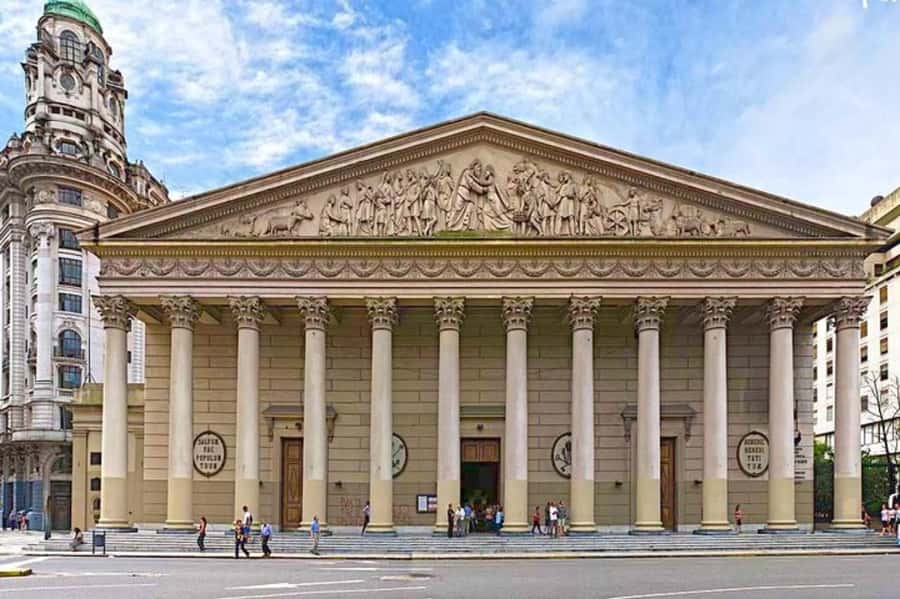
The tour begins at the Catedral Metropolitana de Buenos Aires, facing Plaza de Mayo. This is the city’s oldest and most important square, and it gives you a useful introduction to Argentina’s political and religious life.
Look around the plaza for the Casa Rosada, the pink executive office; the Cabildo, a surviving colonial government building; and the Metropolitan Cathedral. Several government ministries, including Economy and Defense, also sit nearby. You are not simply checking off buildings here. You are seeing the compact center where national power, church authority, and major public events meet.
I like beginning here because the square provides context for the rest of the walk. Buenos Aires can feel sprawling, but Plaza de Mayo gives you a firm starting point. Your guide can connect the buildings to the growth of the city and explain why this area remains its public heart.
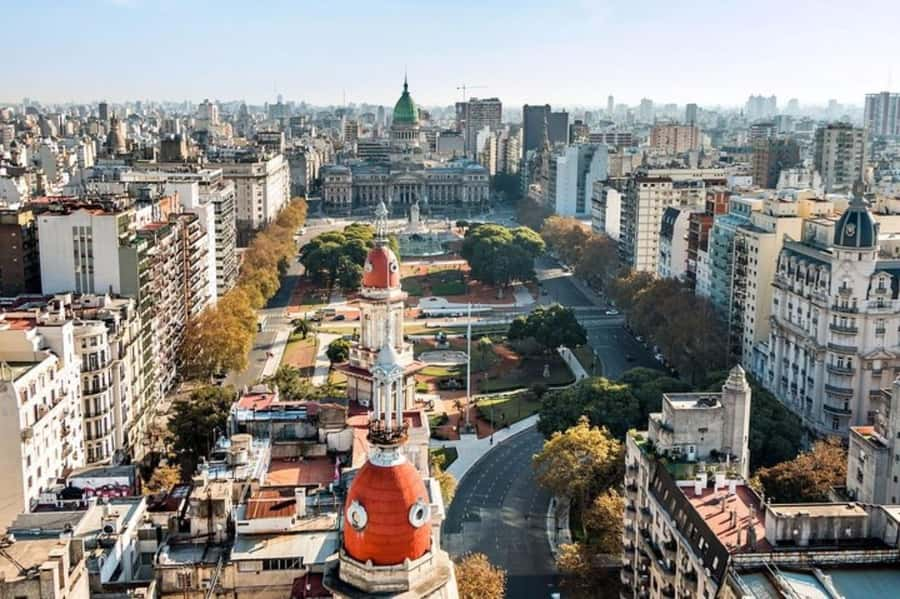
From the western end of the plaza, Avenida de Mayo leads toward the National Congress. It was the city’s first boulevard and the first avenue in South America. The route connects Argentina’s executive and legislative powers, with the Casa Rosada at one end and Congress at the other.
Café Tortoni sits along this avenue. It is the oldest café in Argentina and South America, and its historic setting makes it one of the city’s best-known stops. The tour includes the landmark in the route, but entry depends on availability. Treat it as a possible extra, not a guaranteed café visit. You also should not count on having time for a relaxed coffee unless the group schedule allows it.
More San Telmo and La Boca walks:
- Buenos Aires: La Boca Guided Walking Tour in English
★ 4.8 · 1,587 reviews - Palermo: Graffiti and Street Art Guided Tour in English
★ 4.8 · 684 reviews - Buenos Aires: Puerto Madero Sunset Cruise with Open Bar
★ 4.1 · 439 reviews
Montserrat’s old addresses on Calle Defensa
The Montserrat section turns from grand public buildings to smaller urban clues. Along historic Calle Defensa, you can see the oldest bookstore, church, and pharmacy in Buenos Aires, along with the city’s first two-story building.
These details are valuable because they make the city’s age easier to picture. A claim such as oldest bookstore can feel abstract when it is only part of a speech, but spotting old commercial and religious buildings along one street gives the neighborhood a physical sense of continuity.
Your guide also shares stories linked to sailors, immigrants, enslaved people, and local urban legends. This is one of the route’s better features. Buenos Aires is not just grand avenues and elegant facades. Its identity was shaped by people arriving, working, trading, worshipping, and living in crowded old districts.
The tour is described as a walking experience, with about an hour set aside for each main neighborhood. That makes comfortable shoes essential. Expect frequent stops for explanations and photos, but remember that the clock is moving. If you want to read every plaque or step inside every possible building, you would need a longer, slower visit.
San Telmo, from Mafalda to the 1897 market
San Telmo is Buenos Aires’ second-oldest neighborhood and one of the most characterful parts of the route. Continue along Calle Defensa to find the statue of Mafalda, the beloved Argentine comic character created by Quino.
Mafalda is more than a children’s cartoon figure. She is an important part of Argentine popular culture, known for her sharp observations about society and politics. The statue makes a cheerful photo stop and gives your guide a chance to explain a piece of local culture that a standard architecture tour might miss.
Next comes the smallest house in the city. The stop is brief, but it fits the neighborhood well. San Telmo rewards close attention. Look down side streets, notice unusual building proportions, and listen for the stories attached to old homes and passages.
The San Telmo Market dates to 1897. It now combines antique shops, small restaurants, and traditional fruit and vegetable stalls. I like this stop because it gives you more than a polished historic center. You see a working market alongside objects and interiors connected with Buenos Aires’ older way of life.
The market is a good place to get your bearings, but do not assume you will have time for a full meal. Food and drinks are not included, and the schedule gives the neighborhood about an hour. If lunch matters to you, ask the guide about the available pause, or plan to eat after the tour.
Plaza Dorrego and the French Passage
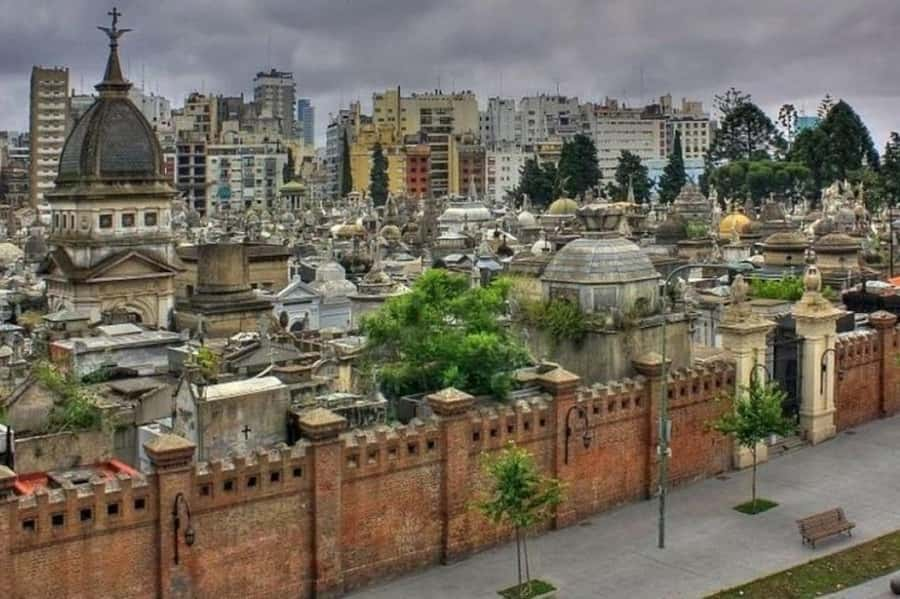
Before the route reaches San Juan Avenue, it passes Plaza Dorrego, the city’s second-oldest square. The square is closely tied to San Telmo’s street life and is a natural place to pause for photographs.
Nearby, Ezeiza’s house adds another historic address to the walk. The French Passage offers a more intimate backdrop, with architectural details that contrast with the larger avenues around Plaza de Mayo.
This is also one of the better areas for a meal, though eating is not part of the $100 price. You may find small restaurants and traditional spots around the square and passage, but the tour schedule is the limiting factor. Think of this part as a compact introduction rather than a free afternoon in San Telmo.
The advantage is variety. In one hour, you move from comic art to a tiny house, from a century-old market to an old square and passage. The tradeoff is that the route cannot give each place the time it deserves.
A few more Buenos Aires half-days to weigh up
- Buenos Aires Hop-On Hop-Off Bus, Free Walking Tours & Discounts
★ 4.5 · 2,218 reviews - Buenos Aires: Piazzolla Tango Show with Optional Dinner
★ 4.4 · 2,122 reviews - Buenos Aires: City Highlights Guided Tour with Transfer
★ 4.7 · 1,946 reviews - Buenos Aires: Hop-On Hop-Off City Bus Tour
★ 4.2 · 1,855 reviews
La Boca, Boca Juniors, and Caminito
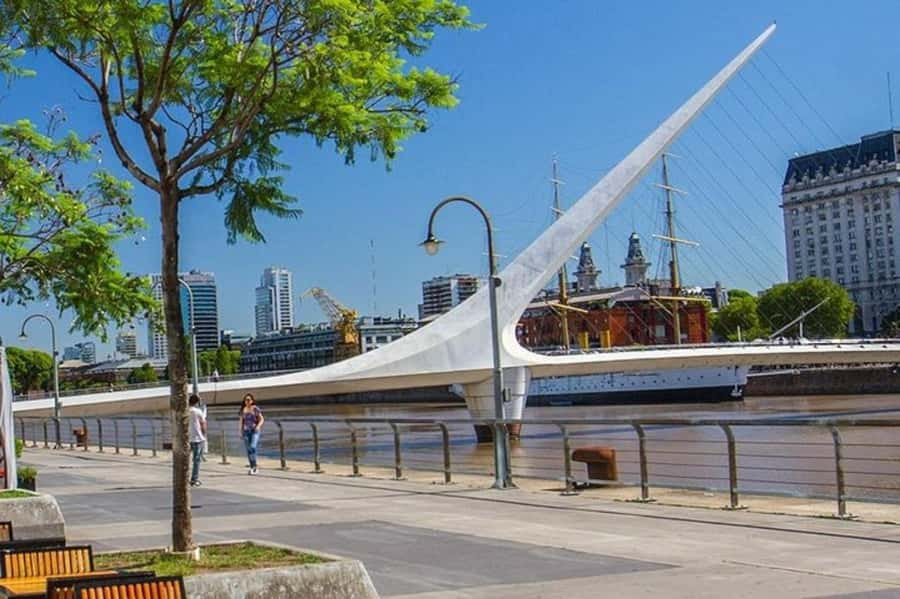
After San Telmo, the tour makes a transfer of about 10 minutes to La Boca. This short move helps keep the experience practical, since the neighborhoods are close enough to combine but too far apart for a comfortable continuous walk.
La Boca is known for the Boca Juniors Stadium and its famous football club. The club is central to Buenos Aires culture, and even people who do not follow football can appreciate the importance of the stadium to local identity. This stop works best if you want to understand how strongly football shapes the city’s public life.
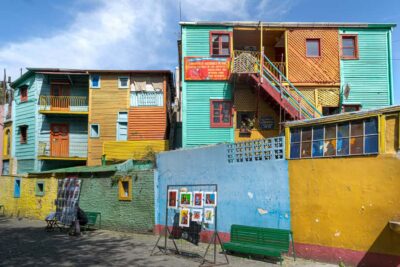
The route also visits Caminito, an open-air museum lined with brightly painted buildings and street art. The area is associated with tango and offers a chance to see tango dancers performing in traditional restaurants.
Caminito is lively and theatrical, so bring your camera, but keep your expectations practical. This is a short guided stop, not a full evening of tango or a stadium match. Souvenir shops and restaurants are available in the area, but personal purchases, meals, and drinks cost extra.
I appreciate that the tour does not treat La Boca as just a colorful photo stop. The football and tango elements show two different sides of the neighborhood’s identity. At the same time, the limited schedule means you may want to return separately if you hope to spend a long time around the stadium or enjoy dinner with a performance.
Puerto Madero and the Puente de la Mujer
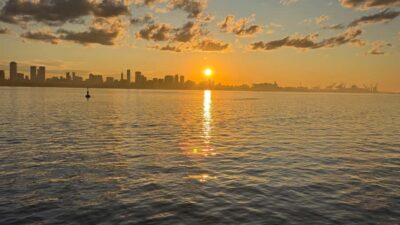
Another 10-minute transfer brings you to Puerto Madero, where the mood changes sharply. This former port project was once abandoned, but it has become a modern district of tall buildings, restaurants, bars, and a riverside promenade.
The contrast with San Telmo and La Boca is one of the route’s strongest features. Within a few hours, you move from old market halls and colonial government buildings to contemporary towers and polished public spaces. That range helps you understand Buenos Aires as a city that keeps adding new layers without losing its older districts.
The tour finishes at Puente de la Mujer, designed by architect Santiago Calatrava. Its sweeping form makes it one of Puerto Madero’s best-known landmarks and a natural final photo stop.
You can also see the frigate Sarmiento and the corvette Uruguay, historic naval vessels preserved in the district. Their presence adds a useful connection to Argentina’s maritime past, especially after hearing about port workers, sailors, and immigrants earlier in the day.
Puerto Madero is a good place to continue on your own because it has restaurants and bars along the promenade. Since the organized tour ends at Puente de la Mujer, you can decide if you want a drink, a meal, or more time by the water. Those costs are not part of the tour.
What the four-hour format means
The schedule divides the main route into roughly four one-hour sections: Montserrat, San Telmo, La Boca, and Puerto Madero. Transfers between San Telmo and La Boca, then La Boca and Puerto Madero, take about 10 minutes each.
This format suits you if you want a broad first look at Buenos Aires. You will cover major landmarks and several neighborhoods without spending a full day on only one part of the city. A live guide in English, Spanish, or Portuguese can provide the connections that are easy to miss when you explore alone.
The format is less suitable if you prefer long museum visits, unhurried meals, or detailed shopping time. The route has many stops, and the best experience comes from listening, looking around, and accepting that this is an overview.
The price is listed at $100 per person. That is a substantial half-day cost, so the value depends on what you need. If you want a guide to connect politics, immigration, football, tango, markets, architecture, and modern redevelopment in one outing, the price may make sense. If you mainly need transport between photo stops, it may feel high, especially since meals, drinks, and personal spending are extra.
The tour allows cancellation up to 24 hours before the start for a full refund, and you can reserve now and pay later. Those terms are useful if your Buenos Aires plans are still shifting, but the main decision should be the pace and coverage rather than the booking policy.
Guide style and the experience on the ground
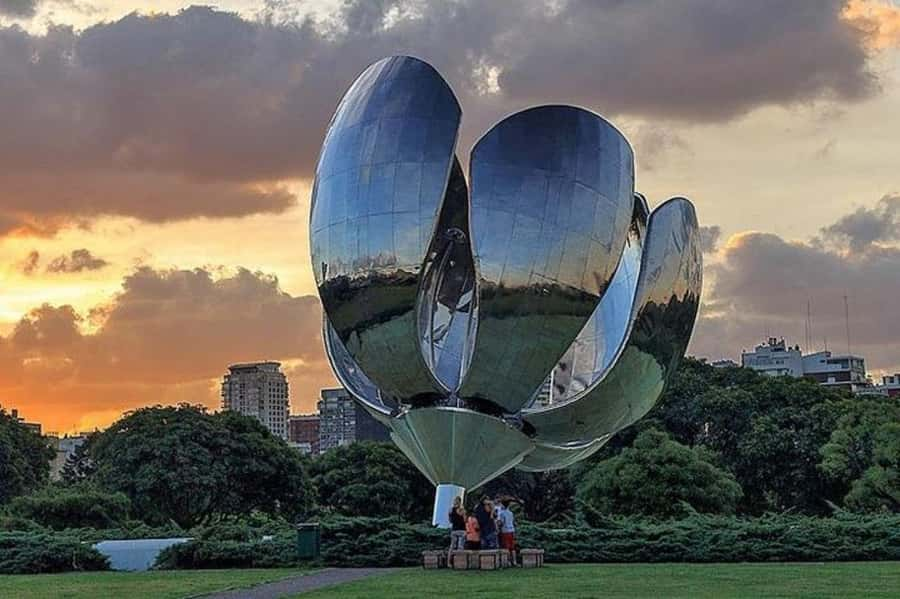
The most important part of a multi-neighborhood tour is the guide. Alejandra, also called Ale, has led this route in English, Spanish, and Portuguese. Her approach has been described as friendly and well informed, with clear explanations and the right amount of information for a fast-moving tour.
That last point matters. A guide who gives too much detail can slow the group down, while a guide who says too little leaves you with disconnected landmarks. Here, the aim is to explain enough to make each district meaningful without turning a four-hour walk into a lecture.
Sebastian has also helped coordinate the experience and make sure the day stays enjoyable. Since the tour involves multiple neighborhoods and transfers, that behind-the-scenes organization matters.
Wear comfortable shoes and check the forecast before you leave. Buenos Aires can make a walking route feel much longer if you are dressed for the wrong weather. The tour is not suitable for wheelchair users, so anyone with mobility needs should choose a different way to see these districts.
Who should book this Buenos Aires route?
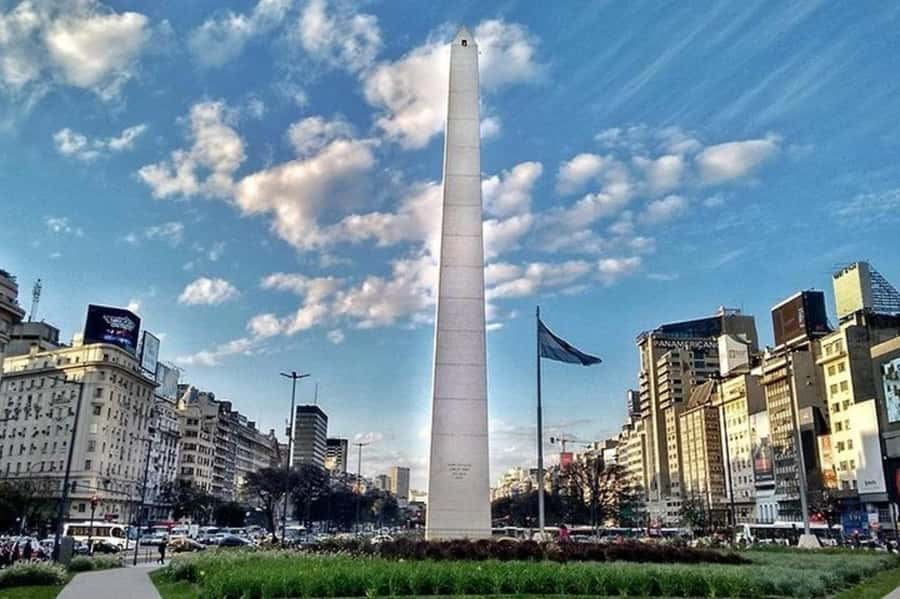
I would recommend this tour to a first-time visitor who wants a fast but connected introduction to the city. It is especially useful if you are interested in politics, architecture, football, tango, and everyday neighborhood life rather than only major monuments.
It also suits you if you have limited time in Buenos Aires. The route covers four very different areas and ends in a district where you can continue eating or walking on your own.
You may want another option if you dislike fixed schedules or prefer to explore one neighborhood in depth. Families with young children should also consider the amount of walking and the number of short stops. Anyone using a wheelchair should note that this activity is specifically not suitable.
Should you book it?
Book this tour if you want a guided introduction that connects old Buenos Aires with its modern side. The best reasons are the unusual small stops in Montserrat and San Telmo, the football and tango focus in La Boca, and the striking change to Puerto Madero at the end.
Skip it if your priority is a slow meal, a full stadium visit, extended market shopping, or a guaranteed stop inside Café Tortoni. The four-hour schedule is broad rather than leisurely.
For many first visits, I think the route earns its place because it gives you a practical map of Buenos Aires in a single morning or afternoon. You see where the city’s power, immigrants, artists, football fans, port workers, and modern developers have left their mark.
FAQ
How long does the Buenos Aires neighborhood tour last?
The tour lasts four hours.
Where does the tour begin?
It begins at the Catedral Metropolitana de Buenos Aires.
Where does the tour finish?
It finishes at Puente de la Mujer in Puerto Madero.
Which languages are available?
The live tour guide is available in English, Spanish, and Portuguese.
Is Café Tortoni guaranteed to be part of the visit?
No. A visit to Café Tortoni depends on availability.
Are meals and drinks included?
No. Meals, drinks, and personal expenditures are not included.
Is the tour suitable for wheelchair users?
No. The activity is not suitable for wheelchair users.
Just added around Buenos Aires
- Tango Show at El Querandi with optional Dinner★ 4.2 · 3 reviews
- Wine Tasting in Buenos Aires★ 4.2 · 4 reviews
- Walking Tour: Buenos Aires bookstores★ 4.3 · 12 reviews
- Velez Sarsfield Football Match★ 5.0 · 3 reviews
- Unique Tigre and Delta Private Day Cruise Navegation★ 5.0 · 3 reviews
- Private Underground Tango Immersion★ 5.0 · 31 reviews
- Sailing with Wine Tasting in Buenos Aires★ 5.0 · 50 reviews
- Experience The Essence of Buenos Aires in San Telmo★ 5.0 · 51 reviews
San Telmo & La Boca Tours, compared.



BA: Empanadas and Alfajores Cooking Experience in Palermo
Read our review →
Browse the lists this tour appears in