
Reviewed · SAN TELMO & LA BOCA TOURS
La Boca Out off the Beaten Track
La Boca is more than Caminito’s painted balconies and tango poses. This 150-minute walk with Paola De Luca, who grew up in the neighborhood, takes you through working streets, immigrant buildings, large social murals, and places most quick visits miss. The personal link matters here: Paola connects local events to the people and artists who shaped La Boca.
I like the visit to the first volunteer fire station in Argentina, and I like the chance to enter a former conventillo rather than simply photograph one from the street. The coffee in an old cafe from 1882 is a fine finish. The main consideration is that this is a walking tour in a lively, uneven urban area, and the tour may feel too short if you want a full museum visit or a long look at every stop.
Key points at a glance
- Paola’s local connection: She was a La Boca neighbor during childhood and youth, bringing personal stories to the neighborhood’s immigrant past.
- Beyond the tourist core: The route reaches lesser-visited streets, warehouses, murals, and old buildings tied to newspapers and bordellos.
- Real interiors: You enter a corrugated-metal conventillo used today as a cultural center and visit Argentina’s first volunteer fire station.
- La Boca in three symbols: Football, religion, and art come together through Boca Juniors Stadium, the Salesian Church, and large public murals.
- A proper local finish: Coffee is included at a notable cafe dating to 1882.
- Small and flexible: Groups are limited to 10, with English and Spanish guiding, free cancellation up to 24 hours before the start, and reserve-now-pay-later booking.
Seeing La Boca beyond Caminito
La Boca is often reduced to one short street lined with bright facades, tango performers, souvenir shops, and painted shutters. Caminito is part of the neighborhood, but it is not the whole story. This walk begins at the corner of Avenida Don Pedro de Mendoza and Martín Rodríguez, then works through the wider district before ending at Caminito.
That direction is useful. You first get context for the neighborhood, then arrive at the famous part with a better sense of why its colors, art, football, and immigrant culture matter. You are not simply being led from one photo stop to another.
Paola’s background gives the walk a personal center. She lived in La Boca during her childhood and youth, so she can connect the public story of the neighborhood with the everyday world behind it. The emphasis is not only on dates or architectural details. You also hear how La Boca became a home for people arriving from elsewhere and how local identity grew from those communities.
The group limit of 10 should help keep the walk conversational. That matters in a neighborhood where you may want to ask about a mural, a building, Boca Juniors, or the way local people use these streets today.
More San Telmo and La Boca walks:
- Buenos Aires: La Boca Guided Walking Tour in English
★ 4.8 · 1,587 reviews - Palermo: Graffiti and Street Art Guided Tour in English
★ 4.8 · 684 reviews - Buenos Aires: Puerto Madero Sunset Cruise with Open Bar
★ 4.1 · 439 reviews
The harbor, warehouses, and the immigrant arrival point
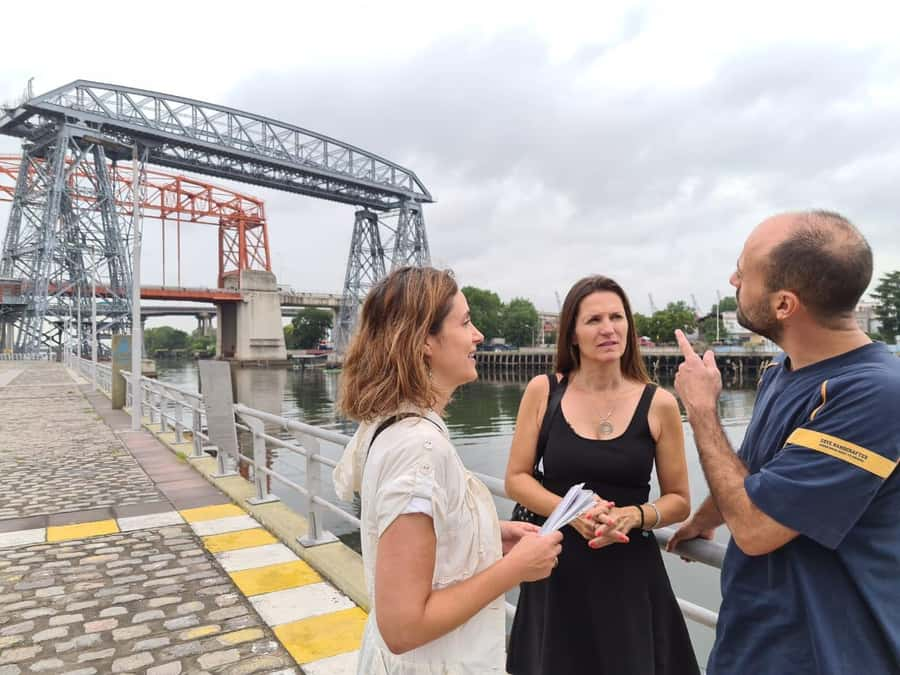
The opening section looks at La Boca’s harbor, old warehouses, and picturesque railway station. These are not random scenic stops. They help explain why the neighborhood became such an important entry point for immigrants.
Large numbers of newcomers arrived through this part of Buenos Aires. The harbor and rail connection placed La Boca close to movement, trade, labor, and temporary housing. You begin to see the neighborhood as a place shaped by arrivals and adaptation, not just as a colorful tourist quarter.
The warehouses add another layer. Their presence points to the working life that supported the district, while the railway station recalls the movement of people through the area. Paola’s explanations are especially useful here because a street or building can look ordinary until you understand what it once did.
Do not expect a long harbor cruise or a visit inside every historic structure. This is a neighborhood walk, and the value comes from the links between the stops. Wear comfortable shoes and be ready to stay on foot for much of the time.
Inside a corrugated-metal conventillo
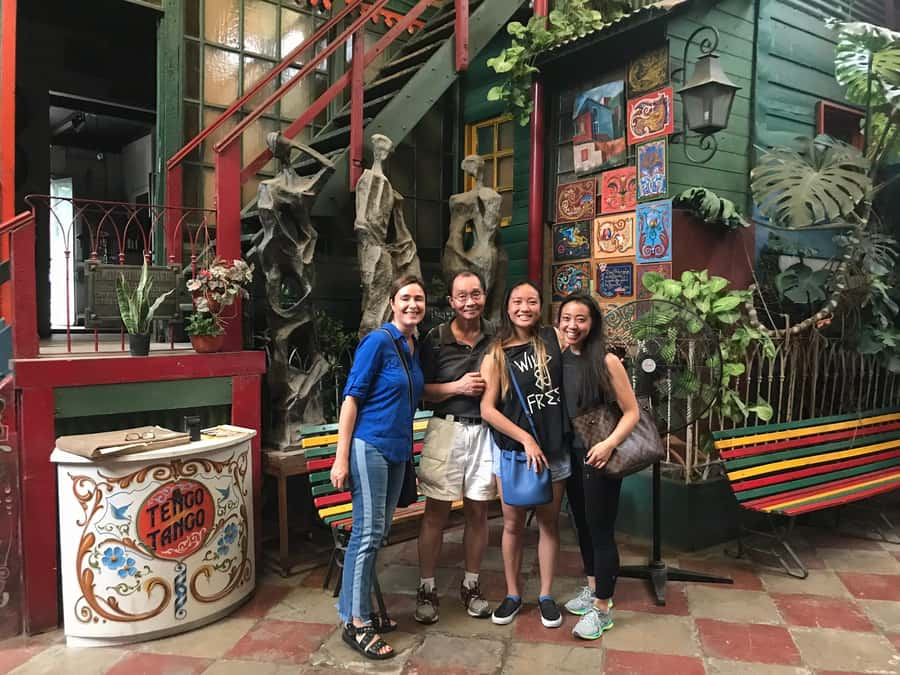
One of the most worthwhile stops is an old conventillo, a tenement house that once sheltered immigrants. The corrugated-metal exterior is closely tied to the visual identity of La Boca, but entering the building gives you more than the familiar postcard view.
These houses were practical responses to a crowded port neighborhood. Many people shared a building, and daily life took place around common spaces. The experience helps you picture the conditions faced by families who arrived in Buenos Aires without an established home or local support network.
The building now functions as a cultural center, so this is not a preserved private residence frozen in time. That is useful in its own way. You can see how an old structure remains part of neighborhood life rather than existing only as a monument.
A visit inside also makes the architecture easier to understand. From the street, brightly painted corrugated metal can look like decoration. Inside, it represents a low-cost building tradition linked to La Boca’s port economy and immigrant population.
The stop may be less comfortable for anyone who prefers a polished museum setting. The point is the building and its social meaning, not a large exhibition with many formal displays.
The first volunteer fire station in Argentina
The tour visits La Boca’s volunteer fire department, identified as the first volunteer firefighter station created in Argentina. Entrance is included, which makes this more than an outside photo stop.
The station reflects a basic problem in a working port district. Fires were a serious threat in dense neighborhoods with warehouses, workshops, and homes built close together. Local mutual-aid groups formed to protect the community when official services were limited or slow to arrive.
This is one of the clearest examples of how immigrant neighborhoods organized themselves. La Boca’s story is not only about hardship. It is also about residents building institutions, helping one another, and creating a shared local identity.
You will want to pay attention to Paola’s explanation of the station’s place in the neighborhood. It gives a human scale to a national first. Instead of treating the fire department as an isolated fact, the tour places it among the mutual assistance groups that helped root newcomers in their new city.
The station visit is particularly good for visitors who want local history with a practical edge. It also breaks up the art and architecture with a civic institution that still has a direct connection to community life.
A few more Buenos Aires half-days to weigh up
- Buenos Aires Hop-On Hop-Off Bus, Free Walking Tours & Discounts
★ 4.5 · 2,218 reviews - Buenos Aires: Piazzolla Tango Show with Optional Dinner
★ 4.4 · 2,122 reviews - Buenos Aires: City Highlights Guided Tour with Transfer
★ 4.7 · 1,946 reviews - Buenos Aires: Hop-On Hop-Off City Bus Tour
★ 4.2 · 1,855 reviews
Murals that carry social messages
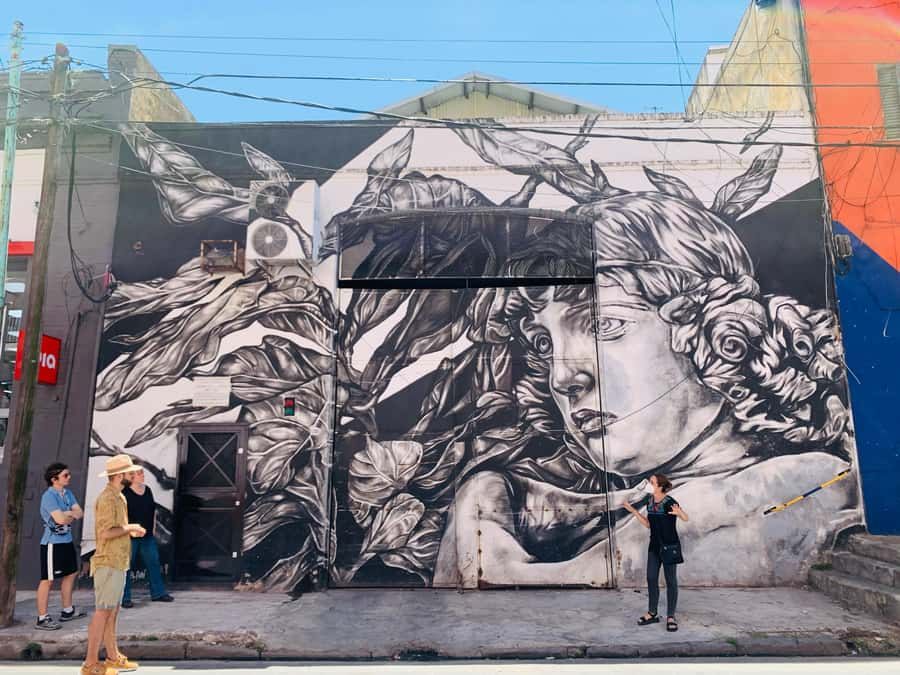
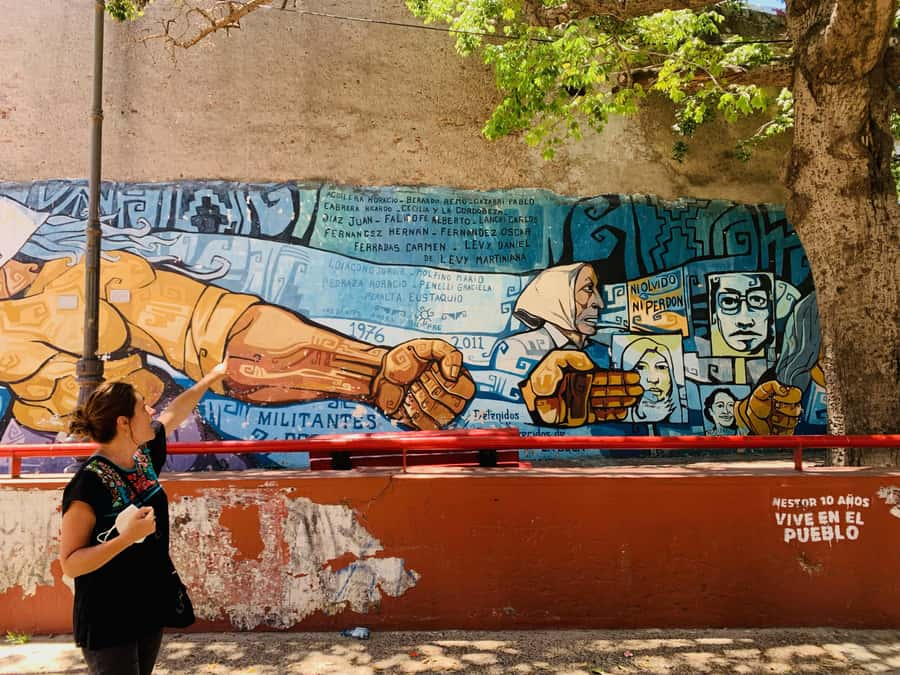
Large murals are a major part of the route. These are not presented only as colorful backgrounds for photographs. Paola explains the social issues and local stories reflected in the paintings, helping you read the walls as public statements.
That makes a difference in La Boca. You can easily walk past a mural, notice its colors, take a picture, and miss its subject. With context, the images become part of a continuing conversation about work, immigration, inequality, neighborhood identity, and local pride.
The murals also show that art in La Boca is not confined to galleries. It occupies walls, streets, community spaces, and homes. The route may take you to works that receive less attention than Caminito’s well-known facades, which is one of the tour’s main advantages.
Paola’s connection to local artists adds a personal touch. The visit includes a typical Boca house belonging to friends who are important to the neighborhood’s art scene, and the local artist connection may bring you closer to the people behind the paintings and buildings.
This part of the walk suits anyone who wants to understand why La Boca looks the way it does. If you mainly want a quick collection of colorful photographs, you can find that in Caminito alone. If you want the stories behind the images, this longer route earns its time.
Newspapers, bordellos, football, and religion
The walk also points out older buildings that once housed anarchist newspapers and bordellos in the early 20th century. These details reveal a less polished side of the district’s past. La Boca was a place of political debate, working-class life, entertainment, and social tension.
The tour then brings together two local forces that still help define the neighborhood: football and religion. You see Boca Juniors Stadium from outside, rather than entering for a match or stadium tour. Even from the exterior, the stadium represents the football passion that shapes La Boca’s identity.
You also visit or view the Salesian Church, which served as a refuge for communities without firm roots in the city. The contrast is worth noting. Boca Juniors expresses collective passion through sport, while the church represents shelter, faith, and social support.
These stops help you avoid a narrow version of La Boca. The neighborhood is not only art, and it is not only football. Its character comes from several forces operating at once: immigration, mutual aid, religion, politics, work, and local pride.
The football stop may feel brief because the stadium is seen from outside. If entering Boca Juniors Stadium is your main goal, you will need a separate activity. Here, the stadium is one piece of a wider neighborhood story.
Caminito, tango, and fileteado
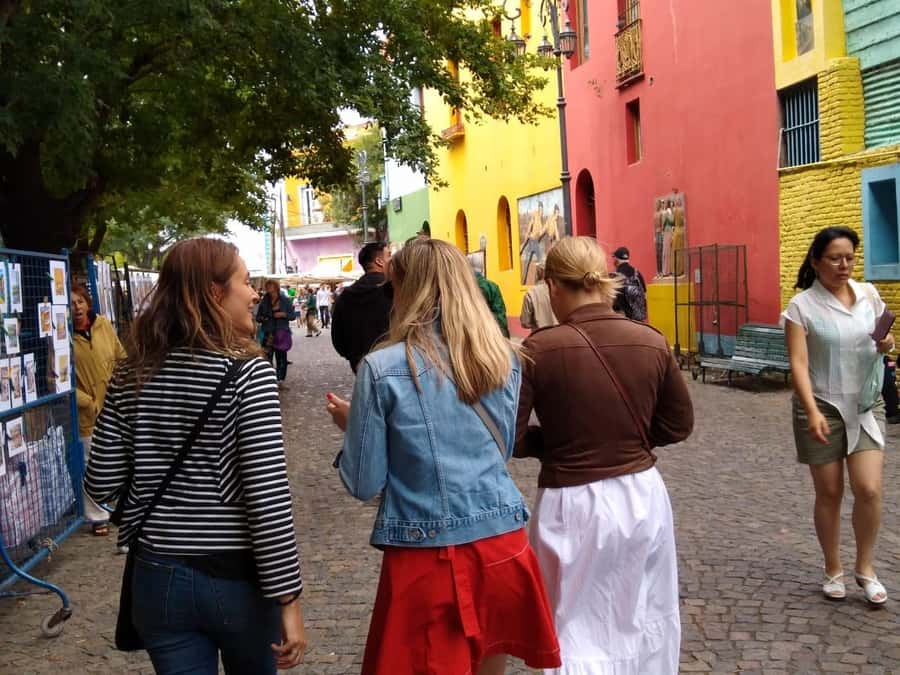
The walk finishes at Caminito, where tango and fileteado appear around nearly every corner. Fileteado is the decorative painting style associated with Buenos Aires, known for ornate lettering, curving lines, and strong colors.
Arriving here at the end works well. You have already seen the less polished, more local sides of La Boca, so Caminito becomes part of the neighborhood rather than the entire picture. You can enjoy its famous visual style without confusing the tourist center with the whole district.
Caminito is also the point where the tour ends, so plan your next activity from there. The guide does not return you to the starting corner. This is convenient if you want to continue exploring the area, but you should know the finish point before planning transport or a timed reservation elsewhere.
The walk’s ending also gives you a natural chance to browse, take photographs, or stay for tango-related sights after the guided portion. Those extra activities are not listed as included parts of the tour, so treat them as your own follow-on plans.
Coffee at an 1882 notable cafe
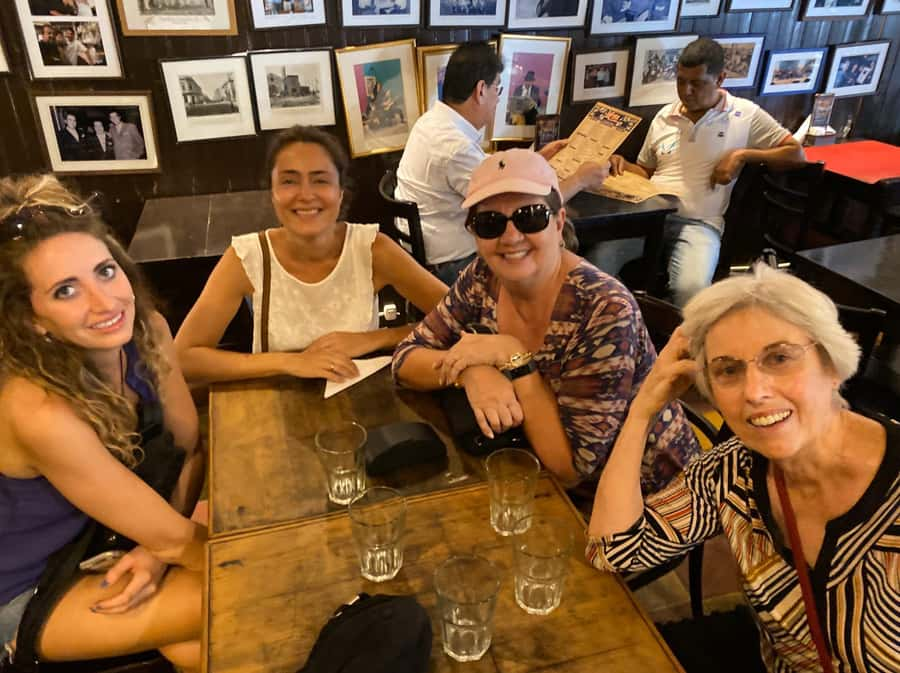
The final scheduled stop is coffee at an old notable cafe dating from 1882. Coffee is included, while food is not.
This is more than a quick refreshment. Historic cafes are part of Buenos Aires culture, and ending at one gives the walk a slower, social finish. After the port, murals, fire station, conventillo, stadium, church, and Caminito, you have time to talk through what you have seen.
The cafe is also a practical feature on a 150-minute walk. A pause matters, especially in warm weather. Paola’s attention to visitor comfort during intense heat has been specifically praised, but you should still bring water and protect yourself from the sun.
Do not expect a full meal. If you need lunch, plan it separately before or after the tour. Coffee is the included refreshment.
Adding the Quinquela Martin museum
The tour can include a visit to the Museo de Bellas Artes de La Boca, associated with Benito Quinquela Martín. Part of the building was his home. The museum ticket is not included, so you should confirm the details and allow for the extra cost if you want to go inside.
Quinquela Martín is an important name for anyone trying to understand La Boca’s artistic identity. His connection to the neighborhood makes the museum more than a general art stop. It links the public murals and painted streets to a major local artist.
Because the tour already lasts 150 minutes, the museum may require extra time beyond the main walk. That is fine if art is a priority, but it may not suit a tightly packed Buenos Aires schedule. Ask about the museum during booking if you want to make it part of your plan.
Is $35 good value?
At $35 per person, the price is reasonable for a small-group walk that includes a live guide, entrance to the volunteer fire station, entrance to the conventillo, and coffee. The group limit of 10 is important here. Paola’s personal connection and ability to answer questions would be less useful in a large crowd.
You are paying for interpretation as much as for access. The fire station and conventillo are the kind of places you might not understand fully from a passing look. The guide connects them to immigration, mutual aid, local art, football, and religion.
The value is strongest if you want the neighborhood explained by someone with a personal tie to it. It is weaker if you only want a short stroll through Caminito, since you can visit that area without paying for a longer guided route.
The tour has received a top rating across six recorded bookings, with particular praise for Paola’s command of the subject, warmth, clear English, and care during hot weather. The consistent point is not simply that she knows facts. She makes the history personal and understandable, which is exactly what this neighborhood needs.
Timing, language, and practical fit
The activity lasts 150 minutes, including about one hour of guided touring and 30 minutes of coffee in the listed schedule, with the remaining time used across the stops and walking route. Starting times vary, so check availability before booking.
Paola guides in Spanish and English. Her English has been specifically described as excellent, making the tour a good choice for English-speaking visitors who want detailed explanations rather than a basic orientation walk.
The meeting point is at Pedro de Mendoza and Martín Rodríguez in La Boca. The tour ends at Caminito. You should arrive at the stated starting point rather than Caminito, and you should plan your onward route from the finishing area.
The activity is not suitable for people over 95, and electric wheelchairs are not permitted. Jewelry, alcohol, and drugs are not allowed. The supplied information does not give a full accessibility description, so anyone with mobility concerns should ask the provider before reserving.
Free cancellation is available up to 24 hours before the start, and you can reserve now and pay later. Those options help if your Buenos Aires plans are still shifting.
Who should book this La Boca walk?
I would choose this for a first or second visit to Buenos Aires if you want to understand La Boca beyond its most photographed street. It suits people interested in immigration, public art, local institutions, football culture, and neighborhood stories.
It is also a strong fit for anyone who values a guide’s personal connection. Paola’s childhood in La Boca gives the tour a sense of place that a purely textbook route cannot easily provide.
Families and older visitors should consider the walking demands, heat, and the restriction on electric wheelchairs. Art lovers may want to add the Quinquela Martin museum, while football fans should remember that the stadium is seen from outside.
Should you book it?
Book this tour if you want context, access, and a local voice rather than a quick photo stop. The conventillo, volunteer fire station, social murals, old buildings, and 1882 cafe create a fuller picture of La Boca, while the small group keeps the experience personal.
Skip it if your only goal is to see Caminito, enter Boca Juniors Stadium, or spend the entire afternoon in a museum. For most visitors who want to understand why La Boca feels so distinct, the $35 cost is fair, and Paola’s connection to the neighborhood is the main reason to choose it.
FAQ
Where does the tour begin?
It begins at the corner of Pedro de Mendoza and Martín Rodríguez in La Boca.
Where does the tour finish?
The tour ends at Caminito in La Boca.
How long does the activity last?
The experience lasts 150 minutes.
What languages are available?
The live guide is available in English and Spanish.
What is included in the price?
The price includes entrance to the volunteer fire station, entrance to the conventillo, and coffee at the notable cafe.
Is the Quinquela Martin museum ticket included?
No. If you choose to visit the Museo de Bellas Artes de La Boca, the entrance ticket is not included.
How large is the group?
The group is limited to 10 participants.
Can I cancel for a full refund?
Yes. You can cancel up to 24 hours in advance for a full refund.
Just added around Buenos Aires
- Tango Show at El Querandi with optional Dinner★ 4.2 · 3 reviews
- Wine Tasting in Buenos Aires★ 4.2 · 4 reviews
- Walking Tour: Buenos Aires bookstores★ 4.3 · 12 reviews
- Velez Sarsfield Football Match★ 5.0 · 3 reviews
- Unique Tigre and Delta Private Day Cruise Navegation★ 5.0 · 3 reviews
- Private Underground Tango Immersion★ 5.0 · 31 reviews
- Sailing with Wine Tasting in Buenos Aires★ 5.0 · 50 reviews
- Experience The Essence of Buenos Aires in San Telmo★ 5.0 · 51 reviews
San Telmo & La Boca Tours, compared.




BA: Empanadas and Alfajores Cooking Experience in Palermo
Read our review →
Browse the lists this tour appears in