

Reviewed · RECOLETA CEMETERY TOURS
Recoleta Cemetery – Small Group Tour of History & Secrets
Recoleta Cemetery is far more than a collection of graves. Behind its marble doors are stories of political power, family feuds, artistic ambition, and old Buenos Aires society. I especially like the way this tour uses the cemetery to explain the city’s past, and the small groups of no more than 15 make it easier to hear, ask questions, and keep up. The separate entrance ticket is the main drawback, since the advertised $49 price does not include the 22,600 Argentine peso cemetery fee.
I also like the practical care built into the tour. Esteban has been praised for finding shady spots, helping during rain, sending clear meeting instructions by WhatsApp, and adjusting explanations for children. The cemetery is still an active place of mourning, so you will need comfortable shoes, a respectful manner, and some patience with the heat or weather.
Key points to know before booking
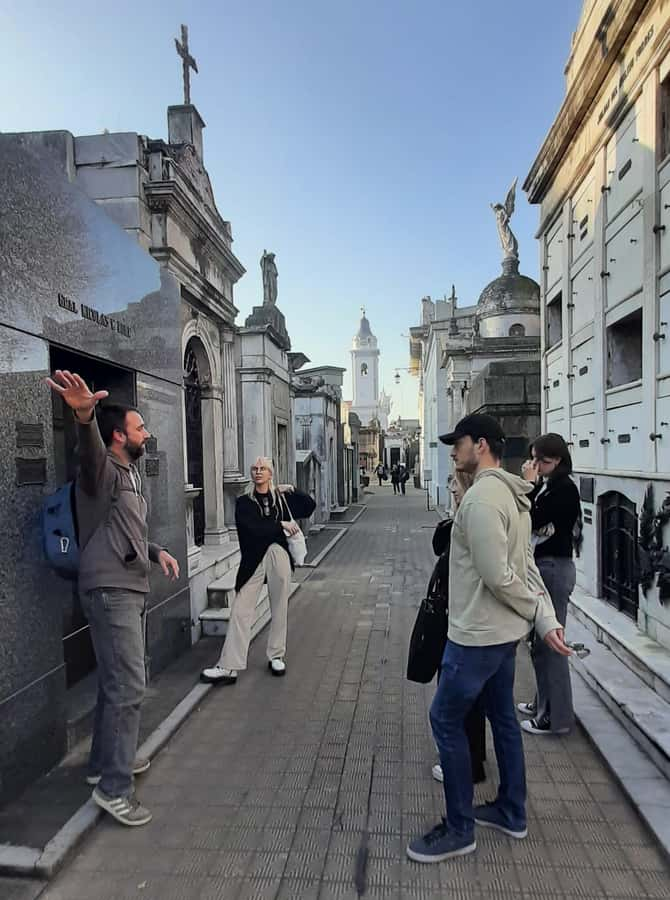
- Evita Perón’s mausoleum: See the cemetery’s most visited tomb and learn why it draws such lasting attention.
- A story-led walk: Hear about a bitter couple, a woman said to have been buried alive, and the families behind the grand facades.
- Small groups: The tour is capped at 15 people, with some groups much smaller.
- European-style mausoleums: Look closely at monuments commissioned from artists and craftsmen connected with Europe.
- A wider Buenos Aires lesson: The cemetery provides a setting for discussing Argentine politics, religion, art, class, and culture.
- English with an attentive guide: Esteban is the regular guide praised most often, though Ivana and Sebastian have also led tours.
Why Recoleta Cemetery deserves two and a half hours
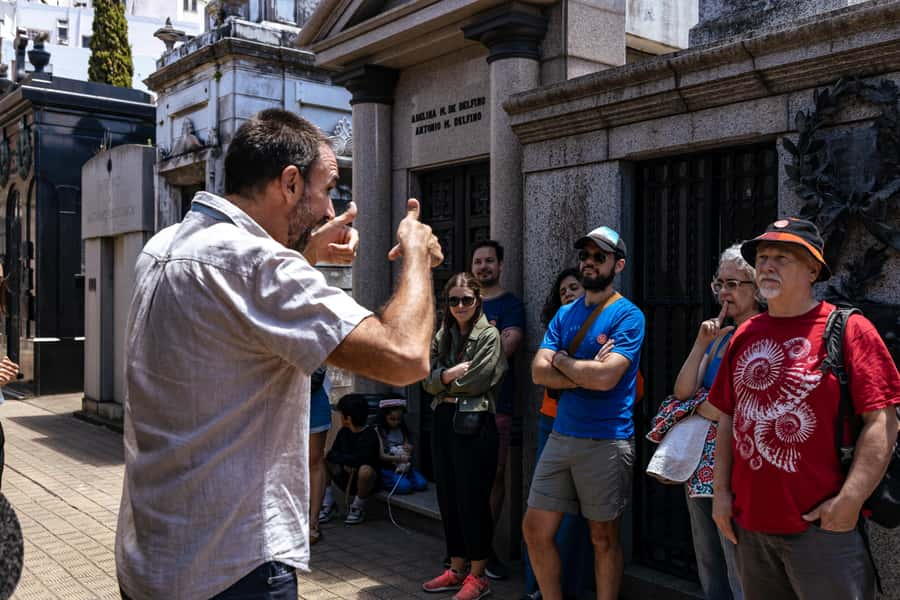
Recoleta Cemetery can look confusing at first. Its paths run between tightly packed mausoleums, and a simple map cannot explain why one doorway, statue, or family name matters. You can walk through on your own, but you may miss the human stories that make the place memorable.
This 150-minute tour gives the cemetery a clear shape. Rather than racing from famous tomb to famous tomb, you spend time hearing how Buenos Aires families used mausoleums to display status and memory. In the 1880s, wealthy families built grand homes in the city and equally grand monuments for the dead. Their tombs became statements of power, taste, faith, and family pride.
I find that context useful because the cemetery is not simply an art site. It is a record of the society that created modern Buenos Aires. Marble, sculpture, imported design, and family names tell you how the city’s elite wanted to be remembered. The guide connects those details to the people inside the tombs, which keeps the walk from becoming a dry architecture lesson.
The pace is another strength. Two and a half hours is long enough to move beyond the obvious highlights, but short enough to fit into a day of sightseeing in Recoleta. You should still expect a walking tour, not a quick photo stop. Comfortable shoes matter, and in warm weather the shaded pauses are important.
More Historical Tours in Buenos Aires
- Nazis in Buenos Aires: a historical walking tour
★ 4.9 · 193 reviews - San Telmo: Historical Guided Tour with Street Food & Drinks
★ 5.0 · 87 reviews - Buenos Aires: La Boca Art and History Walking Tour
★ 4.8 · 55 reviews
Meeting Esteban outside La Recoleta
The meeting point is outside the cemetery at Plazoleta Chabuca Granda. If you arrive by taxi or Uber, use La Biela as your reference point. Its address is Avenida Presidente Manuel Quintana 596, Buenos Aires.
Look for a guide wearing a blue cap. You may also receive a WhatsApp message before the tour with directions, what to bring, and how to recognize the guide. That small bit of preparation can save time in a busy part of the city, especially if you are unfamiliar with the cemetery entrance.
Esteban is the guide most closely associated with this experience. His strengths are clear: strong English, a lively delivery, a good speaking voice, and the ability to answer questions without losing the thread of the tour. He also learns names and backgrounds quickly, then uses that information to make explanations feel more personal.
Other guides named in the tour feedback include Ivana and Sebastian. The experience is in English, so you should be comfortable listening to extended explanations and stories in that language.
The group limit is 15 people. That is small enough for a more personal walk and much easier to manage than a large city tour. Some groups have been as small as four or six people, though the exact size depends on bookings. A smaller group also gives you a better chance to ask about a detail that catches your eye.
Entering a city of mausoleums
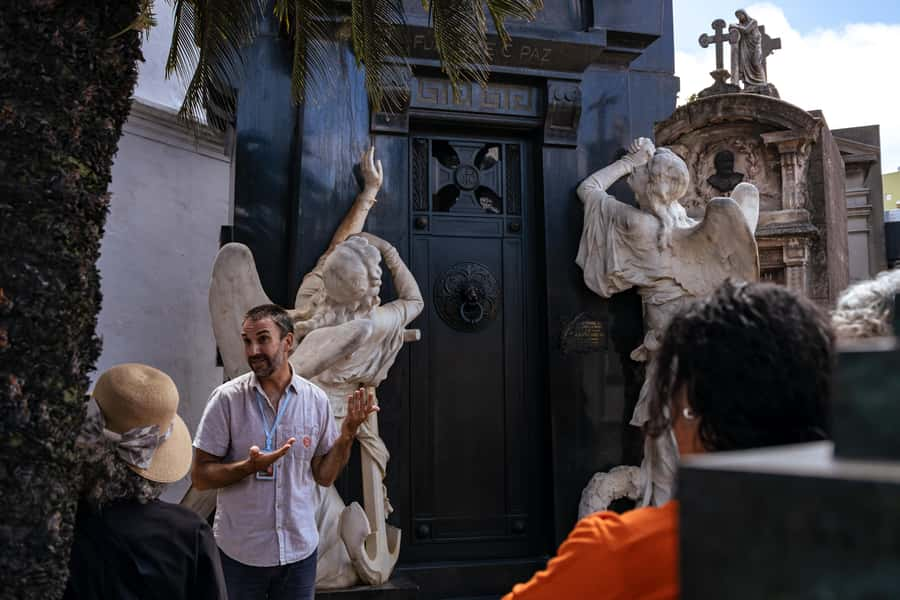
Once inside, the cemetery’s layout becomes the subject of the tour. The most important point is not simply that the tombs are ornate. It is that they were built to be seen.
The mausoleums resemble miniature houses, chapels, and memorial rooms. Many were commissioned by wealthy families who wanted a lasting public image. The tour explains how European artistic influences reached Buenos Aires and how families used the design of a tomb to signal their place in society.
You will be encouraged to look beyond the largest names. Sculptures, inscriptions, doors, religious details, and the condition of the monuments all help tell a story. The guide draws attention to architectural features that are easy to walk past when you are exploring alone.
This is one reason I would not treat the cemetery as a place to simply follow a map. A map can point you toward a famous grave, but it cannot explain a family feud carved into stone or show why a particular sculpture matters. The guide’s storytelling gives the objects a human purpose.
The setting is also unusual. You are walking among impressive works of art, but this remains an active cemetery. Families still come to visit and care for graves. Keep your voice down around mourners, ask before photographing people, and avoid treating every detail as a joke. The stories can be dramatic, but the place deserves care.
The legends that bring the stones to life
The tour includes stories designed to show the stranger side of Recoleta. One concerns a couple whose bitterness was expressed in stone for eternity. The exact details are part of the guide’s presentation, but the larger lesson is clear: family relationships did not always end peacefully when a person died.
Another story tells of a woman believed to have been buried alive. This kind of legend gives the cemetery its eerie edge, though you should expect the guide to place it within the setting of local memory and storytelling rather than presenting the cemetery as a haunted attraction.
That balance matters. Recoleta is fascinating because real social history and dramatic legend sit close together. You hear about actual public figures and families, then encounter stories shaped by rumor, fear, and imagination. A good guide helps you enjoy both without confusing a legend with a documented fact.
Esteban’s style appears to suit this material well. He is described as funny, enthusiastic, and deeply familiar with the cemetery. He welcomes questions and projects his voice clearly, useful qualities when the group is standing outdoors among stone walls and other tour groups.
Families can take part, too. One parent specifically noted that the guide explained the subject in a way a child could understand. Still, parents should remember that this is a serious historical walk with stories about death. Children who enjoy mystery, art, and unusual history may find it gripping, while very young children may not have the patience for 150 minutes.
More Recoleta and Evita walks:
- Buenos Aires: La Recoleta Cemetery Guided Tour in English
★ 4.8 · 1,359 reviews - Buenos Aires Bike Tour: North Districts, Recoleta and Palermo
★ 4.5 · 91 reviews - Buenos Aires: Recoleta and Retiro Tip Based Walking Tour
★ 4.7 · 50 reviews - Cultural Experience by Bike around Palermo and Recoleta Max 6 ppl
★ 5.0 · 44 reviews
Evita Perón’s final resting place
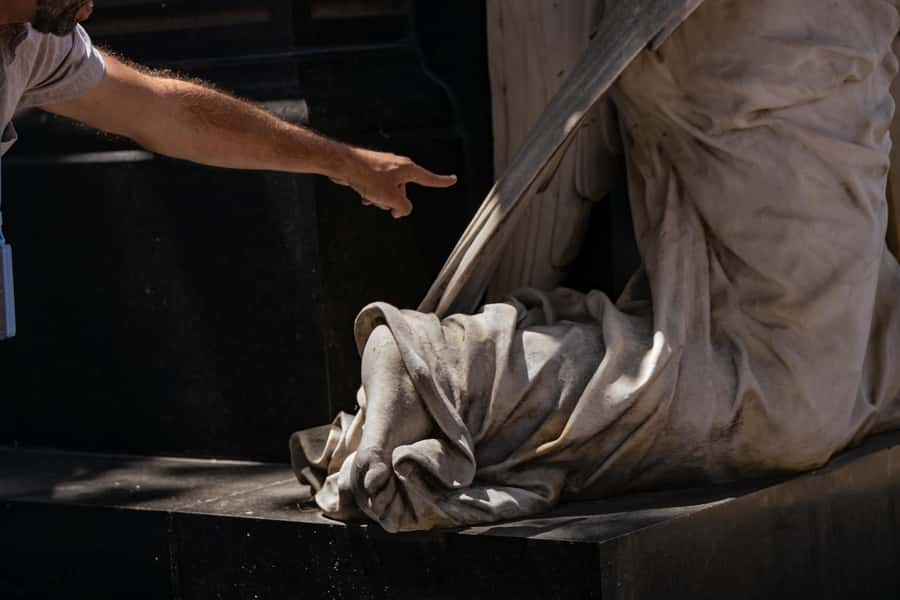
The most famous stop is the mausoleum of Evita Perón. María Eva Duarte de Perón remains one of Argentina’s most powerful and contested public figures, and her tomb is the cemetery’s most visited.
The stop is valuable because it connects a single family tomb to the wider story of Argentina. Evita’s public role, her relationship with Juan Perón, and her place in Argentine political memory all give the site weight far beyond its physical size. The guide uses the mausoleum as a doorway into that larger national story.
You will not simply be shown where Evita is buried and then hurried away. The tour is built around stories of people and the meanings attached to their resting places. At this stop, you can expect a focused explanation of why so many people seek out the tomb and why Evita continues to matter in Buenos Aires.
This is also likely to be the busiest point of the visit. The tour’s small size helps, but you should not expect private access or a quiet, empty scene. Follow the guide’s instructions and be discreet with photography. The cemetery allows photographs, but respect is more important than getting a perfect picture.
What the guide adds to art and architecture
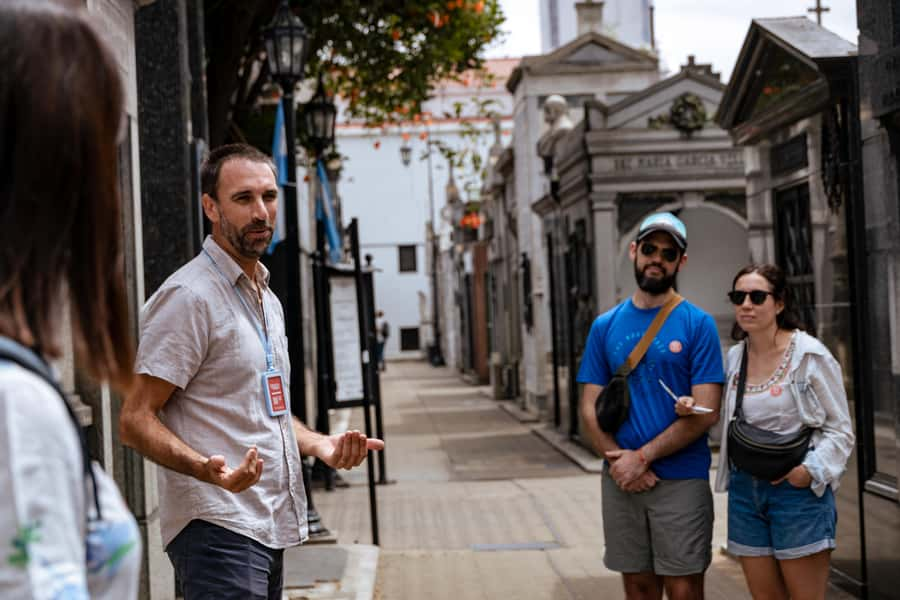
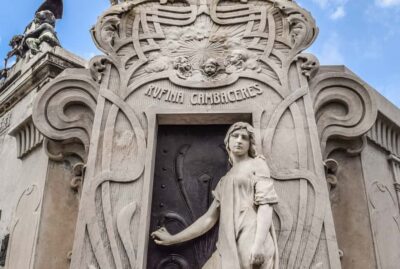
A major benefit of this tour is the attention to visual details. The mausoleums were not built as plain storage spaces. Families commissioned designs meant to express identity, faith, wealth, and remembrance.
The guide points out the artistic features that give each structure its character. You may find yourself studying a doorway, a sculpted figure, a family emblem, or the relationship between a monument and the path around it. These details are easy to overlook when you are thinking only about famous names.
The European connection is central. Wealthy Buenos Aires families imported mausoleum designs and artistic influence from Europe, creating an unusual mix of South American history and European memorial style. You do not need to be an architecture expert to appreciate this. The guide explains what to notice and why it mattered to the people who commissioned it.
I especially like this aspect for visitors who have already seen Buenos Aires’ grand public buildings and elegant neighborhoods. The cemetery shows the same ambition on a smaller scale. Instead of palaces for the living, you see carefully designed monuments for the dead.
The information also gives you a better way to explore after the tour. Once you understand how to read a mausoleum, you can continue looking closely rather than simply checking names off a list.
Heat, rain, and the practical side of the walk
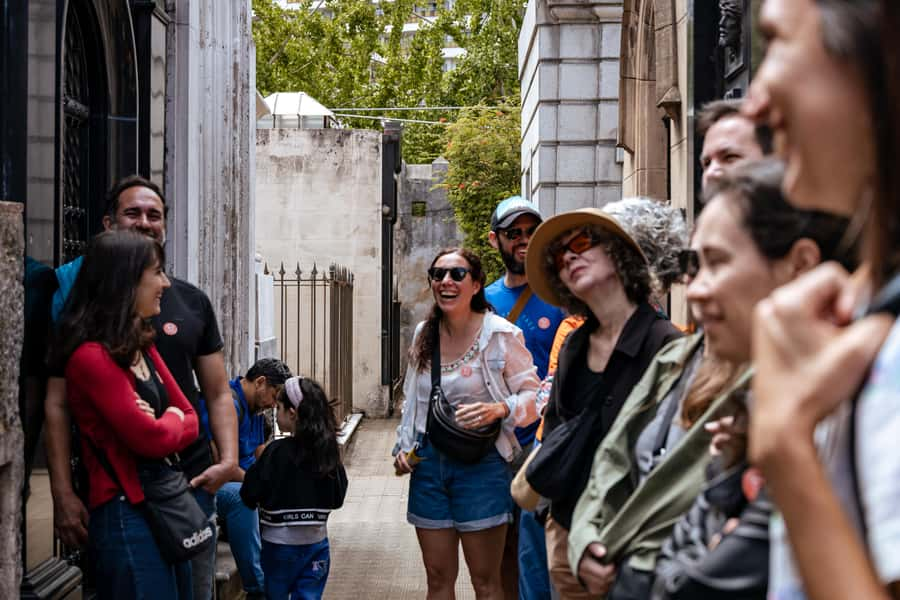
Weather is worth planning for. The cemetery is an outdoor site, and the tour lasts 150 minutes. Bring water and wear comfortable shoes. The guide has made a point of finding shade during stops, which is particularly useful during hot Buenos Aires days.
Rain can also arrive suddenly. Esteban has supplied umbrellas during a downpour, but you should not rely on that as your only weather plan. A light rain layer is sensible, and you may want to check the forecast before setting out.
The route is described as wheelchair accessible, but the supplied details do not explain the condition of every path or the precise route used. If you use a wheelchair, confirm current access arrangements when booking so the guide can prepare for your needs.
Photography is allowed, but keep it discreet. Avoid photographing mourners, do not block entrances, and remember that this is not a theatrical haunted house. The best photographs are likely to come from the architecture and sculpture, not from turning private grief into a spectacle.
The tour begins outside the cemetery, and the entrance fee is extra. At the stated price of $49 per person, you should budget for the additional 22,600 Argentine peso ticket. That separate charge is easy to miss and is the one clear value issue with the booking.
Even so, the price can make sense if you want more than a quick walk through. You are paying for two and a half hours of English guiding, historical context, stories, and help noticing details that a basic entrance map does not explain. If you prefer to wander silently or already know the cemetery well, the extra cost may feel less worthwhile.
Who will enjoy this tour most
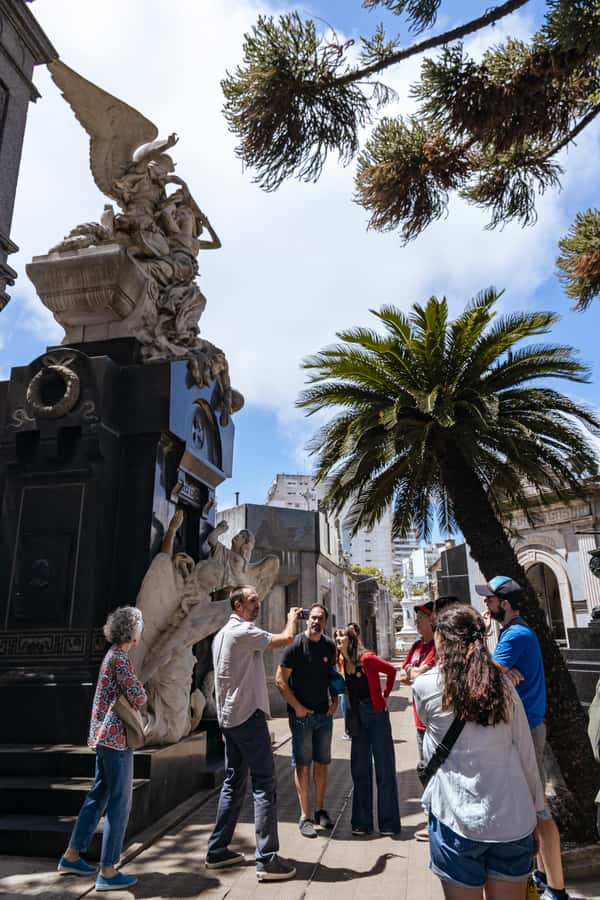
I would choose this tour if you like history that is tied to real places and people. It suits visitors curious about Argentine politics, religion, art, social class, family life, and local legends.
It is also a good match for first-time visitors to Buenos Aires. The cemetery gives you a compact introduction to the city and country, and the guide adds cultural context that you might not get from a general sightseeing route.
Families can consider it, especially if children enjoy unusual stories and sculpture. The guide’s ability to adjust explanations helps, but the length and subject matter still require attention. Teenagers and older children are more likely to enjoy the mix of mystery, famous figures, and visual details.
You may want to skip it if you dislike cemetery visits, have limited tolerance for walking, or want a fast visit focused only on Evita. The tour is deliberately broader. Evita is important, but she is one part of a larger story.
Booking details and final verdict
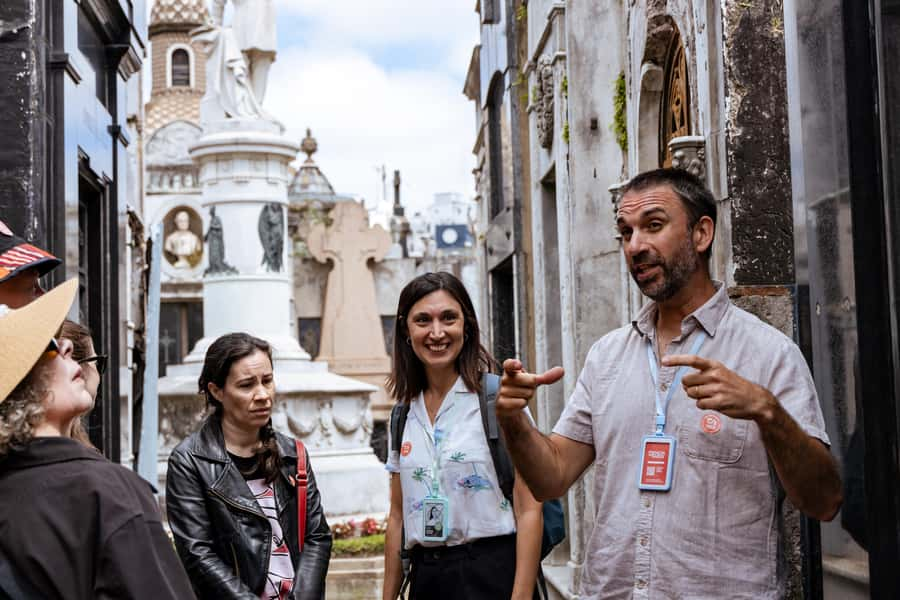
The tour lasts 150 minutes and is conducted in English. You can cancel up to 24 hours in advance for a full refund, and the reserve-now, pay-later option keeps you from paying at the time of booking. The cemetery entrance ticket remains separate, at 22,600 Argentine pesos.
I would book this tour if you want Recoleta Cemetery to make sense rather than simply look impressive. Esteban’s clear communication, strong storytelling, attention to shade and rain, and willingness to answer questions are real advantages. The small group also gives the visit a more human feel.
I would be cautious only about the extra entrance fee, the length of the walk, and the outdoor conditions. If those points work for you, this is one of the better ways to understand Recoleta Cemetery and the Buenos Aires society reflected in its marble monuments.
FAQ
Where does the tour meet?
The meeting point is outside the cemetery at Plazoleta Chabuca Granda. If you use a taxi or Uber, say you are going to La Biela at Avenida Presidente Manuel Quintana 596.
How can I recognize the guide?
The guide will be wearing a blue cap. You may also receive a WhatsApp message with meeting instructions and details about what to expect.
How long does the tour last?
The guided visit lasts 150 minutes, or two and a half hours.
Is the cemetery entrance ticket included?
No. The cemetery entrance ticket is not included and costs 22,600 Argentine pesos.
Is the tour offered in English?
Yes. The tour has a live English-speaking guide.
Can I cancel the booking?
Yes. You can cancel up to 24 hours in advance for a full refund. The reserve-now, pay-later option is also available.
Just added around Buenos Aires
- Tango Show at El Querandi with optional Dinner★ 4.2 · 3 reviews
- Wine Tasting in Buenos Aires★ 4.2 · 4 reviews
- Walking Tour: Buenos Aires bookstores★ 4.3 · 12 reviews
- Velez Sarsfield Football Match★ 5.0 · 3 reviews
- Unique Tigre and Delta Private Day Cruise Navegation★ 5.0 · 3 reviews
- Private Underground Tango Immersion★ 5.0 · 31 reviews
- Sailing with Wine Tasting in Buenos Aires★ 5.0 · 50 reviews
- Experience The Essence of Buenos Aires in San Telmo★ 5.0 · 51 reviews
Recoleta Cemetery Tours, compared.

Buenos Aires Bike Tour: North Districts, Recoleta and Palermo
Read our review →

Cultural Experience by Bike around Palermo and Recoleta Max 6 ppl
Read our review →


Full Day City Tour Buenos Aires, Recoleta Cemetery and Tigre
Read our review →Browse the lists this tour appears in