Reviewed · TICKETS
Teatro Colon Guided Tour Admission Ticket
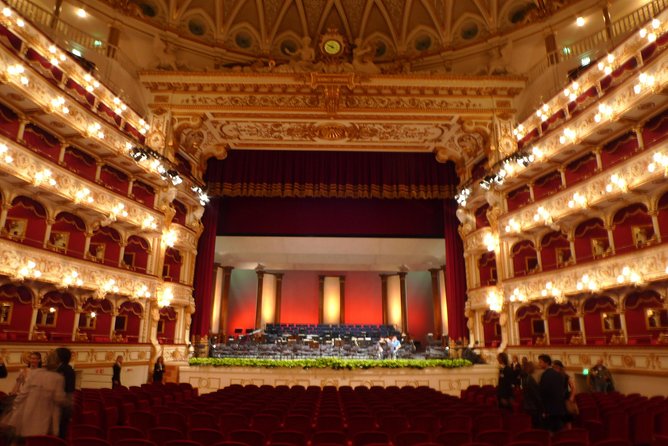
Teatro Colón is not just another pretty theater. It is one of Buenos Aires’ great cultural landmarks, a working opera house where Maria Callas, Plácido Domingo, Luciano Pavarotti, Vaslav Nijinski, and Mijail Barishnikov have appeared. I like the chance to see its Golden Hall and Main Foyer, then step into a box for a better look at the auditorium.
I also like that the official guide explains why the building matters, from its unusual history involving three architects to its celebrated acoustics. Guides such as Octavio, Kiara, and Adrian have been praised for making the story clear and lively. The main caution is that this is a working theater: rehearsals, technical checks, or performances can limit what you see, and the auditorium may be dim or completely dark.
Key points to know before you book
- Theater history: The present Teatro Colón opened on May 25, 1908, with a performance of Aïda.
- Main rooms: The tour includes the Main Foyer, Gallery of Busts, Golden Hall, and auditorium area.
- Short but focused: Plan on about 50 minutes, with the full activity lasting roughly one hour.
- Book early: English departures can fill, and tickets are often booked about three weeks ahead.
- Bring the correct ticket: A separate Teatro Colón entrance ticket is sent by email, and the instructions say it must be printed.
- Working venue: Rehearsals, stage preparation, and other theater activity can change the route or lighting.
Why Teatro Colón deserves an hour of your Buenos Aires time
Buenos Aires is full of grand buildings, but Teatro Colón offers something different from simply admiring a facade from the sidewalk. You walk through the rooms where the city’s opera, ballet, and concert life has played out for more than a century.
The present theater opened in 1908, after the original Teatro Colón operated in another building from 1857 to 1888. Construction of the new house took years, and three architects shaped the finished building. That mixture of design influences gives the tour more substance than a quick look at gilt decoration.
You do not need to know opera to enjoy this visit. The guide connects the building to music, performance, engineering, and Buenos Aires society. The acoustics are a major part of the story, since Teatro Colón is often placed among the world’s finest concert venues for sound. You may not hear a full performance during the tour, but the guide helps you understand why this room has such a strong reputation.
I especially like the link between the architecture and the performers who have appeared here. Maria Callas, Plácido Domingo, and Luciano Pavarotti are among the famous singers associated with the theater. Ballet figures including Vaslav Nijinski and Mijail Barishnikov also belong to its story. These names give the tour a human scale: you are not only looking at marble, plaster, and chandeliers, but at a stage built for artists who shaped opera and dance.
A few more Buenos Aires half-days to weigh up
- Buenos Aires Hop-On Hop-Off Bus, Free Walking Tours & Discounts
★ 4.5 · 2,218 reviews - Buenos Aires: Piazzolla Tango Show with Optional Dinner
★ 4.4 · 2,122 reviews - Buenos Aires: City Highlights Guided Tour with Transfer
★ 4.7 · 1,946 reviews
Entering through Cerrito 628
The meeting point is Teatro Colón at Cerrito 628 in central Buenos Aires. The theater is near public transportation, so you can reach it without arranging a private transfer. Hotel pickup and drop-off are not included, and the activity begins and ends at the theater.
Allow enough time to find the entrance and sort out your ticket. One of the less pleasant parts of this booking is that the standard Viator or TripAdvisor voucher is not accepted at the theater. Instead, an attraction ticket is sent separately by email.
The instructions say you receive the entrance ticket during the first week of the month selected for your visit, and that you must print it. Do not treat the initial booking confirmation as the only document you need. Check your inbox before leaving home, print the attached theater ticket, and bring it with you.
This detail matters. A few people have had trouble when the ticket arrived late, went to a different message channel, or was unclear for a booking involving more than one person. The supplied instructions are firm about printing, so I would follow them rather than rely on a phone screen or the original voucher.
The Main Foyer and Gallery of Busts
The guided visit begins with the formal interior rooms, where the building’s decorative style comes into focus. The Main Foyer is the sort of space that makes a short tour worthwhile even before you reach the auditorium. Look up, look across the floor, and pay attention to the way the room prepares you for a night at the opera.
The Gallery of Busts adds a more personal touch. Sculpted figures and references to major composers help place the theater within the European musical tradition that influenced Buenos Aires at the turn of the twentieth century. A guide can point out details that are easy to miss if you walk through on your own.
This part of the tour is usually the safest bet if your visit is affected by a rehearsal or technical work. The theater may restrict access to certain rooms, but the foyer and gallery are central to the tour’s architectural story.
The guide’s role matters here. Octavio has been singled out for sharing many useful facts, while Kiara has been praised for an entertaining and clear presentation. Adrian has also led an English tour, explaining the building’s three-architect history and the artistic influences behind its design. Guide quality can vary by departure, but the best guides make the details feel connected rather than presenting a string of dates.
The Golden Hall and the view from a box
The Golden Hall is one of the tour’s main rewards. Its name gives you a fair idea of the mood: this is an ornate room meant to impress. You get time to take in the decoration while the guide explains how it fits into the theater’s larger design.
The route also includes the round floor, referring to the main theater area and its seating. Several tour accounts describe access to a box overlooking the auditorium. From there, you can study the shape of the room and imagine the view held by an audience member during an opera or ballet.
That box visit is a particularly useful detail for photographers and architecture fans. It lets you see the auditorium from a different angle instead of only walking through public corridors. It also makes the theater feel like a performance space rather than a museum.
Still, you should keep your expectations flexible. Teatro Colón continues to operate as a theater, and stage work takes priority. During some visits, the auditorium has been fully lit. During others, lights have been dimmed or switched off for technical preparation. One tour spent a large portion of the visit in a dark auditorium while sound and lighting checks took place.
If seeing the auditorium in full light is your main reason for booking, this uncertainty is important. The tour provider cannot guarantee the lighting or the absence of a rehearsal. You might even see part of a ballet rehearsal, such as a Nutcracker preparation, which can be a wonderful bonus. But you might also get only a limited view of the main room.
Same city, a completely different kind of day:
- Buenos Aires: Hop-On Hop-Off City Bus Tour
★ 4.2 · 1,855 reviews - Buenos Aires Hop-On Hop-Off Bus and Exclusive Benefits
★ 4.4 · 1,714 reviews - Buenos Aires: La Boca Guided Walking Tour in English
★ 4.8 · 1,587 reviews - Buenos Aires: La Recoleta Cemetery Guided Tour in English
★ 4.8 · 1,359 reviews
A working theater, not a static museum
This is the central tradeoff. Teatro Colón is impressive partly because it is still used for opera, ballet, and concerts. That active role gives the building life, but it also means the route can change.
The circuit may be affected by performances, rehearsals, refurbishments, technical preparations, or other theater activities. There is no refund if part of the normal route is unavailable. A tour can therefore feel exceptional on one day and more restricted on another.
I would think of the visit as an architectural and historical tour with a chance to see the theater in operation, not as a guaranteed backstage pass. There is no promise of backstage access. The listed rooms are the Main Foyer, Gallery of Busts, Golden Hall, and auditorium area.
The possibility of an active rehearsal is worth noting. It can give you a rare glimpse of the building as a real workplace. On the other hand, a dark auditorium or blocked-off room can leave you feeling that the most important space was only partly shown.
The guide should explain any restrictions at the start. If the auditorium is dark, you can still see the shape and scale of the room from the available seating or box area, but fine decoration will be harder to appreciate.
How the one-hour format works
The tour itself lasts about 50 minutes, with the total activity listed as approximately one hour. That is enough time for a well-paced introduction, but not enough for a slow architectural study of every corridor.
A short visit suits a day of sightseeing in central Buenos Aires. You can fit it between other stops without giving up half a day. It also keeps the focus tight: main rooms, key facts, and a look into the auditorium.
The downside is that the group can feel large. The maximum is 30 people, and some departures may be hard to follow if the guide is not using a microphone. A few people have found it difficult to hear when the group spreads across a large room.
I would stay close to the guide and avoid drifting toward the back. If you have hearing concerns, this is worth considering before you pay. The tour is not private, and there is no promise of a small group below the stated maximum.
The minimum age is five. That makes the activity possible for families, but the subject and quiet indoor setting may not suit a very young child. A tired toddler can make it hard for everyone to hear, so families should judge the timing carefully.
Is $46 a fair price?
At $46 per person, this is not the cheapest way to see Teatro Colón. The fee includes the theater admission and a professional guided tour, but not food, drinks, souvenirs, or transportation.
The value depends on what you want from the visit. If you care about architecture, opera, music, or Buenos Aires history, the guide adds useful context that you would not get from simply walking past the building. The Golden Hall, foyer, bust gallery, and box view provide several worthwhile stops within a short time.
If you mainly want to see the auditorium fully lit, the price feels riskier. The tour can be under an hour, the group may be large, and theater operations can limit the view. A dim auditorium can make the cost feel high, especially if it is the feature you most wanted to see.
The best value comes when you treat the ticket as a guided introduction to a major cultural building, not as a full theater production or backstage visit. The experience is stronger for someone who will listen to the explanations and notice the details in the rooms.
Booking timing and practical planning
English tours can be harder to secure, so I would book well ahead. The average booking point is about 21 days before the visit, and popular entrance times may sell out closer to the date. Multiple entry times are offered during the day, which makes it easier to fit the tour into your schedule.
The booking is non-refundable and cannot be changed for any reason. That is a major condition at this price. Check your date, time, number of people, and email address before confirming.
After booking, watch for the separate Teatro Colón ticket. The theater will not accept the general Viator or TripAdvisor voucher. Print the entrance ticket as instructed, and bring it to the theater.
Arrive at Cerrito 628 with time to spare. The activity begins and ends at the meeting point, so you do not need to coordinate a return transfer. Since the theater is near public transportation, it is practical to visit as part of a central Buenos Aires walking day.
Who will enjoy this tour most
I would recommend this tour to you if you enjoy historic buildings, opera houses, concert halls, or city history. It is also a good choice if you want a structured introduction rather than trying to make sense of the theater on your own.
You do not need any background in opera. The tour explains the building’s architecture, acoustics, and famous performers in plain terms. The short length works well for a first visit to Buenos Aires, especially if you have other sights planned.
Families with children aged five and older can participate, but the quiet setting may test very young children. People who need every detail to be clearly audible should also think about the maximum group size and the possibility that the guide may not use a microphone.
I would hesitate if your only goal is a fully illuminated view of the auditorium or access behind the stage. Those things are not guaranteed. The theater’s own schedule can change the route, and the ticket does not come with a refund if that happens.
Should you book Teatro Colón?
Yes, if you want to understand why Teatro Colón matters and you can accept a little uncertainty. The building’s foyer, Golden Hall, bust gallery, and famous performers make this one of the more worthwhile short cultural visits in Buenos Aires.
Book early, especially for an English departure. Print the separate entrance ticket, arrive at Cerrito 628, and keep an open mind about the auditorium. If it is lit and a rehearsal is visible, you may get an especially memorable visit. If technical work limits the view, the architecture and guide still carry much of the experience, but the $46 price will feel less generous.
FAQ
How long does the Teatro Colón guided tour last?
The activity lasts approximately one hour, with the guided theater circuit taking about 50 minutes.
What rooms are included in the tour?
The tour includes the Main Foyer, Gallery of Busts, Golden Hall, and the auditorium area, including the round floor.
Is the admission ticket included?
Yes. The price includes the Teatro Colón admission fee and the guided tour with a professional guide.
Where does the tour begin?
It begins at Teatro Colón, Cerrito 628, C1010 Buenos Aires, Argentina.
Where does the activity end?
The tour ends back at the meeting point at Teatro Colón.
Will the theater accept my Viator or TripAdvisor voucher?
No. Teatro Colón does not accept the general Viator or TripAdvisor voucher. A separate theater entrance ticket is sent by email.
Do I need to print my theater ticket?
Yes. The instructions state that you must print the Teatro Colón entrance ticket to take the guided tour.
Is the tour available in English?
English guided departures are available, but they can be harder to secure. Booking ahead is recommended.
Can the tour route change?
Yes. Performances, rehearsals, refurbishments, technical work, or other theater activities can affect the circuit and auditorium lighting.
Can I cancel or change the booking?
No. The ticket is non-refundable and cannot be changed. If you cancel or request an amendment, the amount paid is not refunded.
Just added around Buenos Aires
- Tango Show at El Querandi with optional Dinner★ 4.2 · 3 reviews
- Wine Tasting in Buenos Aires★ 4.2 · 4 reviews
- Walking Tour: Buenos Aires bookstores★ 4.3 · 12 reviews
- Velez Sarsfield Football Match★ 5.0 · 3 reviews
- Unique Tigre and Delta Private Day Cruise Navegation★ 5.0 · 3 reviews
- Private Underground Tango Immersion★ 5.0 · 31 reviews
- Sailing with Wine Tasting in Buenos Aires★ 5.0 · 50 reviews
- Experience The Essence of Buenos Aires in San Telmo★ 5.0 · 51 reviews
Tickets, compared.


Entrance Ticket to La Ventana Tango Show with Optional Dinner
Read our review →
Helicopter Ride Over the Iguazu Falls – Admission Ticket
Read our review →