

Reviewed · SAN TELMO & LA BOCA TOURS
Buenos Aires: La Boca Art and History Walking Tour
La Boca is more than bright buildings and tango poses. This 150-minute walk explains how working-class immigrants, artists, football supporters, and port life shaped the neighborhood. I like the focus on Benito Quinquela Martín, whose art and civic work help you see La Boca as a place with purpose, not just a colorful photo stop. I also like the way the tour connects local art with Boca Juniors football, two powerful parts of the neighborhood’s identity.
The main drawback is that the experience depends heavily on your guide and on the day’s operating arrangements. Guides such as Facundo, Laura, Dani, Francisco, and Frani have earned strong praise for clear storytelling and friendly company, but solo visitors must confirm availability, and bookings need to be made at least 24 hours ahead. You should also contact Baires Experience before or after booking to confirm that the tour runs on your chosen date.
Key points at a glance
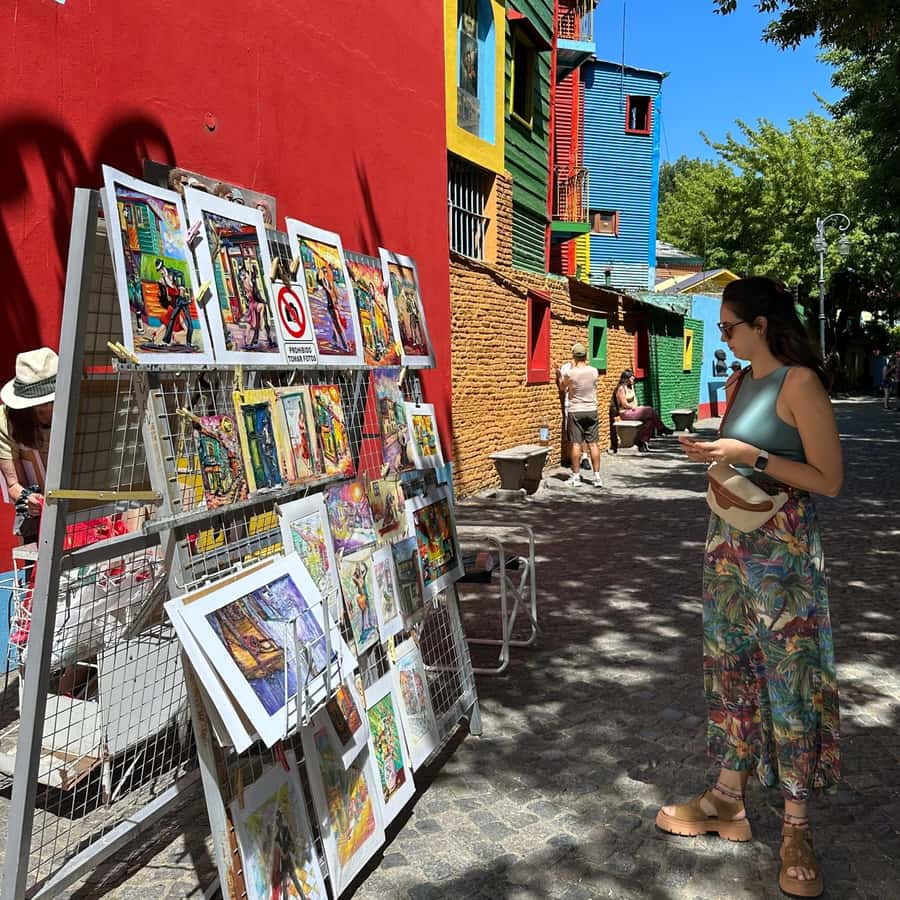
- Benito Quinquela Martín gives La Boca its artistic center: His museum and public legacy add meaning to the neighborhood’s painted streets.
- La Bombonera adds real local energy: The football stop offers a look at why Boca Juniors matters far beyond sport.
- You visit two cultural sites: Museo Conventillo El Rincon de Lucia and the Benito Quinquela Martín Museum are part of the guided route.
- The tour combines history with small tastings: Two of three options are included: museum entry, wine tasting, or dulce de leche tasting.
- Guides are praised for personal storytelling: Facundo, Laura, Dani, Francisco, Frani, Loli, and others are noted for friendly, clear presentations.
- The route lasts 150 minutes: It is long enough for context and several stops, but still manageable as a half-day activity.
Why La Boca needs more than a quick photo stop
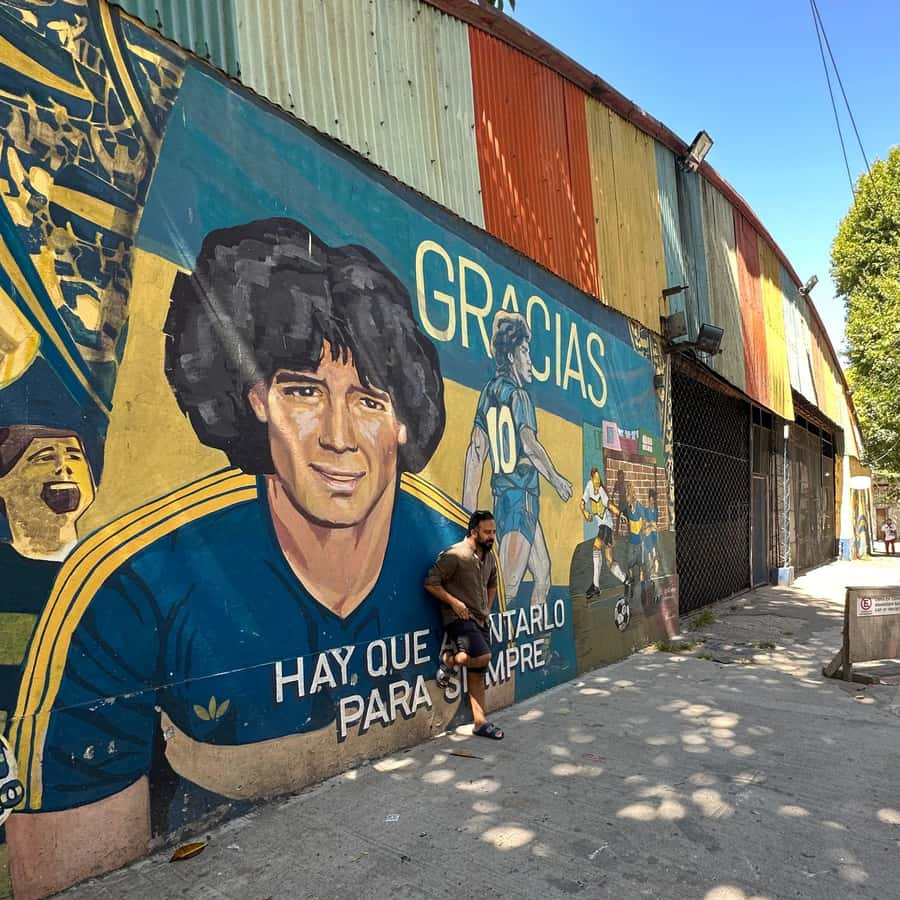
La Boca is one of Buenos Aires’ most recognizable neighborhoods. Its painted houses, tango imagery, football references, and tourist-friendly streets are easy to photograph. They are harder to understand without context.
This tour gives you that context on foot. You move through the area while learning about immigration, working-class life, art, and the social meaning of the neighborhood. I like this approach because La Boca can feel shallow if you only walk along the most colorful street, take a few pictures, and leave. The guide helps connect what you see with the people and institutions that shaped it.
You should expect a walking experience rather than a performance or a long museum program. The route uses streets and landmarks as its main setting, with guided visits at two cultural stops. That makes it a good choice if you want history delivered in manageable pieces instead of a formal lecture.
Tango is part of the tour’s stated focus, especially in the way the neighborhood is presented through movement, music, and street culture. The experience also includes a look at football passion, so the subject matter shifts naturally from art to sport and then back to local history.
More Historical Tours in Buenos Aires
- Nazis in Buenos Aires: a historical walking tour
★ 4.9 · 193 reviews - San Telmo: Historical Guided Tour with Street Food & Drinks
★ 5.0 · 87 reviews - Recoleta Cemetery – Small Group Tour of History & Secrets
★ 5.0 · 53 reviews
Meeting the guide beside the Benito Quinquela statue
The starting point is the Benito Quinquela statue at Av. Don Pedro de Mendoza 1921. This is a useful meeting place because Quinquela is central to the story you are about to hear.
The exact guide may vary. Facundo has been praised for warm communication and excellent English. Juan is noted for his local art knowledge and for speaking Italian, while Rafa helped a solo participant find the meeting point and stayed in touch before the tour. Laura, Dani, Francisco, Frani, Loli, Ludmila, and others have also led this experience.
That range matters. A walking tour is only as good as the person explaining it, and the strongest comments focus on friendly delivery, good timing, and approachable storytelling. You are not simply handed facts. The best guides make the neighborhood easier to read as you walk.
English, Spanish, and Portuguese are offered. One guide also speaks Italian, but Italian should not be treated as a standard tour language. If you need a particular language, confirm it when you arrange the booking.
Walking through La Boca’s working-class past
The first part of the walk introduces La Boca as a neighborhood shaped by immigration and labor. The tour places the colorful houses and street scenes within that past, rather than presenting them as decoration alone.
This is where the guide’s role becomes important. The provided information does not give a fixed list of every street or building visited, so the route may vary. You can expect guided sightseeing through La Boca, with explanations of its working-class roots, immigrant communities, art, and social importance.
I would give this section your full attention. The painted facades are the obvious attraction, but the more useful lesson is learning why color and neighborhood identity became so closely linked. The tour also introduces the Riachuelo Art movement, giving you a way to connect local artists with the riverfront setting.
The walking pace should suit visitors who want to stop, listen, and look around. At 150 minutes, there is time for stories and photographs, but you should still wear comfortable shoes. The activity is listed as wheelchair accessible, though the exact ease of every street and interior stop can depend on conditions that are not specified.
La Bombonera and the force of Boca Juniors
The stop at La Bombonera is a photo stop and sightseeing visit, not a football match or stadium tour. That distinction is important. You get a glimpse of Boca Juniors’ home and hear about the role of football in La Boca’s culture.
For many visitors, this is the moment when the neighborhood’s social energy becomes easiest to grasp. Boca Juniors is not treated as a random sports reference. The club is part of local identity, and the guide uses the stadium to explain that passion.
Rafa was especially praised for sharing information about people, places, and soccer. That balance is useful because the football portion should work even if you are not a serious supporter. You can appreciate the stories and the place without knowing team statistics.
You will have time for photographs, but the listing does not promise entry into the stadium. If you want an interior stadium visit, match tickets, or a behind-the-scenes football tour, this experience does not replace those activities.
More Walking Tours in Buenos Aires
- Buenos Aires Hop-On Hop-Off Bus, Free Walking Tours & Discounts
★ 4.5 · 2,218 reviews - Buenos Aires: La Boca Guided Walking Tour in English
★ 4.8 · 1,587 reviews - Buenos Aires: Personalized 2 to 8-Hour Private Walking Tour
★ 4.7 · 149 reviews - Buenos Aires: San Telmo and Market Guided Walking Tour
★ 4.8 · 102 reviews
Museo Conventillo El Rincon de Lucia
The route includes a guided visit to Museo Conventillo El Rincon de Lucia. The word conventillo refers to the type of shared housing linked with immigrant and working-class life in Buenos Aires. This stop helps give a human scale to the neighborhood’s past.
Rather than seeing La Boca only from the street, you get a closer look at the kind of setting associated with crowded urban life and migration. The stop fits well with the tour’s larger story about how people arrived, lived, worked, and formed communities.
The supplied details do not specify the museum’s room count, collection size, or exact visit length, so you should expect a focused stop rather than a lengthy museum session. Its value comes from how it supports the walking narrative.
This is also one reason I would choose the tour over an independent stroll if you want more than photographs. A guide can explain how a building or display fits into the neighborhood’s wider story, something that is easy to miss when you walk alone.
Benito Quinquela Martín and the Riachuelo Art movement
The Benito Quinquela Martín Museum is the artistic heart of the experience. The tour includes a guided visit, and the museum entry fee is one of the included options, alongside two tasting choices. The activity description says you receive two of the three options, so confirm which combination applies when booking.
Quinquela Martín matters because his influence reached beyond painting. The tour presents his impact on La Boca and his connection with the Riachuelo Art movement. He is treated not only as an artist but also as a figure tied to the neighborhood’s civic and cultural identity.
You can expect the guide to help you read the art in relation to La Boca. The neighborhood is not simply a backdrop for colorful work. Its riverfront setting, laboring communities, and immigrant culture are part of the subject.
The museum visit also gives the tour a welcome change of pace. After walking through the streets and viewing public landmarks, you step indoors and spend time with the art itself. If you are deciding between a casual neighborhood walk and a more substantial cultural activity, this stop is the feature that gives the experience extra weight.
Tango, color, and the movement of the street
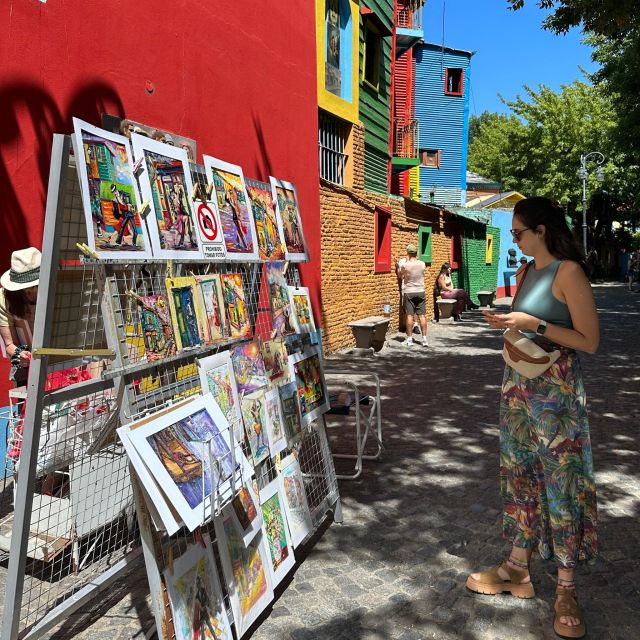
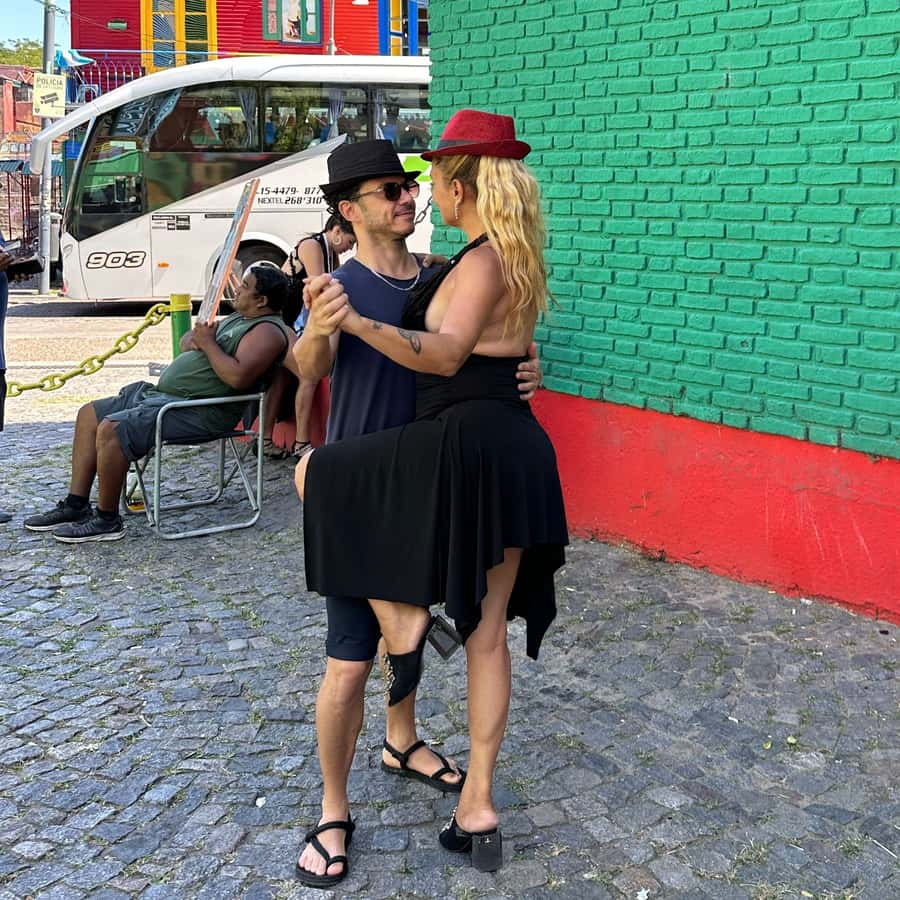
Tango appears among the tour’s main themes, alongside art and football. You should not expect a full dance lesson or a stage performance unless the operator confirms otherwise. The promise is to feel the motion and cultural character of tango as part of La Boca’s street life.
That can be a more useful introduction than a stand-alone show if you want to understand how tango fits into the neighborhood’s image. The tour places dance beside immigration, art, and social history, so you see how several parts of Buenos Aires culture overlap.
The experience is also designed to engage your senses through the included tasting options. Depending on the arrangement, you may receive a free wine tasting and a dulce de leche tasting, with the museum entry completing the three possible choices. Since only two are included, ask in advance which two you will receive.
These small additions do not turn the tour into a food walk. They work better as brief cultural pauses. For a price of $46 per person, that mix of walking, guiding, a museum or tastings, and several landmarks gives the activity reasonable value, especially if you would otherwise pay separately for a museum visit and seek a guide in La Boca.
What the $46 price delivers
At $46 per person, this is not the cheapest way to see La Boca. You can walk through parts of the neighborhood without paying anything. The question is what you gain from the fee.
You are paying for 150 minutes with a live guide, organized sightseeing, a visit to Museo Conventillo El Rincon de Lucia, the La Bombonera photo stop, and a guided museum visit or tasting combination. The fee also buys interpretation. That is the part you cannot reproduce easily with a few photos and a map.
The value is strongest for first-time visitors who want the neighborhood explained. It is also useful if you have limited time in Buenos Aires and prefer one compact activity covering art, history, football, tango, and local food and drink.
The value is weaker if you mainly want free time for photographs or if you already know La Boca well. You may find the structured route less flexible than exploring independently. Still, the guide’s storytelling is repeatedly praised, and names such as Facundo, Laura, Francisco, Dani, and Frani suggest that the company has several guides who can make the experience personal.
The tour finishes at Av. Don Pedro de Mendoza 1835, close to the starting point. Hotel pickup and drop-off are not included, so you must make your own way to and from La Boca.
Who should book this walk?
I would recommend this tour to you if you want the story behind the scenery. It suits first-time visitors, art lovers, people curious about immigration and working-class Buenos Aires, and football fans who want a local view of Boca Juniors.
It also works well for couples, families, and solo visitors who prefer a guide. The reviews describe guides as friendly and easy to approach, and Rafa’s help with finding the meeting point is especially useful for anyone traveling alone.
You may want a different activity if your main goal is a tango class, a full football stadium tour, or a food-focused outing. Those subjects appear here, but each forms part of a wider neighborhood walk.
Book at least 24 hours ahead. Solo visitors must confirm availability directly with Baires Experience, and the company asks you to use email or WhatsApp to make sure the tour operates on your selected date. Bring a passport or identity card. Free cancellation is available up to 24 hours before the activity, and you can reserve now and pay later.
Should you book the La Boca Art and History Walking Tour?
Book it if you want to understand why La Boca matters, not simply photograph its painted streets. The combination of Quinquela Martín’s art, immigrant history, La Bombonera, tango culture, and small tastings gives you a well-rounded two-and-a-half-hour introduction.
The best reason to choose it is the guide. Strong performances from Facundo, Laura, Dani, Francisco, Frani, and others can turn a simple walk into a clear, memorable story. Just confirm your date, language, and included options before paying, especially if you are traveling alone.
FAQ
How long does the La Boca Art and History Walking Tour last?
The tour lasts 150 minutes, or two and a half hours.
What is the tour price?
The listed price is $46 per person.
Where does the tour begin?
You meet the guide at the Benito Quinquela statue at Av. Don Pedro de Mendoza 1921.
Where does the tour finish?
The tour finishes at Av. Don Pedro de Mendoza 1835.
Which languages are available?
The live tour guide may lead the experience in Spanish, English, or Portuguese.
Does the tour visit La Bombonera?
Yes. La Bombonera is included as a sightseeing and photo stop. The information provided does not state that interior stadium entry is included.
Which museums are included?
The route includes a guided visit to Museo Conventillo El Rincon de Lucia and a guided visit to the Benito Quinquela Martín Museum.
What tastings or entries are included?
Two of three options are included: Benito Quinquela Museum entry, free wine tasting, or dulce de leche tasting. Confirm which two options apply when booking.
Can I cancel the booking?
You can cancel up to 24 hours in advance for a full refund. The activity also allows you to reserve now and pay later.
More San Telmo and La Boca Tours
- Palermo: Graffiti and Street Art Guided Tour in English
★ 4.8 · 684 reviews - Buenos Aires: Puerto Madero Sunset Cruise with Open Bar
★ 4.1 · 439 reviews - Buenos Aires: Puerto Madero to Tigre Round Trip Cruise
★ 4.4 · 190 reviews - Buenos Aires: Empanada & Alfajor Cooking Lesson in Palermo
★ 4.6 · 186 reviews
Just added around Buenos Aires
- Tango Show at El Querandi with optional Dinner★ 4.2 · 3 reviews
- Wine Tasting in Buenos Aires★ 4.2 · 4 reviews
- Walking Tour: Buenos Aires bookstores★ 4.3 · 12 reviews
- Velez Sarsfield Football Match★ 5.0 · 3 reviews
- Unique Tigre and Delta Private Day Cruise Navegation★ 5.0 · 3 reviews
- Private Underground Tango Immersion★ 5.0 · 31 reviews
- Sailing with Wine Tasting in Buenos Aires★ 5.0 · 50 reviews
- Experience The Essence of Buenos Aires in San Telmo★ 5.0 · 51 reviews
San Telmo & La Boca Tours, compared.




BA: Empanadas and Alfajores Cooking Experience in Palermo
Read our review →
Browse the lists this tour appears in