

Reviewed · RECOLETA CEMETERY TOURS
Buenos Aires: Recoleta and Retiro Tip Based Walking Tour
Buenos Aires saves some of its grandest scenery for the streets between Retiro and Recoleta. This three-hour walk follows a fine route from Teatro Colón across Plaza San Martín, past aristocratic palaces, and along elegant Avenida Alvear toward Recoleta Cemetery. You get the city’s early-1900s glamour without spending the day inside museums.
I like the contrast between the broad parks and the heavy palace façades, and I like that the walk puts famous sights into a clear story rather than treating them as isolated photo stops. Guides including Victoria, Maria, Juan, and Ivan have led this tour in English. The main drawback is the pace: a large group can make it hard to hear, and the walking may be tiring for older visitors.
Key points at a glance
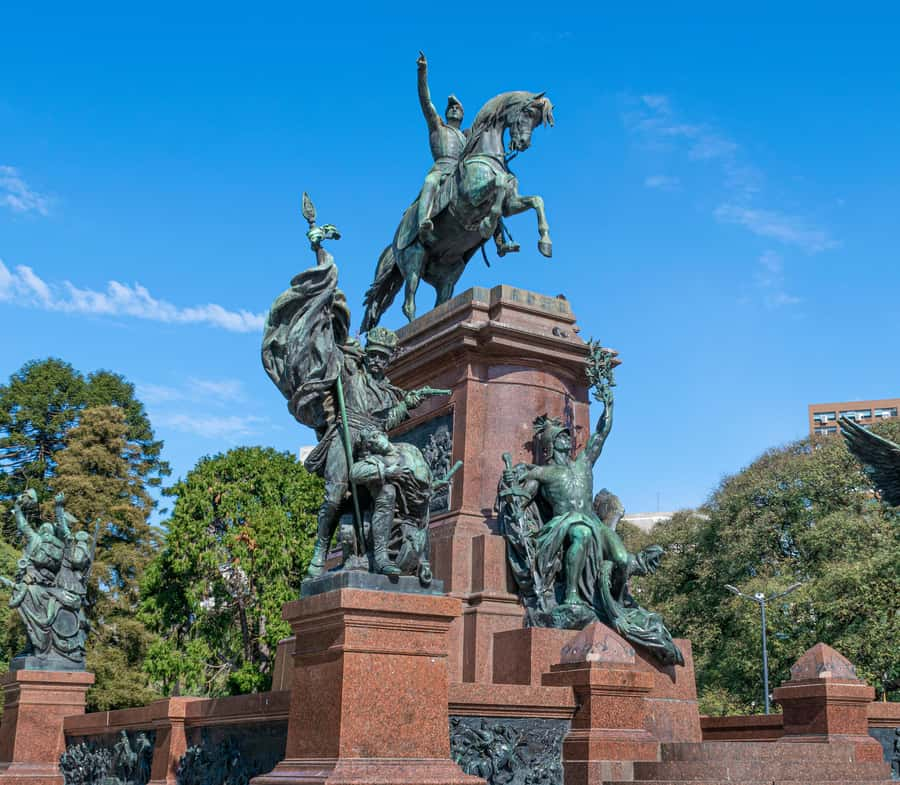
- Three hours from Teatro Colón to Recoleta: The route crosses Retiro and Recoleta on foot, with no hotel transfers included.
- A palace-lined view of Buenos Aires: See Palacio San Martín and Palacio Paz around Plaza San Martín.
- Teatro Colón is exterior only: The walk begins beside one of the city’s great opera houses, but it does not include an interior visit.
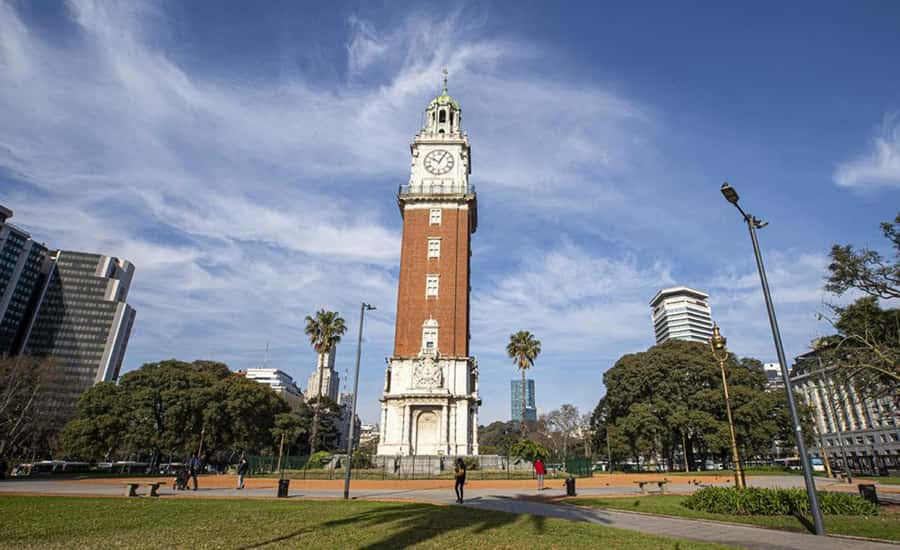
- A terrace view of the English Tower: This gives you a useful angle on one of Retiro’s notable landmarks.
- The cemetery is not the main cemetery tour: You finish near Recoleta Cemetery and the Church of Our Lady of Pilar, but an interior cemetery tour requires a separate booking.
- Tip-based pricing keeps the entry cost low: The listed price is $1 per person, though you should consider carrying cash for a tip and personal expenses.
Starting beside Teatro Colón
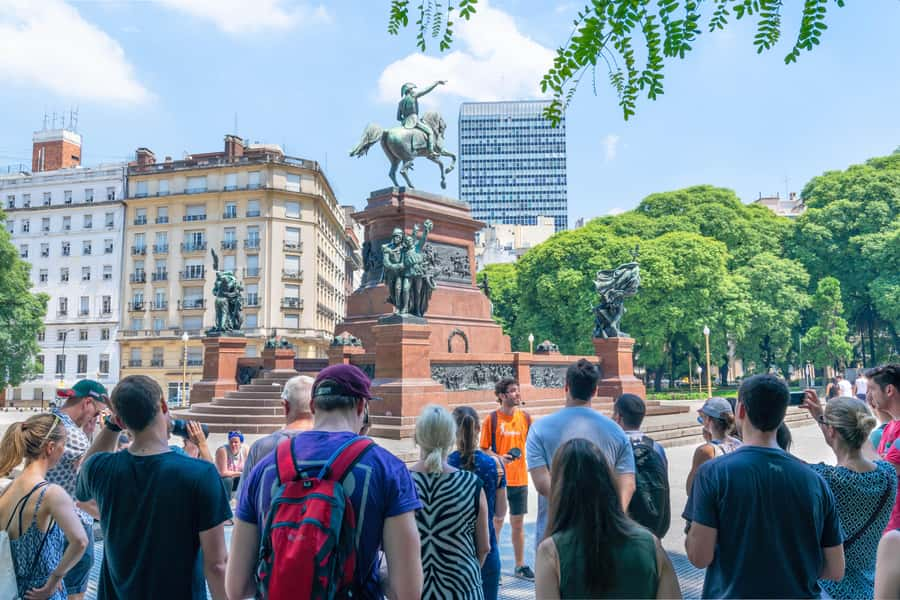
Meet the guides in orange at the corner of Libertad and Viamonte, next to Teatro Colón. This is a practical starting point because the opera house gives you an easy landmark, though you should allow enough time to find the exact corner before the scheduled departure.
The tour treats Teatro Colón as an exterior stop. You can admire its grand façade and hear about its place in Buenos Aires, but the walk does not include an interior tour or an opera performance. That distinction matters if you are hoping to see the auditorium, foyers, or backstage areas.
From here, you cross Avenida 9 de Julio, one of the city’s huge central arteries. The crossing is part of the experience. Buenos Aires often feels grand in its proportions, and this wide avenue sets the tone before the route turns toward the calmer parks of Retiro.
You will do a lot of walking on city streets, pavements, and through open public areas. Comfortable shoes are not a small detail here. Bring water if you need it, check the forecast, and dress for the weather because the tour operates in rain or shine.
More Walking Tours in Buenos Aires
- Buenos Aires Hop-On Hop-Off Bus, Free Walking Tours & Discounts
★ 4.5 · 2,218 reviews - Buenos Aires: La Boca Guided Walking Tour in English
★ 4.8 · 1,587 reviews - Nazis in Buenos Aires: a historical walking tour
★ 4.9 · 193 reviews
Plaza San Martín and Retiro’s aristocratic face
The route reaches Plaza San Martín, one of the prettiest public parks in Buenos Aires. This is where the walk shifts from the traffic and scale of central Buenos Aires to a quieter district shaped by gardens, monuments, and old mansions.
The plaza is more than a green pause. It helps explain how Buenos Aires presented itself as a wealthy, European-looking capital in the early 1900s. Your guide can point out the relationship between the open park and the grand buildings around it, giving you a better sense of how the neighborhood was planned.
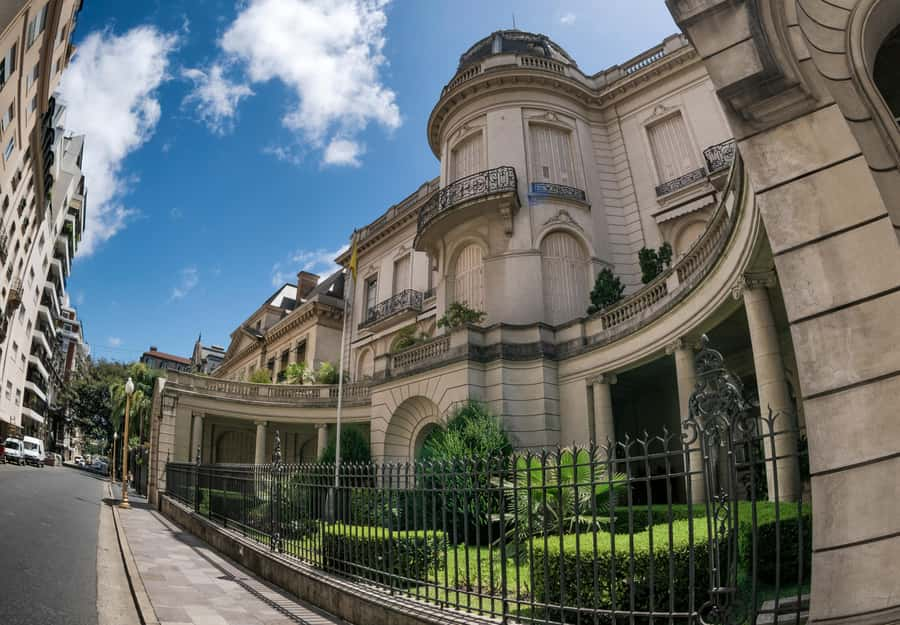
Around the square, you see Palacio San Martín and Palacio Paz. Their elaborate exteriors are the visual payoff, with formal details and the kind of scale that makes an ordinary city walk feel like a tour of old wealth. The experience is primarily about architecture from the street, so do not expect a long indoor palace visit.
I especially like this part for visitors who want context without committing to a full museum program. A guide can explain who used these buildings and why this part of the city became associated with Argentina’s upper class. You get the setting, the façades, and the story while continuing at a steady walking pace.
Palacio Paz, Palacio San Martín, and the English Tower
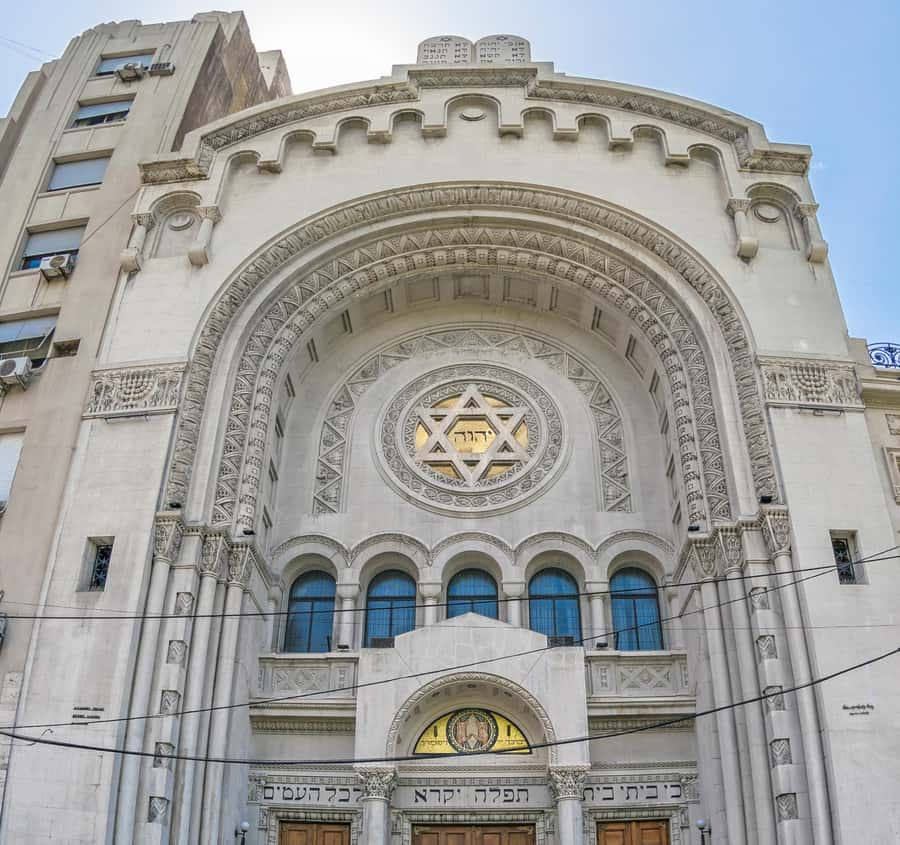
The palaces around Plaza San Martín are among the tour’s strongest sights. Palacio Paz gives you an especially striking reminder of the money and ambition behind Buenos Aires’ grand early-20th-century architecture. Palacio San Martín adds another important façade to the same picture.
The route also includes a terrace viewpoint facing the English Tower. This is a useful change of angle. From street level, city landmarks can blend into the surrounding buildings, but a terrace gives you a clearer view across the area and a chance to pause while your guide explains what you are seeing.
Bring a camera, but do not plan the whole tour around long photography stops. This is a guided walk, not a dedicated photo excursion. You will have chances to take pictures, but the group needs to keep moving, especially if the guide is working with a larger crowd.
Group size can affect this section. One recent participant found that a big group made it difficult to hear everything. If your guide is Victoria, Maria, Juan, or Ivan, stay fairly close and position yourself where you can see the guide’s face. That simple choice may make the explanations much easier to follow.
Arroyo and Alvear streets
After Plaza San Martín, the route continues through Arroyo and Alvear streets. These streets help you see another side of Buenos Aires, one shaped by elegant buildings, polished façades, and careful urban design rather than major landmarks alone.
This is where the walk earns its keep as a neighborhood tour. You are not just ticking off a palace and a square. You are moving through the spaces between the famous sights, seeing how Retiro leads into Recoleta and how the city’s grand style continues from one district to the next.
A guide can also help you notice details you might otherwise miss. The value is less about entering each building and more about understanding why the streets look the way they do. For me, that is a good fit for Buenos Aires, where much of the pleasure comes from looking up while walking between destinations.
There is a practical tradeoff. Long stops at every façade are not possible in a three-hour route. If you want to study a particular building in depth, take a note of its name and return later at your own pace.
More Recoleta and Evita walks:
- Buenos Aires: La Recoleta Cemetery Guided Tour in English
★ 4.8 · 1,359 reviews - Buenos Aires Bike Tour: North Districts, Recoleta and Palermo
★ 4.5 · 91 reviews - Recoleta Cemetery – Small Group Tour of History & Secrets
★ 5.0 · 53 reviews - Cultural Experience by Bike around Palermo and Recoleta Max 6 ppl
★ 5.0 · 44 reviews
Avenida Alvear and the approach to Recoleta
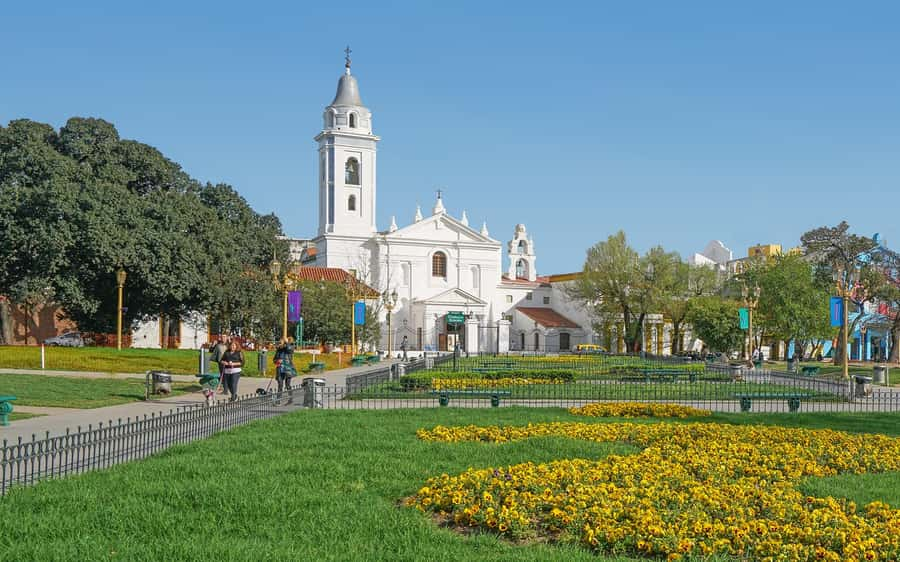
Avenida Alvear is one of Recoleta’s best-known streets, and the tour uses it to connect the elegant Retiro route with the final sights around Plaza Alvear. The avenue gives you another look at the city’s high-end architectural character, with grand buildings and a formal boulevard feel.
The walk through Recoleta is valuable because it places the cemetery in a wider setting. Recoleta is not only a famous burial ground. It is also an area of churches, parks, cafés, and imposing homes. Seeing the district first helps you understand why the cemetery became such an important part of the neighborhood’s identity.
You finish at La Biela Recoleta. This gives you a clear endpoint and puts you close to several places you may want to visit afterward. The tour does not include hotel drop-off, so plan your route home before you arrive, especially if you are tired after three hours on foot.
Church of Our Lady of Pilar and Recoleta Cemetery
Plaza Alvear brings together two of Recoleta’s best-known sights: the Church of Our Lady of Pilar and Recoleta Cemetery. The church is included as part of the walking route, while the cemetery is approached as the final area rather than as a full guided cemetery visit.
This distinction is important. If your main goal is to explore the cemetery’s lanes, tombs, and famous burial sites with detailed commentary, you need to book the separate cemetery tour. The walking tour described here ends near the cemetery and does not include that extended cemetery experience.
That setup can work well if you want a broad introduction first. You can see the church, reach the cemetery area, and then decide if you want to return for a longer visit. It is less suitable if you have come to Buenos Aires mainly for the cemetery and expect the entire three hours to take place inside it.
The bathroom break is another useful practical point. A participant specifically appreciated having one during the walk. Still, do not assume every stop will offer a long break, so it is sensible to use facilities before meeting the group.
What the $1 price really means
The listed price is $1 per person, and the experience is described as tip-based. That makes it an inexpensive way to get an organized introduction to two of Buenos Aires’ most polished neighborhoods, but the low booking price should not be confused with a fully paid private tour.
You should budget for a tip that reflects the guide’s work and your satisfaction with the walk. Carrying some cash is sensible, as the practical information also suggests bringing money for personal expenses. Food and drinks are not included.
One confusing point is the cemetery. The cemetery-focused walk is a separate paid option, so check the exact tour name before booking if that is your priority. The route here includes the Church of Our Lady of Pilar and the area around Recoleta Cemetery, not a full cemetery tour.
The value is strongest if you want orientation, architectural views, and historical explanation at a very low initial cost. It is less useful if you want entrance tickets, extensive indoor visits, or a private pace. No other attraction entrance fees are included.
Guides, language, and group size
The tour is conducted in English. Guides named in the available information include Victoria, Maria, Juan, and Ivan. Their approach may vary, but the strongest comments focus on clear explanations, engaging anecdotes, and strong command of the subject.
Juan is especially noted for articulate storytelling and excellent English. Maria’s explanations are described as easy to follow for the most part, and Ivan is credited with complete, entertaining information. Victoria is also described as providing a great deal of interesting material.
Those details suggest that the guide can make a real difference. The buildings are worth seeing on their own, but the story turns a pleasant walk into a useful introduction to Buenos Aires. If you are standing too far back in a crowded group, however, even a good guide can be hard to hear.
I would choose a position near the guide and avoid drifting behind at busy crossings. If you have hearing concerns, ask to stay close before the walk begins. The tour is not presented as a private experience, so group conditions may change from one departure to another.
Who should book this walk
This is a good choice for a first day in Buenos Aires, especially if you want to understand the city’s central neighborhoods before exploring them independently. The route covers major names, but it also gives you the connecting streets and parks that make the districts easier to read.
It suits visitors who enjoy architecture, urban history, parks, and guided storytelling. It also works for anyone who wants a low-cost activity with plenty of outdoor time and a clear endpoint near Recoleta.
Older visitors and anyone with mobility concerns should think carefully about the three-hour duration. The route involves substantial walking, and one participant found it difficult for two older people in their group. Comfortable shoes, weather protection, and a realistic view of your energy level are essential.
Families may appreciate the open parks and changing scenery, though the amount of historical explanation may not suit very young children. The walk is also useful for solo visitors who want an organized introduction without paying for a private guide.
Practical tips for a better three hours
Arrive at Libertad and Viamonte with a few minutes to spare. Look for the guides in orange beside Teatro Colón, and keep your booking details available in case several groups are gathering nearby.
Wear shoes with good support. The route includes city streets, parks, plazas, and long connecting stretches. This is not a short loop around one square.
Check the weather forecast before leaving. The tour operates in all weather conditions, so bring suitable layers and rain protection when needed. Buenos Aires can feel very different in open plazas than on sheltered streets.
Carry water, a camera, and some cash. Food and drinks are not included, and personal expenses remain your responsibility.
If your main target is Recoleta Cemetery, confirm that you have selected the cemetery-focused option rather than assuming this route includes it. If you want the wider Retiro and Recoleta story, this walk gives you the better overview.
Should you book the Recoleta and Retiro walk?
Book it if you want a budget-friendly, English-language introduction to Buenos Aires’ grand central neighborhoods. The route is strong on outdoor architecture, parks, palaces, and city history, with especially good moments around Plaza San Martín, the English Tower viewpoint, Avenida Alvear, and Plaza Alvear.
Skip it if you need a slow pace, extensive indoor access, or a full guided visit inside Recoleta Cemetery. The $1 price is appealing, but you should treat it as a tip-based walking experience and allow for a large group, substantial walking, and no included food or entrance fees.
For most first-time visitors who can comfortably walk for three hours, I would book it early in the stay. It gives you a useful mental map, points out places worth revisiting, and lets you see Buenos Aires’ polished side without spending much money.
FAQ
Where does the tour begin?
It begins at the corner of Libertad and Viamonte next to Teatro Colón. Look for the guides wearing orange.
Where does the tour finish?
The walk finishes at La Biela Recoleta, near Plaza Alvear and Recoleta Cemetery.
How long does the tour last?
The tour lasts three hours.
Is the tour conducted in English?
Yes. The live tour guide speaks English.
Is Teatro Colón visited inside?
No. Teatro Colón is included as an exterior stop only.
Is Recoleta Cemetery included as a guided visit?
The route ends near Recoleta Cemetery, but a full cemetery tour is a separate option that requires its own booking.
What sights are included?
The walk includes Teatro Colón from the outside, Plaza San Martín, views of Palacio San Martín and Palacio Paz, Avenida Alvear, the Church of Our Lady of Pilar, and a terrace view of the English Tower.
Are food and drinks included?
No. Food and drinks are not included.
What should I bring?
Wear comfortable shoes, dress for the weather, and consider bringing a camera and some cash for personal expenses.
Just added around Buenos Aires
- Tango Show at El Querandi with optional Dinner★ 4.2 · 3 reviews
- Wine Tasting in Buenos Aires★ 4.2 · 4 reviews
- Walking Tour: Buenos Aires bookstores★ 4.3 · 12 reviews
- Velez Sarsfield Football Match★ 5.0 · 3 reviews
- Unique Tigre and Delta Private Day Cruise Navegation★ 5.0 · 3 reviews
- Private Underground Tango Immersion★ 5.0 · 31 reviews
- Sailing with Wine Tasting in Buenos Aires★ 5.0 · 50 reviews
- Experience The Essence of Buenos Aires in San Telmo★ 5.0 · 51 reviews
Recoleta Cemetery Tours, compared.

Buenos Aires Bike Tour: North Districts, Recoleta and Palermo
Read our review →
Recoleta Cemetery – Small Group Tour of History & Secrets
Read our review →
Cultural Experience by Bike around Palermo and Recoleta Max 6 ppl
Read our review →


Full Day City Tour Buenos Aires, Recoleta Cemetery and Tigre
Read our review →Browse the lists this tour appears in