
Reviewed · FOOD & DRINK
Salta en un Bocado – Cultural Tour & Empanada Tasting
Salta en un Bocado turns a city walk into a meal you help create. You begin with Plaza 9 de Julio, the Cathedral, and the Cabildo, then follow Salta’s cobbled streets toward Gaucho culture and a hands-on lesson in salteña empanadas. The cooking class gives the day a clear purpose, not just a string of photo stops.
I like the mix of local history and practical cooking, and I like that the recipe booklet lets you repeat the experience at home. The main consideration is mobility: the tour involves walking on cobblestones and is not suitable for people with mobility impairments. Your own empanadas may also look more rustic than the chef’s, though that is part of the fun.
Key points at a glance
- Start in Salta’s historic center: Meet near the corner of Mitre and España, by the statue of Pope John Paul II, then walk to Plaza 9 de Julio.
- See the city through local stories: The guide explains Salta’s customs, traditions, architecture, and connection to gaucho culture.
- Spend 75 minutes cooking: An experienced chef teaches the dough and filling for classic salteña empanadas.
- Eat what you make: Your empanadas are served with regional wine after the class.
- Take the recipe home: The booklet helps you try the dish again in your own kitchen.
- Plan for roughly four hours: The outing returns to the original meeting point and is offered as a private group experience.
Why this Salta tour works
Many city tours give you dates, names, and monuments, then send you off hungry. Salta en un Bocado connects the places you see with something you can taste and make yourself. That makes the walking portion easier to remember, especially if you enjoy food as a way to understand a place.
The focus is not a broad tour of Salta Province. It is a compact city experience centered on Salta’s historic core, local handicrafts, the memory of General Martín Miguel de Güemes, and the regional empanada. You should book it as a half-day introduction, not as a complete survey of every major sight in the city.
The price is $60 per person. That is more than you would spend on a simple self-guided walk and a plate of empanadas, but the fee covers a guide, a private group format, a 75-minute cooking class, the tasting, and the recipe booklet. If you want an activity that combines sightseeing with participation, the price is easier to justify. If you only want to see monuments or eat cheaply, you can build a less expensive afternoon on your own.
More history walks in Salta:
- Nazis in Buenos Aires: a historical walking tour
★ 4.9 · 193 reviews - Bariloche: German Immigration and History Walking Tour
★ 4.8 · 169 reviews - San Telmo: Historical Guided Tour with Street Food & Drinks
★ 5.0 · 87 reviews
Meeting at Palacio Arzobispal and Plaza 9 de Julio
The tour begins at the Palacio Arzobispal area, specifically on the corner of Mitre and España where the statue of Pope John Paul II is located. Check this point carefully before setting out. The meeting information uses both the palace area and the street corner as reference points, so arriving at the exact statue is the safest plan.
From there, the walk leads to Plaza 9 de Julio, the city’s central square. You spend about 15 minutes on a guided visit, with attention to the colonial architecture and the main buildings around the plaza. The Cathedral and the Cabildo form the key visual anchors here.
This is a good opening because the square gives you Salta’s basic orientation. You see the formal center of the city before moving into smaller streets and local activity. The short stop also keeps the tour from becoming a long lecture in one place. You get the essential context, then keep walking.
Wear comfortable shoes. The route includes cobblestone streets, and the tour is not designed for people with mobility impairments. A hat, a camera, and a reusable water bottle are also recommended. Salta’s sun can make a walking tour feel longer than the schedule suggests.
Cobblestone streets, markets, and local crafts
After the plaza, the guide takes you through the city on foot. This section lasts about 30 minutes as sightseeing, with visits to local markets and areas featuring typical handicrafts. The stated itinerary does not name each market or specify particular crafts, so you should think of this as a guided look at local culture rather than a guaranteed shopping stop with a fixed list of stalls.
The value here is the guide’s interpretation. You are not simply passing old façades. You hear about Salta’s customs and traditions, and you can ask questions in Spanish or English. Maria is one named guide associated with the experience, and the tour format allows the guide to speak directly with your group rather than to a large crowd.
The private group setup matters. It can make a short stop feel more useful because you have room to ask about what you are seeing. It also means the pace may feel less rushed than a large public walk, though the total time remains fairly compact.
Do not expect a long shopping session. The purpose is to connect the city walk with the cooking activity later. If you want to buy handicrafts, use this part to look, ask questions, and note places you may want to revisit after the tour.
Meeting the gaucho story at Güemes Monument
The next major stop is the Monument to General Martín Miguel de Güemes. You spend about 15 minutes here with a guided explanation, followed by a visit of about 10 minutes at the next location.
Güemes is presented here as the gaucho hero, and the stop gives the tour a strong local identity. The experience is not limited to colonial buildings and church façades. It also points toward the gaucho traditions and regional memory that shape Salta’s cultural character.
The monument provides a view of the city, according to the tour details. This creates a welcome change after the enclosed streets and central plaza. Bring your camera if you enjoy city views, though the tour does not promise a long photography session or a particular panorama.
The walking distance continues from the monument to the Casona Histórica, roughly 300 meters farther on. That is not a long transfer, but it still adds to the total time on foot. The route is best for someone comfortable walking between several stops rather than someone looking for a vehicle-based city tour.
More food tours in Salta:
- From Salta: Full-Day Tour to Cafayate with Wine Tasting
★ 4.5 · 478 reviews - From Salta: Cafayate Day Trip with Wine Tasting
★ 4.4 · 226 reviews - Full-day Cafayate, Lerma Valley, and Wine Tasting from Salta
★ 4.5 · 116 reviews - From Mendoza: 3 Wineries, Olive Oil Factory Tour & Tasting
★ 4.6 · 901 reviews
Cooking salteña empanadas at Casona Histórica
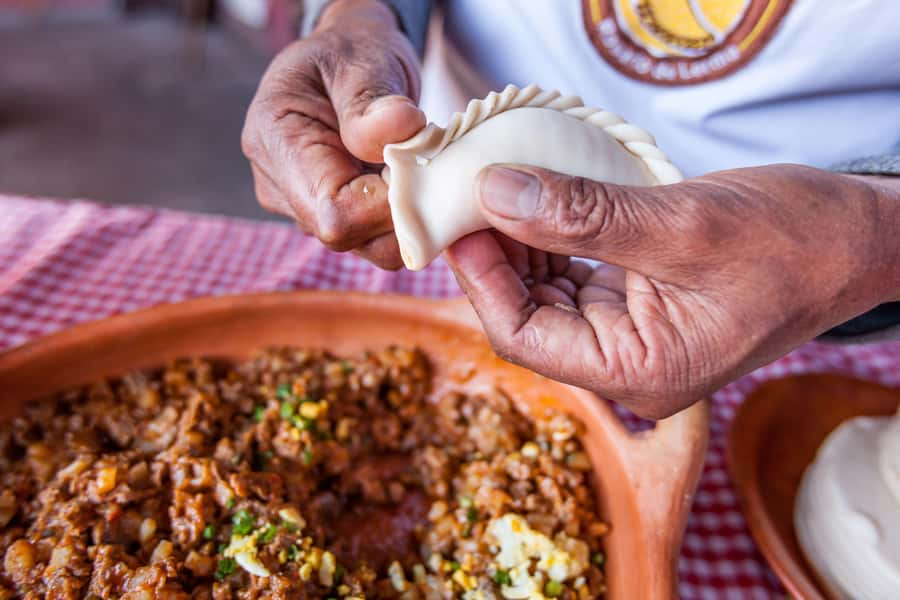
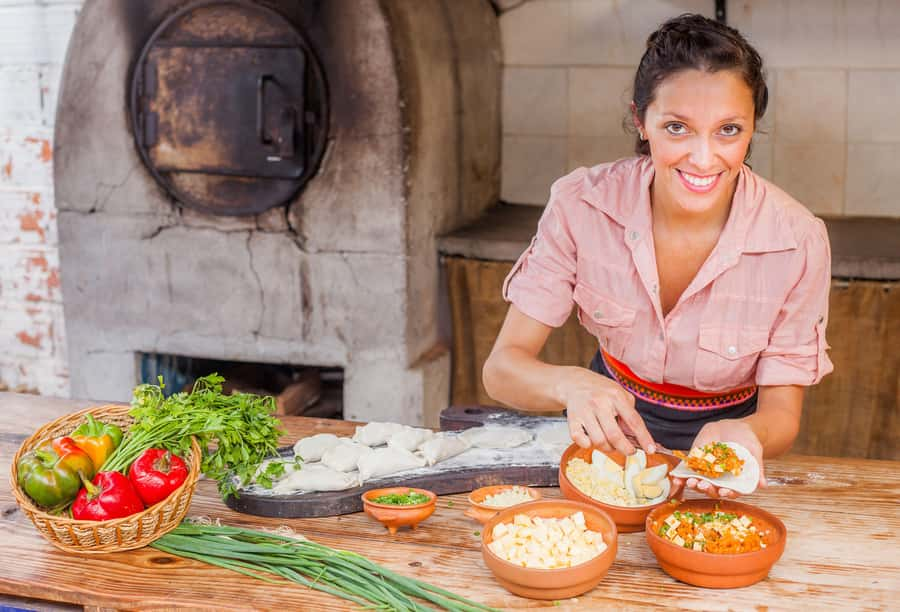
The centerpiece begins at the Casona Histórica, headquarters of the Agrupación Tradicionalista Gauchos de Güemes. Here, an experienced chef leads a 75-minute class on salteña empanadas.
You learn from the dough through to the filling. The details supplied for the class do not give a full ingredient list or promise a particular cooking method, so do not book it expecting a formal culinary-school lesson with a printed technical syllabus. Expect a practical introduction to the basic preparation of this regional dish.
The setting adds meaning to the food. You are not making generic pastries in an anonymous kitchen. The class takes place at a historic house linked to an organization devoted to Güemes and gaucho tradition. That connection helps explain why the empanada is treated as part of local culture, not just a quick snack.
A cooking class also changes your role. You are handling the dough, working with the filling, and trying to shape the empanadas yourself. The chef’s results may look neater than yours. One useful expectation is to judge success by taste and the skills you take home, not by perfectly sealed pastry edges.
The private group format should help here, since the chef can work with a smaller set of participants. Still, the data does not state the maximum group size, so you should not assume one-on-one instruction. The session is long enough to learn the process, but not so long that it takes over your entire day.
Tasting your own empanadas with regional wine
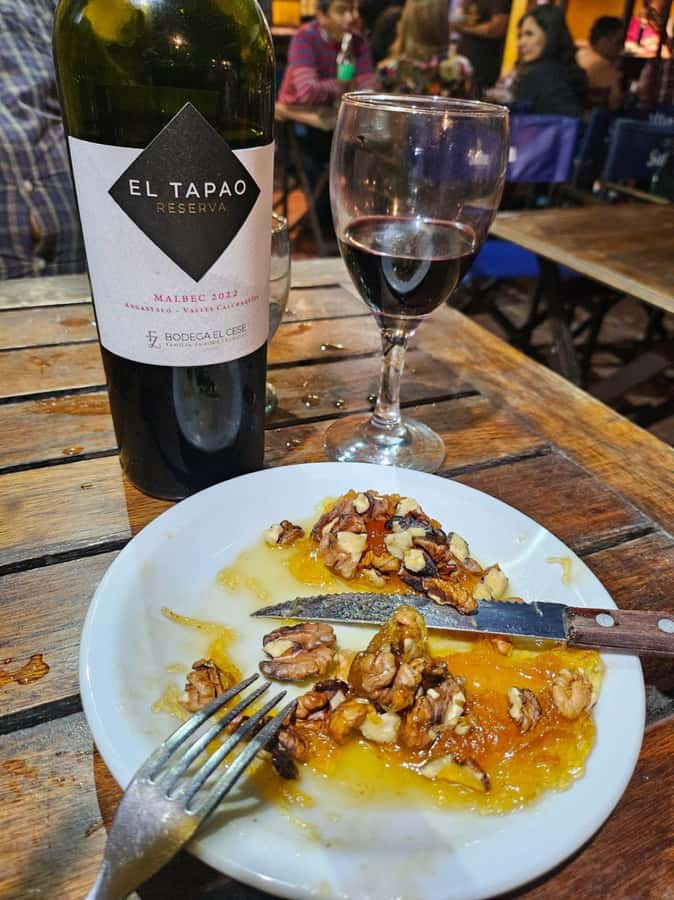
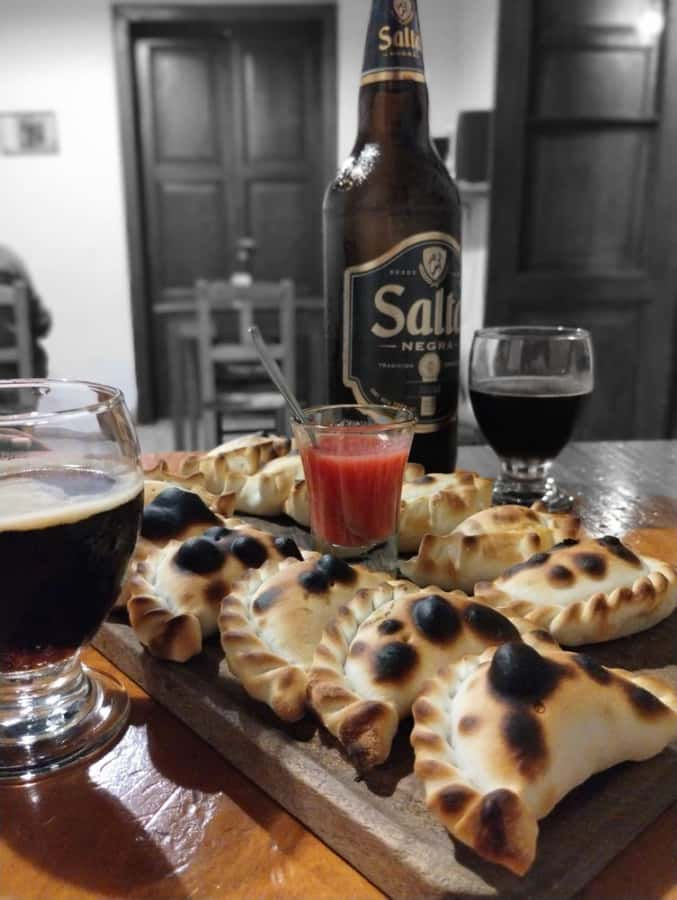
After the class, you eat the empanadas you prepared and pair them with a good wine from the region. This is the most satisfying part of the schedule because the walking and cooking now pay off at the table.
The tour gives you a chance to compare your work with the chef’s example. Your empanadas may not have the same polished appearance, but the tasting is meant to be social and relaxed. Anecdotes and conversation are part of the meal, and the activity ends with a toast.
The wine is included as part of the tasting, but the information does not specify the label, grape, or quantity. If you have particular dietary needs or allergies, ask before booking because no adjustments are described. The tour also does not list other food or drinks beyond the empanadas and regional wine.
I like this closing because it avoids a rushed finish. You do not simply leave the kitchen once the class ends. You sit down, eat what you made, and share the result with the group. For many people, that meal will be the most memorable part of the afternoon.
The recipe booklet makes the experience last
The recipe booklet is a small inclusion, but it adds real value. Food classes can be enjoyable in the moment and hard to repeat once you get home. A written guide gives you a better chance of remembering the steps and preparing salteña empanadas again.
Do not expect the booklet to replace the chef. Its main benefit is that it gives you a reference after the hands-on lesson. Take notes during the class if you want to remember shaping details or questions that come up.
This is also where the tour feels more useful than a standard tasting. You are not just sampling a local specialty. You leave with a method you can try in your own kitchen, even if your first batch looks less tidy than the chef’s.
Timing, language, and physical demands
The actual program lasts approximately four hours. The booking system describes the duration as one day while asking you to check available starting times, so confirm the departure time for your chosen date. The detailed schedule makes clear that this is a half-day activity, not a full-day excursion outside Salta.
The tour is offered in Spanish and English. A live guide leads the walking portion, and an experienced chef handles the cooking lesson. Maria is a named guide connected with the experience, though the available details do not guarantee that she leads every departure.
You return to the original meeting point at the end. Transfers to and from the meeting point are not included, and extras are not covered. Plan your own way to the Mitre and España corner.
Comfortable footwear is essential. Bring a hat, camera, and reusable water bottle. Smoking, bicycles, feeding animals, audio recording, and going barefoot are not allowed during the activity. The tour is specifically marked as unsuitable for people with mobility impairments, so consider the cobblestones, walking segments, and access to the cooking venue before reserving.
Cancellation is flexible if your plans remain uncertain: you can cancel up to 24 hours ahead for a full refund. You can also reserve now and pay later, which may help when arranging a larger Argentina itinerary.
Who should book Salta en un Bocado?
I would recommend this tour to you if you want a compact introduction to Salta that combines sightseeing with food. It suits first-time visitors who want a guide, couples or friends who enjoy cooking together, and anyone who prefers taking part over simply looking at monuments.
It is also a good pick if you want a private group experience in English or Spanish. The recipe booklet is useful for cooks who want a souvenir with practical value rather than another decorative item.
I would choose something else if your main goal is a long architectural tour, extensive market shopping, or a detailed food crawl. The city portion is focused and fairly short, and the cooking class takes up a large part of the four hours. People with mobility limits should also avoid this tour because of the walking demands and stated suitability restriction.
Should you book this tour?
Book it if you like the idea of seeing central Salta, hearing about Güemes and local traditions, then sitting down to eat empanadas you helped prepare. The strongest parts are the clear four-hour structure, the private group setting, Maria’s reported guiding presence, and the recipe booklet that keeps the lesson useful after you leave.
At $60 per person, the value depends on your priorities. It is fair for a guided city walk plus a 75-minute class, tasting, wine, and booklet. It is not the right choice for a bargain meal or a purely historical tour. Bring comfortable shoes, arrive at the Mitre and España meeting point, and expect your empanadas to taste better than they look on your first attempt.
FAQ
How long does Salta en un Bocado last?
The tour lasts approximately four hours. The booking information asks you to check available starting times.
Where does the tour begin?
Meet on the corner of Mitre and España, beside the statue of Pope John Paul II, in the Palacio Arzobispal area.
Where does the tour end?
The activity ends back at the original meeting point.
What places do you visit?
The route includes Plaza 9 de Julio, the Cathedral and Cabildo area, local markets and handicraft areas, the Monument to General Martín Miguel de Güemes, and the Casona Histórica.
Is the cooking class included?
Yes. The tour includes a cooking class led by an experienced chef. The class lasts about 75 minutes.
What food will I prepare?
You will learn to prepare salteña empanadas, including the dough and filling.
Is the empanada tasting included?
Yes. You will taste the empanadas you prepare, accompanied by regional wine.
Is a guide included?
Yes. A live tour guide is included, with Spanish and English available. Maria is one named guide associated with the experience.
Is the tour private?
Yes. The activity is offered for a private group.
What should I bring?
Bring comfortable shoes, a hat, a camera, and a reusable water bottle. Transfers to the meeting point and extras are not included.
Just added around Salta
- Tucumán: Tafí del Valle Full Day Tour★ 3.8 · 4 reviews
- Trekking Purmamarca★ 5.0 · 52 reviews
- Salinas Grandes and Purmamarca Full Day Tour★ 4.5 · 34 reviews
- Tilcara: 2 hours cycling tour trough the rural area★ 5.0 · 5 reviews
- Salta or Jujuy: Iruya and Salinas Grandes 2-Day Tour★ 4.3 · 3 reviews
- From Salta: Cafayate, Humahuaca, Cachi, & Salinas Grandes★ 4.3 · 13 reviews
- Salta: Tour to the Salinas Grandes and Purmamarca★ 3.7 · 3 reviews
- From Salta: Quebrada de Humahuaca, Purmamarca and Tilcara★ 4.2 · 43 reviews
Food & Drink, compared.



Buenos Aires Food Tour: Local Dishes, Steak, Empanada & More
Read our review →
Full-day Cafayate, Lerma Valley, and Wine Tasting from Salta
Read our review →Browse the lists this tour appears in