
Reviewed · MUSEUMS
El Calafate History Museum Tour
The most surprising thing here is the time scale. In roughly two hours, you move from 100 million-year-old dinosaur remains to Pleistocene glaciers, extinct mega-mammals, and the human story of Southern Patagonia. It is a small museum, but it gives El Calafate a past far older than the modern town and its famous glacier excursions.
I like the clear visual approach, with graphics, videos, and mounted bones helping you follow the story without needing a specialist’s background. I also like the flexible opening hours, since you can fit the museum around a boat trip, a glacier outing, or a free afternoon. The main drawback is simple: transport is not included, and the center is compact, so anyone expecting a large natural-history museum may finish sooner than planned.
Key points before you go
- A 100-million-year timeline: Follow Patagonia from dinosaurs and ancient geology to glaciers, mega-mammals, and human culture.
- Small but focused: Plan on about two hours for a careful visit, though the overall activity window can run from one to four hours.
- Daily hours help your schedule: The center is open every day from 10 a.m. to 8 p.m.
- Useful for families: Children of any age can enter, but anyone under 18 must be accompanied by an adult.
- Language options are broad: Information or guiding support is available in Spanish, French, English, Italian, and Portuguese.
- Easy to add to a town day: The museum is about seven blocks from Libertador Avenue and near public transportation.
Why this small museum belongs in an El Calafate itinerary
El Calafate is best known for ice. You may spend a full day looking at the Perito Moreno Glacier, then return to town with only a rough idea of how that ice fits into Patagonia’s much longer story. This museum supplies the missing frame.
The center presents Southern Patagonia as a place shaped by enormous changes. Dinosaurs lived here long before people. Later, large mammals occupied the region. Glaciers advanced and retreated, the climate changed, ecosystems shifted, and human groups adapted to those conditions.
That sequence matters because it makes the region easier to understand. After seeing the museum, a glacier is not just a wall of blue ice for photographs. It becomes part of a process that affected land, plants, animals, and people over long stretches of time.
I would not treat this as a full-day museum outing. The available information points to roughly two hours for the visit, with the broader activity lasting about one to four hours depending on your pace. That makes it a useful companion to larger excursions rather than a replacement for them.
The center is also a good first or last stop in El Calafate. Visit near the beginning of your stay, and the material can give context to later glacier trips. Go near the end, and it can help you make sense of what you have already seen.
More museum tours in El Calafate:
- Buenos Aires: Tickets to Boca Juniors Museum & Stadium
★ 4.5 · 581 reviews - Buenos Aires: River Plate and Boca Juniors Museum Tour
★ 4.5 · 72 reviews - River Plate Monumental Stadium and Museum Guided Tour
★ 4.5 · 39 reviews
Entering the Historical Interpretation Center
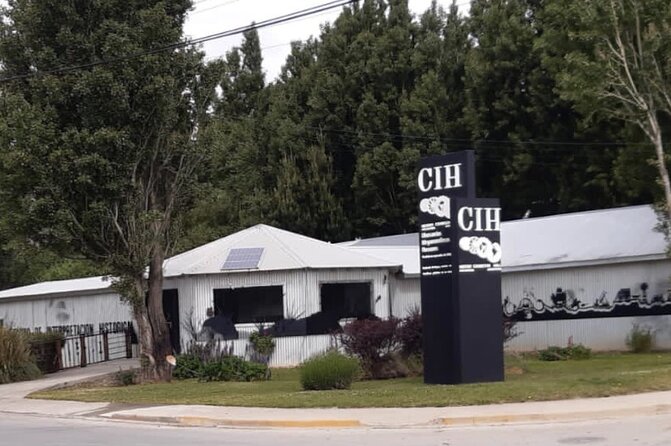
The El Calafate Historical Interpretation Center uses the passage of time as its organizing idea. Rather than presenting disconnected objects, it guides you through stages of Patagonia’s past.
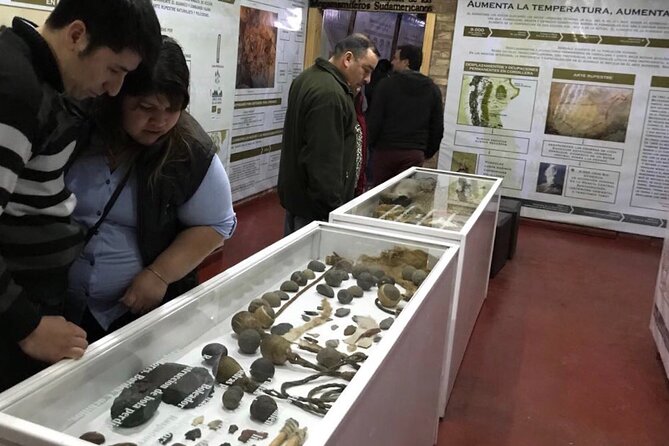
Expect a mix of graphics, videos, and bone montages. These tools are useful because the subject covers a huge period. A written label alone can make 100 million years feel abstract. Visual displays give the timeline shape and help you see how the pieces connect.
The center is described as small, and one practical orientation places it about seven blocks from Libertador Avenue. That distance is manageable if you are already in central El Calafate, and the area is near public transportation. You do not need to build a complicated transport plan around the visit.
The compact size has two sides. It keeps the experience manageable for families and for anyone with limited time. It also means you should not expect room after room of collections. The value comes from the story being told, not from the sheer number of exhibits.
You can visit during the center’s opening hours, from 10 a.m. to 8 p.m. daily. The booking information lists a 10 a.m. start time, but the museum’s long daily schedule gives you flexibility. Check the timing of your voucher or confirmation when planning the day, especially if you want to arrive later.
Dinosaurs, fossils, and Patagonia before people
The prehistoric section is one of the strongest reasons to visit. You will see bones and fossils from dinosaurs and extinct mega-mammals connected with Southern Patagonia.
The dinosaur material gives you a sense of the region before its present climate and ice fields took shape. The mega-mammals shift the story forward to a later period, when large animals lived in an environment shaped by Pleistocene ecological change.
I like this pairing because it prevents Patagonia from being reduced to one famous feature. The area was not always defined by glaciers, and it was not always home to the animals you associate with the modern region. The exhibits show a place that changed repeatedly.
Do not expect the kind of large-scale dinosaur hall found in a major capital-city museum. The center’s appeal is more local and regional. It connects fossils to the particular place you are visiting, which can be more useful on a Patagonia trip than a broad display with no connection to your route.
For children, the bones and mounted displays provide an immediate entry point. For adults, the bigger value is the timeline. You can use the fossils to understand how much came before the human story and how unusual the current environment is within that long span.
Glaciers and the Pleistocene story
The museum also explains the glacier process and the ecological transformations of the Pleistocene. This is the section I would pay close attention to if you plan to visit Perito Moreno Glacier or other ice-related sights nearby.
The Pleistocene was a period of major environmental change. Here, the museum connects those changes with glaciers, animals, and the wider ecology of Southern Patagonia. You are not simply shown an ice photograph. You are given a basic explanation of how ice affected the region.
That background can make later sightseeing more rewarding. At a glacier viewpoint, you can look beyond the scale and color of the ice and think about movement, climate, and the land shaped around it. The center will not replace a specialist explanation on a glacier excursion, but it gives you a useful foundation.
The displays use videos and graphics to make the process easier to follow. This matters because geological change is difficult to picture. You cannot watch a glacier advance over thousands of years, but a well-organized visual sequence can make the idea less remote.
The visit also helps balance the usual focus on scenery. El Calafate is easy to experience as a series of beautiful views. This museum asks you to consider the forces that created those views and the changes that continue to shape them.
More history walks in El Calafate:
- Nazis in Buenos Aires: a historical walking tour
★ 4.9 · 193 reviews - Bariloche: German Immigration and History Walking Tour
★ 4.8 · 169 reviews - San Telmo: Historical Guided Tour with Street Food & Drinks
★ 5.0 · 87 reviews - Buenos Aires: La Boca Art and History Walking Tour
★ 4.8 · 55 reviews
Tehuelche culture and the human chapter
The center’s story does not stop at prehistoric animals and ice. It also includes the Tehuelche culture as part of Southern Patagonia’s past.
That human chapter is important. A museum about Patagonia should not present the region only as an empty setting for geology and wildlife. The inclusion of Tehuelche culture adds people, adaptation, and lived experience to the timeline.
The supplied details do not specify the exact objects, stories, or depth of the displays devoted to Tehuelche culture, so you should not expect a full ethnographic museum from this visit. Still, its place within the center’s overall sequence gives you a more complete understanding of the area.
I would use this section to slow down. The fossils may catch your eye first, but the human history gives the museum a different weight. It reminds you that Patagonia’s story includes communities and cultural traditions, not only extinct animals and natural forces.
This is also one reason the museum works well before other activities. Once you have some sense of the area’s human past, your time in and around El Calafate feels less like a quick stop in a scenic destination and more like a visit to a place with many layers.
How long to allow and how to use the flexible hours
The stated visit time is about two hours, while the activity can take between one and four hours. Your actual timing will depend on how closely you read the material, how much time you spend with the videos, and whether you are visiting with children.
If you read quickly, one hour may be enough for a basic pass through the displays. I would allow two hours if you want to follow the full sequence from geology to people. Four hours would be a slow visit and may suit someone who wants to study the panels carefully or is using the museum as a relaxed indoor activity.
The 10 a.m. to 8 p.m. schedule is especially helpful in El Calafate, where outdoor plans can control much of your day. You can visit in the morning before another activity, in the afternoon after returning to town, or later when you want a break from the weather.
There is no need to force the museum into a rushed gap. Its flexible hours let you choose a time when you can pay attention. If your day already includes a long excursion, a shorter visit may be wiser than trying to squeeze in every display.
The center is open every day, which removes one common problem with small local museums. You are less likely to lose the chance to visit because of a weekly closing day, though you should still confirm the hours close to your visit.
Language support and how to get the most from the displays
Translation options are available in Spanish, French, English, Italian, and Portuguese. That is a useful feature for an exhibit built around dates, scientific terms, and cultural information.
The activity may be operated by a multilingual guide, but the information provided does not name a specific guide. Do not book expecting a particular person. Instead, focus on the available language support and the visual material that carries much of the story.
One practical tip is to give yourself time to read. A Sunday visit was described as a small space full of history, with a recommendation to rely more on reading than on hearing aids. The wording is not specific enough to identify exactly which audio feature was meant, but the useful advice is clear: do not rush past the written panels.
If you are visiting with children, you can make the timeline into a simple game. Ask them to spot the oldest material, then find the dinosaurs, the mega-mammals, the glaciers, and the human culture section. The museum is educational without requiring a formal school-style approach.
Because the center uses several kinds of presentation, you can move between reading, watching, and examining the mounted bones. That variety helps keep the visit active, especially for families who may not want a long sequence of text panels.
The $15 price and what it buys you
At $15 per person, this is a modestly priced cultural stop by El Calafate standards. Admission is included, along with taxes, fees, and handling charges, so the listed cost represents the main expense of the visit.
The value depends on what you want. If you are looking for a large museum with extensive collections, the compact center may feel limited. If you want a clear introduction to the geology, animals, glaciers, and human past of Southern Patagonia, the price is reasonable for a roughly two-hour activity.
You are paying for context as much as for objects. The bones and fossils are the visible draw, but the timeline is what makes them useful. Without that connection, you could see an isolated fossil and leave with little understanding of its place in Patagonia’s story.
There are a few small extra costs to remember. Parking fees are not included and are payable at check-in if applicable. Snacks, coffee, tea, non-alcoholic drinks, and souvenir photos are also separate purchases. Transportation to and from the center is not included.
You can keep the visit inexpensive by walking or using nearby public transportation and skipping the add-ons. Since the center is about seven blocks from Libertador Avenue, it may fit easily into a town walk, depending on where you are staying.
Who should book this experience
I would recommend this museum to families, first-time visitors to El Calafate, and anyone who wants more than scenery. It is also a good choice if rain, wind, or tired legs make another outdoor activity less appealing.
The lack of a minimum age makes it open to very young children, but all children must be accompanied by an adult. Most people can participate, and service animals are allowed.
This is a private activity, meaning only your group participates. The information does not promise a personal guide for every visit, so think of it primarily as a private group museum experience rather than a guaranteed one-on-one tour.
You may want to skip it if your schedule is extremely tight or if you have already seen several large natural-history museums and want only outdoor experiences. The center is small, and its strengths are explanation and local connection rather than scale.
Still, the museum earns its place because it fills a gap in a typical El Calafate visit. Glacier excursions show you the present. This center helps explain the many eras that came before it.
Booking, cancellation, and practical details
Confirmation is provided at the time of booking. The booking information gives a 10 a.m. start time, while the museum is open daily until 8 p.m., so check the exact instructions attached to your reservation before setting out.
Free cancellation is available when you cancel at least 24 hours before the experience’s start time. Cancellations made less than 24 hours in advance are not refunded, and changes within that same period are not accepted. The cut-off follows local time in El Calafate.
You do not need to arrange a minimum number of participants, and there is no stated minimum age. Children need an adult with them. Since transport is excluded, plan your own walk, public transportation, or parking.
I would carry enough time to read rather than treating this as a quick photo stop. The museum’s strongest material is the way it connects the exhibits, and that connection is easy to miss if you hurry.
Should you book the El Calafate History Museum Tour?
Book it if you want a clear, affordable explanation of Southern Patagonia before or after your glacier outings. The combination of dinosaur bones, mega-mammals, Pleistocene change, glaciers, and Tehuelche culture gives you a useful local frame for the rest of your trip.
Skip it only if your El Calafate schedule leaves no room for a small museum or you are looking specifically for a large collection. At $15, with daily hours and several language options, it is an easy addition for most visitors who have a spare hour or two.
FAQ
How much does the El Calafate History Museum Tour cost?
The price is $15 per person. Admission, taxes, fees, and handling charges are included.
How long does the museum visit take?
The experience is listed as lasting approximately one to four hours. About two hours is suggested for visiting the museum carefully.
What are the museum’s opening hours?
The El Calafate Historical Interpretation Center is open every day from 10 a.m. to 8 p.m.
What languages are available?
Translation options are available in Spanish, French, English, Italian, and Portuguese. The activity may also be operated by a multilingual guide.
Is transportation included?
No. Transportation to and from the attraction is not included. Parking fees, when applicable, are also separate.
Can children participate?
Yes. There is no minimum age, but children must be accompanied by an adult. Most people can participate, and service animals are allowed.
Just added around El Calafate
- El Calafate: Gourmet Navigation Upsala & Spegazzini Glaciers★ 3.9 · 8 reviews
- Perito Moreno Glacier Experience with Boat Navigation !!★ 5.0 · 41 reviews
- Ride Experience – Canyons & Mounts★ 5.0 · 33 reviews
- Perito Moreno Full Day Minitrekking with Transfer and Walkways★ 4.5 · 54 reviews
- Safari Experience – Wildlife & Steppe★ 5.0 · 40 reviews
- Navigation All glaciers★ 4.5 · 45 reviews
- Perito Moreno Glacier Big Ice Tour from El Calafate★ 4.5 · 30 reviews
- Torres del Paine Day Trip from El Calafate★ 4.1 · 15 reviews
Museums, compared.


River Plate Monumental Stadium and Museum Guided Tour
Read our review →
AllMaradona Buenos Aires: Maradona House Museum and Stadium
Read our review →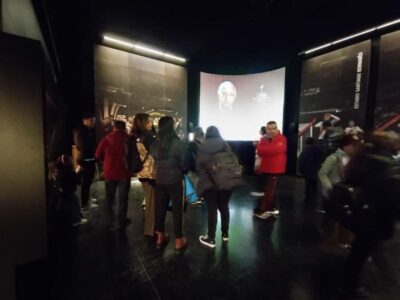


Maradona Tour: Murals, Chapel, Stadium, Museum, Casa D10S
Read our review →Browse the lists this tour appears in