

Reviewed · WALKING TOURS
La Docta Free Walking Tour “Córdoba La Antigua”.
Córdoba’s old center is compact, but its story is layered: Spanish colonial rule, the Jesuit order, university life, political memory, and modern Argentina all meet within a few blocks. This 150-minute walk gives you a useful first look, with guides such as Tomás, Valeria Velez, and Aldy adding humor, local detail, and plenty of chances to ask questions.
I like the pay-what-you-decide format, which keeps the upfront cost tiny, and I like the route’s strong mix of major landmarks and smaller oddities, including the narrowest building in the city. The main consideration is that museum admission is not included, so you should expect the walk to focus on exterior context unless an individual stop allows entry.
Key points at a glance
- A $0.50 booking deposit: You decide the remaining value of the tour at the end.
- A clear first-day route: The walk connects Plaza San Martín, the Cathedral, Cabildo, Jesuit sites, and Patio Olmos.
- English and Spanish guiding: Guides including Tomás, Valeria Velez, and Aldy have led lively, accessible walks.
- A 150-minute history lesson: Expect colonial buildings, Córdoba stories, local culture, and modern context.
- Small surprises along the way: The tour includes planned local sounds and tastes.
- Walking matters: Bring comfortable shoes and a drink for the two-and-a-half-hour route.
Why this is a smart first walk in Córdoba
I would use La Docta’s Córdoba La Antigua tour early in a stay. It gives you a mental map of the central area and explains why the city feels different from a simple colonial museum district. You move from the founding of Córdoba through the colonial period and into the present, while seeing the places where religion, education, government, and public life developed.
The route is also efficient. It begins in Plaza San Martín and ends at Patio Olmos, a central shopping mall. That makes the walk easy to fit into a first morning or afternoon, and the finish leaves you near shops and other central streets rather than sending you back to the starting point.
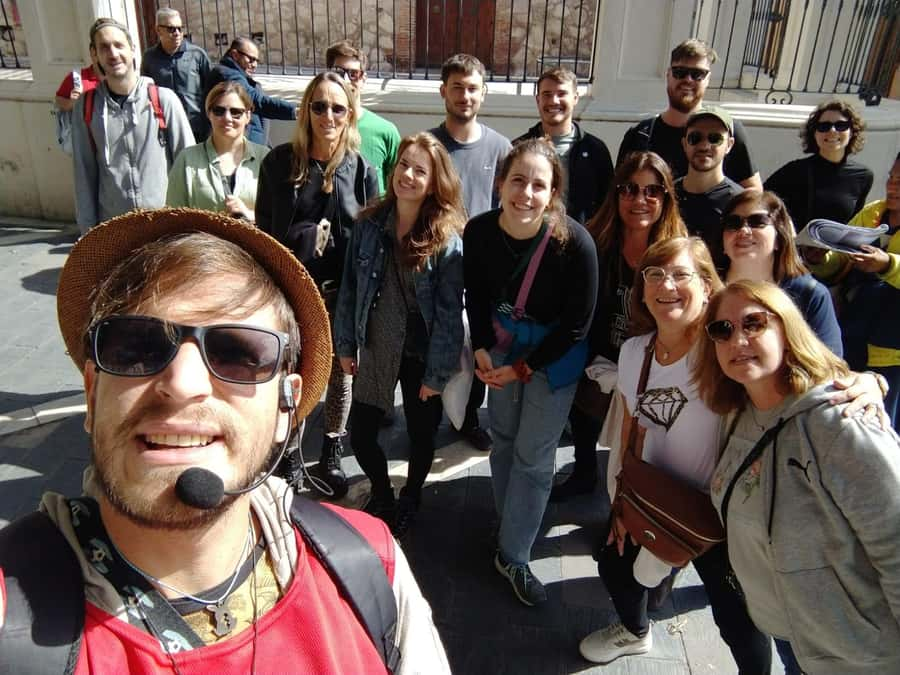
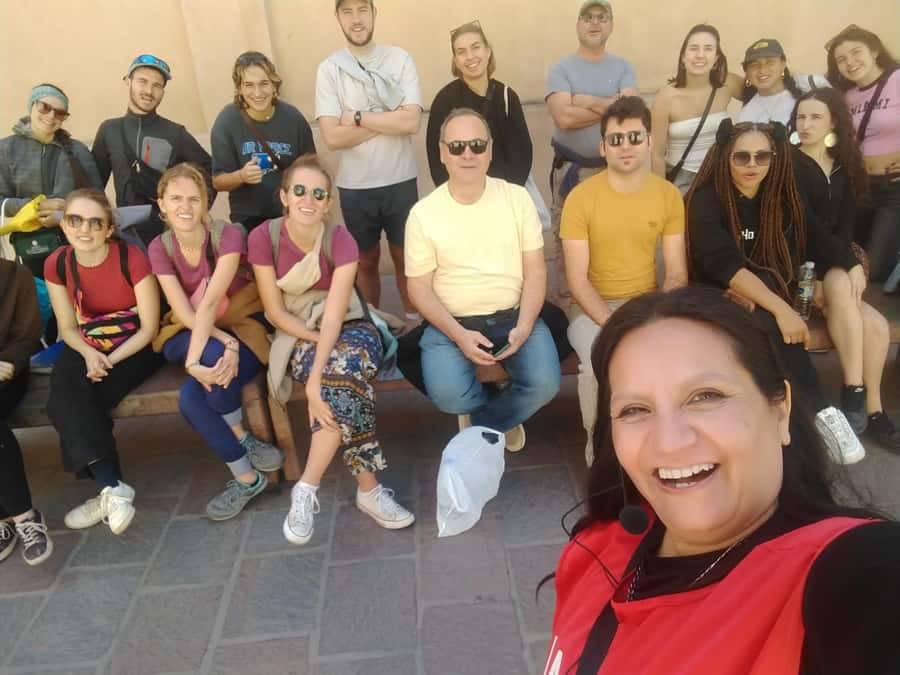
The guides are a major part of the experience. Tomás is described as funny, energetic, and engaging, while Valeria Velez has been especially effective at adding games and helping people in the group talk with one another. Aldy is another guide praised for her energy and warmth. English appears to be well supported, and the tour is also available in Spanish.
This is not a silent procession from one building to the next. You should expect explanation, conversation, questions, and a social tone. One guide has even taken time to speak with people in their native languages, which can make a mixed-language group feel more at ease.
More walking tours in Argentina:
- Buenos Aires Hop-On Hop-Off Bus, Free Walking Tours & Discounts
★ 4.5 · 2,218 reviews - Buenos Aires: La Boca Guided Walking Tour in English
★ 4.8 · 1,587 reviews - Nazis in Buenos Aires: a historical walking tour
★ 4.9 · 193 reviews
Starting beside San Martín in the city center
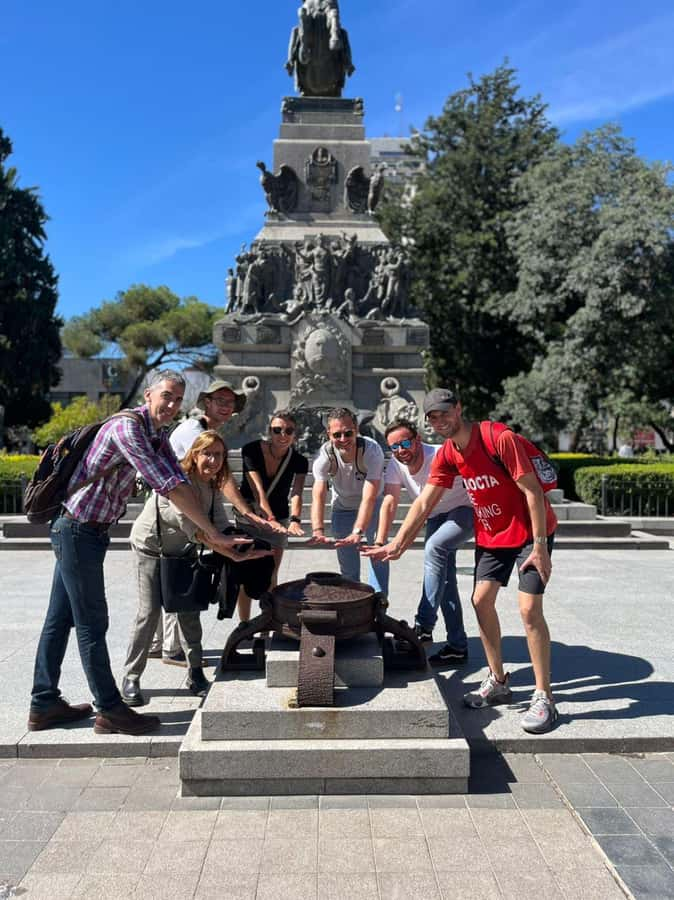
Look for the La Docta team next to the statue in Plaza San Martín. The identifying mark is a red T-shirt, a useful detail in a busy central square.
The plaza is a fitting place to begin because it puts Córdoba’s public center under your feet before the tour turns toward its older religious and civic buildings. From here, the guide can give you the basic timeline of the city and explain how the central district grew around its institutions.
Bring water and wear shoes you can comfortably use for 150 minutes. The route is urban, but a long walking tour can feel tiring if you arrive in sandals or stiff shoes. The activity information also suggests checking the available starting times when booking, since the schedule can vary.
The Jesuit block and the UNC Historical Museum
The first listed stop is the UNC Historical Museum in the Jesuit Block, also known as the Manzana Jesuítica. This is one of the tour’s most important sections because Córdoba’s identity is closely tied to the Jesuit presence and the National University of Córdoba.
The stop includes a guided portion of about 15 minutes. You will learn why the buildings in this part of town matter, how the Jesuit order shaped education and public life, and how old Córdoba’s institutions continue to influence the city.
This is one of the places where the tour’s broad approach works well. Instead of treating each building as an isolated sight, the guide connects religion, schooling, architecture, and local politics. If you want to return later for a slower museum visit, this introduction helps you know what to look for.
Museum admission is not included. That is not a serious problem for a first orientation, but you should not assume the walking tour covers every interior or entrance fee.
Cabildo de Córdoba and the Cathedral
The Cabildo receives roughly 10 minutes. This former civic building represents the governmental side of colonial Córdoba, set close to the religious institutions you will see next. The guide’s job here is to explain how authority worked in the city, not just point out a handsome façade.
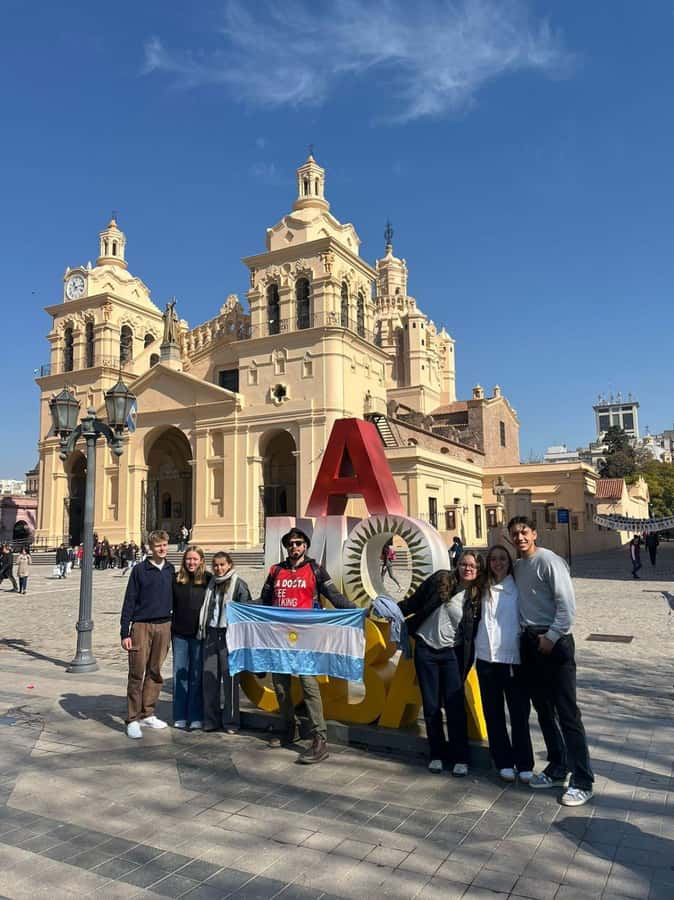
The Cathedral of Córdoba, Nuestra Señora de la Asunción, follows. It is one of the central landmarks of the route and helps show the scale and importance of the old city. You will have around 10 minutes here, enough for a compact explanation and a look around, but not a long, quiet visit.
The itinerary labels several stops as hop-on hop-off stops, but this is a walking tour rather than a bus excursion. In practical terms, read that wording as short visits where you pause, listen, and continue on foot.
The Cathedral and Cabildo work well together. One represents civic power, the other religious power, and both sit within the same walkable center. That pairing gives you a faster grasp of how colonial cities were organized.
A few more Argentina half-days to weigh up
- La Cumbrecita and Villa General Belgrano Full Day Tour
★ 4.5 · 55 reviews - Wine Tour Privado a Calamuchita, Córdoba – Argentina
★ 5.0 · 50 reviews - Cordoba Cumbrecita Tour with Spanish Speaking Guide
★ 4.5 · 34 reviews - PRIVATE TOUR: La Cumbrecita & Villa Gral. Belgrano
★ 5.0 · 33 reviews
The Jesuit Crypt and Córdoba’s hidden lower level
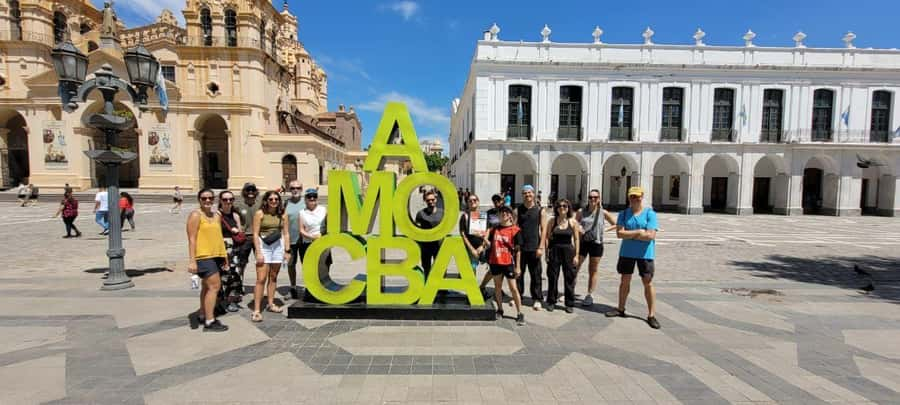
The Jesuit Crypt is a different sort of stop. Instead of another grand façade, you get a more unusual piece of the city’s religious past. The visit is planned for about 10 minutes, so expect a concise introduction rather than a long underground exploration.
This stop is valuable because it breaks up the sequence of plazas, churches, and public buildings. It also gives the guide a chance to explain how older structures can survive beneath the modern city. I would pay close attention here, since the smaller sites can be easy to miss if you explore Córdoba without local context.
As with the other historical sights, check what is open on the day of your visit. The tour information confirms that museum admission is not included, so the guide-led walk and any paid interior visits should be treated as separate parts of your day.
The Marquis of Sobremonte’s house
The Provincial Historical Museum in the former house of the Marquis of Sobremonte receives about 10 minutes. The building adds a domestic and political angle to the route. Instead of looking only at churches and official structures, you get a sense of how an important colonial household fits into Córdoba’s story.
This stop is useful if you want more than a list of dates. Houses reveal social rank, daily life, and the way powerful people occupied the city. The brief visit will not replace a full museum tour, but it gives you enough background to decide if you want to return.
The museum is also a good reminder that Córdoba’s past is not limited to the Jesuits. The city’s story includes officials, families, civic institutions, religious orders, students, and ordinary public life.
The Church of the Company of Jesus
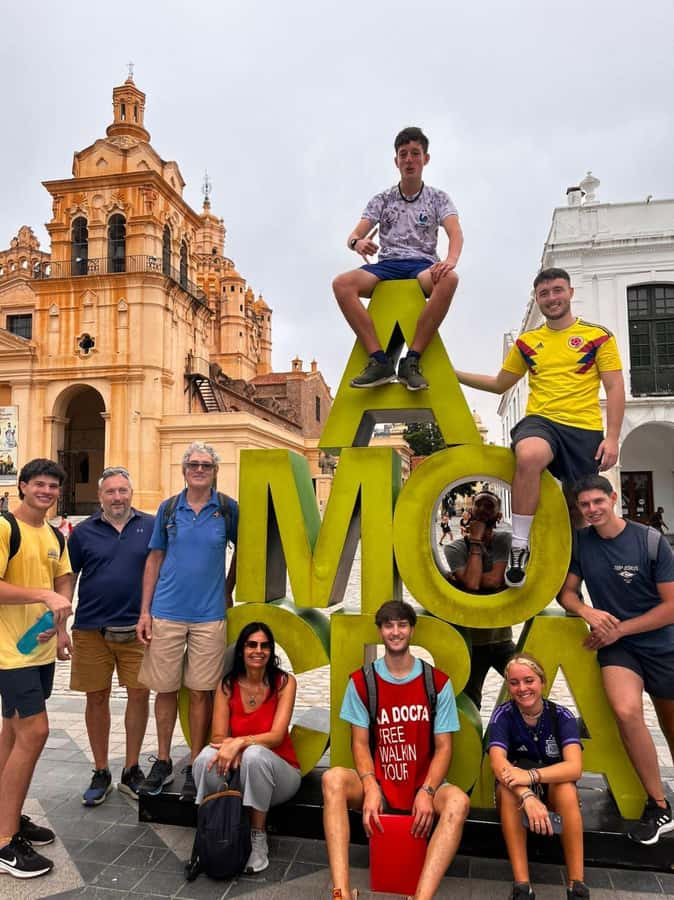
The Church of the Company of Jesus is scheduled for about 15 minutes, one of the longer pauses on the route. That makes sense. It is a key part of the Jesuit complex and one of the places where the city’s religious and architectural history comes together most clearly.
Your guide can point out details you might otherwise walk past, including older construction, decorative work, and the connection between the church and the Jesuit educational institutions nearby. One particularly useful comment from the tour feedback came from a visitor interested in masonry and brickwork, who noticed the old buildings and arches in a new way. You do not need a specialist background to appreciate those details, but a guide helps you see them.
This is likely to be one of the tour’s main visual highlights. It also benefits from the guide’s storytelling, since a church can feel like just another historic building if you do not understand its place in Córdoba’s development.
Monserrat College and the university tradition
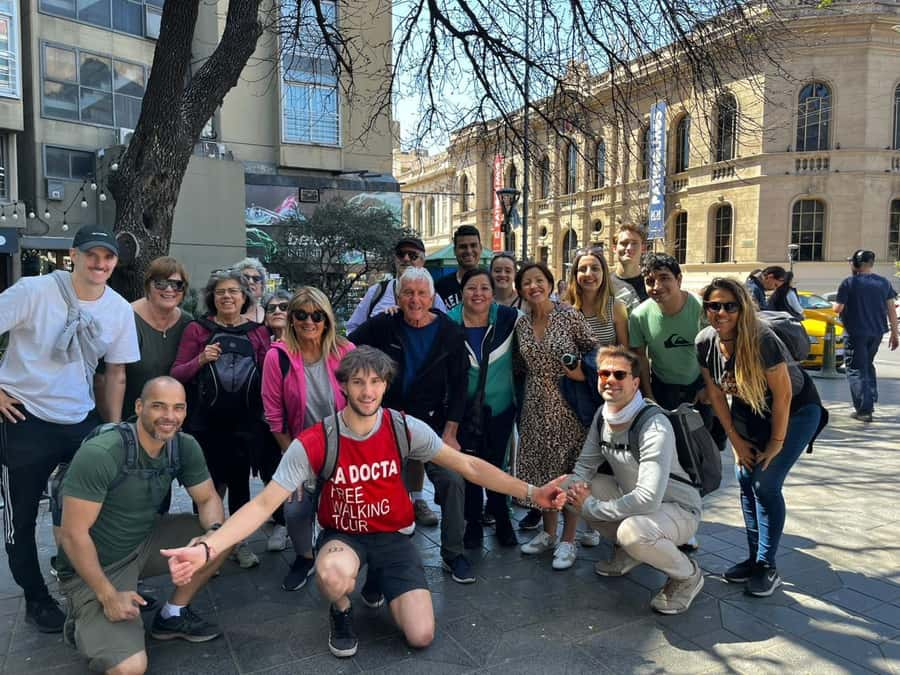
The National College of Monserrat receives around 10 minutes. Along with the UNC Historical Museum, it shows why Córdoba is often associated with learning and university life.
The college helps shift the tour from colonial religion toward education and the city’s long intellectual tradition. You will see how schools and universities became part of Córdoba’s identity, not merely places for students but institutions that shaped public life.
The short stop is enough for orientation. If you are hoping to enter and explore every building in detail, this tour will feel too quick. If you want a well-paced introduction before choosing which places deserve a second visit, the timing works.
The narrowest building and local surprises
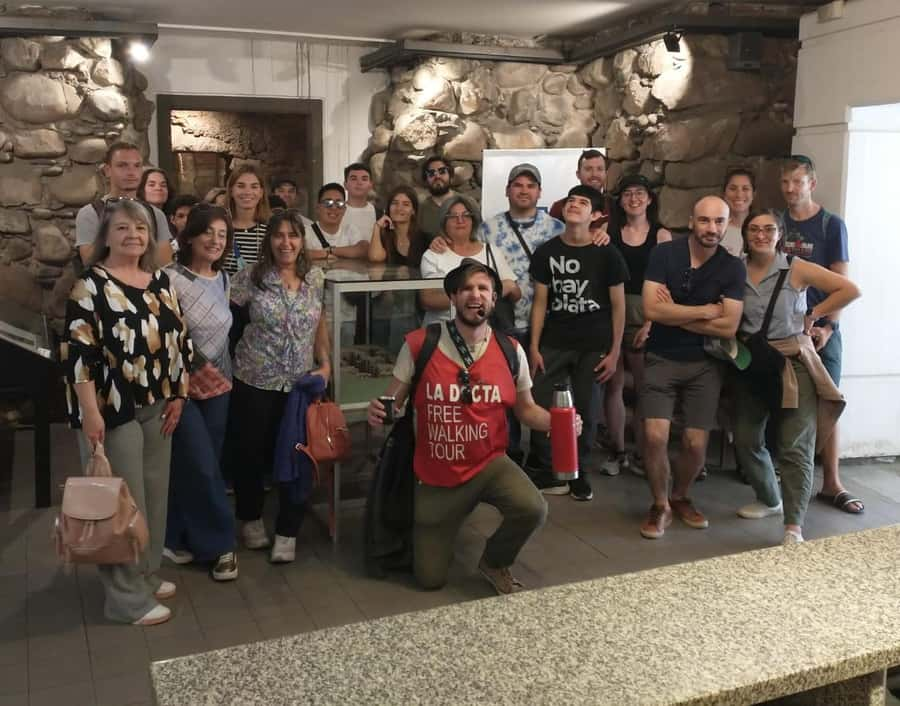
The published route also includes the narrowest building in Córdoba, even though the timed itinerary does not assign it a separate stop. That small detail matters. It keeps the walk from becoming a parade of only grand monuments and gives you one of those city quirks that are easy to miss alone.
La Docta also plans local sounds and tastes as surprises during the experience. The exact format is not specified, so you should treat these as an added feature rather than a promised meal or formal food tasting. The point is to bring local culture into the walk through more than architecture and dates.
This is where the tour’s fun side comes through. Several guides, especially Tomás, Valeria, and Aldy, are described as lively and entertaining. Valeria has used games to help the group socialize, and Tomás has been praised for keeping the history engaging rather than dry.
What the price really means
The booking requires a $0.50 deposit per person. At the end, you decide how much the tour was worth and pay that amount. The low deposit makes this a low-risk way to get a city introduction, but it does not mean the guide’s work has no value.
You should budget for a fair tip based on the guide’s time, the quality of the explanations, the energy of the group, and your own satisfaction. The flexible price is best understood as a pay-what-you-decide model, not as a completely free activity.
For value, the tour gives you 150 minutes of live guiding, a full central route, bilingual availability, and context at major sites. That is a strong deal for someone who wants orientation without committing to a costly private tour. The limitation is that museum admissions are extra, and the tour cannot give every stop the time it deserves.
The activity also allows cancellation up to 24 hours before the start for a full refund, and you can reserve now and pay later. Those policies help if your Córdoba schedule is still changing.
Who will enjoy this walk most
I would recommend Córdoba La Antigua to first-time visitors who want a useful introduction before exploring alone. It suits people who enjoy history in manageable portions, social groups, and guides who bring humor into the explanation.
It is also a good match if you want to meet other people during a city visit. The guides make an effort to help the group interact, and the walk is designed as a shared experience rather than a private lecture.
You may want something else if you prefer long museum visits, quiet photography, or a highly specialized architectural tour. Ten to 15 minutes at many stops gives you the essentials, not an exhaustive study. The experience is strongest as a first look and a way to choose where to return.
Should you book Córdoba La Antigua?
Book this tour if you want to understand Córdoba’s center quickly, see the main colonial and Jesuit landmarks, and learn from an upbeat local guide. The mix of English and Spanish, the tiny booking deposit, and the pay-what-you-decide finish make it easy to try.
I would book it near the start of my stay, wear good shoes, carry a drink, and leave room in the rest of the day to revisit a museum or church that catches your interest. Skip it only if you already know the old center well or want extended indoor access at every stop.
FAQ
How long does the Córdoba La Antigua tour last?
The tour lasts 150 minutes, or two and a half hours.
Where does the tour begin?
It begins next to the statue in Plaza San Martín, in central Córdoba. Look for the guide wearing a red T-shirt.
Where does the walking tour finish?
The tour ends at Patio Olmos shopping mall.
Which languages are available?
The tour is offered in English and Spanish. Some content may be presented in its original language.
How much does the tour cost?
A $0.50 per-person deposit is required to book. The tour has no fixed final price, and you decide what to pay at the end.
Are museum admission fees included?
No. Admission to museums is not included.
What should I bring?
Bring comfortable shoes and drinks for the walking route.
Can I cancel my reservation?
Yes. You can cancel up to 24 hours in advance for a full refund. You can also reserve now and pay later.
Just added around Argentina
- Tango Show at El Querandi with optional Dinner★ 4.2 · 3 reviews
- Zuccardi Full Paired Lunch at Piedra Infinita in Uco Valley★ 3.0 · 3 reviews
- Zuccardi Legacy: A Journey Through Uco Valley’s Finest★ 5.0 · 5 reviews
- Wine and Chocolate Bike Tour: ride, taste, lunch, vineyards.★ 4.1 · 10 reviews
- Wine Tasting in Buenos Aires★ 4.2 · 4 reviews
- Wine Icons: Meet Salentein at the heart of Uco Valley★ 4.1 · 6 reviews
- Wine Icons: Meet the sparkling world of Chandon★ 5.0 · 3 reviews
- Wine Idols: Meet El Enemigo by Alejandro Vigil★ 4.6 · 6 reviews
Walking Tours, compared.

Nazis in Buenos Aires: a historical walking tour
Read our review →


Buenos Aires Walking Tour with Local Guide and Optional Rooftop
Read our review →
Browse the lists this tour appears in