

Reviewed · WALKING TOURS
Buenos Aires in One Day Private Walking Tour
Buenos Aires reveals itself best at street level, where grand French-style palaces, old colonial churches, political monuments, and ordinary neighborhood life sit close together. This private walking tour covers an unusually wide slice of the city, from Plaza de Mayo and Casa Rosada to the tomb of Eva Perón in Recoleta Cemetery and the antiques district of San Telmo.
I like the way the tour connects architecture with Argentine politics and daily life, rather than treating each sight as a photo stop. I also like the private format, which lets your guide adjust the pace and answer your questions. The catch is simple: this is a serious amount of walking, and the route can last closer to seven hours than six.
Key points at a glance
- Start in central Buenos Aires at 10 a.m. Meet outside Florida Garden at Florida 899, near the corner with Paraguay Street.
- Cover several major districts on foot. The route includes Retiro, Recoleta, Palermo, downtown, San Telmo, and Puerto Madero.
- Spend 45 minutes in Recoleta Cemetery. The visit includes Eva Perón’s tomb, grand mausoleums, and stories of famous Argentinians.
- Learn the city through its buildings. Palaces, churches, railway stations, government offices, and old markets help explain Buenos Aires.
- Plan for extra costs. Lunch, coffee, and one taxi ride costing about $5 to $7 are not included.
- Expect a long, full day. The advertised duration is about six hours, but some departures have lasted nearly seven hours.
What this walking tour is really trying to do
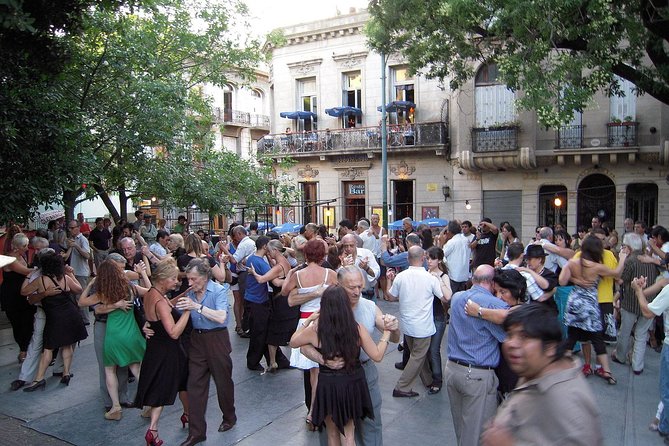
Many city tours show you Buenos Aires from a vehicle. This one asks you to walk through it, block by block, with a guide explaining why the city looks and feels the way it does.
That approach matters here. Buenos Aires can seem like a collection of grand avenues, European-looking buildings, colorful districts, and famous names. On foot, those pieces begin to connect. You see how immigration shaped the architecture, how British influence reached railways and commerce, and how political conflict left marks around Plaza de Mayo.
The tour is private, so only your group takes part. That gives you more room to ask about subjects that interest you, such as Argentine politics, Catholicism, Jewish immigration, tango, military history, or the lives of national figures.
Guides named in past departures include Carlos, Soledad, Clemencia, and Eilat. Guide quality can vary, but the strongest praise has centered on guides who explain both the visible sights and the less obvious stories behind them. Carlos has been singled out for his clear English and broad grasp of Argentine life, while Soledad and Clemencia have also been praised for their friendly, helpful approach.
More Walking Tours in Buenos Aires
- Buenos Aires Hop-On Hop-Off Bus, Free Walking Tours & Discounts
★ 4.5 · 2,218 reviews - Buenos Aires: La Boca Guided Walking Tour in English
★ 4.8 · 1,587 reviews - Nazis in Buenos Aires: a historical walking tour
★ 4.9 · 193 reviews
Starting on Florida Street and entering Retiro
You meet no later than 10 a.m. outside the corner door of Florida Garden at Florida 899. Look for a small BA Walking Tours sign in the guide’s hand or clothing. This is a practical meeting point near public transportation, but it is worth arriving early because the guide will not wait indefinitely after the stated start time.
The first short walk follows Calle Florida, one of central Buenos Aires’ best-known streets. Your guide explains its old buildings and how the city developed around this corridor. The stop itself is brief, but it sets up the larger theme of the day: Buenos Aires has layers from colonial times, the British commercial period, the era of mass immigration, and modern Argentina.
From there, you reach Retiro and Plaza San Martín. This elegant park carries several stories at once. It was connected to an early military bastion, a bullring, and a slave market. The tour does not present the city’s polished architecture without also dealing with darker parts of its past.
Look for the Paz Palace, a grand belle époque mansion, the Kavanagh Building, and the Santísimo Sacramento Church. You also pass the British Clock Tower and railway stations, which give your guide a chance to explain the long British presence in Argentina. The monument to General José de San Martín brings the conversation back to independence and the creation of the Argentine nation.
Palaces, embassies, and Recoleta’s grand address
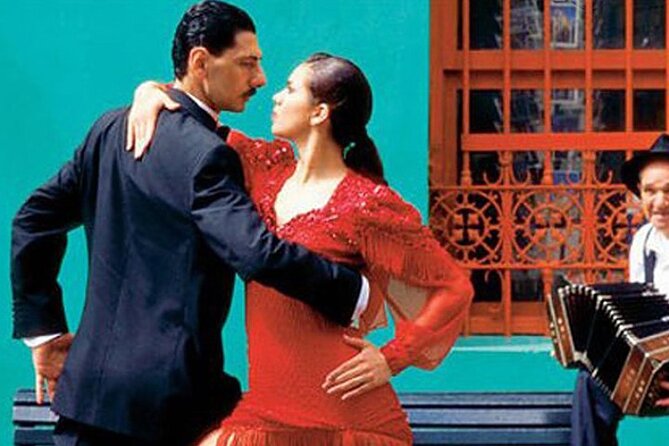
Avenida Alvear is one of the clearest places to see why Buenos Aires earned its old nickname, Paris of the South. The avenue is lined with formal buildings and former mansions, many shaped by French and Italian influence.
The guide points out Palacio Ortiz-Basualdo, now the French Embassy, the Alzaga-Unzué Manor, the Vatican Nunciature, Duhau Mansion, Hume Mansion, and Alvear Palace. Several now serve diplomatic, hotel, or institutional purposes, so you should expect exterior explanations rather than a series of interior visits.
This part of the route is especially useful if you want to understand how wealth, immigration, religion, and European taste shaped Buenos Aires. It also gives you a break from the faster pace of the central streets. The drawback is that architecture fans may want more time, while others may find the number of buildings difficult to absorb.
Recoleta follows, with Nuestra Señora del Pilar Church, the Recoleta neighborhood, Palais de Glace, the Buenos Aires Design Center, and nearby cultural buildings. Palais de Glace is linked to the rise of tango, adding a social and artistic angle to what might otherwise be a parade of grand façades.
Recoleta Cemetery and the story of Evita
The most focused stop of the day is Recoleta Cemetery, with about 45 minutes inside. Admission is included, which is important because this is the only clearly listed paid attraction covered by the tour.
The cemetery is famous for its elaborate monuments and for the burial place of Eva Perón. Your guide explains the tombs and the lives attached to them, including Evita’s story. The appeal is not only the architecture. The cemetery brings together Argentina’s political divisions, social classes, military figures, artists, and national heroes in a compact setting.
This is where guide quality matters most. A guide who knows the stories can turn rows of mausoleums into a readable map of Argentine society. Carlos has been praised for his skill here, and another departure was especially appreciated for its detailed explanations of Recoleta’s famous tombs.
Still, 45 minutes may feel long if cemeteries are not your interest. Some departures have spent so much time here that the day felt stretched. You can ask questions and set the pace, but you should not book this tour expecting a quick look at Evita’s grave followed by immediate sightseeing.
Same city, a completely different kind of day:
- Buenos Aires: Piazzolla Tango Show with Optional Dinner
★ 4.4 · 2,122 reviews - Buenos Aires: City Highlights Guided Tour with Transfer
★ 4.7 · 1,946 reviews - Buenos Aires: Hop-On Hop-Off City Bus Tour
★ 4.2 · 1,855 reviews - Buenos Aires Hop-On Hop-Off Bus and Exclusive Benefits
★ 4.4 · 1,714 reviews
Palermo’s monuments and ordinary city life
The route continues through Palermo, Buenos Aires’ largest and most populated neighborhood. The stated stops include the National Gallery of Art, the large monument presented by France for Argentina’s centennial, the Floralis Monument, the monument to Eva Perón, and the National Library building.
Palermo gives the tour a change of scale. Retiro and Recoleta show elite Buenos Aires through palaces, embassies, and cemetery monuments. Palermo lets you see a broader neighborhood setting and hear more about everyday life in the capital.
The Floralis Monument, a giant metal flower, is one of the route’s most recognizable modern landmarks. The Eva Perón Monument adds another political stop, but from a different angle than her burial site. The National Library brings in modern architecture and public culture.
Do not assume you will enter every building. Most stops are explained from outside, and one negative assessment specifically found that too few interiors were visited. If you want museum access, tell the operator before booking and confirm what can be entered on your date.
Downtown, the Obelisco, and Galerías Pacífico
The central section returns to Florida Street and the downtown core. You pass the old Harrods and Galerías Pacífico buildings, the Centro Naval, Teatro Colón, and the Obelisco.
This is a good stretch for understanding the city’s commercial and political growth. Galerías Pacífico began as offices for the Pacific British Railway and later became a shopping center known for its murals. The Centro Naval reflects Argentina’s former wealth and the role of ranchers and the military. Teatro Colón points to the city’s long investment in opera and high culture.
The Obelisco is more than a standard photo stop. Your guide explains what it represents and how it fits into the city’s changing identity. Nearby, the tour touches on the house associated with Mariquita Sánchez and Argentina’s national anthem, then moves into the banking and financial district.
This section can feel dense because there are many names and institutions in a short span. I recommend taking notes or marking places on your phone. The value here is not only seeing the Obelisco, but understanding how Buenos Aires developed as a center of money, government, culture, and trade.
Plaza de Mayo and the machinery of Argentine history
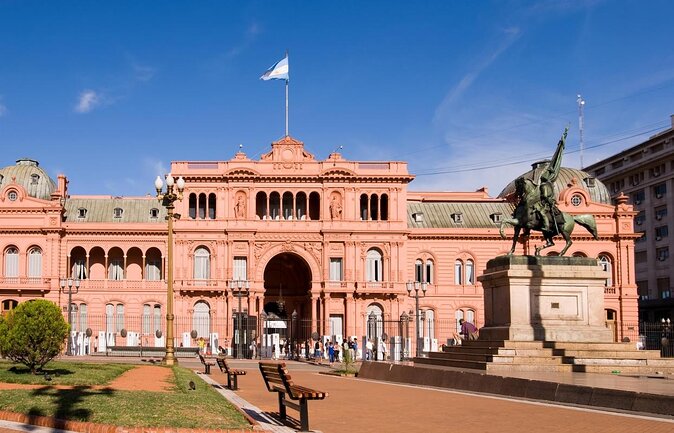
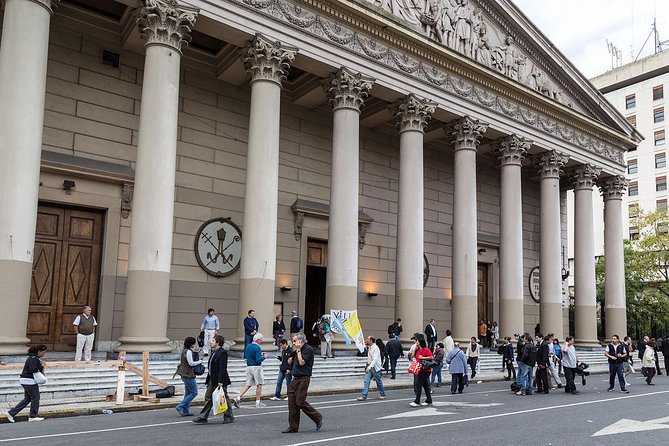
Plaza de Mayo is the political heart of the city. The tour covers the Metropolitan Cathedral, Cabildo, Casa Rosada, the Pirámide de Mayo, and the connection to the Mothers of the Disappeared.
Inside the Cathedral, you see the guarded tomb of General San Martín, one of the central figures in South American independence. The church is also associated with Pope Francis, who worked there before becoming pope. The Cabildo, or old city hall, helps explain the colonial administration of Buenos Aires.
Casa Rosada is the presidential office, and its pink exterior is one of the city’s most familiar sights. The guide explains its history and architecture, but the tour does not promise an interior visit. The Pirámide de Mayo and the Mothers of the Disappeared bring the story into Argentina’s more recent period of dictatorship and political trauma.
The stop is strongest when your guide gives context instead of rushing from building to building. You are looking at a plaza where independence, presidential power, demonstrations, and public mourning have all played out. That makes this one of the most valuable parts of the day for first-time visitors.
San Telmo, colonial streets, and the old slave market
San Telmo is the oldest neighborhood on the route and one of the most atmospheric. Its colonial-style houses, churches, narrow streets, and old shops offer a clear contrast with Recoleta’s formal avenues.
The route includes Defensa Street, Saint Dominic Convent, Manzana de las Luces, the old city hall area, the National Bank, old ministry buildings, and preserved examples of the city’s earliest homes. Your guide also discusses the British invasions of 1806 and 1807, immigration, and the way new residents changed the city’s architecture.
Some of the most unusual stops are the tiny house once donated by a master to a freed slave, the old market, and a small convent connected to the story of Martina Céspedes. These details give the neighborhood a human scale. You are not only looking at landmarks. You are hearing about the people who lived, worked, worshipped, and struggled here.
Plaza Dorrego is the natural finish to the San Telmo walk. It is the center of the famous antiques market and has cafés and antique shops around it. The tour ends here, so you can keep exploring on your own after the guide leaves.
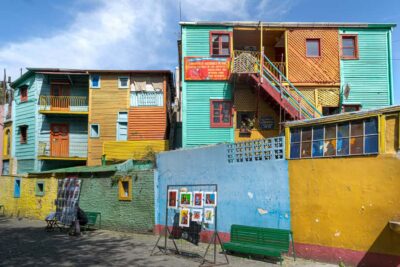
The itinerary also lists an optional extension to La Boca. It takes about 45 extra minutes and requires a taxi, so it is not part of the standard tour and adds another cost. Confirm this option before the day begins if the colorful former port district is a priority.
Puerto Madero and the final shape of the city
Puerto Madero shows the newest side of Buenos Aires. The district was built by expanding across old British dockyards into the water beyond the original coast.
The stop is short, about 15 minutes, but it helps complete the city’s story. You have already seen colonial San Telmo, nineteenth-century commercial streets, grand Recoleta, and modern Palermo. Puerto Madero shows how Buenos Aires continues to extend and remake itself.
One taxi ride is required during the day to move between attractions. The cost is not included and is estimated at $5 to $7. Bring Argentine pesos or a suitable payment method, and ask the guide when the taxi will be needed so you are not caught by surprise.
Food, pace, and the real cost
The listed price is $199 per person. That is a serious price for a walking tour, but the private format and the amount of ground covered make the value easier to understand. You are paying for a guide dedicated to your group, not a large shared outing, plus cemetery admission and a full day of interpretation.
Lunch and coffee are extra. The guide stops for both during the route, so you should budget for a meal rather than expecting food to be included. The breaks are useful because the route is long, but they also add time and may affect how many listed stops you reach.
The advertised duration is about six hours. Some departures have lasted almost seven hours, especially when the group wanted more explanation. The full itinerary can also change because of weather, strikes, demonstrations, repairs, and other city conditions.
Wear comfortable shoes and bring water. The tour operates rain or shine, and the route includes long stretches outdoors. Children age eight and under are free with a paying adult, but the physical demand makes the walking requirement important for families.
Who should book this Buenos Aires walk
I would choose this tour if you have only a short stay and want a serious introduction to the city’s neighborhoods, politics, architecture, and major sights. It is also a good match if you prefer learning from a local guide rather than simply collecting photographs.
The private format suits couples, families, and small groups with specific interests. You can ask for more time at Recoleta, more explanation of Argentine politics, or a faster pace through buildings that matter less to you.
I would hesitate if you dislike long walks, want many interior visits, or prefer a relaxed neighborhood stroll. The route covers a lot, and that breadth can come at the cost of depth in individual places. It also does not include hotel pickup, transport, meals, or a visit to La Boca in the base price.
Should you book it?
Book this Buenos Aires walking tour if your priority is understanding the city, not simply seeing it from a bus window. The strongest guides, including Carlos, Soledad, Clemencia, and Eilat, have made the day memorable through clear explanations and personal insight.
Before paying, be comfortable with the $199 price, the extra taxi fare, the cost of lunch, and a possible seven-hour day. Ask about the guide, the expected route, and the La Boca option if those details matter to you.
For an active visitor who wants Plaza de Mayo, Recoleta Cemetery, San Telmo, Retiro, Palermo, downtown, and Puerto Madero tied together in one day, this is a useful and ambitious introduction. For a slower experience, choose a shorter neighborhood tour instead.
FAQ
Where does the tour start?
The tour starts at Florida Garden, Florida 899, in Buenos Aires. Meet outside the corner door near Paraguay Street at 10 a.m., looking for a small BA Walking Tours sign.
Where does the tour end?
The standard tour ends at Plaza Dorrego in San Telmo, near cafés, antique shops, and the San Telmo Antiques Market.
Is Recoleta Cemetery admission included?
Yes. Cemetery admission is included in the tour price.
Are food and drinks included?
No. Coffee and lunch breaks are part of the day, but you pay for your own food and drinks.
Is transportation included?
No. One taxi ride is required during the tour, and the cost is estimated at $5 to $7. Hotel pickup and drop-off are also not included.
Does the tour visit La Boca?
La Boca is an optional extension, not part of the standard tour. The extension takes about 45 minutes and requires a taxi, with additional costs.
More 1-Day Tours in Buenos Aires
- Gaucho Day Trip from Buenos Aires: Santa Susana Ranch
★ 4.0 · 272 reviews - Gaucho Experience: A Day Trip to Don Silvano Ranch
★ 4.0 · 148 reviews - Colonia del Sacramento: Small-Group Day Trip
★ 4.5 · 48 reviews - Premium Day Trip to Colonia del Sacramento
★ 5.0 · 34 reviews
Just added around Buenos Aires
- Tango Show at El Querandi with optional Dinner★ 4.2 · 3 reviews
- Wine Tasting in Buenos Aires★ 4.2 · 4 reviews
- Walking Tour: Buenos Aires bookstores★ 4.3 · 12 reviews
- Velez Sarsfield Football Match★ 5.0 · 3 reviews
- Unique Tigre and Delta Private Day Cruise Navegation★ 5.0 · 3 reviews
- Private Underground Tango Immersion★ 5.0 · 31 reviews
- Tour Buenos Aires in one day on Electric Scooters★ 5.0 · 33 reviews
- Sailing with Wine Tasting in Buenos Aires★ 5.0 · 50 reviews
Walking Tours, compared.

Nazis in Buenos Aires: a historical walking tour
Read our review →


La Docta Free Walking Tour “Córdoba La Antigua”.
Read our review →

Buenos Aires Walking Tour with Local Guide and Optional Rooftop
Read our review →
Browse the lists this tour appears in