

Reviewed · WALKING TOURS
Jewish Sites Buenos Aires Private Walking and Car Tour
Buenos Aires’ Jewish story is told through places of worship, memorials, museums, and acts of remembrance. This private tour links Templo Libertad, the Buenos Aires Holocaust Museum, and AMIA, helping you understand both the community’s beginnings and the pain it has carried.
I like the small private format, which gives you room to ask direct questions, and I like the choice of three different lengths. The Salvador Kibrick Museum adds real objects and documents, while the four-hour version lets you cover more of the city without wearing out your feet.
The main drawback is simple: the two-hour and three-hour options involve only a fairly short walking route, but the four-hour option is the only one with a private car. Entry to Templo Libertad is not included, and foreign visitors need an original passport for the museum.
Key points to know before booking
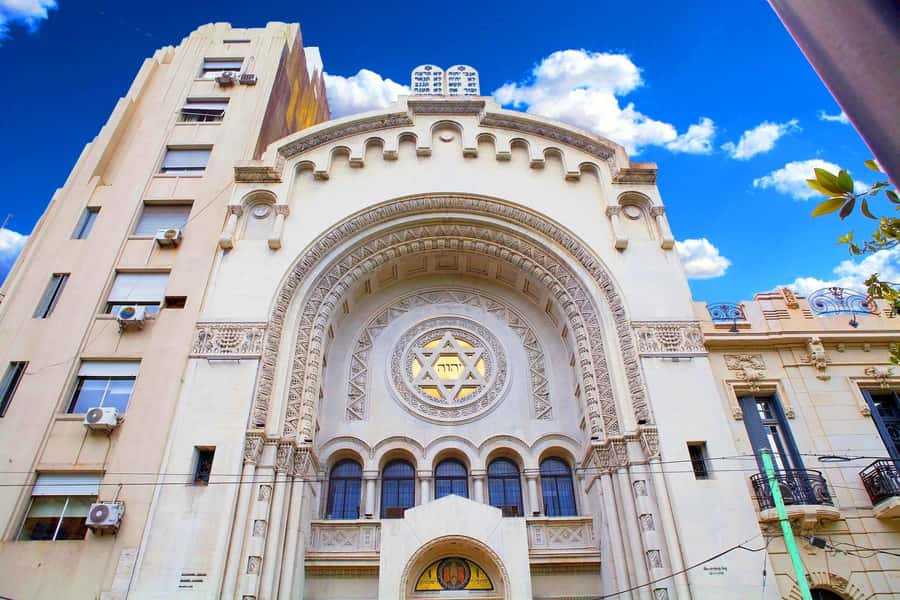
- Templo Libertad is the historic starting point: See the exterior of Argentina’s first synagogue and learn how Jewish immigration took root in Buenos Aires.
- AMIA adds difficult but essential context: The guide explains the 1994 bombing and its continuing effect on Argentine Jewish life.
- The Salvador Kibrick Museum changes the experience: The three-hour and four-hour options include ritual objects, photographs, and historical papers.
- The four-hour tour covers much more ground: A private car connects the Jewish sites with Plaza Libertad, 9 de Julio Avenue, Plaza General San Martín, and the Israeli Embassy Memorial.
- Guides speak five languages: You can book in English, Spanish, French, Italian, or Portuguese.
- The guide quality is a major strength: Richard Shpuntoff received especially warm praise for combining historical explanation with personal and family stories.
A Jewish Buenos Aires tour with a serious purpose

This is not a sightseeing walk built around decorative façades alone. It deals with migration, religious identity, survival, political violence, and memory. You will see important buildings, but the real value comes from understanding what they mean to the people connected to them.
The tour begins at Hotel Presidente on Cerrito 850. You meet the guide outside, not inside the hotel, since the hotel staff is not involved with the activity. From there, the experience moves toward the old Jewish quarter and the Libertad Street area.
Your licensed guide leads the discussion in your chosen language. The tour is private, with one guide for a group of up to 25 people. That upper limit is fairly broad, but the private format still gives your own party control over the questions and pace. Larger groups are assigned extra guides.
The walking portion is moderate and covers about 25 to 30 minutes on foot. You may encounter uneven surfaces or steps, so comfortable shoes matter. The tour runs rain or shine, which makes a light rain layer and some flexibility sensible.
More Walking Tours in Buenos Aires
- Buenos Aires Hop-On Hop-Off Bus, Free Walking Tours & Discounts
★ 4.5 · 2,218 reviews - Buenos Aires: La Boca Guided Walking Tour in English
★ 4.8 · 1,587 reviews - Nazis in Buenos Aires: a historical walking tour
★ 4.9 · 193 reviews
Templo Libertad and the first Jewish roots
Templo Libertad is one of the most important exterior sights on the route. It is described as Argentina’s first synagogue, and its façade gives you a physical starting point for the country’s Jewish story.
You cannot count on entering the synagogue as part of this tour. Synagogue entry is not included, so the guide’s interpretation from outside is central. That is worth knowing if you hoped for an interior visit or religious service. The building still provides a strong anchor, since you can connect the architecture with the early Jewish presence in Argentina.
The guide explains the roots of the Jewish diaspora in Buenos Aires and the process of building a community far from Europe. I like this approach because it avoids treating Jewish heritage as a museum subject sealed in the past. You begin with a functioning place of worship and then follow the community’s changing story through civic institutions and memorials.
Nearby, you pass the Museo Judío de Buenos Aires, also called the Salvador Kibrick Jewish Museum. In the two-hour option, you see the setting from the outside and hear about its role. In the three-hour and four-hour options, you go inside and get a closer look at the collection.
The Salvador Kibrick Museum adds the objects
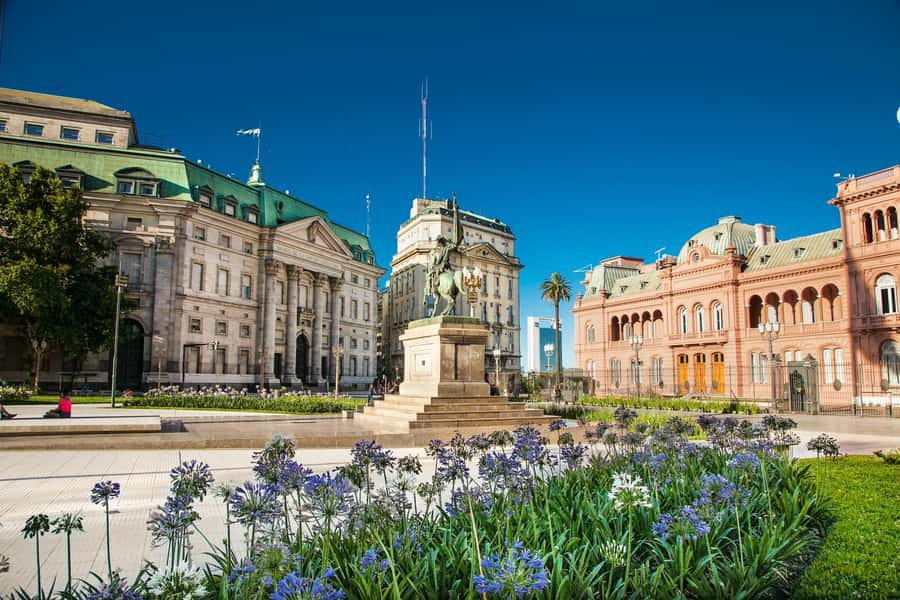
If you want more than a walking explanation, choose the three-hour tour. Museum entry is included in that version and in the four-hour version, but not in the two-hour option.
Inside, you can see ritual objects, photographs, and historical documents. These items help turn broad ideas about immigration and integration into something more concrete. A photograph can show how a community presented itself. A ritual object can reveal what people carried forward from earlier homes. Documents can show how institutions took shape in Buenos Aires.
The museum visit is one of the clearest reasons to spend the extra hour. The two-hour route gives you the basic structure of the story, while the museum gives you evidence you can look at closely.
There is one practical rule you should not miss. For security reasons, foreign visitors must present their original passport. Argentine citizens need their national identity card. A photograph of your passport may not be enough, so carry the correct original document if you choose the three-hour or four-hour option.
The museum is also why I would not automatically choose the shortest tour for a first visit. If Jewish history is a major reason for your time in Buenos Aires, the additional indoor stop gives the subject more substance.
The Holocaust Museum and stories of rebuilding

The Buenos Aires Holocaust Museum brings the tour into the period of World War II and its aftermath. Your guide discusses Argentina’s role during and after the war, along with the experiences of survivors who rebuilt their lives in the city.
This portion requires a respectful pace. It is not presented as a quick photo stop. The guide helps connect international events with the local community, showing how Buenos Aires became a place of refuge, adjustment, and new beginnings for people carrying painful memories.
The subject can be difficult, but it is also one of the tour’s most useful parts. You learn that Jewish heritage in Buenos Aires is not only about the arrival of immigrants or the creation of synagogues. It also includes the work of survivors and later generations who preserved memory while building ordinary lives.
A private guide is helpful here because you can ask for clarification instead of simply moving along with a large crowd. The commentary can also be adjusted to your interests. If you want more attention on wartime history, Argentine politics, or community life, say so early in the tour.
Same city, a completely different kind of day:
- Buenos Aires: Piazzolla Tango Show with Optional Dinner
★ 4.4 · 2,122 reviews - Buenos Aires: City Highlights Guided Tour with Transfer
★ 4.7 · 1,946 reviews - Buenos Aires: Hop-On Hop-Off City Bus Tour
★ 4.2 · 1,855 reviews - Buenos Aires Hop-On Hop-Off Bus and Exclusive Benefits
★ 4.4 · 1,714 reviews
AMIA and the 1994 bombing
The visit to AMIA is the emotional center of the route. The Asociación Mutual Israelita Argentina is both a community institution and a symbol of one of the darkest events in Argentine Jewish history.
The guide explains the 1994 bombing and its lasting impact. The subject is not presented as a detached historical footnote. It connects directly with questions of public memory, justice, Jewish identity, and the safety of community institutions.
This stop gives the tour its modern focus. Templo Libertad points to the community’s early roots. The Holocaust Museum looks at the wider history of persecution and survival. AMIA shows how remembrance remains part of present-day Buenos Aires.
You may find this part especially meaningful if you have a family connection to Jewish history or want to understand how major events shaped Argentina’s Jewish community. It is also useful if you know little about the subject, since the guide can provide the local context that a general city tour usually leaves out.
What the four-hour car option adds
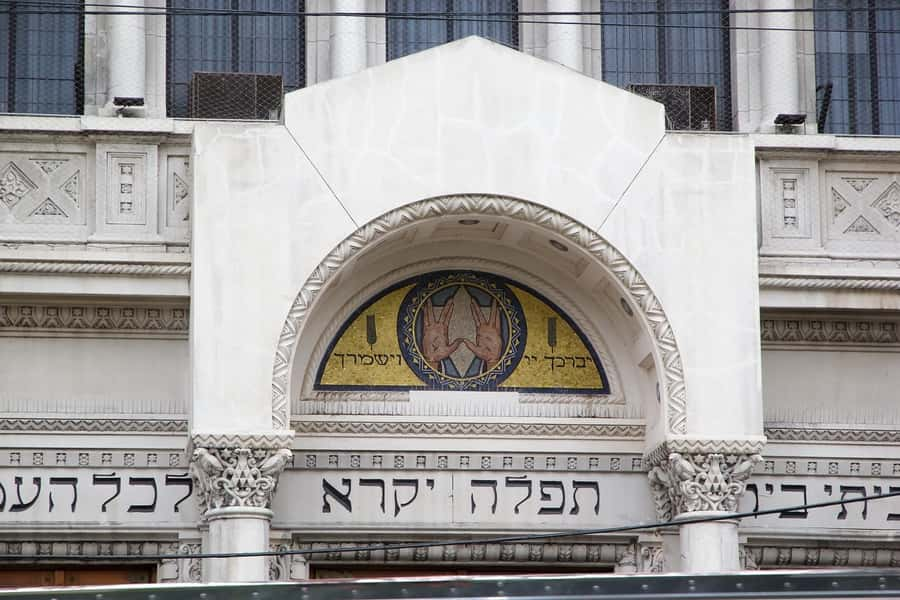
The four-hour version includes the full walking and museum itinerary, then uses private transportation to cover more of Buenos Aires. Pickup and drop-off at your accommodation are included only with this option.
The car matters because the added stops are spread across the wider city. You visit Plaza Libertad, 9 de Julio Avenue, the Israeli Embassy Memorial, and Plaza General San Martín. Instead of treating Jewish heritage as one compact quarter, this version places it within the wider civic center of Buenos Aires.
Plaza Libertad offers architectural surroundings and a quieter public space. It provides a pause between the more intense memorial sites and helps you see how this part of the city fits together.
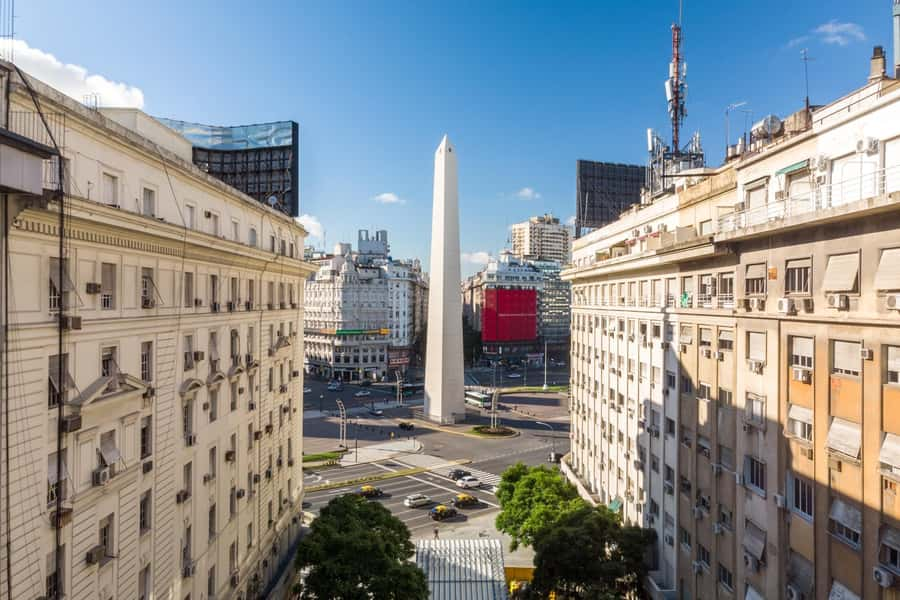
9 de Julio Avenue gives you a sense of Buenos Aires at a much larger scale. It is one of the widest boulevards in the world, and crossing or viewing it helps explain the city’s grand urban design. This stop is not specifically a Jewish site, but it places the community’s institutions within the capital’s main civic setting.
The Israeli Embassy Memorial commemorates the 1992 attack. Along with AMIA, it creates a direct link between Jewish life in Buenos Aires and the violence that affected the community in the modern era. The two memorials should not be rushed. Their value comes from the guide’s explanation and from the chance to consider how remembrance appears in public space.
Plaza General San Martín brings in another layer of Argentine history, including military and immigrant connections. The private car lets you reach these places with less concern about directions, transfers, or walking long distances between stops.
The tradeoff is price. At $129 per person, this is not a budget stroll, especially for one or two people. But the four-hour option combines a private guide, museum entry, transport, and hotel pickup and return. For a small group that values comfort and focused discussion, the package can be good value. If you mainly want Templo Libertad, the Holocaust Museum, and AMIA, the two-hour option costs less in time and may be enough.
Choosing between two, three, and four hours
The two-hour tour is the most efficient choice. It focuses on the old Jewish quarter and the main heritage sites, with roughly 25 to 30 minutes of walking. Choose it if you want a clear introduction or have a packed Buenos Aires schedule.
Remember that museum entry is not included in this option, and there is no private hotel transport. You meet outside Hotel Presidente and make your own way to the starting point.
The three-hour tour is the best middle choice for many people. You keep the walking itinerary and add entry to the Salvador Kibrick Museum. You still arrange your own way to and from the meeting point, but the extra hour gives the tour more evidence and texture.
The four-hour tour is for readers who want the most complete version. It includes the museum, private car travel, hotel pickup and drop-off, and the additional city landmarks. It is also the easiest option if mobility, hot weather, rain, or navigation makes a longer independent outing less appealing.
All three options are private. The guide can adjust the pace, and you can contact customer support in advance if someone in your party has specific needs. Still, the walking tours include uneven surfaces and steps, so ask about your needs before booking rather than waiting until the meeting point.
The guide can shape the experience
The strongest part of a private history tour is the person explaining it. This experience uses licensed guides who speak English, Spanish, French, Italian, or Portuguese.
Richard Shpuntoff is one guide whose style received especially strong praise. His approach was described as warm, open, generous, and clear, with personal and family stories that helped connect past events with Argentina today. That kind of explanation can make a major difference on a subject that includes both public history and private grief.
Other feedback also points to clear explanations of Buenos Aires and Jewish history. The overall rating is five stars from six reviews, with repeated praise for the tour’s educational value and the quality of the guide.
You should still take an active role. Tell the guide what interests you: immigration, synagogue architecture, World War II, the AMIA bombing, Argentine politics, or present-day Jewish life. A private format is most useful when you ask questions instead of treating it like a fixed script.
Price, timing, and practical value
The listed price is $129 per person, with the final value depending on the length you choose and the size of your group. A solo visitor pays for a highly personal experience, while a couple or small family can share the cost of a private guide.
The two-hour option is best judged as a focused introduction. The three-hour option adds the museum, which makes the price easier to justify if artifacts and documents matter to you. The four-hour option adds the car and extra landmarks, so its value rests on convenience as much as content.
You can cancel up to 24 hours before the activity for a full refund, and you can reserve now and pay later. Check your email the day before because the operator sends important tour details then.
Starting times depend on availability. Since the tour lasts between two and four hours, leave enough room in your day rather than placing a tight restaurant booking immediately afterward. Weather does not cancel the walking route automatically, so dress for conditions.
Who should book this Buenos Aires experience?
I would recommend this tour to anyone who wants Jewish history to be part of a Buenos Aires visit rather than a side note. It suits families, couples, solo visitors, and anyone with a personal or cultural connection to the subject.
The two-hour version works well for a first look. The three-hour version is the most balanced choice if the museum is important to you. The four-hour tour suits you if you want private transport, hotel pickup, and a broader view of the city’s memorials and civic spaces.
I would not choose it if you only want a general sightseeing tour or if you expect synagogue interiors to be included. This is a serious heritage experience, and much of its value comes from listening, asking questions, and giving the memorial sites the attention they deserve.
Should you book it?
Book this tour if you want thoughtful local guidance through Buenos Aires’ Jewish past and present. The combination of Templo Libertad, the Holocaust Museum, AMIA, and the Salvador Kibrick Museum gives you a clear progression from community beginnings to survival and remembrance.
Choose the three-hour option for the best balance of walking and museum time. Choose four hours if comfort and broader coverage matter more than keeping the cost low. If your schedule is tight, the two-hour version still covers the essential sites, but remember that it does not include museum entry or transport.
FAQ
Where does the tour begin?
The meeting point is in front of Hotel Presidente at Cerrito 850, C1010 Buenos Aires. Do not enter the hotel, since its staff is not informed about the tour.
Is transportation included?
Private transportation with pickup and drop-off at your accommodation is included only in the four-hour option. The two-hour and three-hour options do not include private transfers.
Is entry to the Salvador Kibrick Museum included?
Museum entry is included in the three-hour and four-hour options. It is not included in the two-hour tour.
Do I need identification for the museum?
Yes. Foreign visitors must present their original passport. Argentine visitors must present their national identity card.
Can I enter Templo Libertad during the tour?
Entry to synagogues is not included. The itinerary includes viewing Templo Libertad and learning about its importance from the guide.
What languages are available?
The live guide is available in English, Spanish, French, Italian, and Portuguese.
Just added around Buenos Aires
- Tango Show at El Querandi with optional Dinner★ 4.2 · 3 reviews
- Wine Tasting in Buenos Aires★ 4.2 · 4 reviews
- Walking Tour: Buenos Aires bookstores★ 4.3 · 12 reviews
- Velez Sarsfield Football Match★ 5.0 · 3 reviews
- Unique Tigre and Delta Private Day Cruise Navegation★ 5.0 · 3 reviews
- Private Underground Tango Immersion★ 5.0 · 31 reviews
- Sailing with Wine Tasting in Buenos Aires★ 5.0 · 50 reviews
- Experience The Essence of Buenos Aires in San Telmo★ 5.0 · 51 reviews
Walking Tours, compared.

Nazis in Buenos Aires: a historical walking tour
Read our review →


La Docta Free Walking Tour “Córdoba La Antigua”.
Read our review →

Buenos Aires Walking Tour with Local Guide and Optional Rooftop
Read our review →
Browse the lists this tour appears in